How Marine Diesel Troubleshooting Works
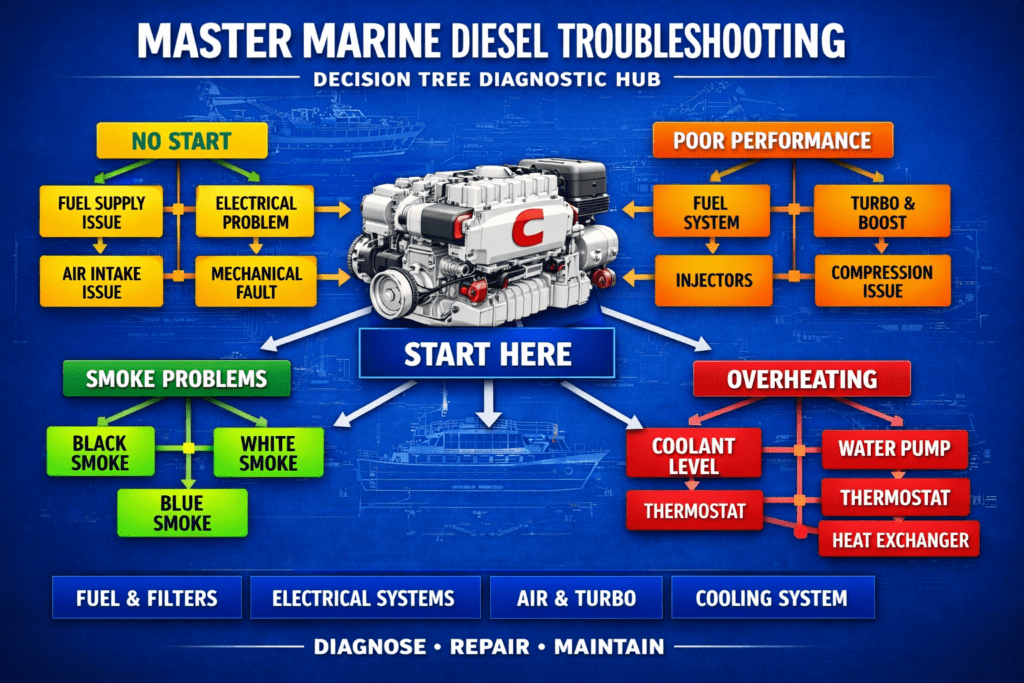
Marine diesel troubleshooting follows a systematic diagnostic process used by experienced marine technicians. Instead of replacing parts randomly, professional troubleshooting focuses on identifying the root cause of the problem by isolating the system involved.
Most marine diesel engine problems can be traced back to one of several major systems. These systems include the fuel delivery system, air intake and turbocharging system, cooling system, electrical and starting system, combustion process, or internal mechanical condition of the engine.
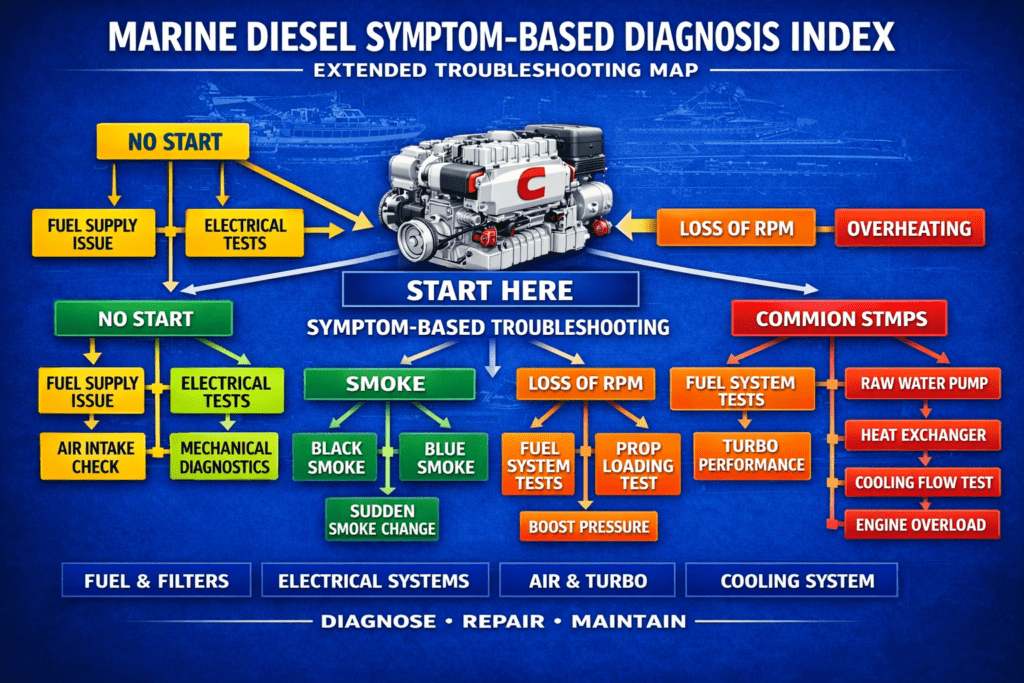
A trained marine diesel technician begins diagnosis by identifying the primary symptom. For example, if the engine will not start, the investigation typically begins with fuel delivery and electrical starting systems. If the engine is overheating, the cooling system is examined, including raw water flow, heat exchangers, and coolant circulation. Loss of power under load often points toward fuel restriction, air restriction, or turbocharger performance issues.
By following a structured diagnostic process, marine technicians can narrow down the possible causes quickly and avoid unnecessary parts replacement. This approach saves time, reduces repair costs, and ensures the engine problem is properly corrected.
With over 30 years of marine engine experience, 805 Marine Diesel Mechanic uses professional diagnostic procedures to identify marine diesel engine problems quickly and accurately. Proper troubleshooting allows issues to be resolved before they lead to more serious engine damage or expensive repairs.
Schedule Professional Diagnosis
🔧 Advanced Diagnosis & Major Decisions
Master Marine Diesel Turbocharger Troubleshooting Guide:
How to Diagnose Marine Diesel Engine Problems
This troubleshooting system reflects real-world diagnostic workflows used by trained technicians servicing marine diesel engines across Ventura, Channel Islands Harbor, and Santa Barbara.
The Fastest Way to Diagnose Marine Diesel Problems
Step 1 — Does the engine crank?
YES → check fuel delivery
NO → check batteries and starter
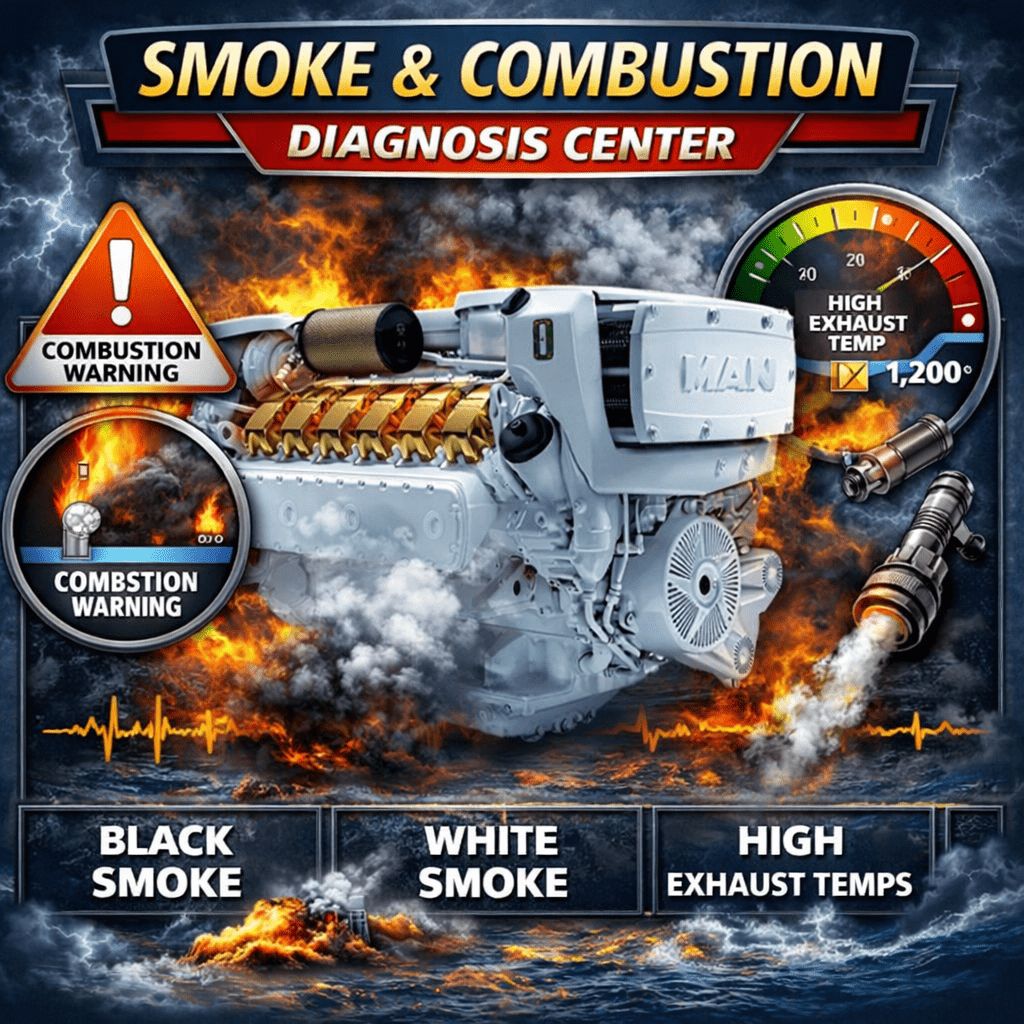
Step 2 — Does it smoke?
Black smoke → air restriction
White smoke → injector issue
No smoke → fuel starvation
Related Marine Diesel Resources
Marine Diesel Troubleshooting – Expert Quick Diagnosis FAQ
These expert quick answers are based on real-world marine diesel diagnostics used by trained technicians in Ventura, Oxnard, Channel Islands Harbor, and Santa Barbara. Start with the symptom, then follow the matching diagnosis center.
What should I check first when a marine diesel won’t start?
First check cranking speed and battery voltage. If cranking is slow, start with the electrical system. If cranking is normal but the engine won’t fire, check fuel delivery, air intrusion, and filter restriction.
Related: Fuel System Diagnosis Center • Electrical & Starting System Diagnosis Center
Engine turns over but no smoke from exhaust — what does that mean?
No smoke while cranking usually indicates fuel is not being injected. Common causes include air in the fuel system, shutoff issues, lift pump failure, or severe restriction.
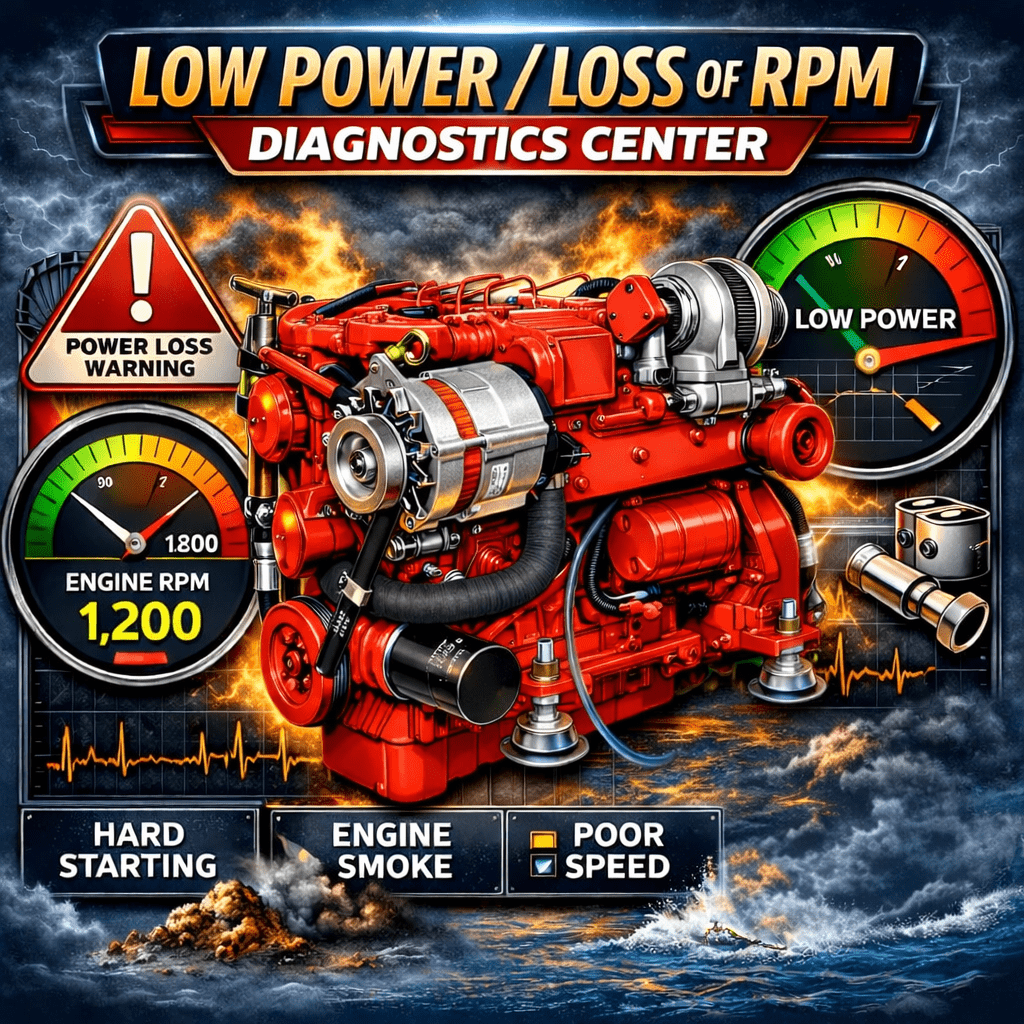
Why does my marine diesel lose RPM under load?
Loss of RPM under load is usually caused by air restriction, boost loss, fuel restriction, or engine overload. Boost pressure testing is often the fastest way to narrow it down.
What does black smoke under throttle usually indicate?
Black smoke under load typically means insufficient air or excessive fuel. Check turbocharger performance, aftercooler condition, intake restriction, and exhaust backpressure.
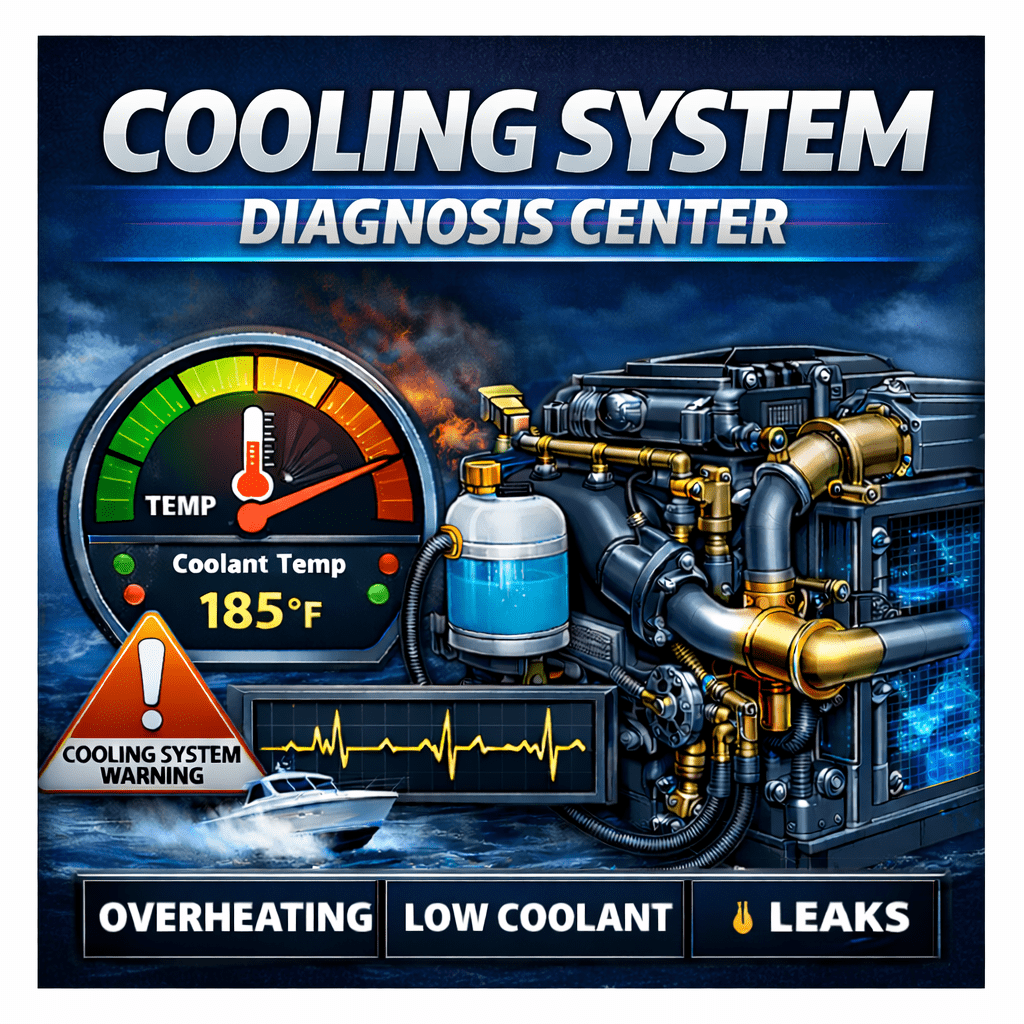
Overheating at cruise but not idle — what’s the likely cause?
When overheating occurs only under load, suspect raw water restriction, impeller wear, heat exchanger fouling, or engine overload.
How do professional marine diesel technicians diagnose engine problems?
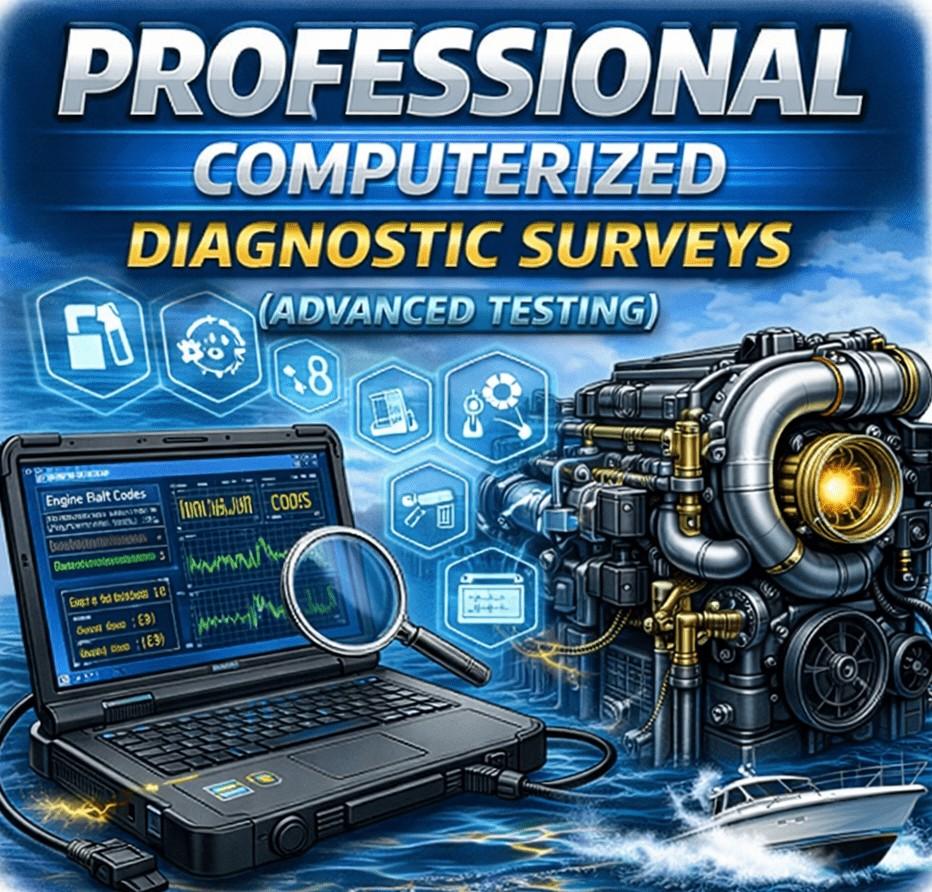
Professionals diagnose by identifying the primary symptom, determining when it occurs, checking fuel, air, cooling, and mechanical systems logically, and confirming findings with performance testing or computerized diagnostics.
When should computerized diagnostics be used?
Use computerized diagnostics when alarms or derates are present, the problem is intermittent, electronic engines are involved, or manual testing does not isolate the issue.
How can I tell cooling system failure from engine overload?
Cooling failure shows reduced water flow and steadily rising temperature. Engine overload typically shows inability to reach rated RPM, heavy smoke under load, and elevated exhaust temperature.
What are the signs of diesel fuel contamination?
Common signs include repeated filter clogging, loss of RPM, hard starting, and water or debris in separator bowls.
What does blue smoke on a turbocharged marine diesel mean?
Blue smoke usually indicates oil burning. On turbo engines, inspect turbo oil drain, crankcase ventilation, and excessive blow-by before assuming internal engine damage.
Understanding Marine Diesel Engine Failures
Common Causes of Marine Diesel Engine Problems
Marine diesel engines are extremely reliable when maintained properly, but most engine problems can be traced back to a small number of root causes. After more than 30 years of marine diesel diagnostic and repair experience, we find that the majority of failures originate from one of five systems: fuel delivery, cooling, air supply, electrical starting systems, or combustion components.
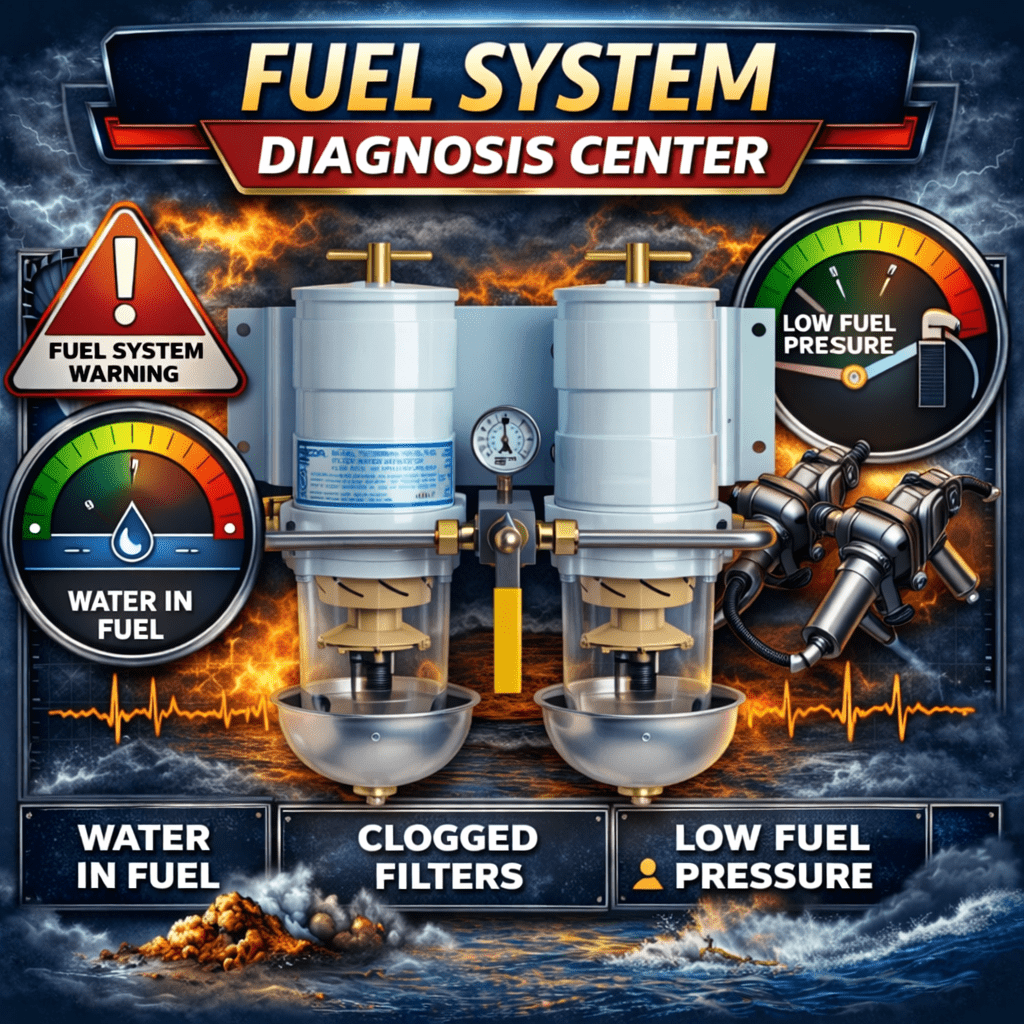
Fuel system problems are one of the most common issues encountered in marine diesel engines. Contaminated fuel, clogged filters, or air intrusion into the fuel lines can quickly cause hard starting, rough running, or complete engine shutdown. Even a partially restricted fuel filter can reduce fuel flow enough to cause noticeable power loss under load.
Cooling system problems are another frequent cause of engine trouble. Unlike automotive engines, marine diesel engines rely on raw water cooling systems that include seawater pumps, heat exchangers, and aftercoolers. Salt buildup, marine growth, or zinc debris inside these components can restrict cooling water flow and lead to overheating.
Air supply problems can also significantly affect engine performance. Marine diesel engines depend on a steady supply of clean air for proper combustion. Restricted air filters, turbocharger issues, or clogged aftercoolers can reduce airflow and cause excessive smoke, reduced power, and poor fuel efficiency.
Electrical and starting system issues are often responsible for no-start conditions. Weak batteries, corroded battery cables, faulty starters, or poor grounding can prevent the engine from cranking at the proper speed required for diesel ignition.
Finally, combustion-related issues such as worn injectors, low compression, or improper fuel atomization can cause excessive smoke, rough running, or reduced engine performance.
By identifying which of these systems is responsible for the symptom your engine is showing, you can dramatically narrow down the possible causes and begin a more accurate diagnosis.
Professional Marine Diesel Diagnostic Methods
Diagnosing marine diesel engine problems properly requires a systematic approach rather than guessing or replacing parts at random. Professional marine technicians follow a structured diagnostic process that focuses on identifying the root cause of a problem before repairs begin.
The first step in professional diagnostics is identifying the primary symptom. Marine diesel engines usually provide clear warning signs before a major failure occurs. These symptoms may include hard starting, loss of RPM, overheating, excessive smoke, abnormal vibration, or sudden power loss.
Once the symptom is identified, the next step is determining which system is most likely responsible. For example, a no-start condition may point toward the fuel system or electrical starting system, while overheating almost always indicates a cooling system problem.
Technicians then perform targeted testing of the suspected system. This may include checking fuel pressure, inspecting fuel filters for contamination, testing raw water pump flow, measuring turbocharger boost pressure, or evaluating injector performance. In some cases, advanced electronic diagnostic tools may be used to monitor engine sensors and performance data.
Another critical step in professional marine diesel diagnostics is visual inspection. Many engine problems can be identified simply by carefully inspecting hoses, fuel lines, wiring connections, cooling system components, and engine mounts.
By following a structured diagnostic process, technicians can often identify the exact cause of an engine problem without replacing unnecessary parts. This approach not only saves time and money but also prevents additional damage that can occur when problems are misdiagnosed.
Preventing Marine Diesel Engine Failures
Many marine diesel engine problems can be prevented through proper maintenance and regular system inspections. Preventive maintenance is one of the most effective ways to extend engine life and avoid unexpected breakdowns while underway.
Fuel system maintenance is especially important in marine environments where fuel contamination can occur. Water intrusion, microbial growth, and sediment buildup inside fuel tanks can quickly clog fuel filters and restrict fuel flow. Regular filter replacement and periodic fuel system inspection can prevent these issues from developing.
Cooling system maintenance is equally critical. Marine engines rely on a continuous flow of seawater to remove heat from the engine through heat exchangers and aftercoolers. Over time, salt deposits, scale buildup, and marine growth can restrict water flow and reduce cooling efficiency. Routine cleaning of heat exchangers, replacement of zinc anodes, and inspection of raw water pumps help ensure proper cooling performance.
Air intake and turbocharger systems should also be inspected regularly. Clean air filters and properly functioning turbochargers allow the engine to maintain correct air-fuel ratios, which improves combustion efficiency and reduces smoke.
Electrical systems should not be overlooked. Corrosion on battery terminals, loose wiring connections, or aging starter components can eventually lead to starting problems. Regular inspection of battery cables, grounds, and starter connections helps prevent unexpected electrical failures.
Finally, monitoring engine performance while underway can provide early warning signs of developing problems. Changes in engine temperature, unusual exhaust smoke, reduced RPM, or abnormal engine noise often indicate that a system requires attention before a more serious failure occurs.
By performing regular maintenance and responding quickly to early warning signs, boat owners can significantly reduce the risk of major marine diesel engine problems and keep their vessels operating reliably for years to come
Need Expert Marine Diesel Troubleshooting?
805 Marine Diesel Mechanic provides mobile diagnostics, repairs, and inspections throughout Ventura, Oxnard, Channel Islands Harbor, and Santa Barbara.
Contact Now

 Overheating Problems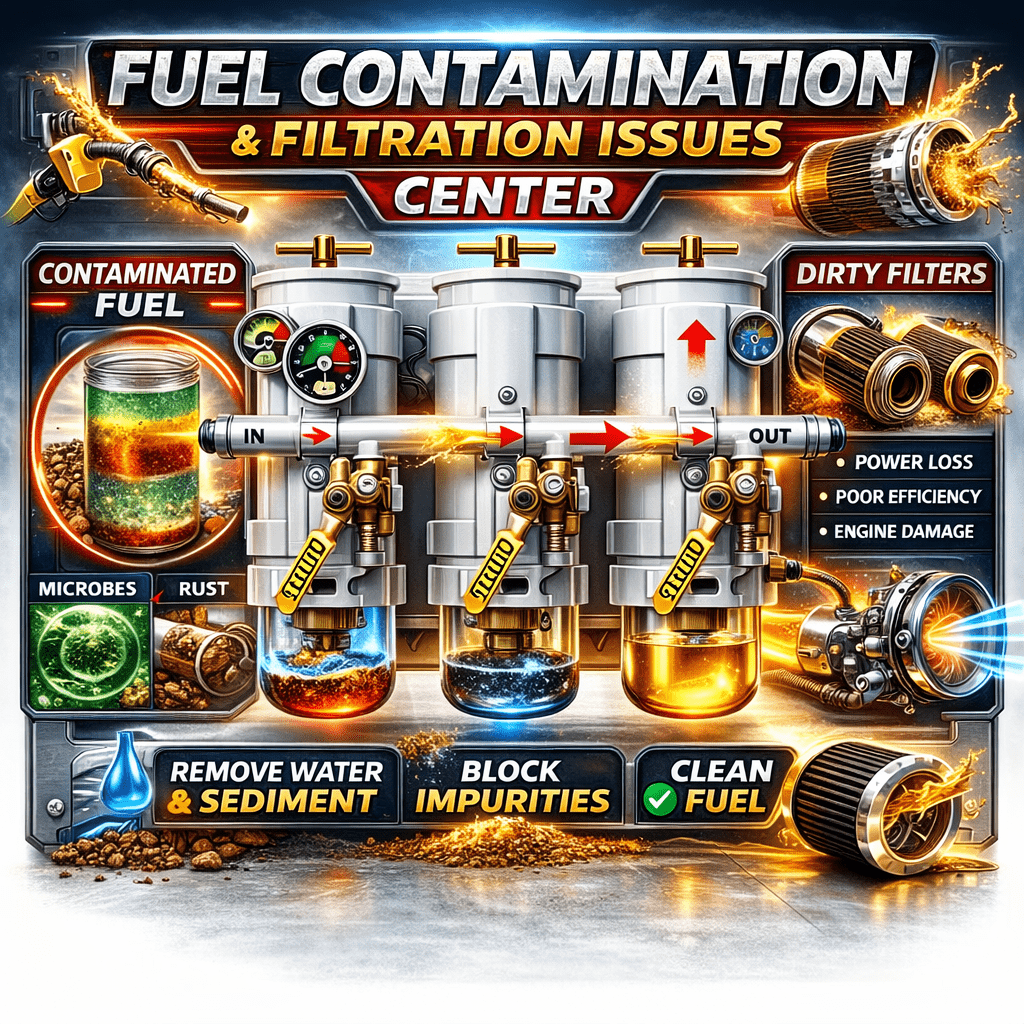
 Fuel Contamination & Filtration Issues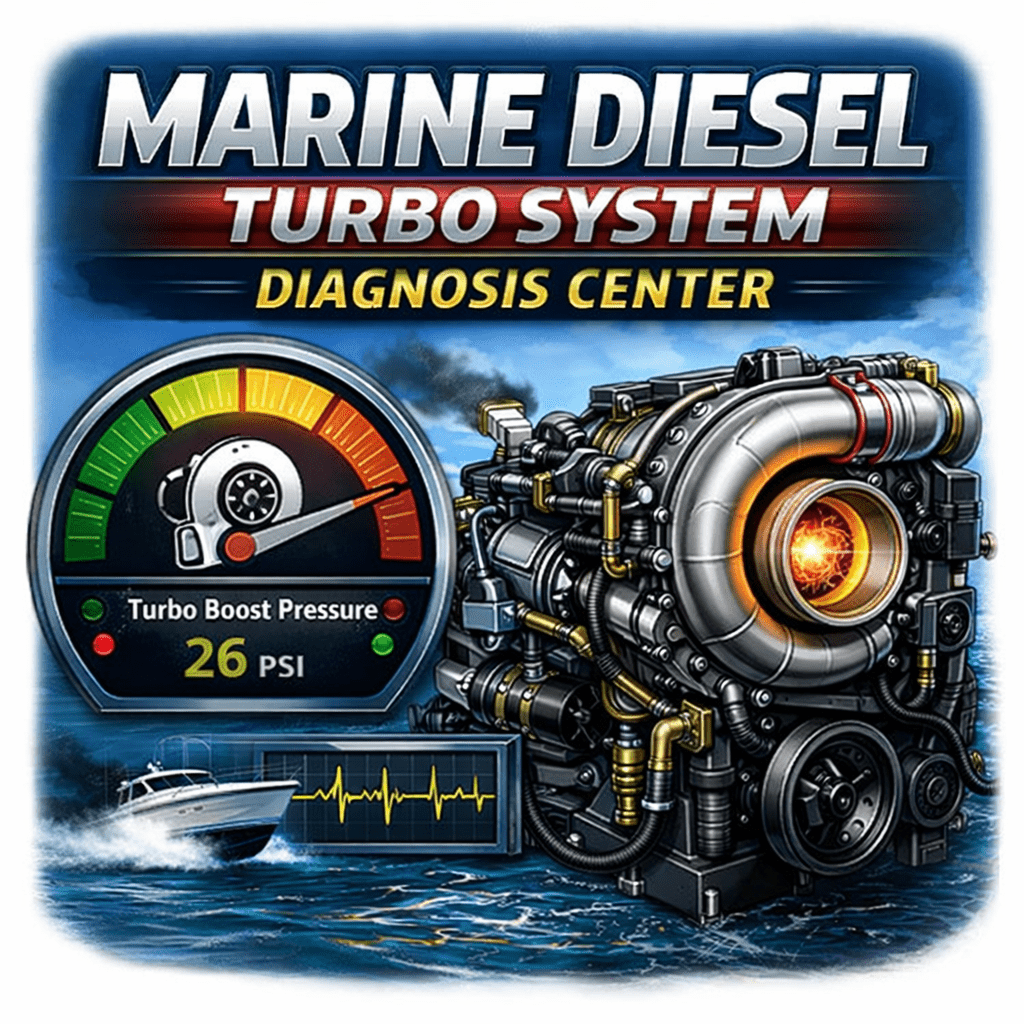
 Turbo & Air System Problems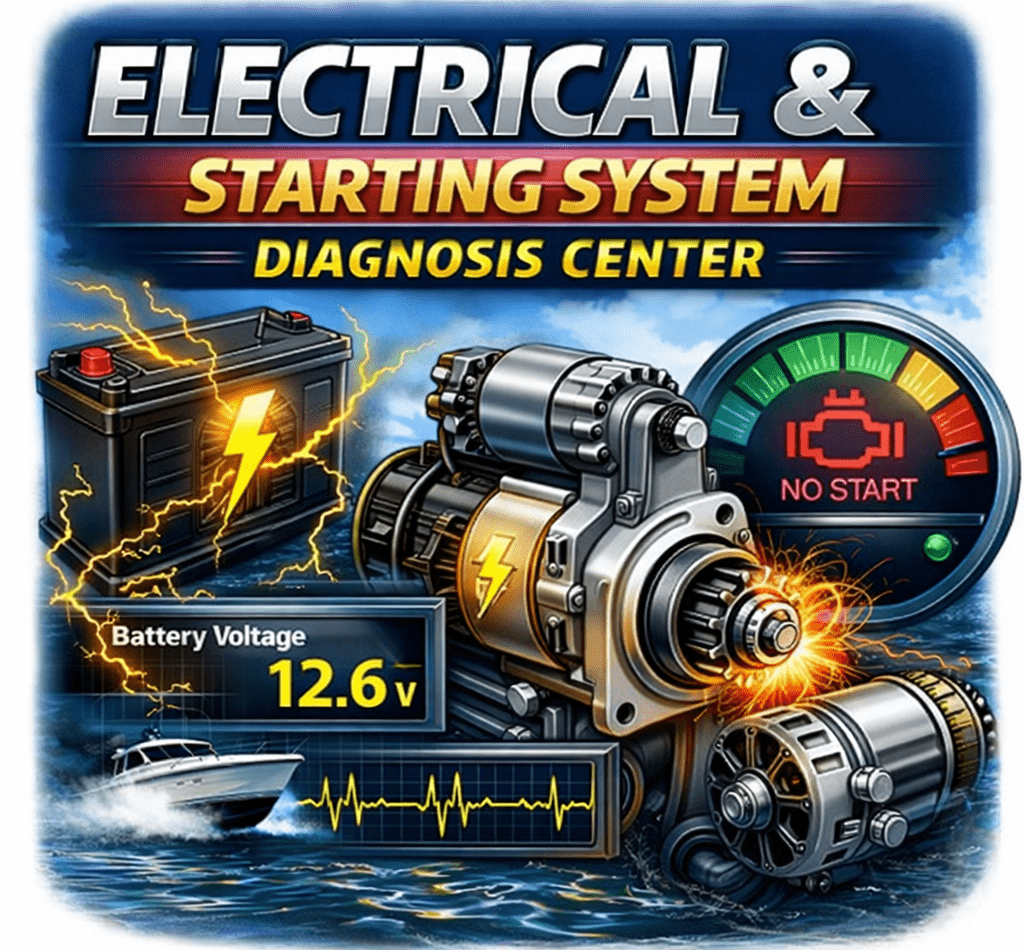
 Smoke Problems (Combustion Diagnosis)