
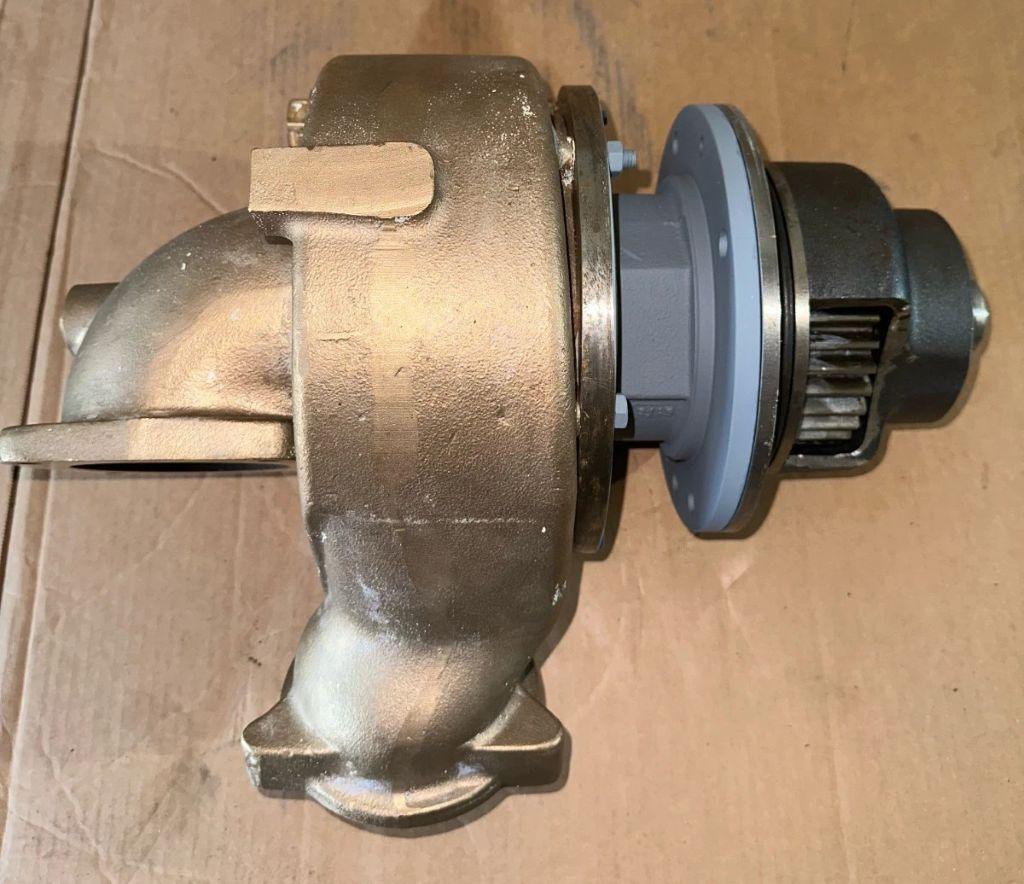
MTU Marine Diesel Overheating Under Load: Raw Water Pump vs Heat Exchanger Failure Guide
MTU marine diesel engines are engineered for high-performance vessels, but when overheating occurs under load, it signals a system imbalance that must be diagnosed correctly—not guessed at. In real-world conditions across Ventura, Oxnard, Channel Islands Harbor, and Santa Barbara, overheating under load is one of the most common and most misdiagnosed marine diesel problems.
With over 30 years of hands-on experience, 805 Marine Diesel Mechanic approaches overheating using system-based logic—analyzing fuel, air, cooling, exhaust, and load together. This guide will walk you through how to correctly identify whether your issue is raw water pump failure, heat exchanger restriction, or a deeper cross-system problem.
Start here for full system navigation:
Master Marine Diesel Troubleshooting Guide
Schedule MTU Cooling System Diagnosis
Understanding MTU Cooling System Load Dynamics
MTU engines rely on a dual-circuit cooling system that must scale with engine demand. At idle, the system operates under minimal thermal load. Under cruise RPM or heavy load, heat production increases dramatically, and any inefficiency becomes immediately visible.
- Raw water pump supplies cooling flow
- Heat exchanger removes engine heat
- Aftercooler reduces intake air temperature
- Thermostat regulates coolant circulation
- Exhaust system removes residual heat
When overheating only occurs under load, the failure is almost never random—it’s a capacity problem.
Official MTU reference:
MTU Marine Systems Documentation
Overheating Under Load vs Idle — The Key Diagnostic Split
This is the first and most important diagnostic step.
If your MTU engine:
- Runs cool at idle
- Overheats at cruise RPM
You are dealing with a restriction or flow limitation—not a coolant failure.
This immediately narrows your diagnosis to:
- Raw water pump inefficiency
- Heat exchanger restriction
- Aftercooler fouling
- Air or exhaust system influence
Related system breakdown:
Cooling System Diagnosis Center
Raw Water Pump Failure — The Most Common Root Cause
The raw water pump is the primary driver of cooling capacity. It often fails gradually, which makes it deceptive.
Here’s what actually happens in the field:
The impeller begins to wear or lose flexibility. At idle, it still pumps enough water to maintain temperature. Under load, it cannot keep up, and temperatures rise.
Real Failure Indicators:
- Weak or inconsistent exhaust water flow
- Steam at exhaust outlet
- Temperature rise only at higher RPM
- Impeller fragments found downstream
Critical mistake: replacing the impeller without removing lodged debris. Those fragments typically block:
- Heat exchanger tubes
- Aftercooler passages
- Mixing elbow
This is why overheating often persists after “fixing” the pump.
Heat Exchanger Restriction — The Silent Failure
Heat exchangers degrade slowly, making them one of the most overlooked causes of overheating.
In saltwater environments, the following accumulate:
- Zinc fragments
- Salt scale buildup
- Marine growth
- Internal corrosion
Under load, restricted tubes reduce heat transfer efficiency, causing temperature creep that becomes full overheating at cruise.
Related deeper failure path:
Marine Diesel Engine Shutdown Causes
Aftercooler & Air System Influence (Often Missed)
Cooling systems do not operate in isolation.
If intake air is not cooled properly:
- Combustion temperature rises
- Exhaust gas temperature increases
- Engine load increases
- Cooling demand exceeds capacity
This creates a false “cooling system problem” that actually originates in the air system.
Related diagnostics:
Turbo System Diagnosis Center
Exhaust & Load Interaction
Restricted exhaust systems also contribute directly to overheating.
- Clogged mixing elbow
- Carbon buildup
- Collapsed exhaust hose
These conditions increase backpressure, raising engine temperature and loading the cooling system beyond its design capacity.
Related issue:
Whining Noise Under Load Guide
Electrical & Sensor Misdiagnosis
Not every overheat alarm is real—but you never assume that first.
Possible false triggers:
- Faulty temperature sender
- Corroded connectors
- Ground faults
- ECM calibration issues
Always verify actual temperature before dismissing an alarm.
Electrical diagnostics:
Electrical & Starting System Diagnosis
Professional Diagnostic Process (What Actually Works)
A trained technician doesn’t guess—they isolate the failure step-by-step.
- Raw water flow volume testing
- Infrared thermal imaging
- Heat exchanger pressure testing
- Aftercooler inspection
- Cooling system pressure test
- ECM data analysis
Advanced diagnostics:
Computerized Diagnostics Center
Preventative Upgrades That Actually Work
- High-performance impellers
- Upgraded marine-grade hoses
- Improved strainer systems
- Routine heat exchanger cleaning
- Aftercooler service intervals
- Digital monitoring systems
External authority reference:
Marine Diesel Maintenance Guide
Request Cooling System Inspection
Local MTU Cooling Specialists
805 Marine Diesel Mechanic provides mobile MTU diagnostics throughout Ventura, Oxnard, Channel Islands Harbor, and Santa Barbara. Every system is analyzed using real-world diagnostic logic built from 30+ years of marine diesel experience.
MTU Overheating FAQ
1. Why does my MTU engine overheat only under load?
This indicates a cooling capacity issue—most commonly raw water restriction or heat exchanger blockage.
2. Can a worn impeller still function?
Yes, but it will fail under load when demand increases.
3. Where do broken impeller pieces go?
They lodge in exchangers or aftercoolers, restricting flow.
4. How do I confirm raw water restriction?
Check flow at exhaust and perform volume testing.
5. Can overheating damage my engine quickly?
Yes, severe damage can occur within minutes under load.
6. Should I shut down immediately?
Reduce throttle immediately and assess conditions.
7. Can sensors cause false alarms?
Yes, but always verify before assuming.
8. What does the aftercooler do?
It reduces intake air temperature to control combustion heat.
9. Can zincs clog the system?
Yes, they are a major source of blockage.
10. How often should I service my cooling system?
Regular inspection is critical in saltwater use.
11. Why does overheating get worse over time?
Because restriction builds gradually.
12. Can hoses collapse?
Yes, especially suction hoses under load.
13. Does marine growth affect cooling?
Yes, especially at intakes and exchangers.
14. Can exhaust restriction cause overheating?
Yes, increased backpressure raises engine temps.
15. What’s the first thing to check?
Raw water discharge flow.
16. Can ECM issues cause false overheating?
Yes, but mechanical issues are more common.
17. Why is overheating worse at higher RPM?
Because heat production increases exponentially.
18. Can turbo issues contribute?
Yes, by increasing exhaust temperature.
19. Should I replace or clean my exchanger?
Cleaning is typically sufficient unless heavily corroded.
20. Who should diagnose MTU overheating?
A trained marine diesel technician with system-level experience.
3 Responses