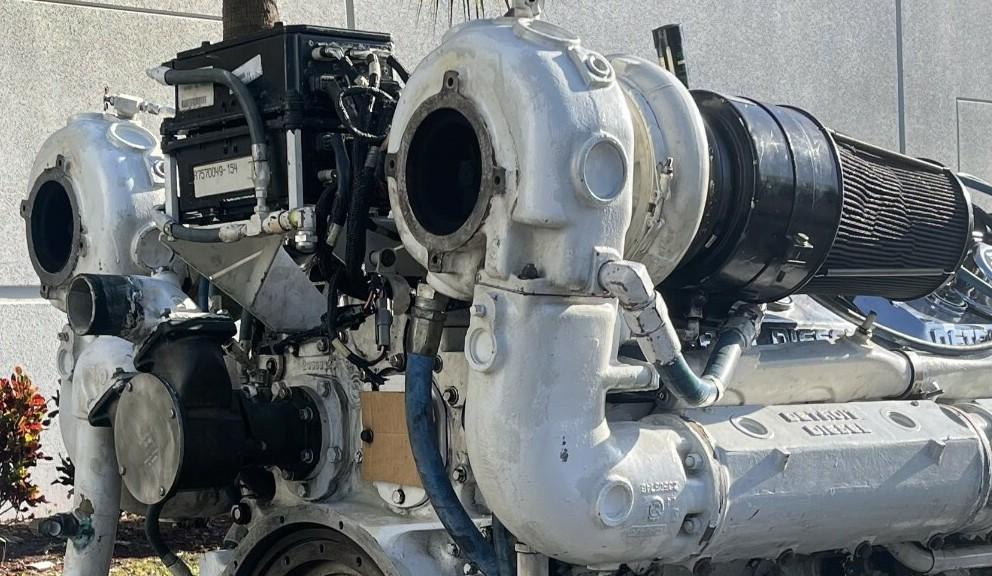
Marine diesel turbocharger diagnostic inspection by trained technician at 805 Marine Diesel Mechanic Ventura Channel Islands Harbor turbo performance troubleshooting
Marine Diesel Turbo System Diagnosis Center
Turbocharger performance issues are one of the most common causes of power loss, excessive smoke, slow acceleration, and high exhaust temperatures in marine diesel engines. This Turbo System Diagnosis Center provides a structured, real-world diagnostic approach used by trained technicians at 805 Marine Diesel Mechanic throughout Ventura, Oxnard, Channel Islands Harbor, and Santa Barbara.
Turbochargers use exhaust gas energy to compress incoming air, increasing oxygen density and allowing the engine to burn more fuel efficiently. This increases power output while maintaining engine efficiency.
Turbo performance depends on balance between fuel delivery, airflow, exhaust flow, and lubrication. Problems in any of these systems directly affect boost and engine performance.
Turbo problems usually appear as reduced performance rather than complete failure. Symptoms include slow acceleration, low RPM, and increased exhaust temperature.
Low turbo boost is usually caused by airflow restriction, fuel issues, or exhaust backpressure. Diagnosis requires comparing multiple systems, not just the turbo.
2. Can turbo issues cause smoke?
Yes, especially black smoke caused by lack of airflow. This should be checked with combustion diagnostics.
3. What causes slow spool-up?
Low exhaust energy, leaks, or turbo wear can delay spool-up. Fuel and load conditions must also be checked.
4. Can fuel problems affect turbo?
Yes, fuel restriction reduces combustion energy and limits turbo performance.
5. What is normal boost?
Boost varies by engine model and load. Always compare to manufacturer specs.
6. Can exhaust issues mimic turbo failure?
Yes, backpressure reduces turbine efficiency and looks like turbo failure.
7. Why low RPM under load?
Low boost or fuel restriction are common causes.
8. What causes turbo noise?
Bearing wear or imbalance is the most common cause.
9. Can oil damage turbo?
Yes, poor oil supply or drainage causes rapid failure.
10. How test turbo?
Boost pressure testing under load is most reliable.
11. Can leaks reduce boost?
Yes, even small leaks reduce efficiency significantly.
12. What causes high EGT?
Poor combustion or restriction in airflow or cooling systems.
13. Can dirty air filter affect turbo?
Yes, airflow restriction reduces boost and increases smoke.
14. Why turbo weak?
Often system imbalance rather than failure.
15. What affects turbo performance?
Fuel, air, exhaust, and cooling systems all affect performance.
16. Can intercooler affect turbo?
Yes, restriction reduces air density and efficiency.

25 Responses