
Marine Diesel Turbocharger Wastegate Problems (Symptoms + Testing Guide)
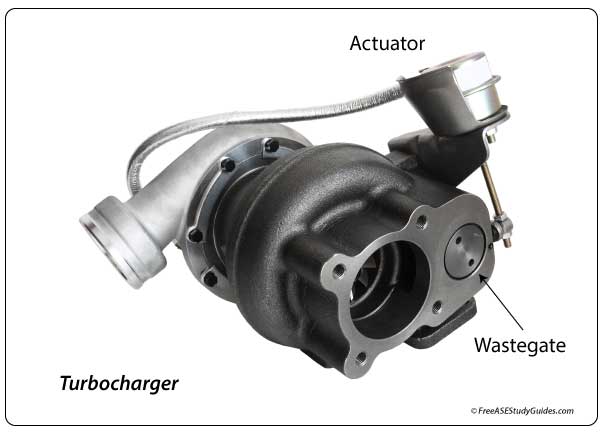
The wastegate on a marine diesel turbocharger is one of the most critical components controlling engine performance under load. It regulates boost pressure by controlling how much exhaust energy is allowed to drive the turbine. When this system fails, engines can experience low power, excessive smoke, overheating, or dangerous overboost conditions that can lead to serious internal damage.
At 805 Marine Diesel Mechanic, wastegate problems are one of the most common causes of incorrect turbocharger diagnosis throughout Ventura, Oxnard, Channel Islands Harbor, and Santa Barbara. Many engines that appear to have turbo failure are actually suffering from boost control problems caused by a stuck, leaking, or slow-responding wastegate system.
Start with the Master Marine Diesel Troubleshooting Guide →
What Does a Marine Diesel Wastegate Do? (Boost Control Explained)
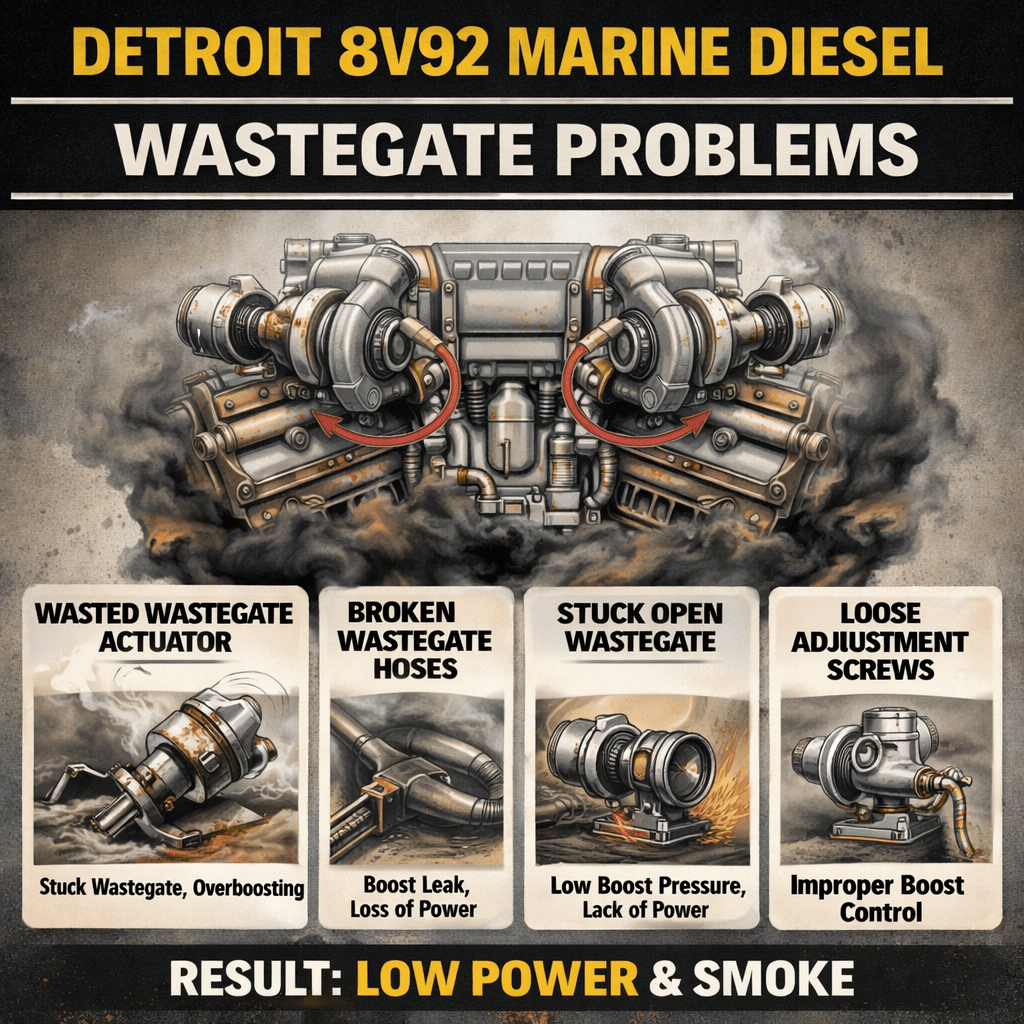
The wastegate is a pressure-controlled valve that determines how much exhaust gas flows through the turbocharger turbine. Turbochargers rely entirely on exhaust energy, and the wastegate controls that energy to maintain safe and efficient boost levels.
When boost pressure reaches a preset level, the wastegate opens and allows exhaust gases to bypass the turbine. When more power is required, the wastegate closes, forcing more exhaust through the turbine to increase boost.
- Closed wastegate → maximum boost and turbine speed
- Open wastegate → controlled boost and reduced turbine load
This balance directly affects systems such as the
Turbo System Diagnosis Center,
Exhaust Backpressure Problems,
High Exhaust Temperature,
Fuel System Diagnosis Center, and
Cooling System Diagnosis Center.
Why Wastegate Problems Are Commonly Misdiagnosed
Wastegate issues are frequently misdiagnosed because their symptoms overlap with turbocharger, fuel, and cooling system problems. Low boost is often blamed on turbo failure, while smoke is blamed on fuel delivery issues.
In reality, incorrect boost control can create both symptoms at the same time. This is why proper diagnosis must always compare performance across the
Smoke & Combustion Diagnosis Center,
Mechanical Failure Diagnostics, and
Computerized Diagnostics Center.
Common Symptoms of Wastegate Problems
- Loss of RPM under load
- Not reaching full RPM
- Power loss under load
- Black smoke under load
- Surging at cruise RPM
- High EGT
- Overheating under load
- Boost instability or overboost alarms
Step-By-Step Wastegate Testing Procedure
- Measure boost pressure using boost testing
- Inspect control lines for leaks
- Test actuator movement
- Inspect exhaust housing for carbon buildup
- Evaluate turbo condition via Turbo Oil Supply Problems
- Confirm performance with computerized diagnostics
System Interaction (Exhaust, Fuel, Cooling)
Wastegate performance is directly influenced by exhaust backpressure, fuel delivery, and cooling system efficiency. For example, exhaust restriction can force the wastegate open prematurely, reducing boost and causing power loss.
Fuel system issues can increase combustion temperature, while cooling system limitations can amplify overheating caused by improper boost control.
These relationships make it essential to compare findings with:
External References
Cummins Marine |
Caterpillar Marine
Local Marine Diesel Turbo Diagnostics
805 Marine Diesel Mechanic provides advanced turbocharger diagnostics and wastegate testing throughout Ventura, Oxnard, Channel Islands Harbor, and Santa Barbara.
One Response