
Marine Diesel Cooling System Diagnosis Center
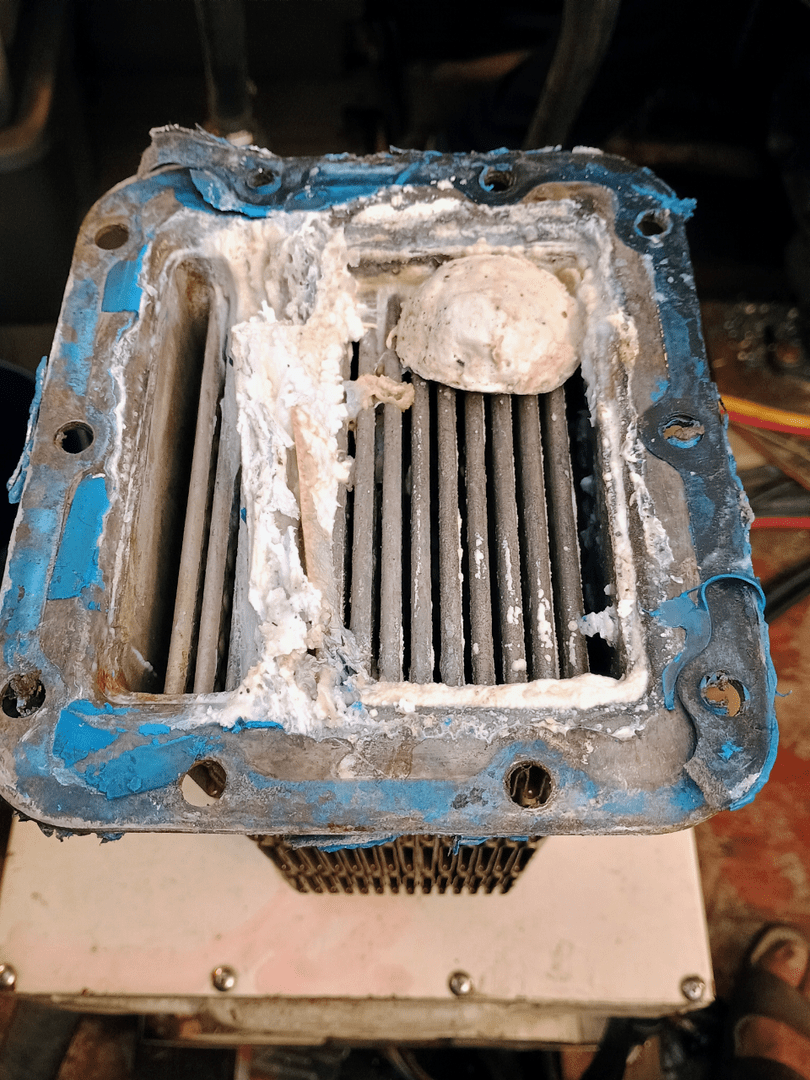
Cooling system problems are a top cause of marine diesel breakdowns—especially overheating at cruise, rising exhaust temperatures, power loss, and premature turbo or aftercooler damage. This Cooling System Diagnosis Center organizes the step-by-step troubleshooting process used by trained technicians at 805 Marine Diesel Mechanic.
Use this page as your structured hub for cooling-related diagnostics, then follow the linked guides for detailed step-by-step procedures. On modern marine diesels, cooling does much more than hold temperature steady. It directly affects combustion efficiency, exhaust temperature, turbocharger life, and how well the engine can carry load over time.
Return to Master Marine Diesel Troubleshooting Guide →
Schedule Cooling System Diagnosis
Open Master Troubleshooting Guide
How Marine Diesel Cooling Systems Really Work
Marine diesel cooling systems usually operate through two connected circuits: the internal closed-loop coolant side and the external seawater side. The internal side circulates coolant through the engine block, cylinder head, and in many cases turbocharger passages. The seawater side pulls in raw water, passes it through coolers and the heat exchanger, then discharges that heat overboard.
That means cooling system diagnosis is never just about a thermostat or a temperature gauge. Heat must be transferred efficiently from metal surfaces to coolant, from coolant to seawater, and then out through the exhaust discharge. If any point in that chain is restricted, total system efficiency drops. This is why cooling problems often overlap with high exhaust temperature (EGT), smoke and combustion issues, and engine overload symptoms.
Start Here — Overheating Diagnosis (Idle vs Cruise)
If your engine overheats at idle, at cruise, or only under heavy load, start with this comparison diagnostic guide.
The pattern matters. Idle overheating often points toward poor base water flow, suction leaks, or circulation-side problems. Cruise overheating usually points toward partial restriction that only becomes critical when heat demand rises. Overheating only under sustained load often crosses into airflow, turbo, exhaust, or propeller-load issues and should be compared with Marine Diesel Overheating Under Load But Not At Idle.
Raw Water Flow Problems (Seawater Side)
Most marine overheating problems start on the seawater side: strainer restriction, hose collapse, air leaks, or pump and impeller failure. If the engine cannot move enough seawater, total cooling capacity drops immediately.
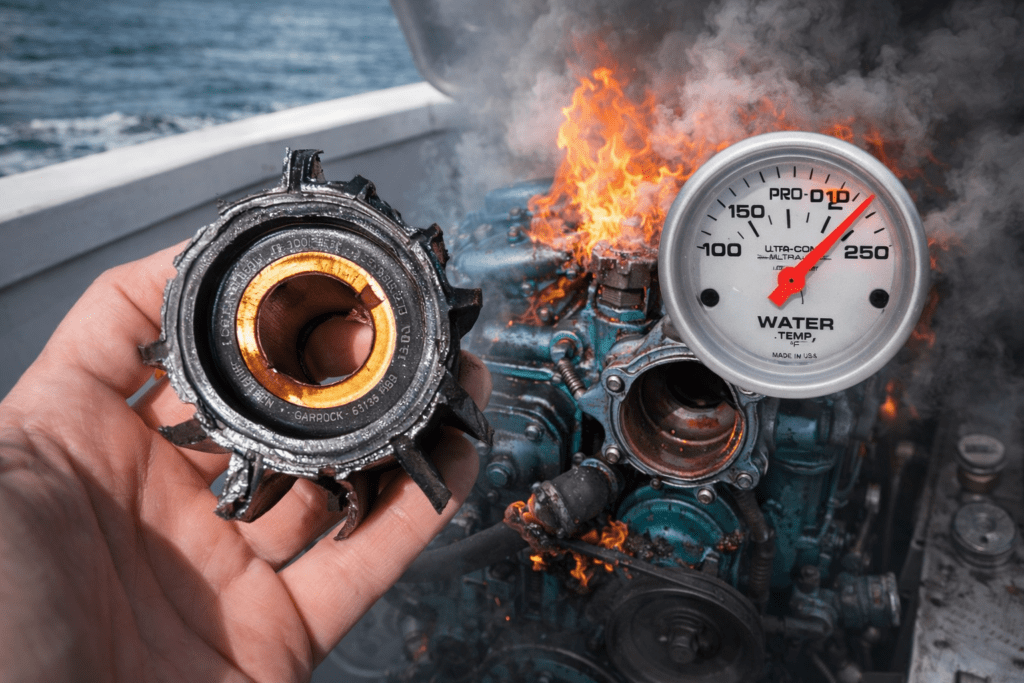
Common seawater-side restrictions include clogged strainers, weakened hoses, air leaks in suction lines, worn pump housings, and damaged impellers. Impeller damage is especially important because broken vane fragments do not disappear. They move downstream and often lodge in the heat exchanger, oil cooler, or aftercooler passages, creating a second restriction after the first failure has already happened.
Heat Exchanger Restrictions & Clogging
Heat exchanger cores clog slowly—until they suddenly don’t. Restriction causes creeping temperatures, reduced RPM, and rising exhaust temperatures under load because the system can no longer reject enough heat through the seawater side.
Salt buildup, zinc debris, biological growth, and internal corrosion all reduce effective flow area inside the exchanger. This creates one of the most common patterns in marine diesel cooling diagnosis: the engine looks acceptable at idle, then gradually runs hotter and hotter at cruise. These issues should also be compared with EGT-related diagnostics because rising exchanger restriction often shows up as rising exhaust temperature before the operator realizes the cooling margin is disappearing.
Turbo-Cooling Crossovers (Aftercooler / Intercooler)
Aftercoolers and intercoolers are cooling system components that directly affect power output, smoke, and turbocharger longevity. If intake air temperatures rise, air density drops, combustion quality worsens, and black smoke increases.
- Marine Diesel Aftercooler & Intercooler Problems (Symptoms + Cleaning Guide)
- Boost Pressure Testing on Marine Diesel Engines
This is one of the most important cooling crossovers on the entire engine. What looks like a turbo issue may actually be a cooling-side fouling problem inside the aftercooler. What looks like a fuel issue may actually be intake air temperature getting too high. This is why cooling restrictions frequently overlap with the Smoke & Combustion Diagnosis Center and Computerized Marine Engine Survey Diagnostics Center.
Performance Problems Caused by Cooling Restrictions
Cooling restrictions frequently show up as “low power” or “won’t reach RPM,” especially under sustained cruise loads, because high temperature reduces efficiency and forces the engine away from its ideal operating range.
- Marine Diesel Low Power / Loss of RPM Diagnosis
- Smoke Analysis (Blue vs Black vs White Smoke)
- Why Does My Boat Engine Lose Power Under Load
- Why Is My Boat Not Reaching Full RPM
When the cooling system is restricted, the engine often loses both thermal control and combustion efficiency at the same time. That means low power, smoke, high EGT, and overheating can all be part of the same root cause rather than separate failures.
Quick Diagnostic Path (Technician Order)
- Confirm the pattern: overheats at idle, cruise, or only under load.
- Check seawater flow first: strainer, hoses, impeller, pump, discharge.
- Inspect heat exchanger core: end caps, debris, zinc condition, flow.
- Verify aftercooler condition: restrictions raise intake temps and EGT.
- Confirm thermostat + coolant side: coolant level, cap, circulation pump, belt.
- Sea trial verification: monitor temps, RPM, boost, and smoke under load.
This order matters because it prevents misdiagnosis. Cooling problems are frequently blamed on thermostats, sensors, or even injectors before the seawater side has been properly inspected. A structured process reduces unnecessary parts replacement and gets to the real restriction faster.
Expansion: Why Cooling Problems Turn Into Major Engine Failures
Cooling system problems are one of the most dangerous failure paths in marine diesel engines because they often begin small and become destructive slowly enough that operators keep running the engine. A partially restricted heat exchanger, weak impeller, or suction leak may only raise temperatures slightly at first, but under sustained load the system margin disappears quickly.
Once temperature trends begin climbing, multiple systems start to suffer. Combustion efficiency falls, exhaust temperature rises, turbocharger stress increases, and coolant-side pressure may begin climbing. This is why small cooling restrictions can eventually trigger large repair decisions. When in doubt, cross-check symptoms with the Master Troubleshooting Guide and the Mechanical Failure Diagnostics page before continued operation.
Advanced Diagnostic Patterns (Real-World)
- Overheats at cruise only → heat exchanger restriction or raw water flow issue
- Overheats at idle → low seawater flow or air leak on suction side
- Temperature climbs slowly over time → partial blockage in heat exchanger or cooler stack
- Sudden overheating → impeller failure or major flow restriction
- High EGT + normal coolant temp → airflow or turbo-cooling issue
- Low power + high temp → cooling restriction affecting combustion efficiency
- Steam at exhaust → severe overheating or restricted seawater discharge
Cross-system diagnostics should include:
- Seawater Pump & Impeller Failure
- Heat Exchanger Clogging Symptoms
- Aftercooler Problems
- Low Power / Loss of RPM
- Overheating Under Load
Deep System Explanation: Cooling + Fuel + Air + Turbo
Cooling System → Combustion Efficiency
If engine temperature rises beyond optimal range, combustion efficiency drops. That means the engine may burn fuel less efficiently, produce more smoke, and make less usable power.
Cooling System → Turbocharger Life
High exhaust gas temperatures caused by cooling restriction increase thermal stress on the turbocharger. This accelerates bearing wear, increases seal stress, and shortens turbo lifespan.
Cooling System → Fuel System Performance
Overheating can alter injection behavior and worsen combustion quality, especially under heavy load. That is why cooling issues should also be compared with the Fuel System Diagnosis Center and Fuel Contamination & Filtration Issues Center.
Cooling System → Electrical / Data Confirmation
On electronically monitored engines, temperature patterns, load history, and warning events can often be confirmed through the Computerized Diagnostics Center. This is especially helpful when overheating is intermittent or load-dependent.
In real-world cases, cooling system problems are rarely isolated. They often overlap with Electrical & Starting System Diagnosis Center fault interpretation, sensor credibility issues, and engine protection logic if alarms or shutdown events are part of the complaint.
Common Cooling Misdiagnosis Patterns
- Thermostat replaced when the real issue is heat exchanger restriction
- Turbo blamed when intake air cooling is the real problem
- Fuel system blamed when overheating is reducing combustion efficiency
- Sensor blamed when real temperature rise is happening under load
These patterns are common because cooling issues create symptoms in other systems. That is why technician order matters: confirm flow first, then restriction points, then cross-system effects.
External Manufacturer Reference
For OEM reference on marine cooling, service intervals, and engine application support, review Cummins Marine and Caterpillar Marine. Manufacturer guidance is useful for confirming baseline specifications, but real-world diagnosis still requires system testing under load.
Local Cooling System Diagnostics (Ventura, Oxnard, Channel Islands Harbor & Santa Barbara)
805 Marine Diesel Mechanic provides mobile cooling system troubleshooting and repair across Ventura County and surrounding coastal harbors. We diagnose the root cause first—then recommend the most reliable fix, whether that means impellers, strainers, heat exchanger service, aftercooler cleaning, or a full system inspection.
FAQ – Marine Diesel Cooling System Diagnosis
1. What causes marine diesel engines to overheat?
2. Why does my engine overheat at cruise but not idle?
3. What is the most common cooling failure?
4. Can a clogged heat exchanger cause power loss?
5. What causes high exhaust temperature?
6. How do I know if my impeller is bad?
7. Can overheating damage the turbo?
8. Why does my temperature rise slowly?
9. Can air leaks affect cooling?
10. What is the role of the heat exchanger?
11. Can aftercoolers affect cooling performance?
12. What causes coolant overflow?
13. How often should cooling systems be serviced?
14. Can debris block cooling systems?
15. What happens if I keep running an overheating engine?
16. Can cooling problems cause smoke?
17. Why does my engine lose RPM when hot?
18. Is overheating always a coolant problem?
19. What systems are affected by cooling issues?
20. When should I call a professional?
Schedule Marine Diesel Diagnostic Service
Serving Ventura, Oxnard, Channel Islands Harbor, and Santa Barbara with over 30 years of marine diesel diagnostic experience.
46 Responses