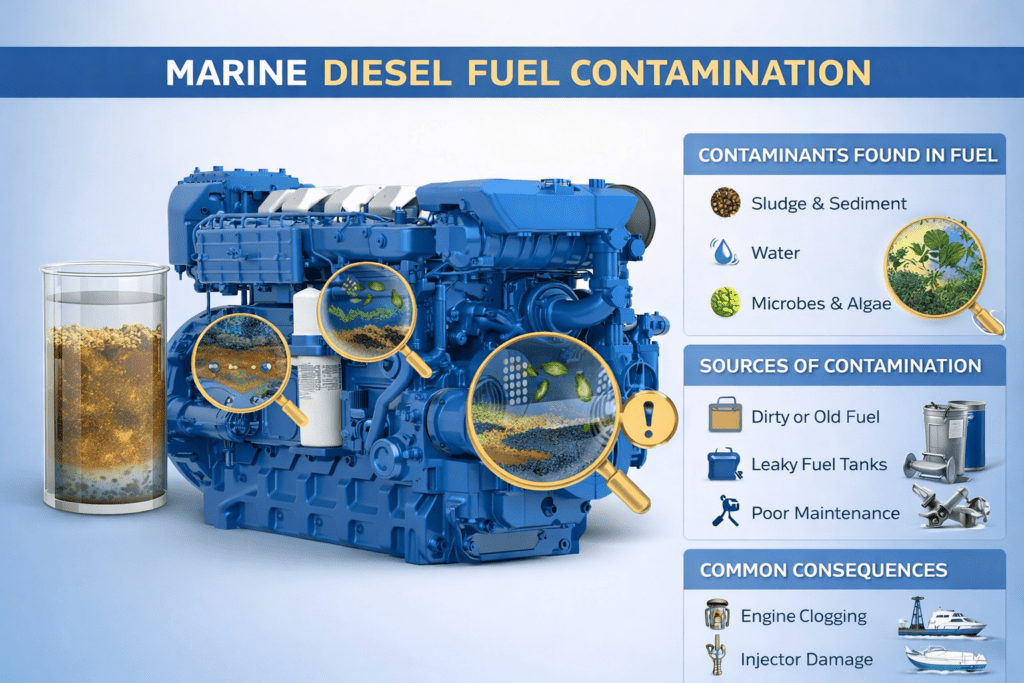
Marine diesel fuel contamination—often called diesel algae—is one of the most common root causes of low power, hard starting, surging, and repeated filter clogging. Before replacing injectors, pumps, or turbochargers, start with the Master Marine Diesel Troubleshooting Guide to confirm whether the issue is actually fuel-related.
At 805 Marine Diesel Mechanic, contamination is frequently misdiagnosed as turbocharger failure, injector problems, or low power mechanical issues. In reality, microbial growth inside the tank restricts fuel delivery and destabilizes the entire system.
Common Fuel Contamination Symptoms
Fuel contamination creates inconsistent fuel delivery, especially under load.
These symptoms overlap with smoke diagnosis and high exhaust temperature issues, which is why contamination is often missed early.
What Causes Diesel Fuel Contamination?
Contamination forms when water enters the fuel system and allows microbial growth to develop.
- Condensation buildup in tanks
- Water intrusion from vents or seals
- Low fuel turnover
- Contaminated fuel supply
This often leads to problems found in the Fuel Contamination Center and Fuel System Diagnosis Center.
How Technicians Diagnose Fuel Contamination
Diagnosis focuses on confirming restriction and identifying contamination sources.
Technicians measure vacuum using Racor gauges and compare results with boost pressure testing and fuel vs air restriction testing.
- Check Racor vacuum readings under load
- Inspect filters for sludge or debris
- Check fuel tank condition
- Confirm fuel delivery stability
Contamination is also commonly found alongside air in fuel system issues and priming problems.
Common Misdiagnosis
Fuel contamination often mimics other failures:
This leads to unnecessary repairs unless the fuel system is confirmed first.
Professional Repair Solutions
Fixing contamination requires system-level correction, not just filter replacement.
- Fuel polishing and tank cleaning
- Biocide treatment
- Fuel system flushing
- Dual Racor installation
These repairs often restore performance tied to RPM loss and power loss under load.
Preventing Future Contamination
- Maintain clean fuel storage
- Drain water separators regularly
- Keep tanks full during storage
- Use proper treatments
- Operate engines regularly
Preventive maintenance connects directly to engine diagnostics and load evaluation.
External Authority Resources
Cummins Marine Engines |
Caterpillar Marine Systems
Marine Diesel Fuel Contamination — FAQ
What is diesel fuel contamination?
Diesel fuel contamination occurs when water, microbial growth, or debris enters the fuel system. This contamination disrupts fuel delivery and combustion efficiency. Over time, it spreads through filters, pumps, and injectors.
What is diesel algae?
Diesel algae is microbial growth that forms at the interface between water and fuel. It creates sludge that clogs filters and fuel lines. This growth spreads rapidly if not treated properly.
What are the first signs of contamination?
Early signs include repeated filter clogging and minor power loss. These symptoms gradually worsen as contamination builds. Catching it early prevents major repairs.
Why does contamination cause power loss?
Contamination restricts fuel flow under load conditions. This prevents the engine from receiving adequate fuel. As a result, power output drops significantly.
Can contamination cause hard starting?
Yes, it interferes with proper fuel pressure during startup. This leads to extended cranking or failure to start. It is especially common after sitting.
Why do filters clog repeatedly?
Contamination in the tank continues feeding debris into the system. Even new filters clog quickly. This cycle continues until the tank is cleaned.
Can contamination damage injectors?
Yes, debris can wear injectors and affect spray patterns. This reduces combustion efficiency. Long-term exposure leads to costly repairs.
How does water enter fuel?
Water enters through condensation, leaks, or contaminated fuel. Marine environments accelerate this process. Once present, microbial growth begins.
What is fuel polishing?
Fuel polishing cleans fuel inside the tank using filtration systems. It removes water and debris. This restores fuel quality.
Do additives fix contamination?
Additives help control microbial growth but do not remove sludge. Cleaning and filtration are still required. They are best used for prevention.
Can contamination mimic turbo failure?
Yes, it can cause power loss and smoke similar to turbo issues. This leads to misdiagnosis. Fuel checks should come first.
Can contamination shut down the engine?
Severe restriction can completely block fuel flow. This causes engine shutdown under load. Immediate repair is required.
How do technicians confirm contamination?
Technicians inspect filters and measure fuel vacuum. They also check tank condition. These steps confirm contamination quickly.
Can contamination return?
Yes, if water remains or maintenance is poor. Proper prevention is required. Otherwise it will come back.
Is it common in stored boats?
Yes, storage increases condensation and microbial growth. Fuel sits longer and degrades. Regular use helps prevent this.
Does contamination affect fuel economy?
Yes, inefficient combustion increases fuel usage. The engine must work harder. Efficiency drops significantly.
Can it damage fuel pumps?
Yes, contamination causes wear and reduces lubrication. This leads to premature pump failure. Repairs can be costly.
What prevents contamination?
Regular maintenance and water removal are key. Keeping tanks full helps reduce condensation. Consistent inspection prevents buildup.
When should I call a technician?
If filters clog repeatedly or power drops, professional testing is needed. Technicians can quickly identify contamination. Early action prevents damage.
What is the fastest fix?
The fastest fix is tank cleaning and fuel polishing. This removes contamination and restores flow. Preventive steps must follow.

13 Responses