
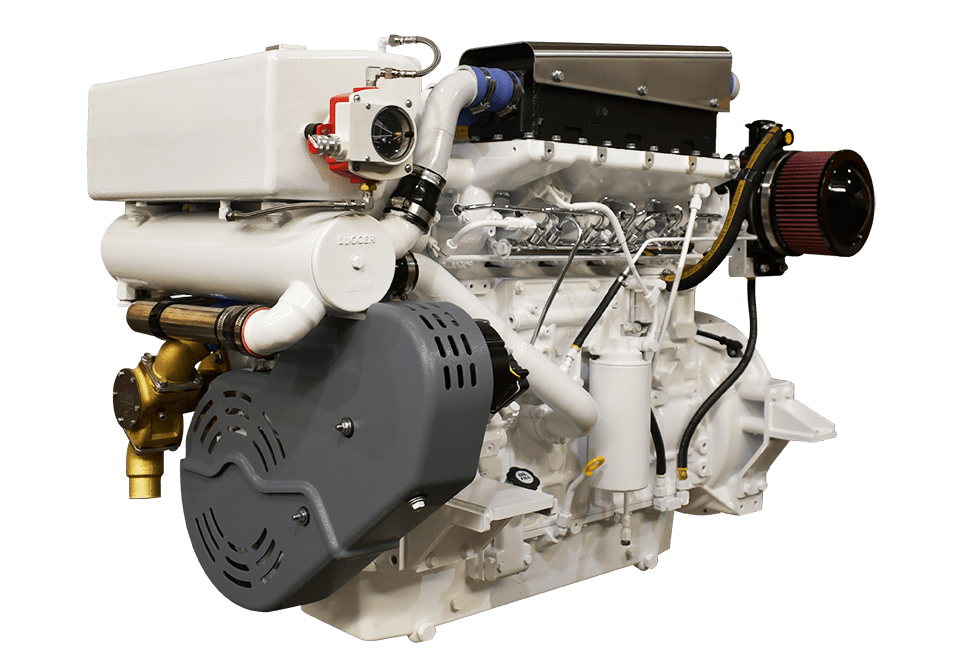
If you run a serious cruising, sportfishing, charter, or commercial boat out of Ventura Harbor, Channel Islands Harbor, Oxnard, or Santa Barbara, your propulsion engine is more than equipment — it is your ticket home. Before choosing between a Lugger repower, a major rebuild, or another propulsion platform, start with the Master Marine Diesel Troubleshooting Guide to determine whether your current issues are engine wear, fuel restriction, cooling weakness, exhaust limitation, or load mismatch.
The Lugger L4105 and L6105 marine propulsion engines are built for owners who value long service life, torque, rebuildability, and practical support. At 805 Marine Diesel Mechanic, we evaluate Lugger installations through the same system-based process used for repower vs rebuild decisions, engine beyond rebuild evaluations, and computerized marine engine survey diagnostics.
Lugger L4105 & L6105: Modern Power With Classic Lugger Durability
Lugger engines have a long-standing reputation in commercial and serious cruising applications because they are built to work, not just impress on paper. The newer L4105 and L6105 propulsion platforms keep that commercial-grade DNA while adding cleaner combustion, modern monitoring, and improved efficiency.
- L4105: Four-cylinder, four-stroke, inline, liquid-cooled marine diesel with a horsepower range suited to mid-size cruisers, trawlers, and smaller commercial boats.
- L6105: Six-cylinder, four-stroke, inline, liquid-cooled marine diesel for larger sportfishers, workboats, and fast cruising hulls needing more torque and top-end output.
Both engines retain features that make Lugger attractive for long-term ownership: heavy-duty blocks, forged crankshafts, individual cylinder heads, and replaceable wet liners. These design choices support serviceability and rebuild planning when compared with many lighter-duty engines.
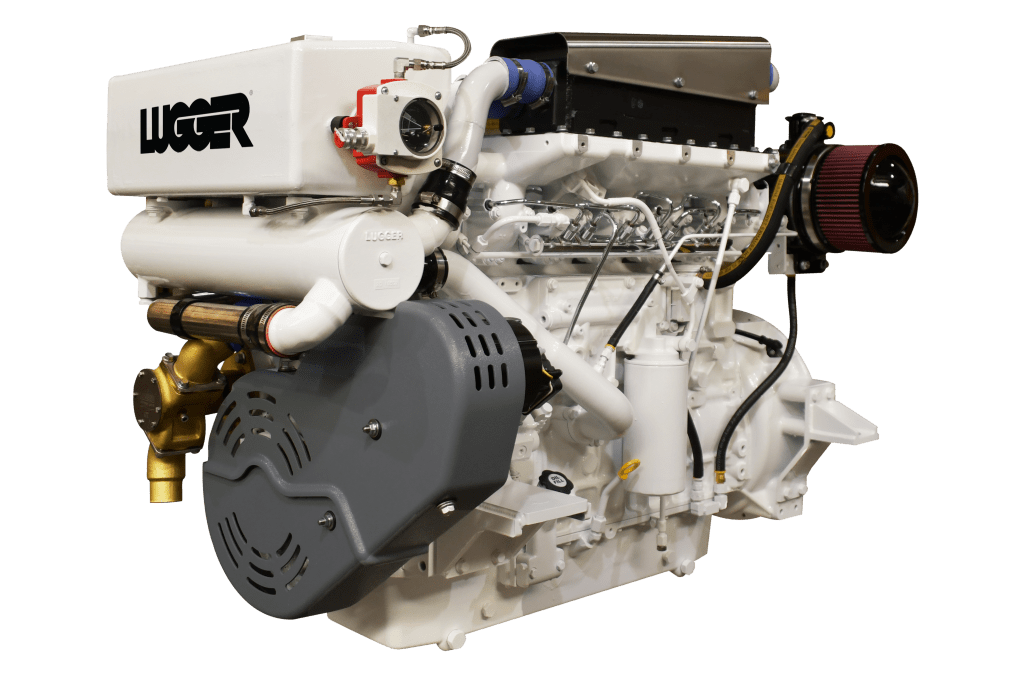
Lugger L6105 marine propulsion engine for high-torque coastal and commercial diesel applications.
Why Lugger Propulsion Makes Sense for Channel Islands Waters
Local operating conditions matter. Boats crossing from Ventura to Anacapa, running offshore from Santa Barbara, or working around Santa Cruz Island need torque, cooling stability, clean fuel delivery, and dependable service access.
A properly matched Lugger can help prevent conditions often seen in low power and loss of RPM diagnosis, marine diesel won’t reach full RPM, and boost pressure testing when the engine is selected and installed correctly.
- Strong torque for heavy seas and loaded boats
- Durable construction for commercial-style operating cycles
- Efficient combustion for longer island runs
- Service-friendly layout for real-world maintenance
- Modern electronics without sacrificing practical reliability
High Torque for Heavy Seas and Strong Currents
One of Lugger’s biggest advantages is torque. Heavy coastal boats need engines that can push through chop without constantly operating at the ragged edge of the power curve.
For sportfishing vessels, dive boats, research boats, trawlers, and charter platforms, torque is what allows the vessel to maintain speed against load. If the vessel is already experiencing loss of power under load, high exhaust temperature, or smoke after startup, those problems should be diagnosed before assuming a larger engine is needed.
Clean Fuel Delivery Is Critical for Modern Lugger Performance
Modern Lugger engines depend on clean, water-free fuel. Fuel system health should always be reviewed before installing or upgrading a propulsion engine.
This is where the required orphan link for this post fits naturally: owners comparing Lugger propulsion should also review Racor fuel filters because primary filtration is one of the first defenses against water, debris, and microbial growth. For larger vessels, fuel planning may also include choosing your yacht fuel filtration, fuel system diagnosis, and marine diesel fuel contamination checks.
- High-quality primary filtration protects pumps and injectors
- Water separation prevents corrosion and microbial growth
- Vacuum gauges help detect restriction before shutdown
- Fuel polishing may help boats that sit between trips
- Clean return routing improves system reliability
Fuel symptoms should be compared with diesel algae contamination, fuel restriction vs air restriction diagnosis, and Racor filter troubleshooting before replacing major components.
Cooling System Planning for Lugger Repowers
Lugger engines are robust, but cooling systems still require careful planning. A strong engine will not survive long if raw water flow, heat exchangers, aftercoolers, or exhaust injection systems are ignored.
During Lugger evaluation, technicians should inspect the same systems covered in the Cooling System Diagnosis Center, including heat exchanger clogging symptoms, raw water flow problems, and fresh water flushing system options.
- Heat exchanger sizing must match duty cycle
- Raw water pumps must maintain volume under load
- Exhaust mixing components must avoid backpressure
- Aftercoolers must be clean and serviceable
- Zincs and corrosion protection should be maintained
If a boat has a history of exhaust backpressure problems, seawater pump failure, or overheating at idle vs cruise, cooling and exhaust layout should be corrected during repower planning.
Electronics, Monitoring, and Practical Simplicity
The new Lugger propulsion engines offer modern electronic monitoring while keeping the practical service mindset that Lugger owners value. This gives operators better visibility into load, alarms, fuel burn, temperatures, and maintenance trends.
Electronic monitoring does not replace technician inspection. A proper installation still requires checking wiring, grounds, engine data, sensors, alarms, and integration with helm controls. Owners upgrading controls may also compare systems such as Glendinning electronic propulsion controls when planning a full helm or repower upgrade.
Where Lugger L4105 and L6105 Fit Best
The L4105 and L6105 are not one-size-fits-all engines. They shine when matched to the correct hull, load, gear ratio, and operating mission.
- Sportfishing boats: Strong midrange torque for loaded offshore runs
- Commercial vessels: Long service life and practical maintenance access
- Trawlers and passagemakers: Efficient long-range power
- Dive and research vessels: Dependable slow-speed and cruise operation
- Charter boats: Reliable duty-cycle performance and lower downtime risk
Before choosing between Lugger, Perkins marine diesel service, Yanmar marine diesel service, or another platform, compare the boat’s real operating needs with proven project examples like the Twin Cummins 6BTA restoration project, Detroit Diesel 671 restoration project, and Yanmar diesel refresh with transmission rebuild.
Repower Planning: More Than Engine Selection
A successful Lugger repower requires the engine, transmission, shaft, mounts, exhaust, cooling, fuel, and electrical systems to work together.
- Engine bed condition and mount geometry
- Shaft alignment and coupling condition
- Transmission ratio and propeller sizing
- Exhaust routing and backpressure control
- Fuel filtration and manifold layout
- Sea trial verification under load
If a current engine shows smoke, power loss, overheating, or vibration, those symptoms should be evaluated before final engine selection. Useful related diagnostic pages include marine diesel smoke diagnosis, black smoke under load, blue smoke causes, and aftercooler and intercooler problems.
Local Lugger Service in Ventura, Oxnard, Channel Islands Harbor, and Santa Barbara
805 Marine Diesel Mechanic supports Lugger owners with inspections, service planning, cooling system review, fuel system evaluation, diagnostics, and repower consulting. For commercial operators, reliability matters more than speculation, so every recommendation should be based on fuel flow, cooling capacity, load condition, and service access.
When performance problems appear, we compare engine behavior with no start after fuel filter change, how to prime a marine diesel fuel system, engine turns over but no smoke, and marine diesel cranks but won’t start when starting reliability is part of the concern.
External Authority Resources
Northern Lights / Lugger Marine Power |
EPA Marine Compression-Ignition Engine Standards
Lugger L4105 & L6105 Marine Diesel — FAQ
1. Are Lugger L4105 and L6105 engines good for Channel Islands runs?
2. What is the difference between the Lugger L4105 and L6105?
3. Are Lugger engines good for commercial boats?
4. Do Lugger engines require clean fuel?
5. Why mention Racor fuel filters with Lugger engines?
6. Can a Lugger repower improve fuel economy?
7. Are Lugger engines easy to service?
8. What boats are best suited for the L4105?
9. What boats are best suited for the L6105?
10. Should I rebuild my old engine or repower with Lugger?
11. Why is cooling system planning important?
12. Can poor fuel filtration cause low power?
13. Do Lugger engines work well with Northern Lights generators?
14. Are Lugger engines good for trawlers?
15. Can Lugger engines reduce smoke?
16. What should be checked before installing a Lugger?
17. Can a Lugger be used for charter boats?
18. How often should Lugger engines be serviced locally?
19. When should I call a technician about a Lugger repower?
20. What is the best way to choose between L4105 and L6105?
805 Marine Diesel Mechanic provides Lugger L4105 and L6105 consultation, repower planning, fuel filtration inspection, cooling system review, and mobile marine diesel diagnostics throughout Ventura, Oxnard, Channel Islands Harbor, and Santa Barbara.
One Response