
Detroit Diesel Marine Engine Surveys | Pre-Purchase Inspections & Engine Evaluations
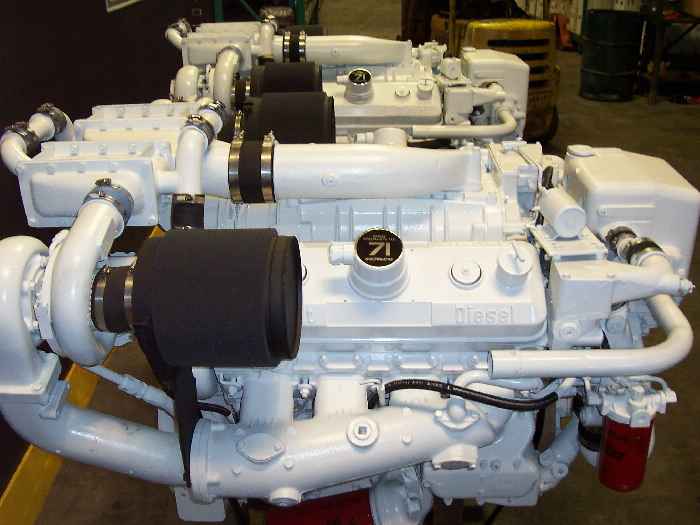
Detroit Diesel engines remain some of the most recognizable marine diesel engines ever installed in yachts, sportfishing vessels, trawlers, commercial boats, and workboats. From the legendary 71 Series to the powerful 92 Series and later electronic engines, Detroit Diesel built a reputation for durability, simplicity, and serviceability that continues to attract buyers today. A Detroit Diesel marine engine survey helps determine actual engine condition before purchasing a vessel and can identify costly problems before ownership changes hands. Detroit Diesel’s marine legacy includes the famous 71 Series introduced in 1938 and the higher-output 92 Series introduced in 1974.
Schedule a Detroit Diesel Engine Survey
Why Detroit Diesel Engines Require Specialized Surveys
Many Detroit Diesel-powered vessels are now decades old. While these engines are known for longevity, age-related maintenance issues, cooling-system deterioration, injector wear, turbocharger problems, fuel contamination, and deferred maintenance can significantly affect reliability and value.
Marine surveys help buyers understand:
- Actual engine condition
- Cooling-system health
- Fuel-system condition
- Oil-analysis results
- Sea-trial performance
- Remaining service life
- Future maintenance costs
Detroit Diesel Engine Families Commonly Surveyed
The Detroit Diesel marine market is dominated by several well-known engine families.
Detroit Diesel 71 Series
The legendary 71 Series was introduced in 1938 and became one of the most successful marine diesel platforms ever produced. These two-stroke engines powered everything from commercial fishing vessels to military landing craft and cruising yachts. The 6-71 and 8V71 remain common in older Hatteras, Bertram, Chris-Craft, and commercial vessels.
- Detroit Diesel 6-71 Marine Engine Survey
- Detroit Diesel 8V71 Marine Engine Survey
- Detroit Diesel 12V71 Marine Engine Survey
Detroit Diesel 92 Series
The 92 Series was introduced in 1974 as a larger-displacement evolution of the 71 Series. Popular marine configurations include the 6V92 and 8V92, frequently found in sportfishing boats, motor yachts, and larger cruising vessels.
- Detroit Diesel 6V92 Marine Engine Survey
- Detroit Diesel 8V92 Marine Engine Survey
- Detroit Diesel 12V92 Marine Engine Survey
Detroit Diesel Series 60
The electronically controlled Series 60 represented Detroit Diesel’s move toward modern four-stroke diesel technology and remains common in larger yachts and commercial vessels.
- Detroit Diesel Series 60 Marine Engine Survey
What Is Included In A Detroit Diesel Marine Survey?
- Visual engine inspection
- Cooling-system evaluation
- Fuel-system evaluation
- Turbocharger inspection
- Oil analysis
- Cooling-system pressure testing
- Sea-trial evaluation
- Maintenance-record review
- Buyer-risk assessment
Cooling-System Inspection
Cooling-system failures remain one of the most expensive causes of marine diesel engine damage. Heat exchangers, raw-water pumps, thermostats, coolant condition, hoses, and cooling passages are carefully evaluated during the survey process.
Related Resource:
Fuel-System Evaluation
Fuel contamination is one of the most common causes of marine diesel operating problems. Survey inspections focus on filtration systems, fuel quality, injector performance, and fuel-delivery integrity.
Turbocharger & Air-System Evaluation
Turbocharger performance directly affects horsepower, smoke output, fuel economy, and overall engine performance. Air-system inspections help identify restrictions and boost-related concerns.
Smoke & Combustion Analysis
Smoke observations provide valuable clues regarding combustion quality, injector performance, turbocharger operation, and engine condition.
Starting & Electrical-System Evaluation
Cold-start performance often reveals important information regarding batteries, starters, wiring, fuel delivery, and engine health.
Sea Trial Evaluation
Sea trials remain one of the most important portions of any marine engine survey. Engines are evaluated under actual vessel load while monitoring temperatures, RPM, smoke output, vibration, acceleration, and overall operating condition.
Oil Analysis & Pressure Testing
Every Detroit Diesel marine engine survey includes oil analysis and cooling-system pressure testing. Together, these procedures help identify hidden internal concerns and cooling-system deficiencies before purchase.
Common Detroit Diesel Survey Findings
- Cooling-system neglect
- Fuel contamination
- Injector wear
- Turbocharger deterioration
- Low power complaints
- Smoke abnormalities
- Oil-analysis concerns
- Exhaust-system deterioration
- Deferred maintenance
Related Resources:
- Detroit Diesel Low Power & Loss of RPM
- Detroit Diesel Allison Marine Transmission
- Detroit Diesel 8V53T Exhaust Restoration Project
- Detroit Diesel Marine Engines FAQ
Detroit Diesel Survey Silo
- Common Detroit Diesel Marine Engine Survey Findings
- Detroit Diesel Marine Engine Survey Checklist
- Detroit Diesel Marine Engine Survey Sea Trial Guide
- Detroit Diesel Marine Engine Survey vs Oil Analysis
- Detroit Diesel 6-71 Marine Engine Survey
- Detroit Diesel 8V71 Marine Engine Survey
- Detroit Diesel 6V92 Marine Engine Survey
- Detroit Diesel 8V92 Marine Engine Survey
- Detroit Diesel Series 60 Marine Engine Survey
Service Areas
805 Marine Diesel Mechanic performs Detroit Diesel marine engine surveys throughout Ventura Harbor, Channel Islands Harbor, Oxnard, Santa Barbara Harbor, Marina del Rey, Malibu, and Port Hueneme.
Authority Resources
For manufacturer history and technical background visit the Detroit Diesel historical resources and the American Boat & Yacht Council standards library. Detroit Diesel’s 71 Series became one of the most successful marine diesel platforms in history, while the 92 Series expanded power output for larger yachts and sportfishing vessels.
Detroit Diesel Marine Engine Surveys FAQ
Why should I perform a Detroit Diesel marine engine survey before buying a boat?
A Detroit Diesel survey helps identify cooling-system issues, fuel-system problems, injector wear, turbocharger concerns, oil-analysis abnormalities, and deferred maintenance before ownership changes hands.
What is included in a Detroit Diesel marine engine survey?
A complete survey includes visual inspection, maintenance-record review, cooling-system evaluation, fuel-system inspection, oil analysis, cooling-system pressure testing, sea-trial evaluation, and buyer-risk assessment.
Is oil analysis included with every survey?
Yes. Oil analysis is included with every Detroit Diesel marine engine survey and helps identify internal engine wear, coolant contamination, fuel dilution, and lubricant-condition concerns.
Is cooling-system pressure testing included?
Yes. Cooling-system pressure testing is included and helps identify hidden leaks, weak hoses, deteriorated clamps, and cooling-system integrity issues.
What Detroit Diesel engines are commonly surveyed?
Common survey engines include the 6-71, 8V71, 12V71, 6V92, 8V92, 12V92, and Series 60 marine diesel platforms.
Why are cooling systems important on Detroit Diesel engines?
Cooling-system problems remain one of the leading causes of marine diesel failures. Heat exchangers, thermostats, raw-water pumps, and coolant condition all directly affect engine longevity.
What fuel-system problems are commonly found?
Fuel contamination, restricted filters, injector wear, air leaks, water intrusion, and fuel-delivery deficiencies are among the most common findings.
Why are turbochargers inspected?
Turbochargers directly affect horsepower, acceleration, smoke output, fuel efficiency, and overall engine performance.
What causes black smoke on Detroit Diesel engines?
Black smoke may indicate restricted airflow, turbocharger deficiencies, injector problems, fuel-system concerns, or excessive engine load.
What causes white smoke on Detroit Diesel engines?
White smoke may indicate injector concerns, combustion inefficiencies, fuel-delivery issues, or cold operating conditions.
What causes blue smoke on Detroit Diesel engines?
Blue smoke may indicate oil consumption, turbocharger oil leakage, or internal engine wear.
What is evaluated during a sea trial?
Sea trials evaluate temperatures, oil pressure, RPM, smoke output, acceleration, turbocharger response, vibration, and overall engine performance under load.
Why is rated RPM important?
Failure to achieve rated RPM may indicate fuel restriction, turbocharger issues, hull fouling, propeller overload, injector problems, or reduced engine output.
Can a survey identify overheating concerns?
Yes. Cooling-system inspection, pressure testing, and sea-trial observations frequently reveal overheating risks before purchase.
Can a survey identify injector issues?
Yes. Fuel-system inspection, smoke observations, oil analysis, and operating performance can reveal injector-related concerns.
Are Detroit Diesel two-stroke engines still good engines?
Yes. Properly maintained Detroit Diesel two-stroke engines remain reliable powerplants and continue operating successfully in many yachts, commercial vessels, and sportfishing boats.
What are the most common Detroit Diesel survey findings?
Cooling-system neglect, fuel contamination, injector wear, turbocharger deterioration, low power complaints, smoke abnormalities, and deferred maintenance are among the most common findings.
Do you survey Detroit Diesel engines in Marina del Rey?
Yes. Marina del Rey is one of our active Detroit Diesel marine engine survey service areas.
Do you survey Detroit Diesel engines in Ventura Harbor and Channel Islands Harbor?
Yes. Ventura Harbor, Channel Islands Harbor, Oxnard, Santa Barbara Harbor, Marina del Rey, Malibu, and Port Hueneme are included when scheduling allows.
How do I schedule a Detroit Diesel marine engine survey?
Call 805-774-0637 or use the contact page to discuss vessel location, engine model, survey timing, and sea-trial availability.