
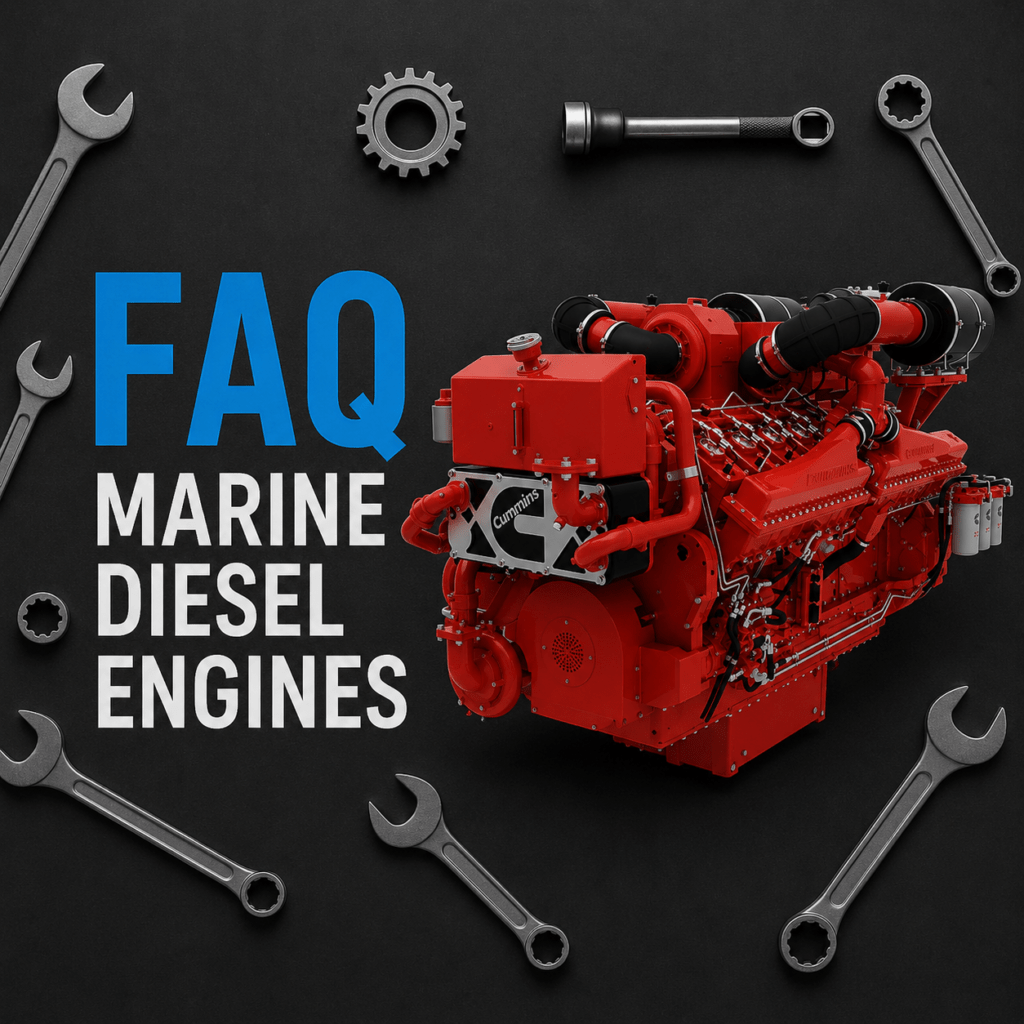
Marine diesel engines are extremely reliable when properly maintained, but most major failures begin as small overlooked problems. Before replacing expensive components, many owners use the Master Marine Diesel Troubleshooting Guide to determine whether the issue involves fuel delivery, cooling restriction, turbocharger performance, electrical faults, exhaust restriction, or drivetrain load.
805 Marine Diesel Mechanic provides mobile inboard diesel diagnostics, troubleshooting, maintenance, cooling-system service, fuel-system diagnostics, and marine engine surveys throughout Ventura, Oxnard, Santa Barbara, and Channel Islands Harbor. The focus is identifying the real root cause instead of guessing at parts.
Most marine diesel engines should receive annual service or maintenance every 100–200 hours depending on operating conditions, manufacturer recommendations, and fuel quality.
Routine service commonly includes:
marine diesel maintenance scheduling,
oil and filter service,
coolant inspection,
impeller inspection,
zinc replacement,
belt checks,
and transmission fluid service.
Boats operating in saltwater environments often require additional cooling-system inspection because scale, corrosion, and marine growth can reduce heat transfer efficiency over time.
Fuel contamination is one of the most common causes of marine diesel power loss and offshore shutdowns. Water intrusion, sludge, algae growth, and dirty tanks can clog filters and reduce fuel delivery under load.
Common fuel-system diagnostics include:
fuel-system diagnostics,
fuel contamination diagnosis,
diesel algae contamination,
Racor troubleshooting,
fuel-system priming,
Many low-power complaints blamed on injectors or turbochargers are actually caused by restricted fuel delivery.
Smoke color is one of the fastest ways to narrow down a marine diesel problem.
Blue smoke usually indicates oil entering the combustion chamber through worn rings, valve seals, crankcase ventilation problems, or turbocharger seal failure.
Related pages include:
blue smoke diagnosis,
turbocharger failure symptoms,
and signs an engine may be beyond rebuild.
Black smoke commonly indicates excess fuel or insufficient airflow.
Common causes include:
fuel restriction vs air restriction,
dirty air filters,
boost leaks,
turbocharger lag,
aftercooler restriction,
or propeller overload.
Related diagnostics include:
black smoke under load,
turbo lag diagnosis,
and boost-pressure testing.
White smoke may indicate poor combustion, injector problems, coolant intrusion, or cold-start combustion issues.
Useful related resources:
white smoke diagnosis,
smoke after startup,
hard-starting diagnosis,
and no smoke during cranking.
Overheating is commonly caused by reduced raw-water flow, restricted heat exchangers, impeller damage, or cooling-system scale buildup.
Cooling-system diagnostics often include:
cooling-system diagnostics,
raw-water flow diagnosis,
impeller diagnosis,
heat-exchanger restriction diagnosis,
aftercooler servicing,
and fresh-water flushing systems.
Many vessels only overheat under heavy offshore load because cooling demand increases dramatically at cruise RPM.
Marine diesel engines require proper fuel delivery, cranking speed, electrical support, and combustion temperature to start reliably.
Hard-starting diagnostics may include:
cranks but won’t start,
no-start after filter service,
starts then dies,
electrical-system diagnostics,
and fuel-system losing prime.
Turbochargers are critical to marine diesel efficiency and power output. Turbo lag, boost leaks, exhaust restriction, and aftercooler problems can reduce RPM and increase smoke.
Common diagnostics include:
turbo-system diagnostics,
high exhaust temperature diagnosis,
exhaust backpressure testing,
turbocharger failure diagnosis,
and slow spool-up diagnosis.
Marine propulsion systems require regular inspection and maintenance to avoid vibration, slipping, or engagement problems.
Related drivetrain diagnostics include:
shift-clunk diagnosis,
vibration under load,
and propeller overload diagnosis.
Marine engine surveys provide buyers and owners with professional evaluation of cooling-system performance, smoke behavior, fuel-system condition, vibration, operating temperature, and sea-trial operation under load.
Useful related services include:
marine engine surveys,
computerized diagnostics,
repower vs rebuild planning,
and top marine diesel engine platforms.
805 Marine Diesel Mechanic provides mobile marine diesel troubleshooting, diagnostics, surveys, cooling-system service, fuel-system diagnostics, turbocharger troubleshooting, and inboard diesel maintenance throughout Ventura Harbor, Oxnard Harbor, Channel Islands Harbor, Santa Barbara Harbor, and surrounding Southern California coastal areas.
The diagnostic approach remains consistent:
identify the symptom,
test the connected systems,
verify the root cause,
and repair the actual problem instead of replacing random parts.
Caterpillar Marine Engines |
Cummins Marine Engines