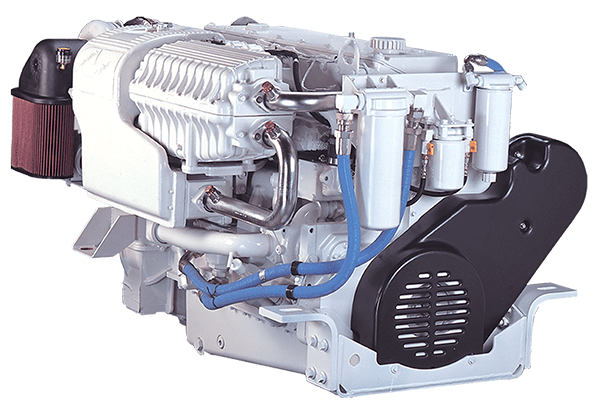
1. Air Intrusion in the Fuel System
Air intrusion is one of the most common reasons a marine diesel cranks but won’t start. Even small amounts of air prevent the injection system from building the pressure needed to atomize fuel.
- Loose Racor filter seals
- Cracked suction hoses
- Fuel pickup tube leaks
- Improper filter installation
This condition is closely related to fuel system losing prime and fuel air leak issues. Air must be completely removed through proper priming before the engine will fire.
2. Fuel Delivery Failure
If fuel is not reaching the injection system, the engine will crank indefinitely with no combustion.
- Fuel line blockage
- Clogged primary or secondary filters
- Collapsed hoses
- Fuel tank contamination
This often overlaps with fuel contamination problems and Racor restriction issues.
3. Shutdown Solenoid or Safety Interlock Failure
Many marine diesel engines use a shutdown solenoid or electronic control system to allow fuel into the injection pump.
- Corroded wiring connections
- Failed solenoid
- Emergency stop circuit engaged
If the solenoid does not open, fuel is completely blocked, resulting in a no-start condition that can mimic fuel starvation.
This condition overlaps with electrical no-start issues.
4. Injector or Injection Pump Problems
If fuel reaches the injection system but is not delivered properly, combustion will not occur.
- Stuck injectors after sitting
- Injection pump wear
- Fuel rack sticking (mechanical engines)
This is more common on engines that have been inactive for long periods, similar to no-start after sitting conditions.
5. Low Cranking RPM or Weak Batteries
Diesel engines rely on compression heat for ignition. If cranking speed is too slow, the engine cannot generate enough heat to ignite fuel.
- Weak batteries
- Poor cable connections
- Starter motor inefficiency
This often overlaps with hard starting when cold and slow cranking issues.
6. Fuel Shutoff or Valve Misconfiguration
Simple mechanical oversights can completely stop fuel flow.
- Closed fuel shutoff valves
- Incorrect tank selection
- Fuel manifold misalignment
This is one of the most overlooked causes and should always be checked early in the diagnostic process.
7. Compression Loss or Internal Mechanical Issues
Although less common, low compression can prevent ignition.
- Stuck piston rings
- Valve sealing issues
- Cylinder wear
This may require deeper inspection and overlaps with engine beyond rebuild symptoms.
Advanced Diagnosis — Fuel vs Air vs Electrical
Professional diagnosis separates systems quickly:
- No smoke → fuel delivery issue
- White smoke → fuel present but not burning
- Intermittent start → air intrusion or control issue
This structured approach prevents unnecessary replacement of injectors, pumps, or electronics.
Technician Diagnostic Workflow
- Verify cranking RPM and battery condition
- Check fuel supply from tank
- Inspect filters and lines
- Prime system completely
- Test shutdown solenoid operation
- Measure injection pressure
- Evaluate compression if needed
This process integrates fuel pressure testing and system diagnostics for accurate results.
External Authority Resources
Cummins Marine Engines |
Caterpillar Marine Systems
Marine Diesel Cranks But Won’t Start — FAQ
1. Why does my engine crank but not start?
This means combustion is not occurring. The most common causes are fuel delivery failure, air intrusion, or shutdown system issues. Diagnosis should focus on fuel and control systems first.
2. Can air in fuel lines stop the engine from starting?
Yes, air prevents injection pressure from building. Without pressure, injectors cannot deliver fuel. Even small air leaks can stop the engine completely.
3. What does no smoke while cranking mean?
No smoke indicates fuel is not reaching the cylinders. This is a clear fuel delivery issue. Diagnosis should start at the fuel system.
4. Can fuel filters cause no-start?
Yes, clogged or improperly installed filters restrict fuel flow. This prevents fuel from reaching the injectors. Always verify filter condition.
5. Can a bad lift pump cause this?
Yes, the lift pump supplies fuel to the injection system. If it fails, fuel delivery stops. This results in a no-start condition.
6. Can injectors cause a no-start?
They can, but it is less common than fuel supply issues. Injectors usually fail gradually. Always check fuel delivery first.
7. Can weak batteries cause no-start?
Yes, slow cranking reduces compression heat. Diesel engines require sufficient speed to ignite fuel. Battery condition is critical.
8. Can shutdown solenoid failure stop starting?
Yes, if the solenoid stays closed, fuel cannot enter the system. This completely prevents combustion. Electrical testing is required.
9. Should I keep cranking the engine?
No, excessive cranking can damage the starter and drain batteries. Diagnosis is more effective than repeated attempts. Stop and inspect the system.
10. Can fuel contamination cause no-start?
Yes, contaminated fuel can clog filters and lines. This blocks fuel flow. Tank cleaning may be required.
11. Can valves being closed cause this issue?
Yes, closed fuel valves prevent flow entirely. This is a common oversight. Always verify valve positions.
12. Can the engine start and then stop?
Yes, partial fuel delivery may allow temporary combustion. Air or restriction then stops the engine. This indicates unstable fuel supply.
13. Can electrical problems prevent starting?
Yes, modern engines rely on sensors and ECU control. Faults can block injection. Diagnostics are required.
14. Can compression loss cause no-start?
Yes, but it is less common. Most no-start conditions are fuel-related. Compression testing confirms this.
15. Can priming fix the problem?
If air intrusion is the cause, yes. Proper priming restores fuel flow. Follow correct procedures carefully.
16. What is the fastest way to diagnose?
Check for fuel at the injection system. If absent, trace back through the fuel path. This identifies the restriction quickly.
17. Can fuel pressure testing help?
Yes, it confirms whether fuel is reaching the injection system. Low pressure indicates restriction or pump failure. Testing is essential.
18. Can repeated no-start issues indicate air leaks?
Yes, small suction leaks allow air into the system. This creates recurring problems. The leak must be fixed.
19. When should I call a technician?
If the engine does not start after basic checks. Especially if the issue repeats. Professional diagnosis is recommended.
20. What is the best diagnostic method?
Follow the fuel system step-by-step. Confirm flow, pressure, and control operation. This ensures accurate diagnosis.

13 Responses