
Marine Diesel Turbocharger Failure Symptoms (Accurate Diagnosis Guide)
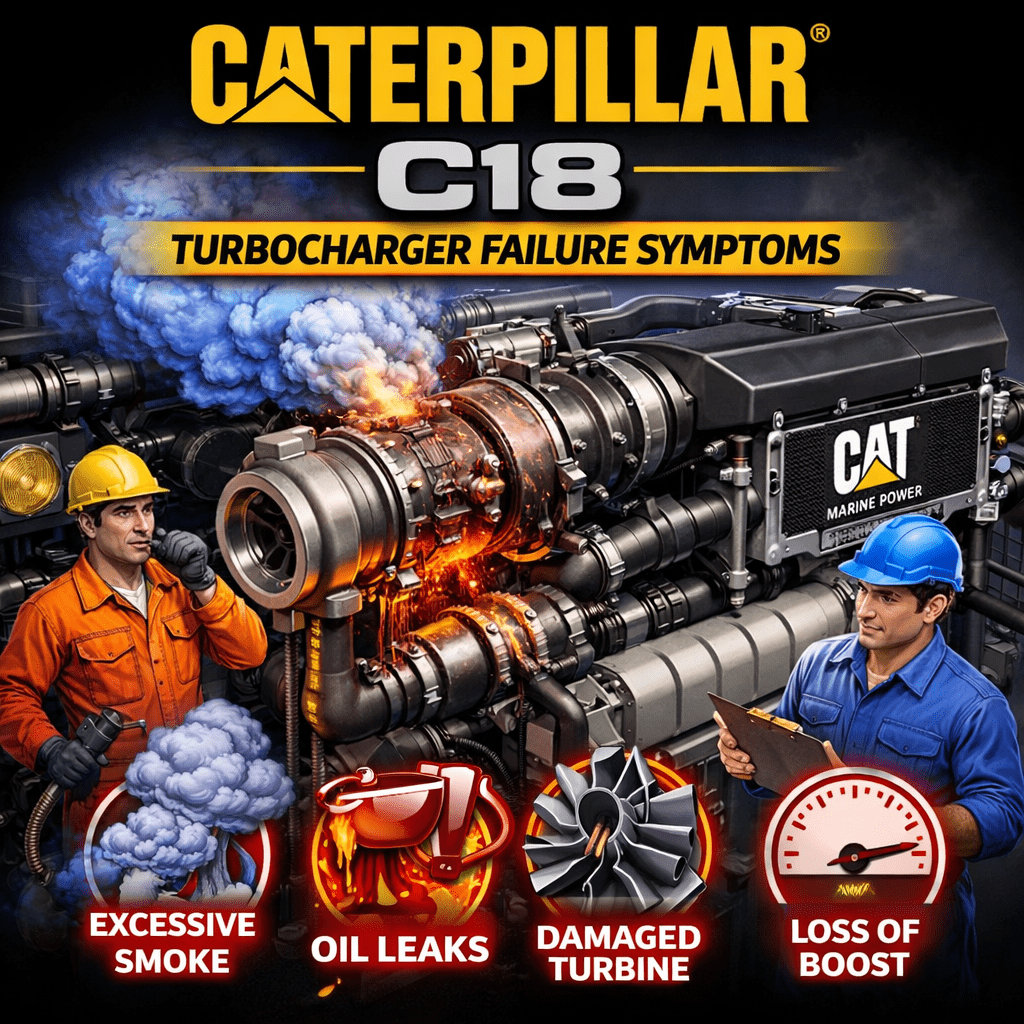
Turbocharger problems are one of the most misdiagnosed causes of marine diesel performance issues. Engines that lose power, produce smoke, or fail to reach full RPM are often blamed on fuel systems or engine wear, when the real issue is loss of boost, airflow restriction, or turbocharger failure.
At 805 Marine Diesel Mechanic, turbocharger diagnostics are performed across Ventura, Oxnard, Channel Islands Harbor, and Santa Barbara using real-world testing and system-based troubleshooting. Proper diagnosis identifies whether the turbo itself has failed or if supporting systems are limiting performance.
Start with the Master Marine Diesel Troubleshooting Guide →
Why Turbocharger Failures Are Misdiagnosed
Turbo issues often present with symptoms similar to fuel restriction, injector imbalance, or engine overload. Because diesel engines depend on both fuel and air, any imbalance can create overlapping symptoms.
This is why turbo diagnostics must always be compared with the
Fuel System Diagnosis Center,
Smoke & Combustion Diagnosis Center, and
Low Power Diagnostics Center.
Primary Turbocharger Failure Symptoms
Turbocharger failure rarely appears as a single symptom. Instead, it shows as a pattern of performance changes that affect power, smoke, and engine behavior under load.
Loss of Power or Reduced RPM
Engines may struggle to reach rated RPM or fail to get onto plane. This is often linked to
RPM limitations and
power loss under load.
Black Smoke Under Load
Excess fuel with insufficient air leads to incomplete combustion. This symptom overlaps with
black smoke diagnosis.
Blue or White Smoke Changes
Oil entering the turbo or combustion chamber can cause smoke changes, often related to seal or bearing issues.
Whining or Grinding Noise
Unusual turbo noise indicates bearing wear, compressor damage, or foreign object ingestion.
Visual Inspection Checklist
- Check turbo shaft play
- Inspect intake hoses and clamps
- Look for oil residue in intake piping
- Inspect exhaust housing for corrosion
- Check aftercooler condition
These inspections should be combined with
Boost Pressure Testing and
Aftercooler Diagnostics.
Common Causes of Turbocharger Failure
Turbo failure is often caused by supporting system problems rather than the turbo itself.
- Air intake restriction
- Dirty AirSep filters
- Fuel system imbalance
- Cooling system overheating
- Oil starvation or contamination
- Exhaust restriction
These causes tie directly into
Cooling System Diagnosis,
Exhaust System Problems, and
Turbo Oil System Issues.
Fuel Problem vs Turbo Problem (Critical Difference)
Distinguishing between fuel restriction and turbo failure is essential to avoid misdiagnosis.
- Fuel problem: gradual power loss, fluctuating RPM, vacuum increase
- Turbo problem: consistent low power, heavy smoke, low boost
Compare with
Fuel vs Air Restriction Diagnosis.
When Turbo Replacement Is Required
Turbochargers should only be replaced after confirming mechanical failure.
- Excessive shaft play
- Wheel contact with housing
- Oil leakage into intake or exhaust
- Confirmed boost failure under load
External References
Cummins Marine Engines |
Caterpillar Marine Systems
Turbocharger Failure FAQ
1. What are the signs of turbocharger failure?
2. Can turbo failure cause black smoke?
3. Can turbo problems be mistaken for fuel issues?
805 Marine Diesel Mechanic provides mobile turbocharger diagnostics, airflow testing, and full performance troubleshooting throughout Ventura, Oxnard, Channel Islands Harbor, and Santa Barbara.
16 Responses