
Rebuild vs Repower Marine Diesel Engine (Which Is the Smarter Long-Term Decision?)
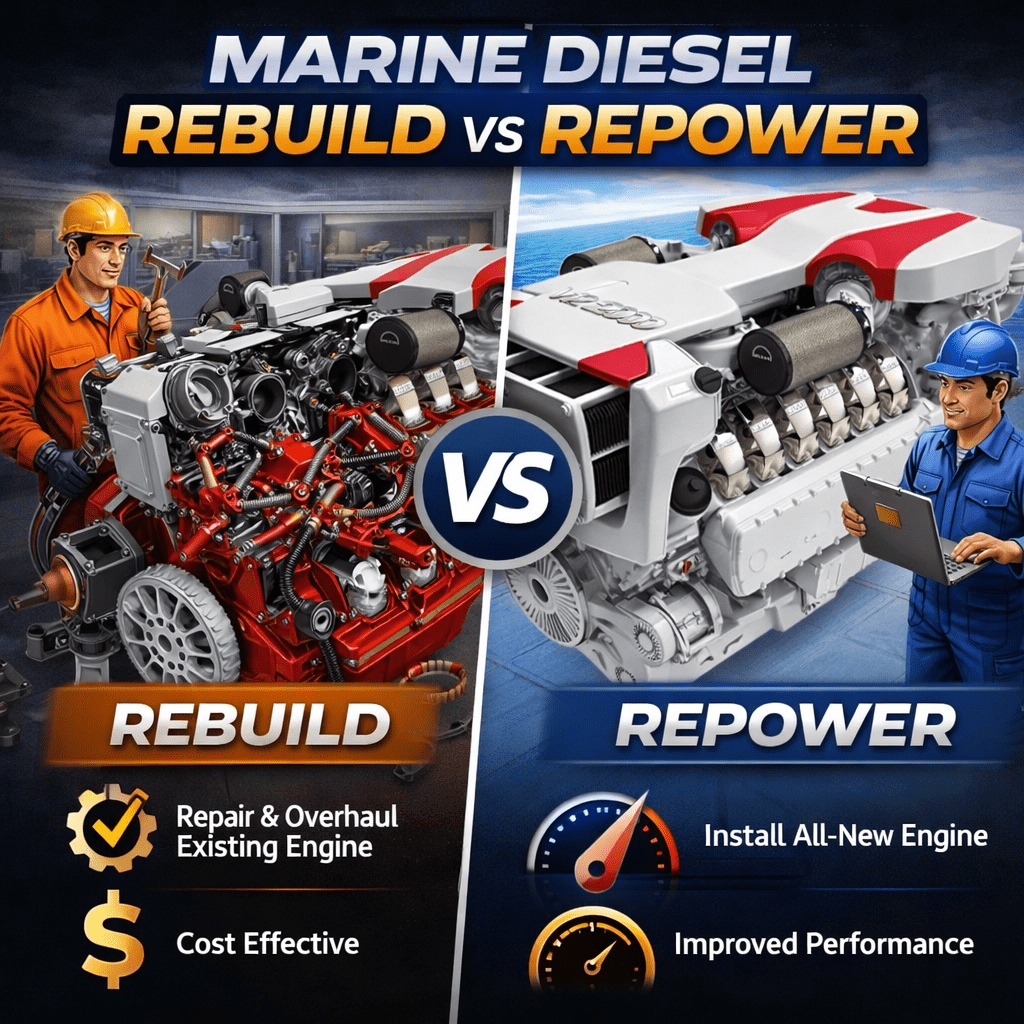
At some point, every boat owner faces the same decision: rebuild the existing marine diesel engine or replace it with a new one. The right answer is never based on guesswork—it starts with accurate diagnosis. Before making any major investment, use the Marine Diesel Troubleshooting Guide to confirm whether your symptoms are caused by wear, system imbalance, or repairable external issues.
At 805 Marine Diesel Mechanic, rebuild vs repower decisions are made daily across Ventura, Oxnard, Channel Islands Harbor, and Santa Barbara. This guide expands the real diagnostic and financial framework used in the field to determine the smartest long-term decision.
Start With Diagnosis — Not Assumptions
Many engines that appear “worn out” are actually suffering from fuel restriction, airflow limitation, or cooling system inefficiency.
Common misdiagnosed symptoms include low power and loss of RPM, black smoke under load, and hard starting.
These symptoms often trace back to correctable problems such as fuel contamination, air intrusion, or aftercooler restriction.
When a Marine Diesel Rebuild Makes Sense
A rebuild is the right choice when the engine’s core structure remains sound and system failures are repairable.
Engines showing symptoms like blue smoke, moderate high exhaust temperature, or declining compression can often be restored.
- Block and crankshaft in good condition
- No severe corrosion or seawater intrusion
- Parts availability remains strong
- Cooling system has not suffered repeated failures
Before committing, confirm conditions with cooling system diagnostics and fuel system evaluation.
When Repowering Is the Smarter Investment
Repowering becomes the better decision when structural damage or system-wide degradation limits long-term reliability.
This is often seen after repeated issues like overheating under load, exhaust restriction, and turbo failure symptoms.
- Cracked block or severe cylinder wear
- High engine hours combined with poor maintenance history
- Chronic performance issues despite repairs
- Parts becoming difficult to source
Compare conditions with engine beyond rebuild indicators to confirm direction.
Cost Comparison: Rebuild vs Repower
The decision is often financial as much as mechanical.
Rebuild costs increase quickly when multiple systems are involved, especially if issues extend into turbo oil systems, boost performance, and cooling system failures.
- Rebuild: lower upfront cost, shorter downtime
- Repower: higher cost, but improved efficiency and reliability
Modern repowers often eliminate recurring problems tied to fuel vs air imbalance and turbo inefficiency.
Performance & Efficiency Considerations
Older engines often show declining performance even when operational.
Common symptoms include:
Repowering resolves these issues by resetting the entire system.
Installation & Downtime Factors
Rebuilds typically retain existing components, while repowers require system updates.
Repower installations often include improvements to:
- Fuel filtration systems
- Cooling system layout
- Exhaust design
- Engine mounting and alignment
While more complex, these upgrades often eliminate recurring issues like drivetrain shock and propulsion inefficiency.
Long-Term Strategy (The Real Decision)
Your long-term plan determines the correct choice.
- Short-term ownership → rebuild may make sense
- Long-term ownership → repower often delivers better reliability
Always confirm system condition using structured diagnostics such as engine survey diagnostics and combustion analysis.
External Authority Resources
Cummins Marine Engines |
Caterpillar Marine Systems
6 Responses