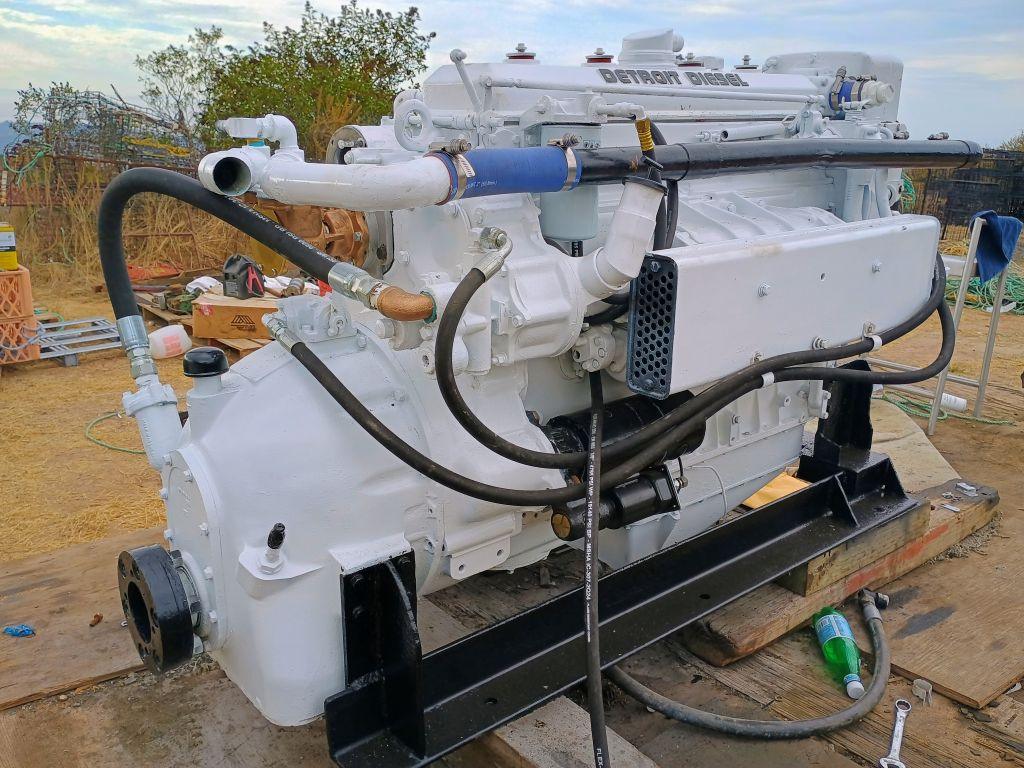
Marine diesel engine surging at cruise RPM diagnosed by 805 Marine Diesel Mechanic Ventura Channel Islands Harbor Santa Barbara

Schedule Engine Surging Diagnosis
Master Marine Diesel Troubleshooting Guide

Marine diesel engine surging at cruise RPM is a clear sign that the engine is not receiving stable fuel, air, or control input. Before replacing injectors or blaming the governor, start with the Master Marine Diesel Troubleshooting Guide to determine whether the issue originates from fuel delivery, air intake, load conditions, or control systems.

At 805 Marine Diesel Mechanic, surging is frequently misdiagnosed as injector failure when the actual cause is often air intrusion, fuel contamination, or fuel restriction. The key to accurate diagnosis is understanding the pattern of RPM fluctuation under steady throttle.


What Is Engine Surging?

Engine surging occurs when RPM repeatedly rises and falls even though throttle position remains constant. This instability indicates inconsistent combustion caused by fluctuating fuel delivery, airflow imbalance, or control system response.

Surging often overlaps with loss of power, RPM limitations, and smoke changes.


Primary Causes of Surging at Cruise RPM

1. Air Intrusion in Fuel System

Air entering the fuel system is one of the most common causes of surging.

  • Loose fuel fittings
  • Cracked hoses
  • Racor seal leaks

Air bubbles disrupt injection pressure, causing inconsistent combustion and RPM fluctuation.

This often appears after fuel system service or filter changes.


2. Fuel Restriction or Contamination

Restricted fuel flow creates intermittent starvation.

  • Clogged filters
  • Blocked pickup tubes
  • Contaminated fuel

This overlaps heavily with Racor system issues and fuel efficiency problems.


3. Governor or Throttle Control Problems

The governor regulates fuel delivery based on load. If it overcorrects, RPM oscillation occurs.

  • Mechanical governor wear
  • Electronic throttle faults
  • Control cable issues

This can feel similar to engine instability.


4. Turbocharger or Air Intake Instability

Airflow must match fuel delivery for stable combustion.

Unstable airflow causes uneven combustion, leading to RPM fluctuation.


5. Electronic Sensor or Control Faults

Modern engines rely on sensor input to regulate fuel delivery.

  • Faulty boost sensors
  • Throttle position sensor issues
  • ECU calibration problems

This often requires computer diagnostics.


6. Fuel Injection System Wear

Uneven fuel delivery causes inconsistent combustion cycles.

  • Worn injectors
  • Injection pump wear
  • Pressure instability

This may overlap with injector issues.


7. Load or Propeller Variations

External load changes can mimic surging.

This is often confused with engine problems when the cause is external resistance.


How to Identify the Root Cause

Technicians isolate surging by analyzing patterns:

  • Surging only under load → fuel or air issue
  • Surging at all speeds → control or mechanical issue
  • Surging after service → air intrusion

This pattern-based method prevents unnecessary part replacement.


Technician Diagnostic Workflow

  • Verify fuel supply stability
  • Check for air intrusion
  • Inspect filters and fuel system
  • Evaluate turbo and airflow
  • Test governor response
  • Perform load-based testing

This process integrates boost testing and system performance checks.


External Authority Resources

Cummins Marine Engines |
Caterpillar Marine Systems


Request Surging Diagnosis

Marine Engine Surging at Cruise RPM — FAQ

1. What causes marine engine surging?
Surging is caused by unstable fuel, air, or control input. The engine cannot maintain steady combustion. This results in RPM fluctuations.
2. Can air in fuel cause surging?
Yes, air bubbles disrupt injection pressure. This causes inconsistent fuel delivery. It is one of the most common causes.
3. Can fuel restriction cause surging?
Yes, restricted flow leads to intermittent fuel starvation. This causes RPM to fluctuate. Filters and pickup tubes should be checked.
4. Can injectors cause surging?
Yes, worn injectors deliver uneven fuel. This leads to inconsistent combustion. Testing may be required.
5. Can turbo problems cause surging?
Yes, unstable airflow affects combustion. Turbo lag or boost issues can contribute. Air system inspection is important.
6. Can governor issues cause surging?
Yes, faulty governors overcorrect fuel delivery. This leads to oscillation. Both mechanical and electronic systems can fail.
7. Can propeller issues cause surging?
Yes, load variation can mimic engine surging. Fouling or incorrect pitch increases resistance. This affects RPM stability.
8. Can contamination cause surging?
Yes, dirty fuel affects combustion consistency. This leads to unstable power output. Fuel quality is critical.
9. Can sensors cause surging?
Yes, faulty sensors send incorrect signals. This causes improper fuel adjustments. Electronic diagnosis is required.
10. What is the fastest way to diagnose surging?
Identify when the surge occurs. This helps isolate the system involved. Pattern recognition is key.
11. Can surging cause engine damage?
Yes, prolonged instability can stress components. It may lead to further failures. Early diagnosis prevents damage.
12. Is surging worse under load?
Yes, load increases demand on systems. Problems become more noticeable. This helps identify root causes.
13. Can cooling issues cause surging?
Indirectly, yes. Overheating affects combustion stability. Cooling system checks may be needed.
14. Can exhaust restriction cause surging?
Yes, backpressure affects engine performance. This can disrupt combustion. Exhaust should be inspected.
15. Should I keep running engine if it surges?
Short-term operation may be safe, but persistent surging should be addressed. Continued use can worsen problems. Diagnosis is recommended.
16. Can air filters cause surging?
Yes, restricted airflow disrupts combustion balance. This may lead to RPM fluctuation. Air system inspection is necessary.
17. Can electrical issues cause surging?
Yes, electronic engines rely on sensors and control units. Faults can create instability. Diagnostics are required.
18. When should I call a technician?
If surging persists or worsens. Especially under load conditions. Professional diagnosis is recommended.
19. Can surging be intermittent?
Yes, it may come and go depending on conditions. This can make diagnosis harder. Pattern tracking is important.
20. What is the best diagnostic method?
Combine observation, load testing, and system inspection. This ensures accurate results. Avoid replacing parts blindly.


Schedule Surging Diagnosis

21 Responses