
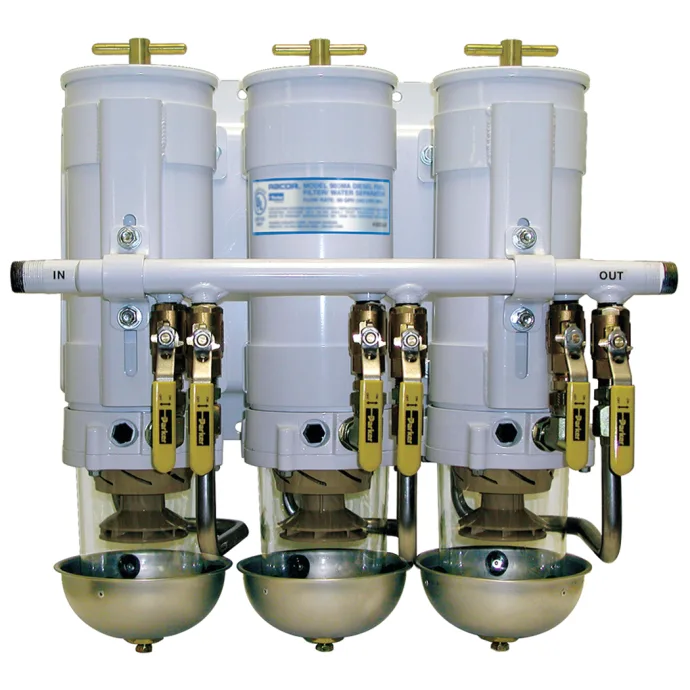
If your marine diesel engine won’t start after a fuel filter change, the problem is almost always air in the fuel system or a loss of fuel delivery integrity. Before assuming injector or engine failure, start with the Master Marine Diesel Troubleshooting Guide to determine whether the issue is air intrusion, improper priming, or a restriction introduced during service.
At 805 Marine Diesel Mechanic, this is one of the most common service calls across Ventura, Oxnard, Channel Islands Harbor, and Santa Barbara. In many cases, the engine is fully functional—but fuel is simply not reaching the injectors, similar to turns over but won’t fire conditions or no fuel to injectors scenarios.
Why Filter Changes Cause No-Start Conditions
Marine diesel fuel systems operate under precise pressure conditions. When filters are changed, air enters the system and disrupts that pressure balance.
- Air compresses instead of transferring pressure
- Injection pump cannot build pressure
- Injectors cannot atomize fuel
This results in cranking with no combustion, often accompanied by white smoke at startup or no smoke at all.
1. Air Trapped in Fuel System (Primary Cause)
Air intrusion is responsible for the majority of no-start conditions after filter replacement.
- Filters not pre-filled
- Incomplete bleeding
- Air pockets in fuel lines
This often overlaps with fuel system priming issues and systems losing prime.
2. Incorrect Filter Installation
Even small installation errors can allow air into the system.
- Damaged O-rings
- Loose filter housings
- Incorrect filter type
These issues often cause intermittent starting problems and may lead to start-then-die symptoms.
3. Improper Priming Procedure
After replacing filters, the system must be fully primed.
- Manual lift pump not used long enough
- Bleed points skipped
- Air not fully removed
Improper priming leads to repeated no-start conditions even when components are good.
4. Fuel Contamination Exposed During Service
Changing filters often reveals underlying fuel issues.
- Diesel algae growth
- Water contamination
- Debris in tank
This may quickly clog new filters and create recurring problems.
5. Fuel Shutoff or Valve Misconfiguration
Simple mistakes can completely block fuel flow.
- Closed valves
- Incorrect manifold position
- Tank switching errors
This is often overlooked but very common after maintenance.
6. Lift Pump Failure or Weak Operation
Lift pumps must move fuel through the system during priming.
- Mechanical pump wear
- Electric pump failure
- Inability to overcome air pockets
This condition can mimic fuel restriction issues such as fuel line blockage.
7. Electronic Engine Shutdown or Sensor Faults
Modern engines rely on fuel pressure sensors.
- Low pressure triggers no-start condition
- Sensor errors prevent injection
- ECU safety logic blocks operation
This requires electronic diagnostics for confirmation.
Advanced Diagnosis — Micro Air Leaks
One of the most overlooked issues is micro air leaks on the suction side of the system.
These leaks:
- Do not show visible fuel leakage
- Allow air to enter under vacuum
- Cause intermittent or complete no-start
Common leak points include:
- Racor housings
- Banjo fittings
- Fuel hose connections
This condition is closely related to fuel air separation problems.
Fuel Pressure Verification & System Integrity
Professional diagnosis requires confirming actual fuel delivery.
- Check supply pressure at injection pump
- Measure vacuum on suction side
- Verify return fuel flow
- Check for air bubbles in lines
If no smoke is present during cranking, fuel is not reaching cylinders. Continue diagnosis here:
No Smoke Condition Guide.
Technician Diagnostic Workflow
- Verify filter installation
- Check for air intrusion points
- Prime system completely
- Test lift pump function
- Confirm fuel pressure
- Evaluate injection system
This structured approach prevents unnecessary part replacement.
External Authority Resources
Cummins Marine Engines |
Caterpillar Marine Systems
8 Responses