
Marine Diesel High Exhaust Temperature (EGT) Diagnosis Guide
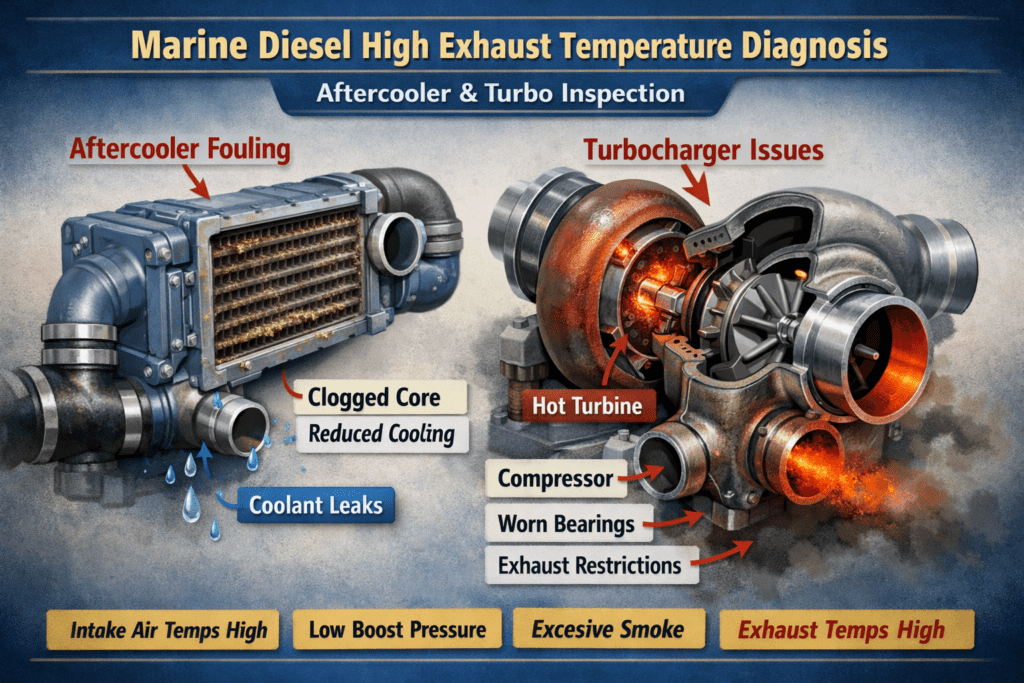
High exhaust gas temperature (EGT) is one of the most important indicators of marine diesel engine health. Elevated exhaust temperatures often signal airflow restriction, cooling system problems, turbocharger issues, or improper fuel delivery.
At 805 Marine Diesel Mechanic, monitoring exhaust temperature patterns helps identify hidden performance problems before major engine damage occurs. Across Ventura, Oxnard, Channel Islands Harbor, and Santa Barbara, high EGT is one of the earliest warning signs that an engine is operating outside of its safe thermal range.
Return to Master Marine Diesel Troubleshooting Guide →
What Is Exhaust Gas Temperature (EGT)?
EGT measures the heat of exhaust gases leaving the engine. When combustion is efficient and airflow is correct, temperatures stay within a normal range. When imbalance occurs, exhaust heat rises quickly.
This heat flows directly through the turbocharger, exhaust manifold, and exhaust system. That is why elevated EGT is not just a number—it is a direct indicator of stress being placed on the engine and its components.
Common Symptoms of High Exhaust Temperature
- Loss of RPM under load
- Black smoke during acceleration
- Overheating alarms
- Turbocharger running excessively hot
- Reduced fuel efficiency
- Burning smell or abnormal exhaust heat
These symptoms often overlap with loss of power under load, not reaching full RPM, and black smoke under load, because all of these issues come from system imbalance.
Most Common Causes of High EGT
Airflow Restrictions
- Dirty air filters
- Blocked intake hoses
- Aftercooler fouling
Aftercooler & Intercooler Problems
Turbocharger Issues
- Low boost pressure
- Wastegate malfunction
- Turbo lag
Cooling System Restrictions
- Heat exchanger blockage
- Raw water flow issues
- Impeller wear
Fuel Delivery Problems
- Overfueling
- Injector imbalance
- Fuel contamination
Fuel vs Air Restriction Diagnosis
Engine Overload Crossover
One of the most common causes of high EGT is engine overload. When the engine is forced to work harder than its design limits, combustion heat rises rapidly and is carried out through the exhaust.
This is why high EGT often overlaps with Engine Overload Diagnosis and Smoke Only Under Load.
Exhaust Restriction & Backpressure
Restricted exhaust flow traps heat inside the engine. Backpressure reduces airflow and raises combustion temperature, increasing EGT even when other systems appear normal.
This should always be compared with Exhaust Backpressure Problems.
Advanced Diagnostics
Proper diagnosis requires testing under load. Key measurements include boost pressure, RPM, exhaust temperature trends, and fuel system stability.
Advanced analysis through the Computerized Diagnostics Center helps identify which system is causing excessive heat.
Why High EGT Is Dangerous
- Turbocharger damage
- Exhaust manifold cracking
- Piston overheating
- Valve damage
- Reduced engine life
Unchecked EGT can turn a performance issue into a mechanical failure.
Prevention
- Maintain airflow systems
- Clean cooling components
- Monitor load conditions
- Keep fuel clean
Routine service through Marine Diesel Engine Services helps prevent excessive thermal stress.
For manufacturer reference, see Cummins Marine and Caterpillar Marine.
Local Marine Diesel Diagnostics
805 Marine Diesel Mechanic provides advanced EGT diagnostics throughout Ventura, Oxnard, Channel Islands Harbor, and Santa Barbara. With over 30 years of experience, real-world load testing ensures accurate root-cause diagnosis.
High Exhaust Temperature (EGT) FAQ
1. What does high EGT mean?
High EGT means the engine is producing more heat than it can efficiently manage. This usually indicates imbalance between airflow, fuel delivery, cooling, or engine load.
2. Is high EGT dangerous?
Yes, high exhaust temperature can damage critical engine components. Over time it can lead to turbo failure, piston damage, and shortened engine life.
3. What causes EGT to rise?
Common causes include airflow restriction, turbo problems, overload, fuel imbalance, and cooling system issues. Often, multiple systems are involved at once.
4. Can overload cause high EGT?
Yes, overload is one of the most common causes. When the engine is overworked, combustion heat increases and raises exhaust temperature.
5. Can low boost increase EGT?
Yes, low boost reduces available air for combustion. This causes incomplete combustion and higher exhaust temperatures.
6. Can fuel problems raise EGT?
Yes, overfueling or injector imbalance can increase combustion temperature. This is why EGT issues should be compared with Fuel vs Air Diagnosis.
7. Can cooling issues affect EGT?
Yes, poor cooling increases engine temperature overall. This can influence combustion heat and raise exhaust temperature.
8. What symptoms come with high EGT?
Common symptoms include smoke, loss of RPM, overheating, and reduced efficiency. These often overlap with Low Power Diagnosis.
9. Can exhaust restriction cause high EGT?
Yes, restricted exhaust traps heat and raises combustion temperature. This is why it should be compared with Backpressure Problems.
10. How is EGT tested?
EGT is measured using sensors or gauges during operation. Testing must be done under load for accurate results.
11. Can EGT rise without overheating?
Yes, EGT often rises before cooling alarms trigger. It can be an early warning sign of problems.
12. What is normal EGT?
Normal EGT varies by engine type and load conditions. Manufacturer specifications should always be referenced.
13. Can aftercoolers affect EGT?
Yes, restricted aftercoolers reduce airflow density. This leads to higher combustion temperatures and increased EGT.
14. Can turbo failure raise EGT?
Yes, turbo issues reduce airflow and increase combustion heat. This directly raises exhaust temperature.
15. Can dirty filters raise EGT?
Yes, restricted airflow from dirty filters reduces oxygen supply. This leads to inefficient combustion and higher heat.
16. Why is EGT important?
EGT is one of the best indicators of engine efficiency and stress. It helps detect problems early before damage occurs.
17. Can EGT damage a turbo?
Yes, excessive heat can damage turbo bearings and components. Long-term exposure shortens turbo life.
18. Can EGT indicate overload?
Yes, high EGT combined with low RPM is a strong sign of overload. This should be checked with Overload Diagnosis.
19. When should I call a technician?
If EGT is consistently high under load or rising over time, professional diagnostics are recommended. Early intervention prevents costly repairs.
20. Where do I start troubleshooting?
Start with the Master Troubleshooting Guide. Then evaluate airflow, fuel, cooling, and load systems.
18 Responses