
Why Is My Boat Not Reaching Full RPM? (Propeller vs Engine Problem Guide)
If your boat cannot reach full RPM at wide open throttle (WOT), you are dealing with one of the most important performance diagnostics in marine diesel engines. This condition is not random—it is a direct signal that something in the system is limiting engine output or increasing resistance beyond what the engine is designed to handle.
After more than 30 years diagnosing marine diesel engines across Ventura, Oxnard, Channel Islands Harbor, and Santa Barbara, we consistently find that most low RPM problems are not true engine failures. They are load-related problems. The key is understanding the balance between power production and resistance.
In simple terms, either the engine cannot produce full power—or the boat is demanding too much of it.
Start with the full system:
Marine Diesel Troubleshooting Guide
Power vs Load — The Core Diagnostic Principle
Every low RPM condition comes down to two sides of the same equation:
- Power problem: the engine cannot produce full output
- Load problem: the propeller, hull, or drivetrain is overloading the engine
This distinction is critical. Many boat owners assume engine failure when the real issue is external load. Engines from Caterpillar and Cummins are designed to reach a specific RPM range under proper conditions. If they cannot, something is out of balance.
Related orphan: Surging at Cruise RPM
1. Propeller Overload (Most Common Cause)
The propeller is the most common reason a boat cannot reach full RPM. When pitch or diameter is too aggressive, the engine is forced to push more water than it was designed to handle. This creates a constant overload condition that limits RPM and stresses internal engine components.
This issue often appears after repowers, prop changes, or when additional weight is added to the vessel. Even small increases in pitch can significantly reduce achievable RPM. Under load, the engine may feel strong initially but will plateau early and struggle to climb higher.
From a diagnostic standpoint, this is a classic “engine is fine, load is wrong” situation. You can often confirm it by observing black smoke under load, which indicates the engine is being over-fueled for the available airflow and RPM range.
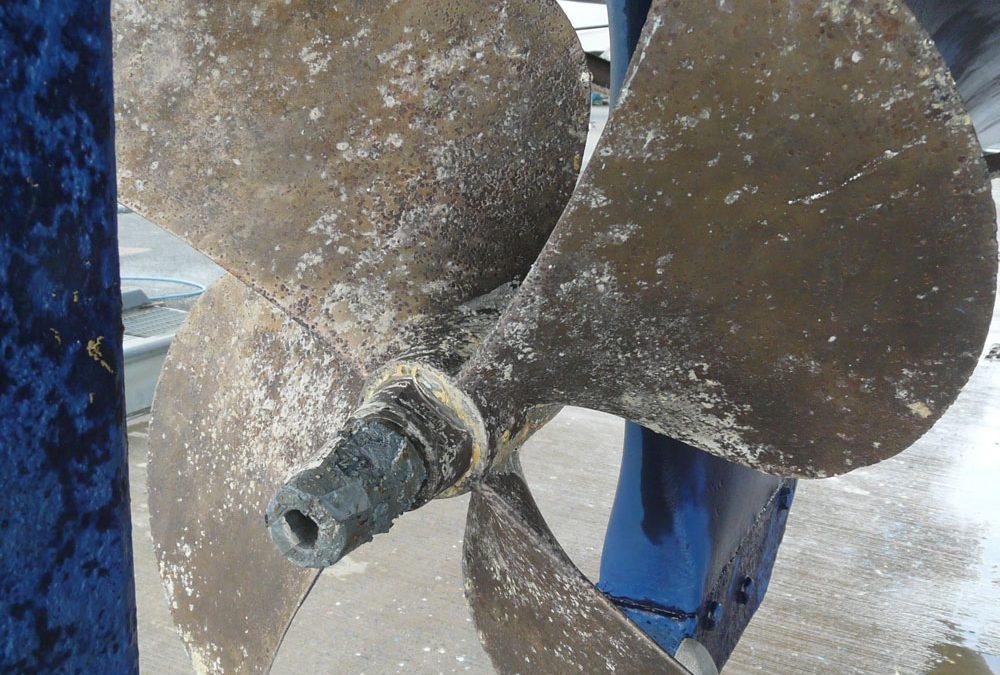
2. Propeller Damage and Marine Growth
Even if the propeller is correctly sized, physical damage or marine growth can dramatically affect performance. Barnacles, slime, or bent blades disrupt water flow and reduce thrust efficiency. The engine must work harder to achieve the same result, which limits RPM.
This is especially common in boats that sit for extended periods. A propeller that looks “slightly dirty” can reduce RPM by several hundred. In real-world diagnostics, we often see this misinterpreted as an engine problem when it is actually a maintenance issue.
Related: Excessive Vibration Guide
3. Fuel System Restrictions Under Load
Fuel system problems often appear only under load conditions. At idle, the engine requires minimal fuel, so a partially restricted system can appear normal. However, as throttle increases, fuel demand rises sharply. If the system cannot keep up, the engine will plateau in RPM.
This includes clogged filters, restricted pickup tubes, weak lift pumps, or contaminated fuel. The key symptom is an engine that accelerates initially but cannot sustain power at higher load levels.
Related: Fuel System Diagnosis Center
4. Turbocharger and Airflow Limitations
Marine diesel engines rely heavily on airflow to produce power. Without sufficient air, fuel cannot burn efficiently, and power output drops. Turbochargers are responsible for increasing airflow under load, and any issue in this system directly affects RPM.
Common problems include restricted air filters, boost leaks, worn turbo bearings, or delayed turbo response. The result is an engine that feels sluggish and cannot reach rated RPM, especially at higher throttle settings.
Related: Turbo Systems Diagnosis Center
5. Drivetrain Resistance and Transmission Issues
Even if the engine produces full power, drivetrain issues can prevent that power from reaching the water. Transmission drag, slipping clutches, worn couplings, or internal resistance can absorb energy before it reaches the propeller.
This often shows up as normal engine sound but reduced performance. In some cases, RPM may increase slightly without corresponding speed gains, indicating power loss within the drivetrain.
Related: Grinding Noise Guide
6. Shaft Misalignment and Bearing Drag
Alignment between the engine and shaft is critical. Even small misalignment creates friction and resistance, especially under load. Over time, this not only reduces RPM but can also cause vibration and premature component wear.
Cutlass bearing wear can also introduce drag, further increasing load on the engine. These issues are often overlooked because they do not affect idle operation but become very noticeable under load.
Related: Mechanical Diagnostics
7. Exhaust Restriction
Restricted exhaust systems prevent proper engine breathing. If exhaust gases cannot exit efficiently, combustion efficiency drops, reducing power output and limiting RPM.
8. Engine Mechanical Condition
Internal engine issues such as low compression, injector imbalance, or valve problems reduce power output. While less common than load issues, they must be considered if all external systems check out.
Related: Engine Noise Guide
Step-by-Step Professional Diagnosis
- Verify rated vs actual RPM
- Inspect propeller size and condition
- Check hull for growth
- Test fuel system under load
- Evaluate turbo and airflow
- Inspect drivetrain resistance
- Perform full load test
Frequently Asked Questions
1. Why won’t my boat reach full RPM?
This usually means either the engine cannot produce enough power or the boat is overloaded. Start with the Marine Diesel Troubleshooting Guide to determine whether the issue is fuel, air, or load-related.
2. Can propeller size affect RPM?
Yes, incorrect pitch is the most common cause. Even small increases in pitch can overload the engine and limit RPM significantly.
3. Can fuel restriction cause low RPM?
Yes. Fuel restrictions often appear under load. Use the diagnostic guide to isolate the issue.
4. Can turbo problems reduce RPM?
Yes. Without sufficient airflow, diesel engines cannot produce full power.
5. Is running below rated RPM harmful?
Yes, it overloads the engine and increases wear.
6. Can hull growth reduce RPM?
Yes, significantly.
7. Can drivetrain issues cause this?
Yes. Internal resistance reduces efficiency.
8. Can surging be related?
Yes. See Surging Guide.
13 Responses