
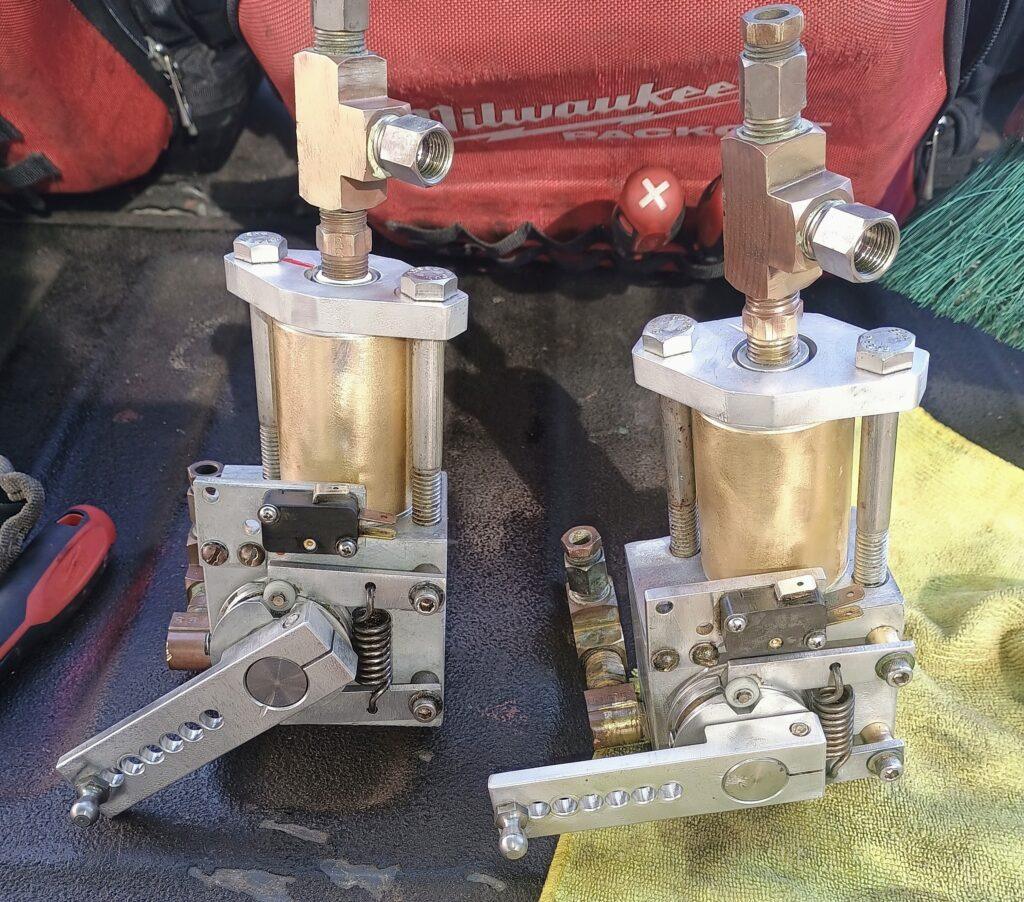
When a boat relies on a Hynautic hydraulic engine control system, smooth shifting and throttle response are critical for safe docking, maneuvering, and low-speed control. Before assuming a transmission, throttle, or engine problem, start with the Master Marine Diesel Troubleshooting Guide to separate control-system faults from fuel, drivetrain, alignment, or engine-performance problems.
At 805 Marine Mechanic, Hynautic shifter and throttle control problems are often diagnosed alongside symptoms such as clunking when shifting into gear, shaft movement without proper propulsion, excessive vibration, and low power complaints. A hydraulic control issue can feel like an engine or transmission failure even when the engine itself is healthy.
Understanding the Hynautic Hydraulic Engine Control System
The Hynautic hydraulic control system uses pressurized fluid to transmit throttle and shift commands from the helm to the engine and transmission. Instead of a direct mechanical cable, the system uses hydraulic senders, reservoirs, lines, and slave cylinders to move throttle arms and shift levers.
On dual-engine vessels, one poorly performing slave cylinder can create uneven response between engines. That can show up as docking difficulty, delayed shifting, inconsistent throttle control, or symptoms that overlap with engine surging at cruise RPM and failure to reach full RPM.
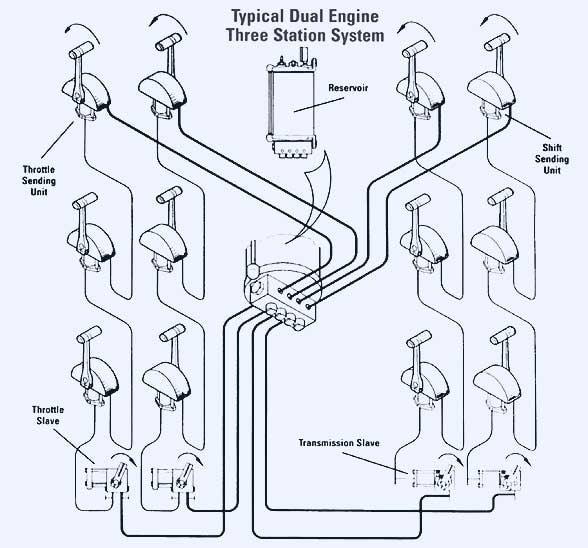
Hynautic dual-engine three-station hydraulic shift and throttle system diagram used for marine control troubleshooting.
Because this system affects both engine command and transmission engagement, it should be inspected during any broader performance diagnosis. Control response problems may appear similar to loss of power under load, crank-no-start confusion after control changes, or no-fuel delivery symptoms if shutdown or throttle controls are not returning correctly.
Before: Symptoms of Failing Hynautic Shifter Controls
Before rebuild, this system showed classic symptoms of internal hydraulic wear. These symptoms usually develop gradually, which is why owners may adapt to stiff shifting until the system becomes unsafe or unreliable.
- Hard or delayed shifting when moving into gear
- Visible hydraulic fluid leakage around pistons and fittings
- Erratic response between helm station and transmission
- Dark or contaminated hydraulic fluid in the reservoir
- Inconsistent detent positioning at the shift lever
- Throttle or shift response differing between stations
Delayed hydraulic control response can be mistaken for transmission slippage or driveline trouble. If the boat also shows vibration under load, grinding noise in gear, or shifting harshness, the control system should be evaluated before condemning the transmission.
Worn and leaking Hynautic hydraulic shifter slave cylinder before rebuild, showing corrosion, seal wear, and fluid leakage.
Why Hynautic Slave Cylinders Fail
Hydraulic slave cylinders fail because seals harden, internal surfaces corrode, and contaminated fluid damages sealing surfaces. In marine engine rooms, salt air, humidity, heat, and vibration accelerate this wear.
A control-system failure may not look like a diesel engine problem at first, but it can affect how the engine responds to throttle command. When throttle response seems inconsistent, technicians often compare control movement against systems such as Fuel System Diagnosis Center, Marine Diesel Fuel System Problems, and Fuel Restriction vs Air Restriction Diagnosis before making repair decisions.
- Old hydraulic fluid causes internal wear and sticking
- Moisture contamination creates corrosion
- Hardened seals allow bypass and leakage
- Piston wear creates inconsistent control movement
- Improper bleeding creates spongy response
That is why Hynautic service should include both component rebuild and system-level bleeding, not just replacing one visible leaking part.
Professional Rebuild Process
1. Complete Disassembly
Every slave cylinder is disassembled down to the body casting. Pistons, springs, quad seals, bushings, bearings, detent rollers, lever arms, and valves are removed and inspected for wear, corrosion, and dimensional damage.
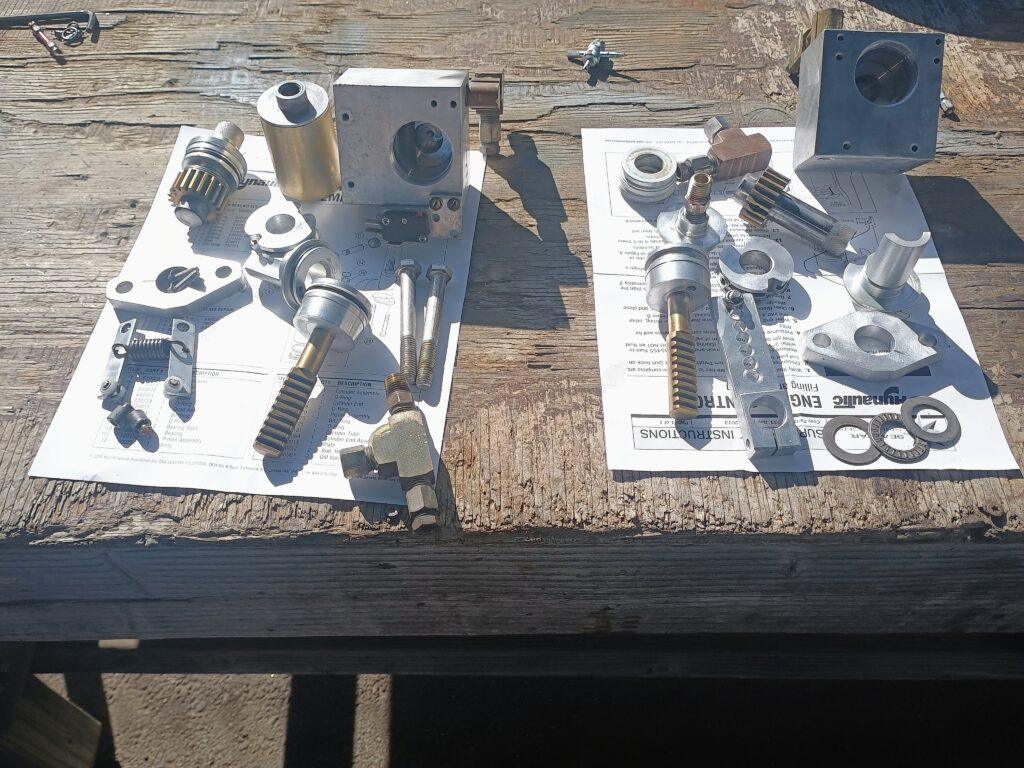
Fully disassembled Hynautic shifter slave components laid out for inspection, cleaning, seal replacement, and rebuild.
Disassembly is important because external cleaning alone cannot restore internal hydraulic sealing. If the piston, bore, or seals are worn, the system may still bypass internally and respond slowly even if it no longer leaks externally.
2. Deep Cleaning and Surface Restoration
Internal corrosion and contamination are removed using controlled cleaning techniques. Piston surfaces and bores must be smooth enough to allow seal movement without tearing or bypass.
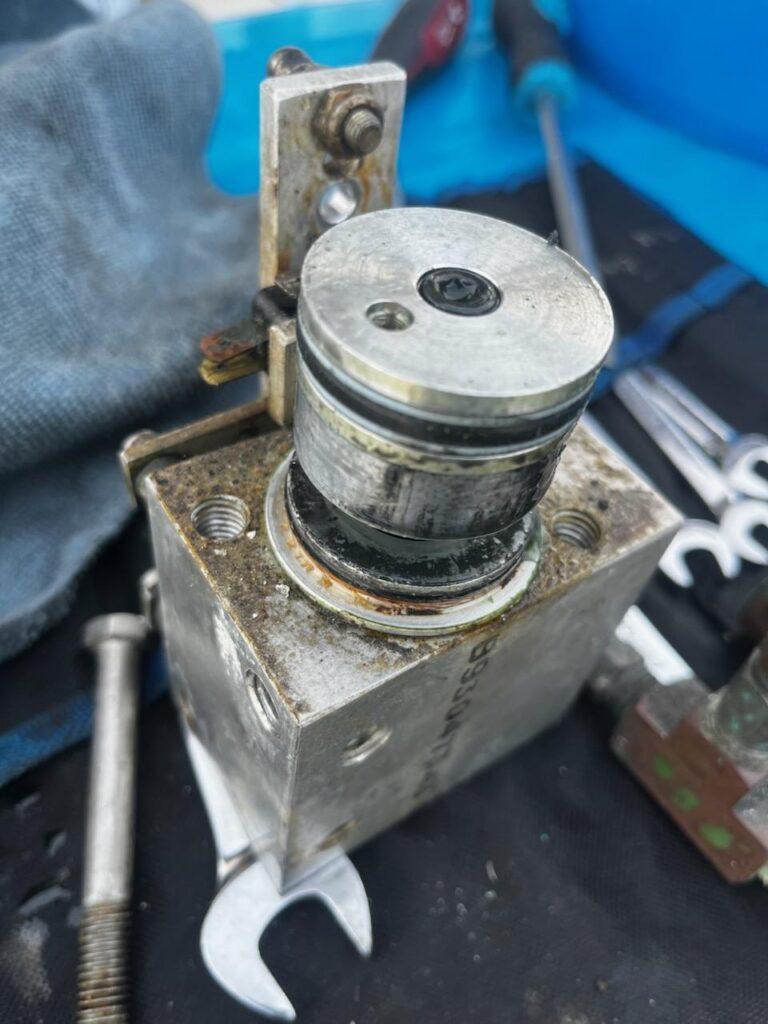
Contaminated Hynautic shifter piston before cleaning, showing wear and buildup that can cause stiff or delayed shifting.
Contaminated hydraulic systems behave much like contaminated fuel systems: a small amount of contamination can create big performance problems. That same diagnostic logic applies when comparing control problems against Racor filter troubleshooting, diesel algae contamination, and marine diesel fuel contamination.
3. Seal Replacement Using Correct Kits
Seal kits are installed to restore pressure holding, piston travel, and fluid control. The correct seals matter because undersized, incorrect, or damaged seals can cause bypass, leakage, or premature failure.
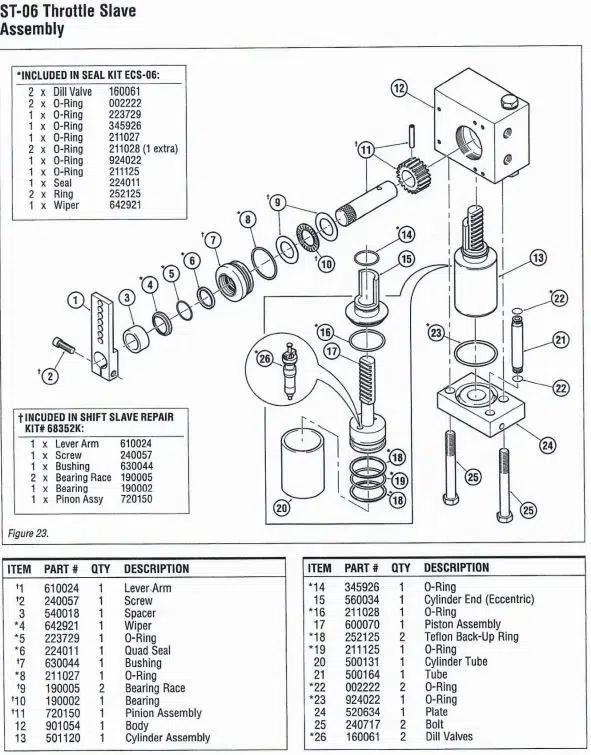
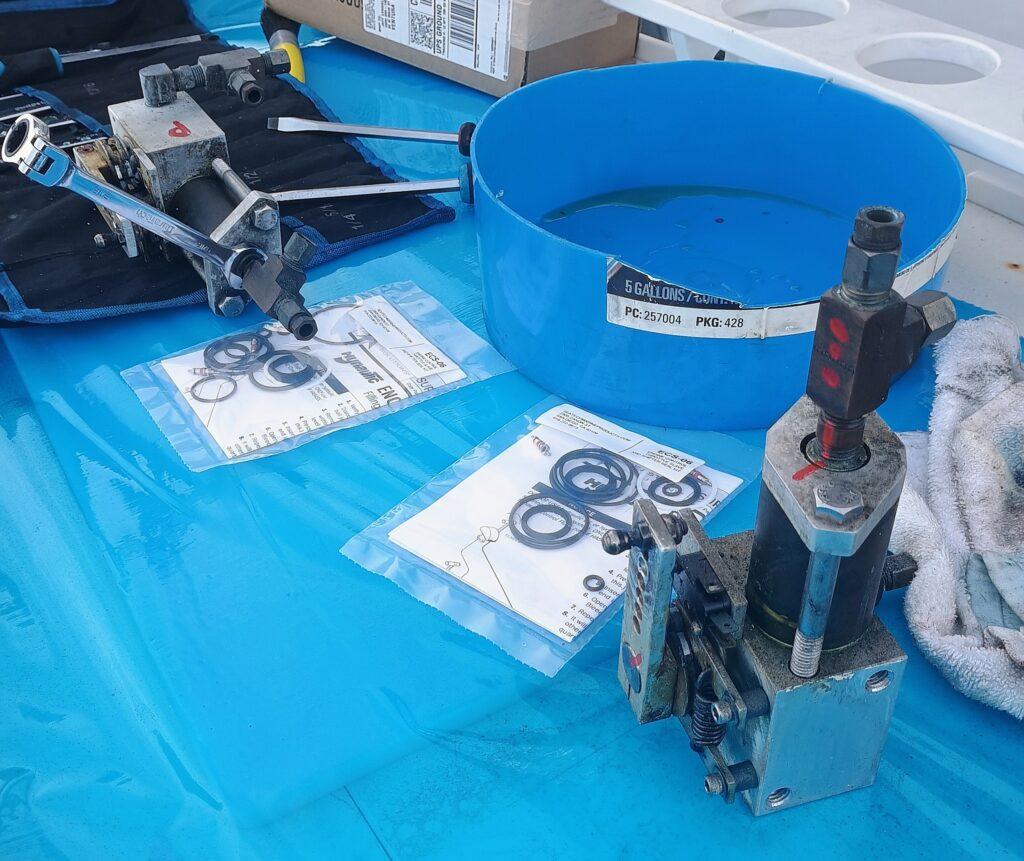
Hynautic shifter slave rebuild kit with seals, O-rings, bushings, and components used for hydraulic control restoration.
Once rebuilt, the slave should move smoothly, hold pressure, and return consistently. If shift travel remains inconsistent after the rebuild, the technician must inspect helm senders, reservoir pressure, hydraulic lines, and station synchronization.
4. Precision Reassembly and Bench Testing
After all new seals are installed, the slave cylinder is lubricated, reassembled, and bench-tested before installation. Testing confirms smooth lever throw, proper detent engagement, zero leakage, and correct piston return.
Completed Hynautic hydraulic shifter slave cylinders rebuilt and bench-tested for smooth, leak-free operation.
Bench testing prevents reinstalling a component that still has internal bypass or mechanical resistance. This is similar to verifying boost pressure under load or using computerized marine engine diagnostics before declaring an engine problem resolved.
Hydraulic Reservoir Service and System Bleeding
A Hynautic rebuild is incomplete unless the reservoir and hydraulic lines are serviced. Old fluid can contain water, debris, seal particles, and air that will quickly damage rebuilt components.
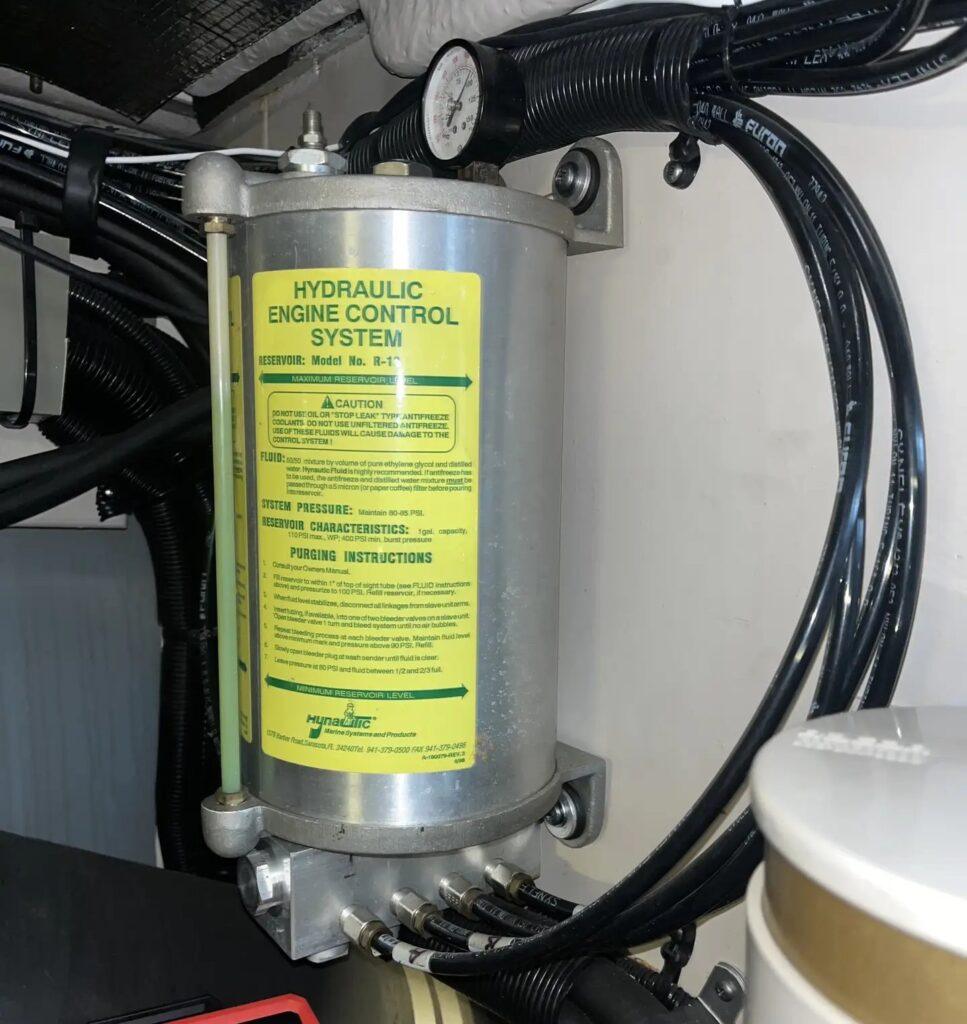
Hynautic R-1 hydraulic control reservoir installed in a marine engine room and serviced during a multi-station control rebuild.
The reservoir is inspected, fluid is refreshed, the system is purged, and every station is checked for air. Air trapped in hydraulic controls creates the same type of inconsistent response that air causes in diesel fuel systems, where symptoms may resemble fuel system priming problems or no-start after fuel filter change.
Why a Proper Rebuild Matters
Hydraulic controls are safety-critical. Delayed shifting near docks, inconsistent gear engagement, and unpredictable throttle response can create dangerous situations in tight harbors and marinas.
- Prevents dangerous shifting delays around docks
- Restores reliable multi-station control
- Protects transmissions from improper engagement
- Reduces wear on shift arms and linkage
- Maintains survey readiness and resale value
A properly rebuilt system also protects the drivetrain. Poor control response can contribute to harsh gear engagement, which may accelerate problems related to engine alignment, vibration under load, and long-term rebuild vs repower decisions.
Serving Ventura, Oxnard, Channel Islands Harbor, and Santa Barbara
805 Marine Mechanic services hydraulic shift and throttle control systems on commercial fishing vessels, sportfishers, trawlers, cruising yachts, and multi-station vessels throughout the region. Whether the issue is stiff shifting, delayed response, leaking slaves, contaminated fluid, or inconsistent station control, the correct repair starts with system-level diagnosis.
If the control issue is happening together with smoke, temperature, or power symptoms, we can also compare findings with marine diesel smoke diagnosis, cooling system diagnosis, exhaust backpressure problems, and aftercooler and intercooler problems.
External Authority Resources
Dometic Marine Control Systems |
ABYC Standards
Hynautic Shifter Control Rebuild — FAQ
1. What is a Hynautic shifter control system?
2. What are the signs of failing Hynautic shifter controls?
3. Why do Hynautic slave cylinders leak?
4. Can contaminated hydraulic fluid damage the system?
5. Do Hynautic controls affect transmission life?
6. Can Hynautic problems feel like transmission problems?
7. What parts are replaced during a Hynautic slave rebuild?
8. Why does the reservoir need service too?
9. How often should Hynautic controls be inspected?
10. Can air in the hydraulic system cause poor shifting?
11. Can I just top off the fluid and keep using it?
12. What happens if Hynautic controls fail underway?
13. Can Hynautic controls be rebuilt instead of replaced?
14. Why is bench testing important?
15. Can a hydraulic control issue affect engine RPM?
16. Do multi-station systems require special bleeding?
17. What fluid should be used in a Hynautic system?
18. Can hydraulic control problems affect survey results?
19. When should I schedule Hynautic service?
20. What is the best approach to Hynautic control repair?
805 Marine Diesel Mechanic provides Hynautic shifter control rebuilds, hydraulic control bleeding, marine throttle and shift troubleshooting, drivetrain diagnostics, and mobile marine diesel service throughout Ventura, Oxnard, Channel Islands Harbor, and Santa Barbara.