
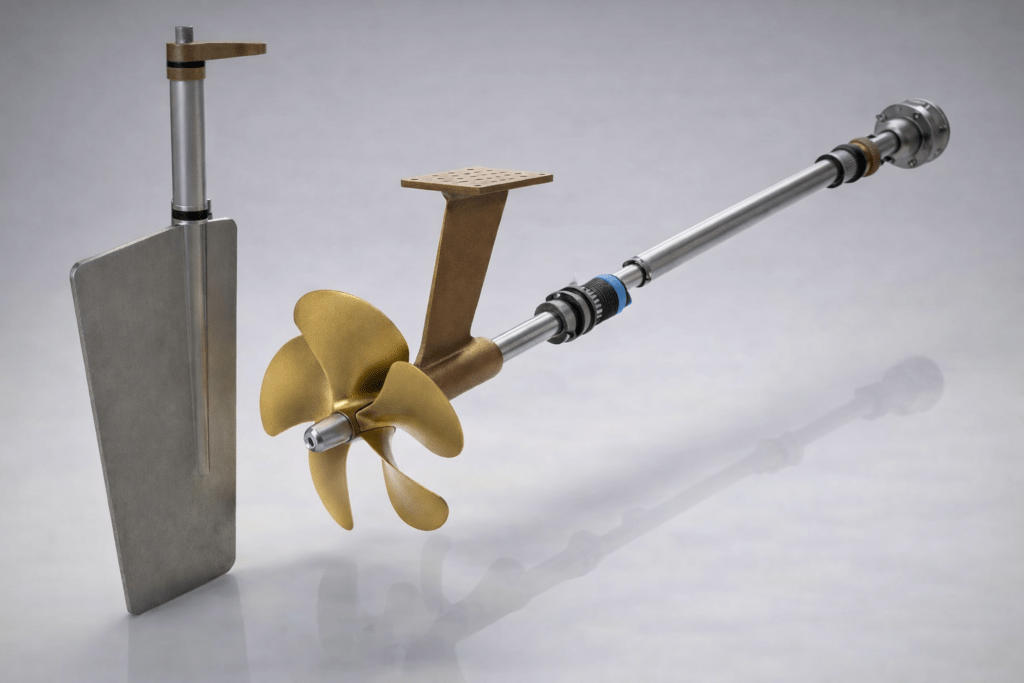
Marine shaft, propeller, and transmission alignment is one of the most critical—and most overlooked—factors in drivetrain reliability. Even slight misalignment can create vibration, premature bearing failure, coupling damage, and long-term transmission stress. This guide breaks down how alignment actually works, how it fails, and how to diagnose it correctly using real-world marine diesel experience.
What Marine Alignment Actually Means
Alignment refers to the precise positioning between:
- Engine output shaft
- Transmission flange
- Coupling
- Drive shaft
- Strut and bearings
All of these components must operate on a single centerline. When they don’t, the system begins fighting itself—creating resistance, vibration, and component wear.
This is why alignment issues often show up alongside drivetrain symptoms found in the Master Marine Diesel Troubleshooting Guide.
Primary Symptoms of Alignment Problems
Excessive Vibration
Vibration that increases with speed is one of the clearest signs of alignment issues.
Clunk When Shifting Into Gear
Misalignment causes drivetrain shock during engagement.
Whining or Grinding Noise
Noise under load often indicates bearing or alignment stress.
Loss of Efficiency or Power
Misalignment creates drag, reducing performance.
How Misalignment Actually Damages Your Boat
Misalignment is not just a vibration issue—it’s a system-wide failure multiplier.
- Couplings tear or deform
- Shaft bearings wear unevenly
- Transmission output bearings fail
- Engine mounts shift or collapse
This is why alignment problems often overlap with:
Types of Alignment Problems
Angular Misalignment
The shafts are at an angle rather than parallel.
Parallel Misalignment
The shafts are offset but run parallel.
Dynamic Misalignment
Alignment changes under load due to weak mounts or structural flex.
Dynamic misalignment is one of the most dangerous because it may not appear during dockside inspection.
Coupling & Shaft Relationship
The coupling is designed to absorb minor misalignment, but it is not a fix for poor alignment. Once tolerances are exceeded, the coupling becomes a failure point.
Common issues include:
- Rubber element breakdown
- Bolt stretch or loosening
- Heat damage
These failures often show up as drivetrain symptoms before total failure occurs.
Alignment vs Transmission Failure (Critical Separation)
One of the biggest diagnostic mistakes is confusing alignment problems with transmission issues.
Alignment Problems:
- Vibration increases with speed
- Noise under load
- Gradual component wear
Transmission Problems:
- Delayed engagement
- Slipping under load
- No gear engagement
Always separate the systems before diagnosing.
External Authority References
Professional Alignment Process
- Feeler gauge coupling measurement
- Dial indicator shaft runout testing
- Engine mount adjustment
- Shaft straightness verification
- Sea trial load confirmation
Shaft, Prop & Alignment FAQ
1. How often should alignment be checked?
At least annually or after major work.
2. Can misalignment cause vibration?
Yes, it is one of the most common causes.
3. Can alignment damage the transmission?
Yes, especially output bearings.
4. What causes alignment issues?
Mount wear, hull flex, improper installation.
5. Can prop damage affect alignment?
Indirectly through vibration and imbalance.
6. Is vibration always alignment?
No, but it is a primary cause.
7. Can alignment change over time?
Yes, especially with engine mount wear.
8. What tools are used?
Feeler gauges, dial indicators, laser tools.
9. Can I check alignment myself?
Basic checks yes, precision requires tools.
10. When should I call a mechanic?
At first sign of vibration or noise.
11. Can misalignment cause overheating?
Yes, through increased load.
12. Can alignment affect fuel efficiency?
Yes, increased drag reduces efficiency.
13. What is shaft runout?
Shaft deviation during rotation.
14. Can bearings fail from misalignment?
Yes, very quickly.
15. Can alignment issues get worse?
Yes, rapidly once started.
16. Does load affect alignment?
Yes, dynamic alignment changes under load.
17. Can alignment cause noise?
Yes, whining or grinding.
18. Should alignment be checked after repower?
Always.
19. Can flexible couplings fix alignment?
No, only absorb minor variation.
20. Where do I start?
Start with the Master Troubleshooting Guide.
With over 30 years of marine diesel experience, 805 Marine Diesel Mechanic provides precision drivetrain alignment services throughout Ventura, Channel Islands Harbor, Oxnard, and Santa Barbara.
One Response