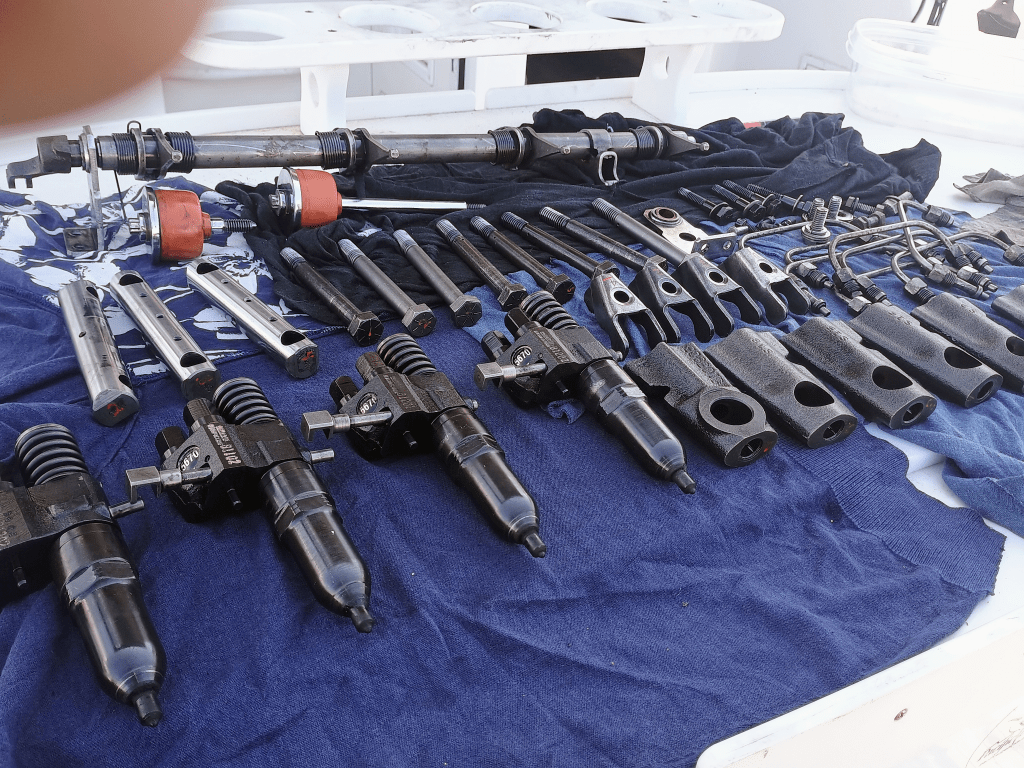
Marine diesel fuel injectors and components used during blue smoke diagnosis by trained technician at 805 Marine Diesel Mechanic serving Ventura Channel Islands Harbor Santa Barbara

Blue Smoke Causes in Marine Diesel Engines — Diagnosis Guide

Quick Technical Diagnosis Summary: Blue smoke from a marine diesel engine usually indicates engine oil entering the combustion chamber and burning during operation. Common causes include worn piston rings, turbocharger seal failure, valve guide wear, excessive crankcase pressure, or overfilled engine oil. Identifying when the smoke occurs (startup, idle, acceleration, or under load) helps pinpoint the root cause.

At 805 Marine Diesel Mechanic, blue exhaust smoke is frequently diagnosed throughout Ventura, Oxnard, Channel Islands Harbor, and Santa Barbara. This guide explains how trained technicians distinguish between normal conditions and mechanical wear requiring service.

Schedule Marine Engine Inspection

What Does Blue Smoke Mean?

Blue smoke typically indicates burning lubricating oil rather than fuel imbalance. Oil entering combustion reduces efficiency and may indicate internal wear.

1. Worn Piston Rings or Cylinder Wear

2. Turbocharger Oil Seal Failure

Turbocharger bearing or seal wear may allow oil into intake airflow.

3. Valve Guide or Valve Seal Wear

4. Overfilled Engine Oil

Excess oil level may increase crankcase pressure and push oil into intake systems.

5. Crankcase Ventilation or AirSep Problems

6. Injector Issues Mimicking Blue Smoke

In some cases, poor atomization may resemble oil smoke, requiring careful diagnosis.

7. Engine Operating Conditions

Helpful marine maintenance resources are available from BoatUS.

Professional Marine Diesel Diagnosis in Ventura & Santa Barbara

Proper diagnosis includes compression testing, turbo inspection, crankcase pressure evaluation, and injector performance analysis. Our trained technicians provide mobile marine diesel service throughout Ventura County, Channel Islands Harbor, Oxnard Harbor, and Santa Barbara.

Request Diagnostic Service

Continue Troubleshooting


Blue Smoke Diagnosis Depends on When It Happens

Blue smoke is one of the most important smoke symptoms because it usually means engine oil is entering the combustion process or exhaust path somewhere it should not. But the real diagnostic shortcut is not just identifying the color — it is identifying when the blue smoke appears. Blue smoke at startup can point in one direction, blue smoke during long idle can point in another, and blue smoke that worsens under load often points somewhere else entirely.

That timing matters because the same basic symptom can come from very different root causes. Turbo oil seal issues, oil drain restriction, worn rings, cylinder wear, valve guide wear, crankcase ventilation problems, overfilled oil level, and extended low-load operation can all create blue smoke, but they do not usually show up in exactly the same operating pattern. That is why trained technicians always match the smoke event to the rest of the symptom cluster before recommending parts.

Fast Blue Smoke Decision Path

Why Blue Smoke Gets Misdiagnosed

One of the most common mistakes is assuming all blue smoke automatically means the engine is worn out. Sometimes that is true, but many blue-smoke complaints are actually tied to turbo oil-control problems, crankcase ventilation issues, overfilled oil, long-idle operation, or symptom patterns that still require deeper confirmation before blaming rings and cylinders.

Across Ventura, Oxnard, Channel Islands Harbor, and Santa Barbara, blue smoke is frequently diagnosed alongside oil residue in intake piping, boost-related complaints, breather issues, and changing oil consumption patterns. That is why 805 Marine Diesel Mechanic approaches blue smoke as an oil-path diagnosis, not just a general smoke complaint. The question is not just “why is it smoking?” but “how is the oil getting there, when does it happen, and what changed?”

What Else Should Be Checked With Blue Smoke

Blue smoke becomes more meaningful when compared with oil level history, oil type, idle time, turbo response, breather condition, crankcase behavior, and whether the engine is also losing RPM, using oil faster than normal, or leaving residue on the air or exhaust side. If blue smoke overlaps with hard starting, white smoke, black smoke, or low-power symptoms, the engine may need to be diagnosed as part of a broader system imbalance rather than as a single isolated complaint.

For broader comparison, use this page together with Marine Diesel Smoke Diagnosis Guide, Marine Engine White Smoke at Startup Diagnosis, Yacht Engine Black Smoke Under Load, and How to Diagnose Marine Diesel Engine Problems.

Blue Smoke Causes in Marine Diesel Engines — FAQ

These frequently asked questions help boat and yacht owners understand what blue smoke usually means on a marine diesel engine and how to follow the right diagnostic path before replacing expensive parts unnecessarily.

What does blue smoke mean on a marine diesel engine?
Blue smoke usually means engine oil is entering the combustion process or exhaust stream and burning during operation. Common causes include turbo seal problems, worn rings, valve guide wear, crankcase ventilation issues, or overfilled oil.
Does blue smoke always mean the engine is worn out?
No. Blue smoke can also come from turbo oil-seal issues, oil drain restriction, breather problems, overfilled oil, or long-idle operating patterns before it points to major internal wear.
Why does my engine make blue smoke only at startup?
Startup-only blue smoke can point toward oil entering the cylinders or intake path while the engine is shut down, including valve guide wear or certain turbo oil-seep conditions. Compare with Boat Engine Blowing Blue Smoke.
Why does my marine diesel make blue smoke at idle?
Blue smoke at idle often points toward oil carryover, breather issues, turbo oil control, or long low-load operating conditions that affect how oil moves through the system.
Why does blue smoke get worse under load?
Blue smoke under load often moves turbo oil-seal issues, oil drain restriction, rising crankcase pressure, or more serious wear higher on the list. Continue with Turbo Oil Supply & Drain Problems.
Can turbocharger seal failure cause blue smoke?
Yes. Turbo oil-seal or oil-control problems are one of the most common blue-smoke causes on turbocharged marine diesels. See Marine Diesel Turbo System Diagnosis Center.
Can overfilled engine oil cause blue smoke?
Yes. Overfilled oil can increase crankcase pressure and encourage oil carryover into systems that influence smoke.
Can crankcase ventilation or breather problems create blue smoke?
Yes. Breather restrictions or oil-separation problems can push more oil vapor into the intake or combustion path and create blue-smoke symptoms.
Can worn piston rings cause blue smoke?
Yes. Ring wear and cylinder wear can allow oil bypass into the combustion chamber and often overlap with blow-by and compression concerns.
Can valve guide wear cause blue smoke?
Yes. Valve guide or seal wear can allow oil into the cylinder, especially during startup or idle-related symptom patterns.
Can injector problems look like blue smoke?
Yes. Poor atomization can sometimes confuse the visual diagnosis, which is why smoke should always be checked in context with smell, timing, and other symptoms.
What if my engine has blue smoke and low power together?
That often points toward a broader turbo, oil-control, or loaded-performance issue rather than smoke alone. Compare with Boat Engine Won’t Reach Full RPM.
What if blue smoke is paired with oil residue in intake piping?
That pattern makes turbo oil-control or breather-related issues more likely, especially on turbocharged engines.
Can long idle or low-load operation contribute to blue smoke?
Yes. Extended low-load running can change oil-control behavior and smoke appearance, especially on engines already trending toward oil carryover.
When is blue smoke more serious?
Blue smoke becomes more serious when oil consumption rises, the symptom gets worse under load, power falls off, or the smoke pattern is clearly changing over time.
Can blue smoke overlap with shutdown or surging complaints?
Yes. Some engines show blue smoke alongside broader instability such as surging, shutdown behavior, or loaded-performance complaints. See Marine Engine Surging at Cruise RPM.
Should I keep running the engine if blue smoke suddenly increases?
Not under heavy load. A sudden increase in blue smoke should be treated seriously until turbo, oil level, breather condition, and engine behavior are checked.
When should I call a marine diesel technician for blue smoke?
If blue smoke is persistent, getting worse, paired with oil use, low power, shutdowns, or broader smoke changes, professional diagnosis is the safest next step. Request diagnostic service.
Where should I continue if I suspect turbo or oil-control issues?
Where should I continue if I suspect deeper internal wear?


Related Blue Smoke, Turbo, Oil-Control & Wear Diagnosis Guides


Schedule Blue Smoke Marine Diesel Diagnosis

805 Marine Diesel Mechanic provides mobile blue-smoke, turbo, oil-control, crankcase, and performance diagnostics throughout Ventura, Oxnard, Channel Islands Harbor, and Santa Barbara, helping boat owners identify the real cause before expensive parts are replaced.