
Diagnose Detroit Diesel marine engine smoke and combustion problems using a proven system-based process built from over 30 years of real-world marine diesel experience in Ventura, Oxnard, Channel Islands Harbor, and Santa Barbara.
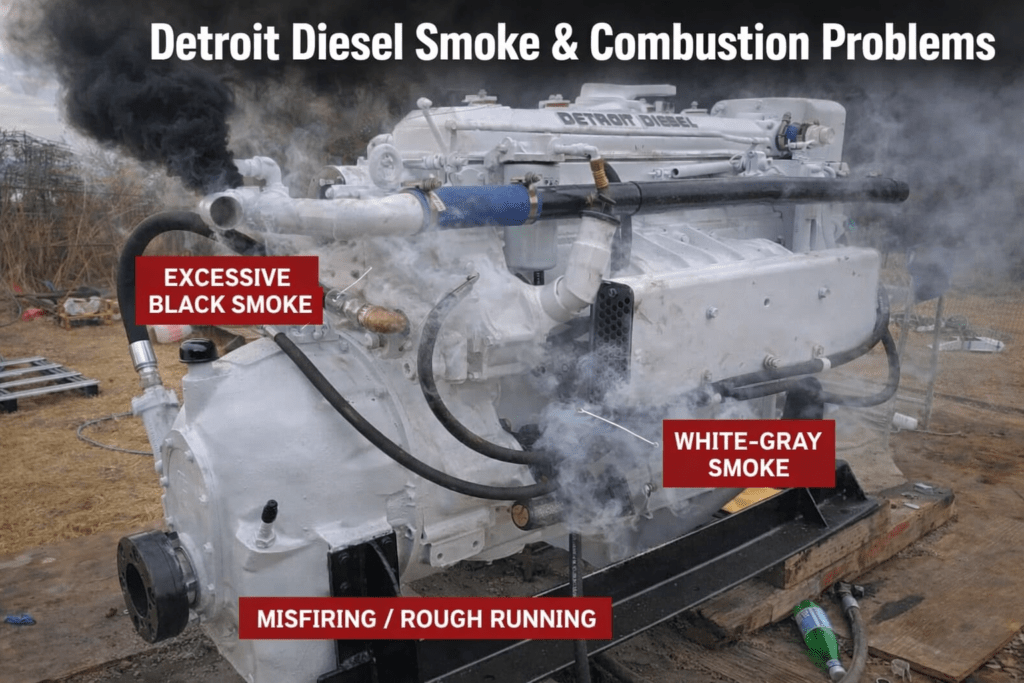
Detroit Diesel Smoke & Combustion Problems: Marine Diesel Diagnosis Authority Guide
Smoke from a marine diesel engine is one of the most important early warning signs of combustion problems. Detroit Diesel engines such as the 6-71, 8V71, 6V92, and 8V92 are known for providing clear visual feedback through exhaust color when something is wrong with fuel delivery, airflow, or internal engine condition.
Understanding what that smoke means allows you to diagnose problems early before they turn into major failures. The most effective way to approach this is through a structured diagnostic process like the one outlined in the Master Marine Diesel Troubleshooting Guide, where symptoms are traced back to real root causes.
Understanding Marine Diesel Smoke Patterns
Marine diesel engines rely on precise combustion. When that process becomes unbalanced, smoke appears. The color of the smoke tells you which system is failing.
- Black smoke indicates excess fuel or restricted air
- White smoke indicates unburned fuel or low combustion temperature
- Blue smoke indicates oil burning inside the engine
Each smoke condition points to a different system, which is why smoke diagnosis should never be treated as a guessing game. It must be tied back to fuel, air, cooling, and mechanical systems working together.
Black Smoke Diagnosis (Airflow vs Fuel Imbalance)
Black smoke is one of the most common complaints and usually appears under load. It indicates incomplete combustion where too much fuel is present for the available air.
- Restricted air filters
- Turbocharger failure
- Aftercooler fouling
- Overfueling injectors
- Injection timing issues
Many black smoke issues are directly tied to airflow restriction. These same problems often show up as power loss and are covered in the Low Power Loss of RPM Diagnosis Center, where airflow and load issues are diagnosed together.
White Smoke Diagnosis (Unburned Fuel Conditions)
White smoke typically indicates that fuel is not burning properly. This can occur when combustion temperatures are too low or when fuel is not atomized correctly.
- Cold engine conditions
- Low compression
- Faulty injectors
- Incorrect injection timing
- Fuel contamination
Persistent white smoke is often linked to fuel quality problems. Water intrusion and microbial growth are common issues, and they are explained in detail in the Fuel Contamination & Filtration Issues Center, where filtration failures and contaminated fuel systems are diagnosed.
Blue Smoke Diagnosis (Oil Consumption Issues)
Blue smoke is a clear indication that engine oil is entering the combustion chamber. This is typically a mechanical issue rather than a fuel or air problem.
- Worn piston rings
- Valve guide wear
- Turbocharger oil seal failure
- Overfilled crankcase
Blue smoke often develops gradually and becomes worse over time. Early diagnosis is critical to prevent major internal engine damage.
Need Help Diagnosing Smoke? Contact 805 Marine Diesel Mechanic
Fuel System Influence on Combustion
Fuel system problems directly affect combustion quality. Injectors must deliver precise fuel at the correct pressure and timing. When that process is disrupted, combustion becomes unstable and smoke develops.
Fuel system issues often overlap with combustion problems and are covered in the Fuel System Diagnosis Center, where restriction, contamination, and injector performance are analyzed.
Air System and Turbocharger Effects
Detroit Diesel engines are extremely sensitive to airflow. If the turbocharger or intake system becomes restricted, the engine cannot supply enough oxygen for combustion.
This imbalance leads to black smoke, poor efficiency, and loss of power. Air system failures are often tied to issues found in the Turbo & Air System Problems Center, where airflow restrictions and boost problems are diagnosed.
Cooling System Effects on Combustion
Cooling systems also influence combustion. When engines run too hot, combustion efficiency drops. When they run too cold, fuel does not burn completely.
Cooling-related combustion problems are often tied back to issues diagnosed in the Cooling System Diagnosis Center, where heat transfer and flow restrictions are evaluated.
Professional Combustion Diagnosis Process
At 805 Marine Diesel Mechanic, combustion diagnosis is performed using a structured process:
- Injector testing
- Fuel pressure evaluation
- Turbocharger inspection
- Compression testing
- Airflow restriction checks
Advanced inspections are available through the Computerized Marine Engine Survey Diagnostics Center, where deeper system analysis is performed.
Preventing Combustion and Smoke Problems
Most smoke-related issues develop slowly. Preventive maintenance is key to avoiding major failures.
- Injector inspections
- Air filter maintenance
- Fuel system servicing
- Turbocharger inspections
- Monitoring exhaust smoke changes
Detroit Diesel Service – Ventura to Santa Barbara
805 Marine Diesel Mechanic provides combustion and smoke diagnostics throughout Ventura, Oxnard, Channel Islands Harbor, and Santa Barbara.
Detroit Diesel Smoke Diagnosis FAQ
What does black smoke mean?
Black smoke indicates excess fuel or insufficient air, often caused by airflow restriction or turbocharger problems.
Is white smoke normal?
Some white smoke during cold start is normal, but persistent smoke indicates injector or compression issues.
What causes blue smoke?
Blue smoke indicates oil burning inside the engine, usually from worn components.
Can fuel contamination cause smoke?
Yes, contaminated fuel disrupts combustion and often causes white or black smoke.
Do injectors affect smoke?
Yes, poor spray patterns cause incomplete combustion and visible exhaust smoke.
Can turbo failure cause black smoke?
Yes, reduced airflow causes excess fuel conditions and black smoke.
Can overheating affect combustion?
Yes, high temperatures reduce efficiency and affect combustion balance.
Why does smoke increase under load?
Load increases fuel demand, exposing airflow or fuel system restrictions.
Is smoke always a serious issue?
Yes, it indicates imbalance and should be diagnosed early.
Can air restrictions cause smoke?
Yes, airflow limitation is a major cause of black smoke.
Can oil leaks cause smoke?
Yes, oil entering combustion creates blue smoke.
What is the first step in diagnosis?
Identify smoke color and operating condition.
Can poor maintenance cause smoke?
Yes, buildup and wear lead to combustion problems.
Can injector timing cause smoke?
Yes, incorrect timing affects combustion efficiency.
Can cooling issues cause smoke?
Yes, improper temperature affects combustion.
Why is smoke worse at startup?
Cold engines burn fuel less efficiently.
Can smoke damage the engine?
Yes, it indicates problems that can lead to failure.
Is black smoke linked to power loss?
Yes, both are caused by airflow or fuel imbalance.
Can turbo seals cause blue smoke?
Yes, oil leaks from turbo seals can enter combustion.
When should I call a professional?
If smoke persists, professional diagnosis prevents major damage.