
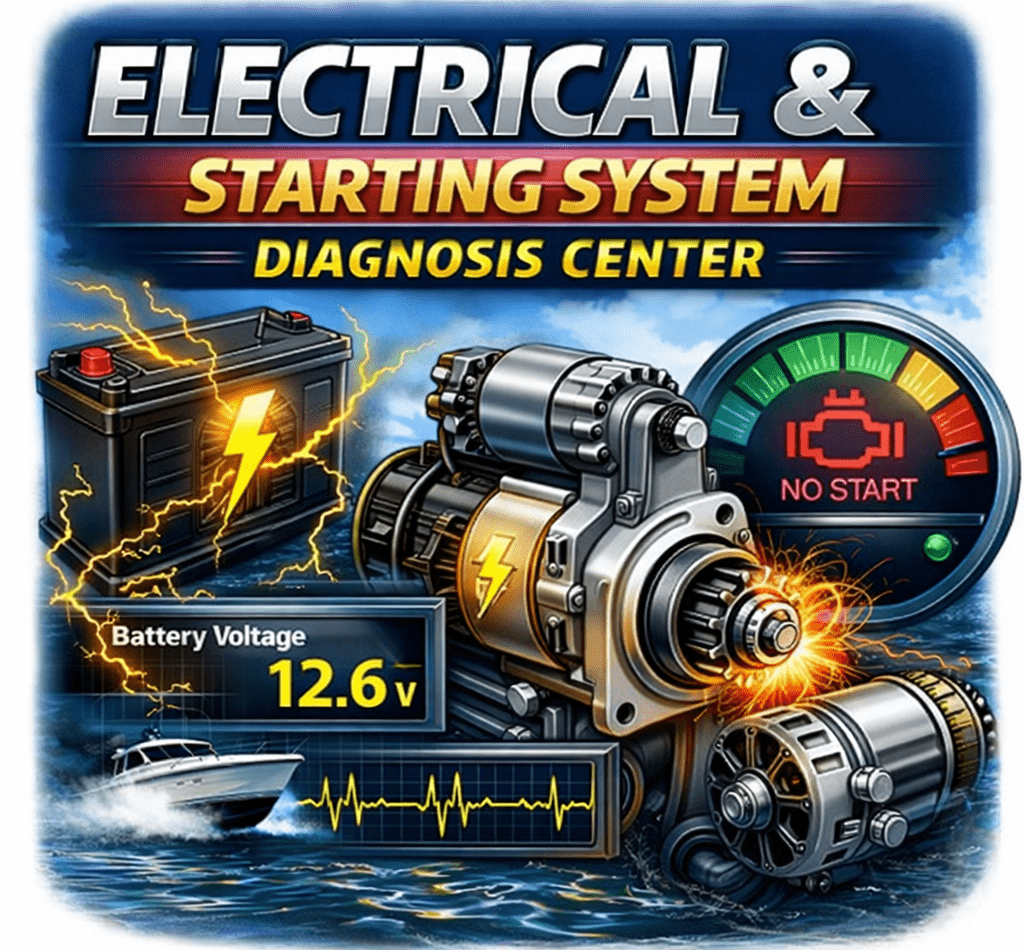
Electrical and starting system issues are one of the most common causes of marine diesel breakdowns. From weak batteries to hidden voltage drop, these problems can prevent the engine from cranking or starting properly even when everything else appears normal.
This Electrical & Starting System Diagnosis Center provides a complete troubleshooting framework used by trained technicians at 805 Marine Diesel Mechanic throughout Ventura, Oxnard, Channel Islands Harbor, and Santa Barbara.
Return to Master Marine Diesel Troubleshooting Guide →
Electrical Starting System Fundamentals
The starting system is a complete circuit—not just a battery and starter. Power must flow from the battery, through cables, connections, and the starter motor, and return through a solid ground path.
Any resistance in this path reduces current flow and can lead to slow crank or no-start conditions. This is why electrical issues often overlap with performance problems like loss of RPM or combustion issues found in the Smoke & Combustion Diagnosis Center.
No Crank vs Slow Crank vs Cranks But Won’t Start
Identifying the correct starting condition is the first step in accurate diagnosis.
- No Crank: Electrical circuit failure (battery, solenoid, wiring)
- Slow Crank: Voltage drop or weak current delivery
- Cranks But Won’t Start: Fuel or combustion issue
Voltage Drop — The Hidden Problem
Voltage drop is one of the most common and overlooked issues. Even with a fully charged battery, resistance in cables or connections can prevent enough current from reaching the starter.
This often creates symptoms that mimic fuel system issues or combustion problems, especially when paired with white smoke at startup.
Starter Motor & Current Draw
The starter must draw sufficient current to rotate the engine at proper speed. If current draw is too high or too low, the engine will not start correctly.
This can overlap with deeper issues found in Mechanical Failure Diagnostics if engine resistance is excessive.
Charging System & Alternator Problems
Charging issues reduce battery capacity over time and often lead to intermittent starting problems.
These issues can also contribute to shutdown symptoms like engine starts then dies or engine shuts off while running.
Glow Plug & Cold Start Systems
Glow systems assist cold combustion. When they fail, engines may crank normally but struggle to start, often producing white smoke.
Cross-System Electrical Failures
Electrical problems often overlap with other systems:
- Fuel System Diagnosis
- Cooling System Diagnosis
- Computerized Diagnostics
- High EGT
- Engine Overload
- Overheating Under Load
Advanced Diagnostic Flow
- Check battery voltage (rest + load)
- Perform voltage drop testing
- Measure starter current draw
- Inspect grounds and connections
- Confirm cranking speed
- Verify fuel solenoid operation
- Cross-check fuel and combustion systems
Prevention & Maintenance
Routine inspection prevents electrical failure and ensures reliable starting.
Service through Marine Diesel Engine Services helps maintain system reliability.
Reference:
Cummins Marine |
Caterpillar Marine
Local Electrical Diagnostics
805 Marine Diesel Mechanic provides advanced electrical diagnostics throughout Ventura, Oxnard, Channel Islands Harbor, and Santa Barbara.
Electrical System FAQ
1. Why won’t my engine crank?
This is usually caused by a battery, starter, or wiring issue. It is important to test voltage under load, not just at rest, to confirm the problem.
2. What causes slow cranking?
Slow cranking is often due to voltage drop or weak current delivery. Corroded cables and poor connections are common causes.
3. Why does my engine crank but not start?
If the engine cranks normally, the issue is usually fuel or combustion related. See cranks but won’t start for full diagnosis.
4. Can a bad battery cause starting issues?
Yes, even if voltage appears normal, the battery may fail under load. Load testing is required to confirm battery condition.
5. What is voltage drop?
Voltage drop occurs when resistance reduces available power. This can prevent proper starter operation even with a good battery.
6. Can alternator problems cause starting issues?
Yes, a failing alternator prevents batteries from charging properly. Over time, this leads to weak starting performance.
7. What does a bad starter sound like?
Clicking or slow turning often indicates starter or electrical issues. Proper testing is needed to confirm.
8. Can electrical issues mimic fuel problems?
Yes, slow cranking can prevent proper combustion. This can appear similar to fuel system issues.
9. Can glow plugs affect starting?
Yes, failed glow plugs make cold starting difficult. This often results in extended cranking and white smoke.
10. Should I check cables and grounds?
Yes, poor connections are one of the most common causes of starting issues. They should always be inspected first.
11. Can electrical issues cause shutdown?
Yes, intermittent electrical faults can stop engine operation unexpectedly. This often overlaps with control system issues.
12. Can diagnostics confirm electrical problems?
Yes, testing and the diagnostics center help confirm root causes.
13. Can corrosion cause starting issues?
Yes, corrosion increases resistance and reduces current flow. This is one of the most common marine electrical problems.
14. Can bad grounds cause no-start?
Yes, poor grounding can prevent the starter from operating properly. This is often overlooked during diagnosis.
15. Can electrical issues affect performance?
Yes, electrical supply problems can affect engine control systems. This may lead to performance issues.
16. When should I call a technician?
If starting issues persist or worsen, professional testing is recommended. Early diagnosis prevents further damage.
17. Can electrical problems cause overheating?
Indirectly, yes. Electrical faults can affect cooling system controls and sensors.
18. Can starting problems get worse?
Yes, electrical issues typically worsen over time. Early diagnosis prevents system failure.
19. What is the first diagnostic step?
Start by checking battery voltage under load. This confirms whether power supply is adequate.
20. Where should I start?
Start with the Master Troubleshooting Guide for structured diagnosis.
12 Responses