
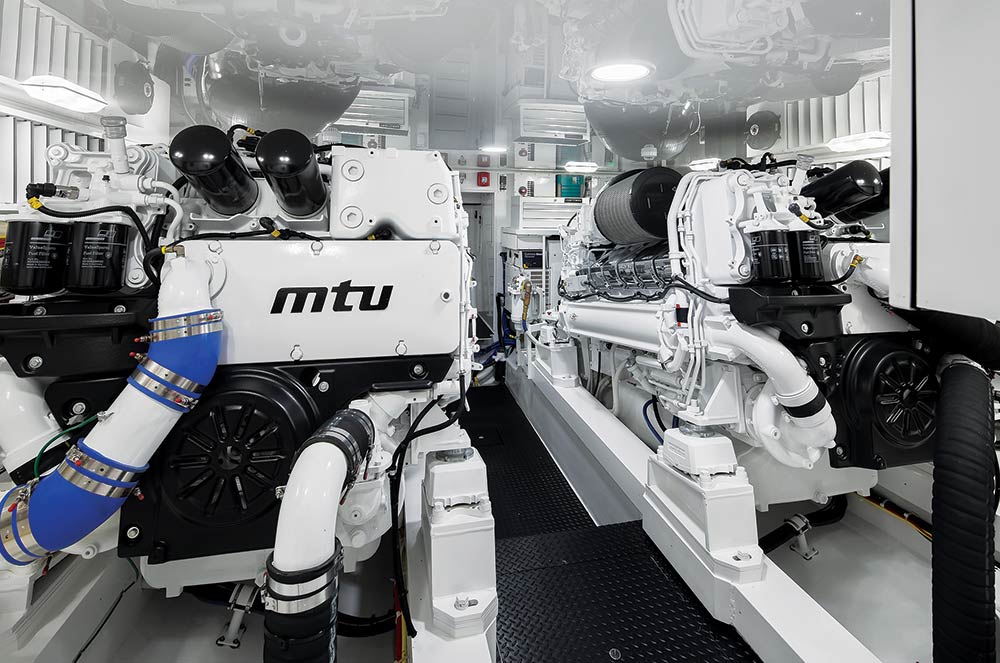
MTU marine diesel engines are premium inboard power systems, but the right way to maintain them is not to treat the engine as a single isolated component. A yacht with MTU power depends on fuel quality, cooling-water flow, turbocharger response, electronic controls, exhaust restriction, driveline alignment, and operator history all working together. That is why the first diagnostic step for any MTU-powered vessel should be the Master Marine Diesel Troubleshooting Guide, which organizes symptoms into a system-based path instead of guessing at parts.
At 805 Marine Mechanic, our trained technicians support inboard diesel vessels across Ventura, Oxnard, Channel Islands Harbor, and Santa Barbara. For yacht owners, MTU service is not only about changing oil and filters. It is about protecting a high-value propulsion package, confirming the engine is reaching rated load correctly, and catching early signs of restriction, overheating, smoke, or control-system faults before they become expensive failures offshore.
This guide expands the original MTU overview into a technician-focused service and diagnostic resource for local yacht owners. It explains why MTU engines became so respected, how Detroit Diesel heritage and Rolls-Royce Power Systems shaped the brand, what matters in the Series 2000 and Series 4000 platforms, and how a local diagnostic approach should be applied before a major repair, overhaul, or repower decision is made.
MTU Marine Diesel Engines as a Complete Propulsion System
MTU engines are often selected because they deliver high output in a compact engine-room footprint. That power density is useful for sportfishing yachts, performance cruisers, pilot boats, patrol craft, and larger luxury vessels that need strong acceleration without giving up interior space. But high-output marine diesel engines are also sensitive to load, cooling condition, fuel cleanliness, and installation details. A restricted raw-water circuit, dirty aftercooler, fouled propeller, weak fuel supply, or slipping transmission can make a healthy MTU engine behave as if the engine itself is failing.
That is why every inspection should begin with a complete propulsion view. The service pathway at 805 Marine Diesel Mechanic marine services starts by identifying the owner’s symptom, operating conditions, engine hours, recent service history, alarm history, and whether the issue appears only at idle, during acceleration, at cruise, or under full load. For MTU-specific service planning, our MTU marine services page organizes maintenance, diagnostics, and overhaul support around the same principle: confirm the system before condemning a major component.
A yacht that leaves Ventura Harbor, runs across the Santa Barbara Channel, trolls near the Channel Islands, and returns through afternoon chop asks a lot from the engine package. The engine must pull clean fuel from the tank, move enough seawater through heat exchangers, build boost correctly, hold stable electronic control values, and push through the propeller load without over-fueling. When one part of that chain falls out of range, the symptom may show up as smoke, low RPM, high exhaust temperature, hard starting, or an intermittent alarm.
From Detroit Diesel Heritage to Rolls-Royce Power Systems
The MTU name carries a long engineering history. Detroit Diesel built its reputation on durable workboat, commercial, military, and heavy-duty diesel applications, while MTU Friedrichshafen brought European high-speed diesel engineering and marine propulsion development. The modern MTU yacht engine story grew from that shared focus on dependable high-output power, then continued under Rolls-Royce Power Systems as the product range, controls, emissions systems, and global support network expanded.
For yacht owners, that history matters because it explains the platform’s strengths. MTU engines were not built as casual recreational engines with light-duty expectations. They were designed for demanding load profiles, rapid acceleration, long service life, and integration with sophisticated control systems. Official manufacturer information lists the mtu Series 2000 yacht engine family with power ratings up to 1,939 kW / 2,600 bhp, depending on model and rating, and describes the platform around power, fuel efficiency, and reliability. For reference, see the official mtu Series 2000 yacht engine information.
Local support still matters even when the engine has a global reputation. A yacht sitting in Channel Islands Harbor may have a very different failure pattern than a commercial vessel running daily. Long idle periods, salt air, dockside battery cycling, partially loaded trips, and fuel that sits between seasons all affect diagnostics. Our MTU marine diesel engine services focus on translating that big-engine capability into reliable local use for owners who operate out of Ventura, Oxnard, Santa Barbara, and the islands.
Why Yacht Builders and Owners Choose MTU Power
Yacht builders choose MTU engines because they solve several design problems at once. They offer high output for their size, strong torque delivery, smooth operation when installed correctly, electronic management, and broad support for high-end yacht applications. The result is a propulsion package that fits premium sportfishers, enclosed flybridge yachts, large express cruisers, expedition vessels, and commercial crossover boats.
For owners, the benefit is confidence when the engine is maintained correctly. A properly loaded MTU should accelerate cleanly, reach expected wide-open-throttle RPM, maintain stable coolant and exhaust temperature, and avoid excessive smoke once warm. If it does not, the issue should be approached through a structured diagnostic process. A good starting point is comparing the engine’s symptoms with MTU marine diesel engine specifications and then checking service history, fuel quality, boost response, cooling condition, and drivetrain load.
MTU platforms also support modern electronic diagnostics. Electronic control units, sensors, alarms, data logs, and live operating values allow trained technicians to see whether the engine is being limited by fuel pressure, boost pressure, exhaust temperature, coolant temperature, throttle command, or protective derate logic. For a sea trial, purchase inspection, or unexplained alarm, the computerized marine engine survey diagnostics center explains why scan data should be paired with mechanical testing rather than treated as a replacement for it.
Series 2000 and Series 4000 at a Glance
The two most common yacht-focused MTU families are the Series 2000 and Series 4000. Exact ratings depend on model, duty classification, emissions package, installation, software, and application. The table below is a practical owner-level overview, not a substitute for a serial-number-specific data plate or factory documentation.
| MTU Series | Common Yacht Use | Typical Configuration | Owner Service Focus |
|---|---|---|---|
| Series 2000 | Performance yachts, sportfishers, patrol craft, and fast cruisers | V8, V10, V12, and V16 variants depending on model generation | Fuel quality, aftercooler condition, boost response, electronic data, and load verification |
| Series 4000 | Large yachts, commercial vessels, ferries, and heavier-duty propulsion applications | V8, V12, V16, and V20 variants depending on rating and application | Cooling capacity, exhaust temperature, SCR or emissions equipment where installed, and lifecycle maintenance |
For owners comparing models, our MTU marine engine data resource provides a local service perspective on specifications, engine families, maintenance needs, and repower considerations. It is useful when a listing advertises “MTU power” but does not clearly explain which model, rating, hours, service records, or control package is installed. For broader marine-industry context beyond local service, Marine Log marine industry coverage remains a useful external reference for commercial vessel, engine, shipyard, and propulsion news.
Local Operating Conditions in Ventura, Oxnard, Channel Islands Harbor, and Santa Barbara
The Santa Barbara Channel is a demanding environment for marine diesel engines. Boats may idle in the harbor for long periods, accelerate hard once outside the breakwater, run into changing sea state, then sit for weeks between trips. Salt air and moist engine rooms accelerate corrosion, while long storage periods can allow microbial fuel contamination, weak batteries, sticky controls, and scale buildup in raw-water components.
For vessels based in Ventura, the marine services Ventura page outlines how mobile diesel service supports owners at slips, yards, and local marinas. Owners looking specifically for dockside support can also review our marine mechanic Ventura CA service information. The goal is to reduce downtime by bringing diagnostic tools, mechanical experience, and system logic directly to the vessel whenever possible.
Oxnard and Channel Islands Harbor create their own service pattern. Many yachts run repeated trips to Anacapa, Santa Cruz Island, Santa Rosa Island, or offshore fishing grounds, which means fuel polishing, coolant condition, raw-water flow, and drivetrain load should be checked before a symptom becomes a trip-ending failure. For that region, the marine mechanic Channel Islands resource and Channel Islands marine services page help connect MTU owners with local support built around those operating conditions.
Santa Barbara owners often deal with a mix of cruising, seasonal use, and high expectations for clean, quiet, reliable operation. Our Santa Barbara marine services page explains how inboard diesel repairs, diagnostics, fuel work, cooling-system service, and mechanical support fit local harbor use. When an MTU-powered yacht needs broader vessel repair coordination, the boat repair Santa Barbara resource provides a practical local starting point.
Trained-Technician Diagnostic Logic for MTU Engines
Good MTU diagnostics begin with the symptom and then move through the systems most likely to create that symptom. Replacing parts because an alarm appeared, smoke changed color, or the engine missed rated RPM is not professional troubleshooting. The correct approach is to ask what the engine was doing, when the symptom occurred, what load was applied, what the live data showed, and which supporting systems were outside normal range.
Fuel Delivery and Filtration
Fuel problems are one of the most common causes of hard starting, surging, black smoke, low power, and sudden shutdown. A restriction can appear only when the engine demands high flow, so an engine may idle cleanly at the dock and still fall on its face during a sea trial. The Fuel System Diagnosis Center is the right place to begin when filters, tanks, lift-pump supply, injector behavior, or fuel contamination are suspected.
Advanced MTU fuel work should include tank condition, Racor or primary filtration, secondary filters, air intrusion, water separation, return flow, and pressure under load. The marine diesel fuel system diagnosis center explains how water, air, and low pressure overlap in real symptoms. For owners seeing recurring filter clogging, sludge, biological growth, or power loss after rough-water operation, the marine diesel fuel system problems guide helps separate contamination issues from injector or turbocharger faults.
Airflow, Turbocharger Response, and Boost
MTU engines depend on clean airflow and correct boost pressure. A restricted air filter, charge-air cooler fouling, leaking hose, failing sensor, wastegate issue, turbocharger wear, or exhaust restriction can reduce oxygen available for combustion. The engine may respond with black smoke, slow acceleration, high exhaust temperature, or an inability to reach rated RPM.
The marine diesel turbo system diagnosis center lays out a boost-first workflow. Instead of assuming the turbocharger has failed, a technician confirms air restriction, boost leaks, aftercooler condition, exhaust backpressure, sensor accuracy, and fuel delivery. On an electronic MTU, live data should be compared with mechanical observations so the repair target is supported by evidence.
Cooling System, Heat Exchangers, and Exhaust Temperature
Overheating at idle is not the same diagnostic path as overheating at cruise RPM. Idle overheating may point toward raw-water pump flow, air pockets, coolant circulation, or thermostat behavior. Cruise overheating can involve heat-exchanger restriction, aftercooler fouling, seawater intake limitation, exhaust mixing issues, propeller overload, or a partially blocked raw-water circuit.
The Cooling System Diagnosis Center is the correct starting point when coolant temperature, high exhaust temperature, steam, or load-related heat problems appear. For vessels that spend time in saltwater marinas around Ventura and Santa Barbara, consistent fresh water flushing can help reduce salt and scale buildup in appropriate systems when performed correctly for the installation. Cooling service should always be matched to the exact MTU model, heat-exchanger arrangement, seawater plumbing, and manufacturer procedures.
Electrical, Controls, and Computerized Diagnostics
Modern MTU engines rely on batteries, cables, grounds, control modules, sensors, harnesses, actuators, displays, and communication networks. A weak battery bank or voltage drop can create starting complaints that look like fuel trouble. A bad sensor or wiring problem can trigger derate logic that feels like a mechanical power loss.
For slow cranking, intermittent no-start conditions, warning lights, voltage problems, or unexplained control behavior, use the Electrical & Starting System Diagnosis Center. For deeper ECM testing, sea-trial data capture, fault-code review, and live monitoring, the computerized marine diesel engine survey diagnosis center explains how scan data should be interpreted with load, temperature, boost, fuel pressure, and operator complaints.
Mechanical Condition and Load Verification
Internal mechanical failure is possible, but it should not be assumed first. Low compression, valve issues, injector problems, turbo wear, coolant intrusion, and bearing concerns need disciplined testing. The marine engine mechanical failure diagnostics page explains why trained technicians separate true internal failure from fuel, cooling, air, exhaust, and drivetrain problems that imitate major damage.
Load verification is especially important on high-output yachts. If the propeller is fouled, oversized, damaged, or mismatched to the engine rating, the MTU may over-fuel, smoke, run hot, or fail to reach rated RPM even if the engine is healthy. A proper diagnosis may include sea-trial observation, wide-open-throttle RPM confirmation, boost readings, exhaust temperature, fuel data, shaft condition, and transmission behavior.
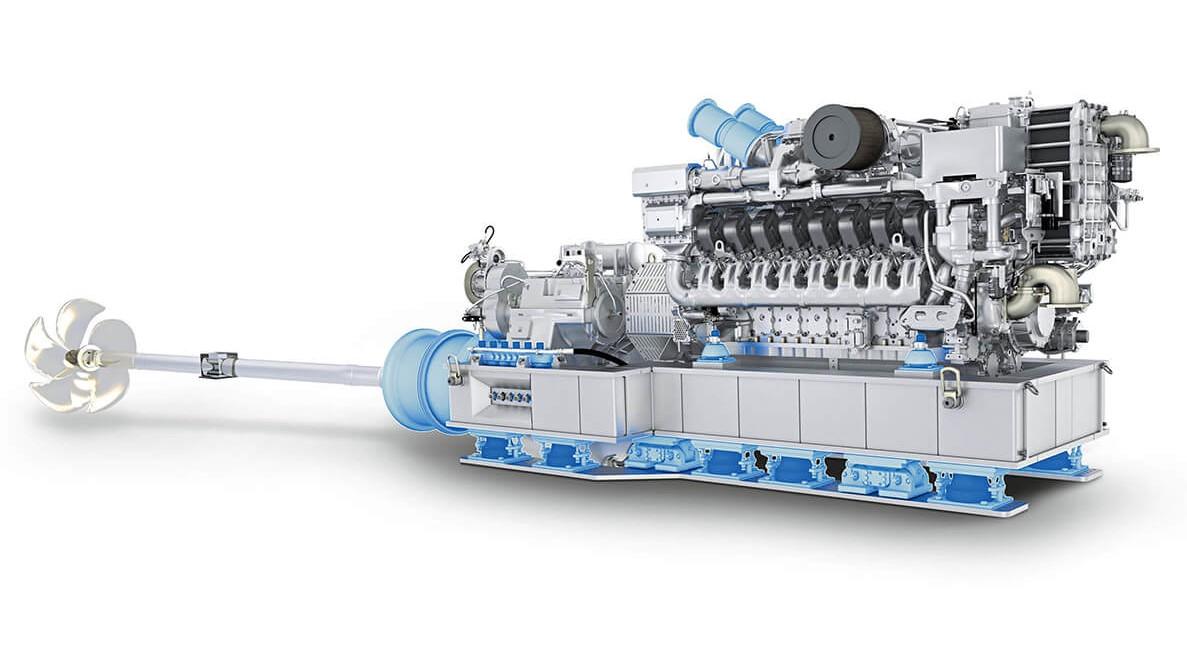
Maintenance Priorities for Series 2000 and Series 4000 Yachts
MTU maintenance should be based on hours, calendar time, duty cycle, coolant chemistry, fuel condition, and the way the boat is actually used. A yacht that runs frequent load-bearing trips may need different attention than a yacht that idles often and sits between seasons. The MTU marine diesel maintenance schedule is a useful planning resource for owners who want to stay ahead of service intervals instead of reacting to alarms.
Routine maintenance includes oil and filter service, coolant inspection, seawater pump inspection, belt and hose checks, battery and charging-system review, exhaust inspection, fuel filter service, and visual inspection for leaks or corrosion. More advanced maintenance may include aftercooler inspection, heat-exchanger cleaning, injector evaluation, valve adjustment where applicable, mount inspection, alignment checks, and confirmation that the engine reaches correct temperature and load. The more detailed MTU marine engine maintenance schedule helps owners think through those tasks before a long trip, survey, or seasonal service window.
On Series 2000 applications, especially fast yachts and sportfishers, acceleration behavior, smoke control, and load response are important health indicators. Our MTU 16V 2000 M97 propulsion engine resource is useful for understanding how high-performance MTU installations should be approached for diagnostics, cooling, electronics, and repower planning. Even when the exact model differs, the diagnostic mindset is the same: verify the supporting systems before assigning fault to a major assembly.
Common MTU Symptoms and the Right First Checks
When an MTU engine will not start, starts and dies, cranks slowly, smokes, overheats, or loses RPM, the first move is to define the failure pattern. A no-crank condition belongs in electrical testing. A normal-crank no-start may point toward fuel delivery, shutdown logic, ECM inputs, or compression. A warm hard-start problem can be different from a cold hard-start problem.
For no-start situations, use the boat engine won’t start guide to separate cranking, fuel, air, and shutdown issues. For engines that start but require extended cranking, the boat engine hard starting marine diesel diagnosis guide and the broader diagnosing hard-starting marine diesel engines resource help identify whether the problem is electrical speed, fuel drain-back, air intrusion, injector condition, or temperature-related compression behavior.
Smoke color also matters. Black smoke usually means the engine is receiving more fuel than the available air can burn, or the vessel is overloaded. White smoke can involve incomplete combustion, cold operation, injector problems, coolant intrusion, or compression concerns. Blue smoke usually points toward oil consumption or turbocharger oil control. The Smoke & Combustion Diagnosis Center breaks those paths apart before parts are replaced unnecessarily.
Older Detroit Diesel-powered vessels follow different mechanical logic than modern electronic MTU engines, but the symptom-first mindset still applies. Owners comparing legacy platforms can review the Detroit Diesel marine engine will not start resource to understand why fuel, air, compression, and cranking speed remain foundational. That background is helpful when moving from a mechanical Detroit Diesel installation to a more electronically managed MTU package.
Repower, Rebuild, or Keep Maintaining the Existing MTU?
A repower decision should never be based on brand reputation alone. It should be based on engine hours, service records, parts availability, compression and oil-analysis results, cooling-system condition, electronic history, transmission compatibility, exhaust routing, shaft and propeller load, and the owner’s intended cruising profile. Sometimes the correct answer is a planned maintenance catch-up. Sometimes it is a top-end repair, a major overhaul, or a full repower.
For owners comparing options, marine engine services provide a broader view of maintenance, repairs, and performance upgrades. If another diesel platform is being considered, comparing MTU with Perkins marine diesel engines or modern MAN marine services can help clarify tradeoffs in output, installation size, parts support, duty cycle, and service expectations. The right engine is the one that matches the hull, usage, engine-room access, budget, and long-term service plan.
Emissions equipment should also be considered early. Depending on the vessel, engine rating, construction date, operating area, and whether a project qualifies as a replacement or major conversion, emissions requirements may affect engine choice and installation design. Marine diesel compliance can be tied to engine power, ship construction date, and operating areas, so regulatory applicability should be confirmed during project planning. A trained technician can help coordinate the practical engine-room implications, including exhaust routing, cooling load, controls, and service access.
What a Professional MTU Service Visit Should Include
A professional MTU service visit should not be limited to a quick oil change unless that is the exact scheduled task and the rest of the engine condition is already documented. For a high-value yacht engine, a trained technician should inspect for leaks, corrosion, loose clamps, hose deterioration, belt condition, raw-water pump condition, coolant level, oil condition, fuel filter status, engine mounts, exhaust condition, alarm history, and unusual vibration or sound.
When the complaint involves performance, the technician should connect the symptom to testable systems. Low power should lead to fuel-flow checks, boost confirmation, air-path inspection, exhaust restriction review, propeller load evaluation, and ECM data where available. Overheating should lead to seawater flow, coolant circulation, heat-exchanger condition, aftercooler condition, and load verification. Hard starting should lead to cranking speed, battery health, voltage drop, fuel prime, air intrusion, shutdown inputs, and compression-related checks when needed.
The owner should also receive clear next steps. That may be a maintenance recommendation, a sea-trial plan, a fuel polishing recommendation, a cooling-system cleaning, a sensor or harness test, an injector evaluation, or an overhaul planning discussion. Professional diagnostics should reduce uncertainty, not simply create a larger parts list.
Local MTU Support for Serious Yacht Owners
MTU engines are capable of excellent service life when they are maintained with the same discipline that went into their design. For owners in Ventura, Oxnard, Channel Islands Harbor, and Santa Barbara, the best results come from combining official engine information, careful local inspection, and a symptom-based diagnostic process. That means looking at the entire propulsion package rather than assuming the most expensive component is the source of every problem.
805 Marine Mechanic supports MTU-powered yachts with mobile inboard diesel diagnostics, maintenance planning, fuel-system troubleshooting, cooling-system service, computerized engine survey support, and overhaul or repower coordination. For MTU-specific questions that are not covered above, the MTU marine diesel engines FAQ provides additional owner-focused guidance. For scheduling, records review, or a vessel-specific diagnostic request, use the 805 Marine Mechanic contact page and include the engine model, hours, vessel location, symptoms, and any recent alarm or service history.
Frequently Asked Questions
Who manufactures MTU marine diesel engines?
MTU marine diesel engines are manufactured under Rolls-Royce Power Systems. The mtu brand traces its modern marine reputation through MTU Friedrichshafen, Detroit Diesel heritage, and continued Rolls-Royce investment in high-output marine power.
Are MTU and Detroit Diesel the same company?
They are not the same company today, but their histories are connected. Detroit Diesel and MTU collaborated during the development era that helped shape modern Series 2000 and Series 4000 marine engines, and MTU later became part of Rolls-Royce Power Systems.
Which MTU engine series are common in yachts?
The Series 2000 and Series 4000 are the most common MTU families discussed in yacht applications. Model choice depends on vessel size, power requirement, duty rating, engine-room access, and whether the vessel needs a performance or heavier-duty propulsion package.
Why are MTU engines popular in large yachts?
MTU engines are known for high power density, smooth operation, electronic control, and strong acceleration when installed and loaded correctly. Yacht builders also value the support network and the ability to match engine packages to demanding hull designs.
Can MTU engines be serviced locally in Ventura, Oxnard, Channel Islands Harbor, and Santa Barbara?
Yes. 805 Marine Mechanic provides mobile inboard marine diesel diagnostics and maintenance support for MTU-powered vessels in Ventura, Oxnard, Channel Islands Harbor, and Santa Barbara. Service begins with symptom-based testing so the correct system is diagnosed first.
What are the first signs an MTU engine needs diagnostics?
Warning signs include hard starting, excessive smoke, overheating, low RPM, slow acceleration, unusual vibration, fuel alarms, coolant temperature alarms, or unexplained electronic faults. Any repeated symptom under load should be documented and diagnosed before the next long offshore run.
How should MTU power loss be diagnosed?
Power loss should be diagnosed by checking fuel delivery, boost pressure, air restriction, exhaust restriction, propeller load, cooling condition, and electronic data. A trained technician should verify whether the engine is truly weak or being limited by a supporting system.
What causes black smoke from an MTU marine diesel?
Black smoke usually means the engine is receiving more fuel than the available air can burn. Common causes include restricted airflow, low boost, overloaded propellers, dirty aftercoolers, fuel delivery problems, or excessive load during acceleration.
What causes white smoke from an MTU engine?
White smoke can come from incomplete combustion, cold operation, injector problems, low compression, coolant intrusion, or incorrect operating temperature. The cause should be separated by when the smoke appears, how long it lasts, and whether coolant level or starting behavior has changed.
Why does an MTU engine overheat at cruise RPM?
Cruise-RPM overheating often points toward restricted raw-water flow, heat-exchanger fouling, aftercooler restriction, coolant circulation problems, exhaust restriction, or vessel overload. The diagnostic path is different from idle overheating, so load and RPM conditions matter.
How often should MTU marine diesel engines be serviced?
Service intervals depend on the exact model, rating, hours, calendar time, and manufacturer schedule. Even low-hour yachts need calendar-based inspection because coolant, fuel, belts, hoses, seawater pumps, and batteries age while the vessel sits.
Should MTU fuel filters be replaced on a schedule?
Yes, fuel filters should be serviced according to the engine and filtration system requirements, but condition matters too. If filters show water, sludge, biological contamination, or repeated restriction, the tank and fuel supply system need diagnosis rather than just another filter change.
Does fresh-water flushing help MTU engines?
Fresh-water flushing can help reduce salt and mineral buildup in suitable raw-water systems when performed correctly for the vessel. The procedure should match the installation so water flow, valves, strainers, and exhaust routing are handled safely.
What does computerized MTU engine diagnostics show?
Computerized diagnostics can show fault codes, live sensor values, alarm history, throttle command, temperature data, boost-related values, and other operating information depending on the engine and tool access. The data is most useful when compared with a sea trial and mechanical inspection.
Can a technician diagnose an MTU problem if there are no fault codes?
Yes. Many fuel, cooling, turbo, exhaust, propeller-load, and mechanical problems may not create a clear fault code. A trained technician uses live data, physical inspection, pressure testing, temperature checks, and operating symptoms together.
What should be inspected before buying an MTU-powered yacht?
A pre-purchase inspection should review engine hours, service records, oil samples, coolant condition, fuel quality, sea-trial performance, electronic data, visible leaks, mounts, exhaust, and whether the engines reach rated RPM. The inspection should also evaluate the generator, driveline, and cooling systems.
Is an MTU repower a good upgrade?
An MTU repower can be an excellent upgrade when the hull, transmission, exhaust, cooling capacity, controls, and budget all support the project. A repower should be planned around the full vessel system, not just the engine horsepower number.
How do local Southern California conditions affect MTU maintenance?
Ventura, Oxnard, Channel Islands Harbor, and Santa Barbara vessels often deal with salt air, seasonal use, long idle periods, and runs across changing sea state. Those conditions make fuel quality, cooling-system health, battery condition, corrosion control, and load testing especially important.
Do MTU engines require OEM parts?
Critical MTU maintenance and repair work should use parts and fluids that meet manufacturer requirements. Using the wrong filters, coolant, sensors, or service parts can create performance issues, warranty concerns, or avoidable component damage.
When should I call 805 Marine Mechanic for MTU service?
Call when the engine develops repeated alarms, smoke, overheating, hard starting, low power, unusual vibration, or when a survey, seasonal service, or repower evaluation is needed. For the fastest help, provide the engine model, hours, vessel location, symptom history, and recent service records.
Schedule MTU Marine Diesel Service
If your MTU-powered yacht is due for maintenance, showing smoke, running hot, losing RPM, or needs a survey-level inspection before a major trip, 805 Marine Mechanic can help with trained inboard diesel diagnostics across Ventura, Oxnard, Channel Islands Harbor, and Santa Barbara.
One Response