
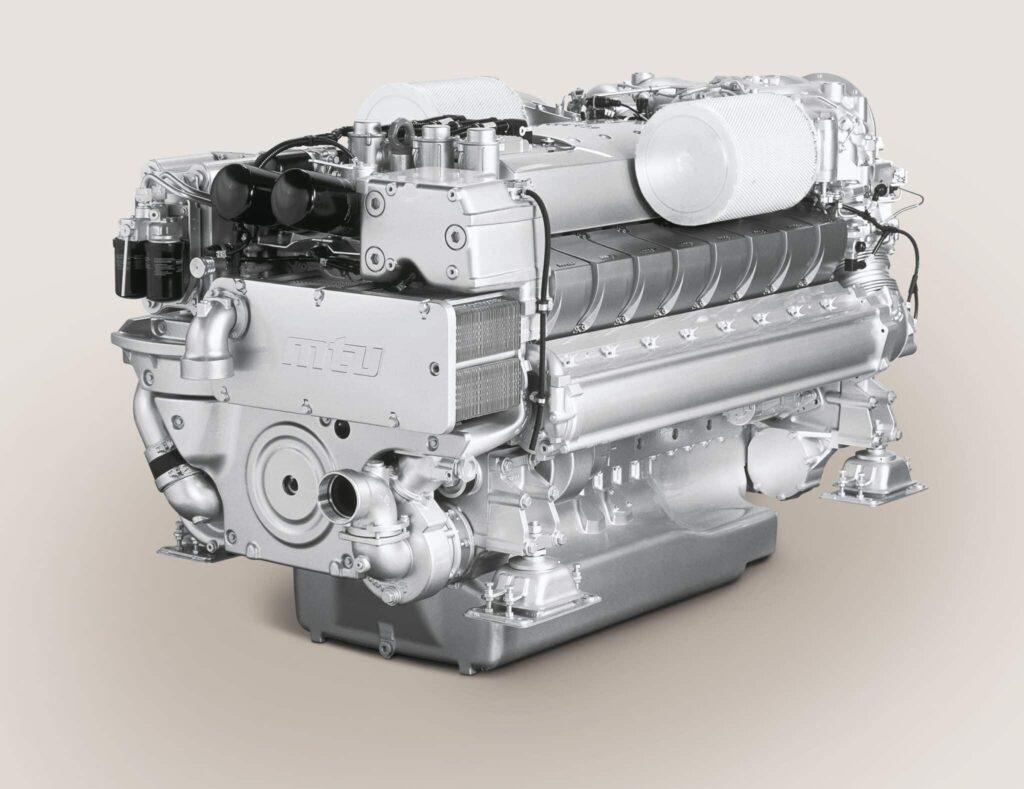
The MTU 16V 2000 M97 is a high-output propulsion engine used in yachts, sportfishing vessels, fast craft, and commercial marine applications where power density, acceleration, smooth operation, and reliability matter. These engines require disciplined maintenance because small changes in cooling efficiency, fuel quality, boost pressure, exhaust temperature, or electronic control data can affect performance quickly.
805 Marine Diesel Mechanic supports MTU Series 2000 owners throughout Ventura Harbor, Channel Islands Harbor, Oxnard, Santa Barbara Harbor, Port Hueneme, and nearby Central Coast marinas. Our mobile service helps owners and captains reduce downtime while keeping high-performance propulsion systems properly inspected, documented, and ready for offshore use.
Schedule MTU 16V 2000 M97 Service
MTU 16V 2000 M97 Marine Engine Overview
High-Output Series 2000 Performance
The MTU 16V 2000 M97 is designed for demanding marine propulsion applications where strong acceleration, high cruise performance, low vibration, and electronic engine protection are essential. It is part of the MTU Series 2000 family, a platform widely used in premium yachts, sportfishers, patrol vessels, commercial craft, and fast marine applications.
Because these engines operate at high output, the support systems matter as much as the engine block itself. Cooling circuits, aftercoolers, seawater pumps, fuel filtration, air intake, exhaust routing, ECM data, and driveline condition all influence performance and reliability.
Why Specialized MTU Service Matters
The MTU 16V 2000 M97 is not a basic mechanical diesel. It is an electronically managed, high-performance propulsion system that requires correct diagnostic practices, proper maintenance intervals, clean fuel, healthy cooling systems, and accurate interpretation of engine data.
Fault codes, temperature trends, boost readings, fuel-pressure behavior, and sea-trial data should be reviewed together. Guessing at parts without looking at the full system can waste time and miss the actual cause of the problem.
MTU 16V 2000 M97 Maintenance Priorities
Routine Engine Service
Routine MTU service includes oil and filter changes, fuel-filter replacement, coolant checks, belt inspection, hose inspection, seawater-system inspection, aftercooler review, heat-exchanger inspection, air-filter inspection, electronic diagnostics, and visual engine-room inspection.
High-performance engines should also be maintained by trend. Captains should track coolant temperature, oil pressure, boost pressure, exhaust temperature, fuel burn, RPM, vibration, and alarm history. Small changes can point to developing problems before a major failure occurs.
Related MTU support includes MTU marine diesel engine services, MTU marine engine data, and MTU diesel engine maintenance schedule.
Cooling-System and Aftercooler Service
Cooling-system service is one of the most important maintenance areas on the MTU 16V 2000 M97. These engines create major heat under load, and even partial restrictions in seawater flow can reduce performance or trigger alarms.
Aftercoolers, heat exchangers, seawater pumps, strainers, hoses, coolant circuits, zincs, and exhaust components should be inspected regularly. A vessel may idle normally at the dock but still show rising temperature, reduced RPM, smoke, or ECM derate during heavy operation.
Related cooling support includes marine engine raw-water flow problems, Sherwood marine engine pump maintenance, and fresh water flushing for marine diesel engines.
Fuel-System Cleanliness
Fuel quality is critical for MTU Series 2000 engines. Water contamination, biological growth, restricted filters, injector imbalance, or unstable fuel pressure can cause hard starting, smoke, power loss, alarms, and expensive injector damage.
Fuel-system inspection should include the tank condition, water separators, filters, fuel lines, return lines, pressure behavior, and contamination history. If the vessel sits between trips, fuel degradation can become a major reliability concern even when engine hours are low.
Electronic Diagnostics and Data Review
Electronic diagnostics help identify stored faults, active alarms, derate events, sensor problems, overheat history, low-voltage conditions, boost abnormalities, and operating trends. For high-output MTU engines, diagnostic data should always be paired with visual inspection and sea-trial behavior.
Related survey support includes marine diesel vessel pre-purchase engine survey and pre-purchase marine engine survey.
MTU 16V 2000 M97 Performance Warning Signs
- Failure to reach expected RPM
- Rising coolant temperature under load
- Smoke during acceleration
- Weak boost response
- High exhaust temperature
- Repeated electronic alarms
- Low oil pressure warnings
- Fuel-filter restriction
- Unusual vibration
- Loss of top-end speed
These symptoms should be diagnosed as a complete propulsion system. The root cause may involve fuel delivery, airflow, seawater flow, exhaust restriction, propeller load, sensor data, or drivetrain condition.
Drivetrain and Vessel Load Checks
Large MTU engines transmit substantial torque through transmissions, couplings, shafts, bearings, and running gear. Vibration, misalignment, damaged couplers, fouled propellers, or overloaded running gear can reduce performance and damage components.
Related drivetrain support includes marine flexible shaft couplings
Local MTU Dockside Service Areas
805 Marine Diesel Mechanic provides mobile MTU service throughout Ventura Harbor, Channel Islands Harbor, Oxnard, Santa Barbara Harbor, Port Hueneme, and surrounding Central Coast marine facilities.
We support MTU-powered yachts, sportfishing vessels, fast craft, and commercial vessels with scheduled maintenance, cooling-system inspection, diagnostic support, survey preparation, pre-trip checks, and condition-based troubleshooting.
Helpful MTU Technical Resources
MTU 16V 2000 M97 FAQ
Do you service MTU 16V 2000 M97 engines?
Yes, 805 Marine Diesel Mechanic services MTU Series 2000 propulsion engines including high-output 16V platforms. Service support includes diagnostics, cooling-system inspection, scheduled maintenance, and survey preparation.
Why does the MTU 16V 2000 M97 need specialized service?
The MTU 16V 2000 M97 is an electronically managed high-performance propulsion engine. Correct diagnostics, proper maintenance intervals, clean fuel, cooling-system health, and data review are essential for reliability.
Can MTU service be done dockside?
Yes, many MTU inspections, maintenance services, diagnostics, and cooling-system checks can be performed dockside. Some performance complaints may still require sea-trial verification under load.
What causes an MTU 16V 2000 engine to lose RPM?
Loss of RPM may be caused by fuel restriction, cooling-system restriction, fouled running gear, overloaded propellers, boost problems, exhaust restriction, injector issues, or electronic derate conditions.
Why is aftercooler service important?
Aftercoolers help control charge-air temperature and combustion efficiency. Restricted or contaminated after
2 Responses