
Marine flexible shaft couplings reduce vibration, protect drivetrain components, and help smooth power transfer between the transmission and propeller shaft.
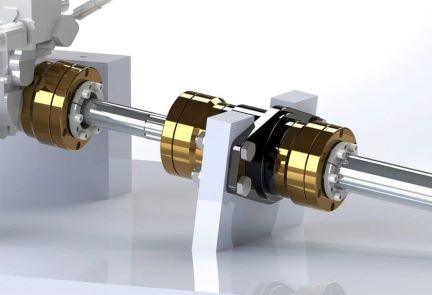
805 Marine Diesel Mechanic installs and services marine flexible shaft couplings for inboard diesel yachts, sailboats, sportfishing vessels, and commercial boats throughout Ventura Harbor, Oxnard, Channel Islands Harbor, and Santa Barbara Harbor. A properly selected coupling can reduce noise, dampen torsional vibration, protect transmission components, and help reduce wear on shaft bearings and seals.
Before assuming a coupling alone will fix vibration, start with the Marine Diesel Troubleshooting Guide. Shaft vibration, gearbox noise, motor mount sag, propeller issues, and alignment problems should be diagnosed as a complete propulsion-system concern.
Schedule Shaft Coupling Service
Marine Flexible Shaft Coupling Installation
A marine flexible shaft coupling is installed between the gearbox output flange and the propeller shaft coupling. Its purpose is to transmit engine torque while helping absorb vibration, shock loading, and minor movement between the engine and shaft system.
Many boat owners first notice the need for coupling service when the vessel develops drivetrain vibration, cabin resonance, harsh gear engagement, transmission rattle, or shaft-bearing wear. In some cases, a coupling upgrade can reduce onboard noise and vibration significantly when the rest of the driveline is correctly aligned.
For broader drivetrain and gearbox support, visit Marine Transmission Service & Repair.
Why Flexible Shaft Couplings Matter
Marine diesel engines create torsional vibration every time combustion events transmit torque through the crankshaft, transmission, coupling, shaft, and propeller. These forces become more noticeable at low RPM, during shifting, while maneuvering in the harbor, or when the drivetrain is slightly misaligned.
A quality flexible coupling helps reduce:
- Torsional vibration
- Gear engagement shock
- Drivetrain resonance
- Transmission flange stress
- Propeller shaft shock loading
- Wear on shaft bearings and seals
- Cabin noise and vibration
Flexible couplings do not replace correct alignment, but they can make a properly aligned propulsion system smoother and more forgiving.

Shaft Alignment Still Matters
A flexible coupling should never be used as a shortcut for poor shaft alignment. Major misalignment can still damage transmissions, cutlass bearings, shaft seals, couplings, and engine mounts.
Before installing a coupling, the technician should inspect:
- Transmission output flange condition
- Propeller shaft alignment
- Engine mount condition
- Cutlass bearing wear
- Shaft straightness
- Coupling face condition
- Transmission mounting hardware
For related mount and alignment service, visit Marine Engine Motor Mount Replacement.
Bruntons SigmaDrive Coupling Systems
Bruntons SigmaDrive systems are designed to reduce vibration and compensate for small alignment changes while transmitting torque through the propulsion system. SigmaDrive systems can be used on a range of vessels, from yachts and sailboats to heavier workboat applications, depending on sizing and installation requirements.
One advantage of SigmaDrive-style systems is their ability to manage propeller thrust in certain configurations while helping reduce vibration from imperfect alignment. Proper installation is still essential because coupling selection depends on horsepower, shaft size, gearbox configuration, available space, and operating load.
Bullflex Marine Flexible Couplings
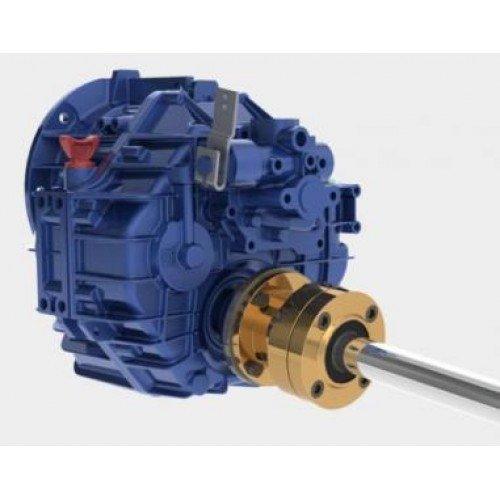
Bullflex-style couplings are commonly used on smaller stern gear installations where vibration damping, smooth torque transfer, and backlash reduction are important. Their flexible rubber element helps reduce torsional vibration while maintaining power transfer between the transmission and shaft.
According to VETUS product information, Bullflex couplings are designed for vibration damping and include a pre-tensioned rubber element for low-noise transmission. VETUS Bullflex flexible coupling
These systems may help with:
- Low-speed torsional vibration
- Transmission rattle
- Minor shaft movement
- Backlash reduction
- Noise reduction
DriveSaver and Shock Protection
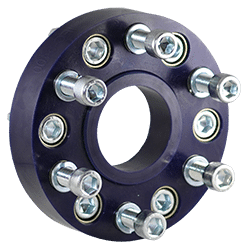
DriveSaver-style flexible couplings use non-metallic isolation material between the transmission and propeller shaft. These couplings can help absorb shock loads from propeller strikes, line wraps, sudden torque changes, and harsh shifting events.
DriveSaver couplings may also provide a protective barrier between the transmission and shaft system, helping reduce drivetrain shock before it reaches expensive transmission components.
Choosing the Correct Flexible Shaft Coupling
The correct coupling depends on the vessel’s engine, shaft, transmission, horsepower, torque curve, reduction ratio, and operating conditions. Choosing a coupling only by shaft diameter can lead to poor performance or premature failure.
Selection should consider:
- Engine horsepower and torque
- Transmission model and flange pattern
- Gear reduction ratio
- Shaft diameter
- Available installation space
- Propeller thrust loading
- Existing vibration symptoms
- Engine mount condition
- Operating profile
For broader service planning, visit the Marine Diesel Engine Services page.
Flexible Couplings and Transmission Protection
A marine transmission is exposed to shock loads every time the vessel shifts into gear, loads the propeller, or encounters rough water. Flexible couplings help reduce harsh torque transfer, but they must be installed correctly and matched to the propulsion system.
If a vessel has persistent vibration or gearbox noise, the source may be:
- Worn motor mounts
- Poor shaft alignment
- Damaged propeller
- Cutlass bearing wear
- Transmission wear
- Incorrect coupling selection
- Engine idle instability
For survey-related drivetrain evaluation, visit Marine Engine Survey.

Installation and Sea Trial Testing
Flexible shaft coupling installation should be followed by alignment verification and operating testing. Even when the coupling fits correctly, the vessel should be checked under real load to confirm vibration levels, shifting behavior, shaft movement, and transmission smoothness.
A proper installation process may include:
- Inspecting existing shaft and gearbox flanges
- Checking motor mount condition
- Verifying coupling dimensions
- Cleaning mating surfaces
- Installing correct hardware
- Torquing fasteners properly
- Checking static alignment
- Performing sea-trial vibration testing
For local inspection support, visit Marine Mechanic Ventura CA.
Noise and Vibration Reduction Benefits
Many flexible shaft coupling systems can reduce drivetrain vibration and onboard noise when installed as part of a correctly aligned propulsion system. The original source material notes average noise reduction around 5 dBa, or up to roughly 30%, depending on installation and drivetrain condition.
Real-world results depend on the full system. If the propeller is damaged, the shaft is bent, mounts are collapsed, or the transmission flange is worn, a coupling alone will not solve the problem.

Complete Drivetrain System Thinking
Flexible couplings are most effective when evaluated as part of the complete propulsion system. The engine, mounts, transmission, coupling, shaft, cutlass bearing, shaft seal, strut, and propeller all interact under load.
For example, a coupling failure may not be the root cause. It may be the result of poor alignment, excessive vibration, overloaded propeller demand, worn mounts, or previous shaft impact.
Cooling and fuel-system problems can also affect driveline behavior. An engine with rough idle, uneven power delivery, or intermittent misfire may create abnormal torsional vibration. For related support, visit the Fuel System Diagnosis Center and Cooling System Diagnosis Center.
Flexible Shaft Coupling Service in Ventura and Santa Barbara
805 Marine Diesel Mechanic provides flexible shaft coupling installation, drivetrain vibration diagnosis, transmission alignment support, motor mount inspection, and propulsion-system troubleshooting throughout Ventura Harbor, Oxnard, Channel Islands Harbor, and Santa Barbara Harbor.
For Santa Barbara mobile service, visit Mobile Marine Services Santa Barbara. For recurring service planning, visit the Marine Diesel Engine Maintenance Schedule.
For additional propeller shaft coupling reference information, see MIT Group Propeller Shaft Coupling.
Contact 805 Marine Diesel Mechanic
What does a marine flexible shaft coupling do?
A marine flexible shaft coupling transmits torque between the transmission and propeller shaft while helping reduce vibration, shock loading, and drivetrain noise.
Can a flexible coupling fix shaft misalignment?
No. A flexible coupling can compensate for minor movement, but major shaft misalignment must be corrected with proper alignment.
Why do boats use flexible shaft couplings?
Flexible couplings help reduce vibration, protect transmissions, improve comfort, and lower stress on shaft bearings and seals.
Can a coupling reduce cabin noise?
Yes. When installed correctly, a flexible coupling can reduce drivetrain noise and vibration transmitted through the hull.
What is a SigmaDrive coupling?
A SigmaDrive is a flexible coupling system designed to reduce vibration and compensate for small alignment changes in marine propulsion systems.
What is a Bullflex coupling?
A Bullflex coupling uses a flexible rubber element to dampen torsional vibration and reduce backlash between the engine and propeller shaft.
What is a DriveSaver coupling?
A DriveSaver-style coupling uses non-metallic isolation material to absorb shock loads and help protect the transmission and shaft system.
Does installation require shaft alignment?
Yes. Shaft alignment should be checked before and after coupling installation to protect the transmission, shaft, and bearings.
Can bad motor mounts affect a flexible coupling?
Yes. Collapsed or worn motor mounts can cause alignment changes and overload a flexible coupling.
Can a damaged propeller cause coupling vibration?
Yes. A bent or damaged propeller can create vibration that travels through the shaft and coupling.
How do I know if my coupling needs inspection?
Inspect the coupling if you notice new vibration, gearbox noise, harsh shifting, shaft movement, or unusual drivetrain resonance.
Can flexible couplings protect transmissions?
Yes. They can reduce shock loading and torsional vibration before those forces reach the transmission.
Are flexible couplings used on sailboats?
Yes. Flexible shaft couplings are commonly used on sailboats, yachts, workboats, and many inboard diesel vessels.
Can a coupling be installed while the boat is in the water?
Some installations can be performed in the water depending on engine-room access, shaft support, and drivetrain layout.
Does a coupling eliminate all vibration?
No. Couplings reduce vibration, but the complete drivetrain must be inspected for mounts, alignment, propeller, shaft, and bearing problems.
What causes flexible coupling failure?
Common causes include poor alignment, excessive vibration, wrong coupling selection, loose hardware, propeller impact, and worn motor mounts.
Should coupling bolts be checked?
Yes. Coupling hardware should be inspected for proper torque, corrosion, wear, and correct fastener condition.
Can flexible couplings help after a prop strike?
Some coupling designs help absorb shock, but the shaft, propeller, transmission, and alignment should still be inspected after any impact.
How is the correct coupling selected?
The correct coupling is selected by shaft size, horsepower, torque, transmission flange, reduction ratio, and vessel operating conditions.
Where does 805 Marine Diesel Mechanic install flexible couplings?
805 Marine Diesel Mechanic installs marine flexible shaft couplings throughout Ventura Harbor, Oxnard, Channel Islands Harbor, and Santa Barbara Harbor.
Schedule Marine Flexible Shaft Coupling Service
805 Marine Diesel Mechanic provides flexible shaft coupling installation, shaft alignment support, transmission vibration troubleshooting, motor mount inspection, and drivetrain service throughout Ventura Harbor, Oxnard, Channel Islands Harbor, and Santa Barbara Harbor.