
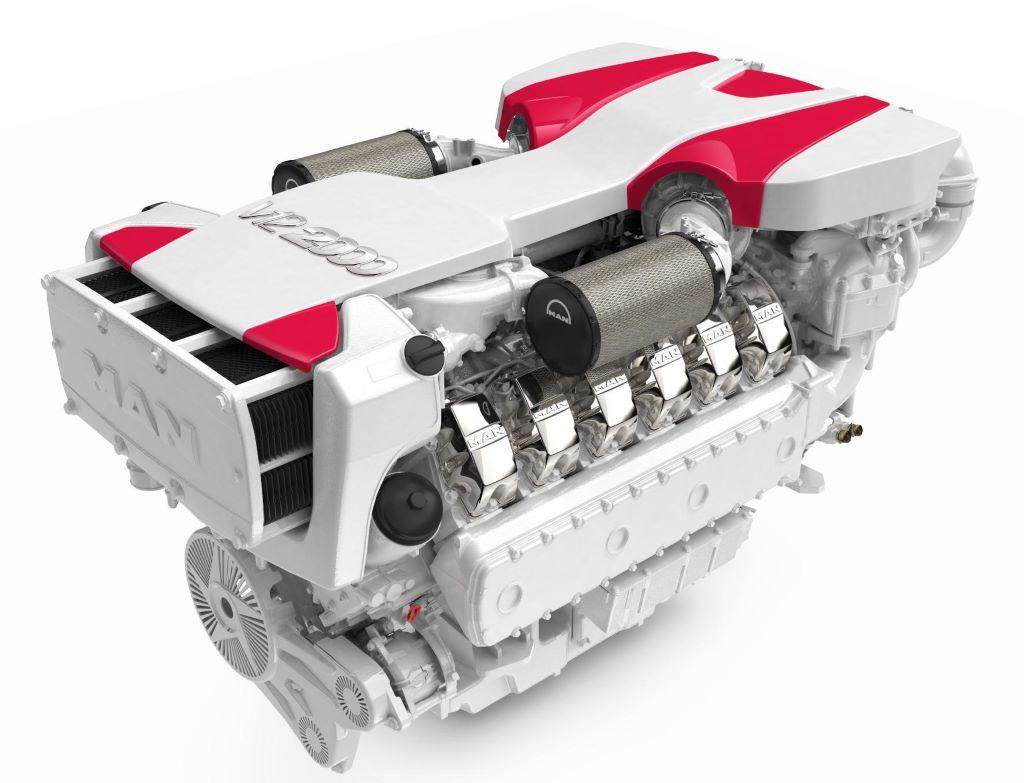
MAN marine diesel engines depend heavily on healthy aftercoolers to control intake air temperature, maintain combustion stability, and protect expensive internal engine parts. This guide explains how to diagnose MAN aftercooler failure by separating raw-water restriction, internal core leakage, charge-air temperature rise, turbo crossover problems, smoke symptoms, and power-loss complaints before they turn into major engine damage.
MAN Marine Diesel Aftercooler Failure: Overheating, Power Loss & Internal Damage Prevention Guide
MAN marine diesel engines, especially high-output platforms like the V8, V10, and V12 2000 series, make impressive power because they move a large volume of compressed air through the engine. That compressed air has to be cooled before it enters the intake manifold. If it is not cooled properly, air density drops, exhaust temperature rises, combustion becomes less efficient, and the engine begins losing the performance margin it was designed to have. That is exactly why the aftercooler matters so much on a MAN engine.
When an aftercooler begins to fail, the symptoms often do not look dramatic at first. A boat may start feeling slightly flatter at cruise, black smoke may increase when throttle is advanced, exhaust temperatures may trend higher, or the engine may begin to run hotter under sustained load. On electronically managed platforms, derate behavior or alarm activity may begin before the owner realizes that the real problem is charge-air cooling efficiency. Left long enough, aftercooler failure can move beyond a performance issue and become an engine protection issue.
At 805 Marine Diesel Mechanic, MAN aftercooler failures are diagnosed throughout Ventura, Channel Islands Harbor, Oxnard, and Santa Barbara. With more than 30 years of real-world marine diesel diagnostic experience, the goal is always to identify whether the problem is restricted raw-water flow, internal corrosion, turbo-related oil contamination, charge-air leakage, or an actual internal cooler failure before it becomes catastrophic. Start systematic troubleshooting with the Master Marine Diesel Troubleshooting Guide.
What the MAN Aftercooler Does
The aftercooler, also called the charge-air cooler, reduces the temperature of compressed air coming from the turbocharger before that air enters the intake manifold. Cooling the compressed air increases density, which means more oxygen reaches the cylinders. More oxygen allows the engine to burn fuel more efficiently, make rated horsepower, and keep exhaust temperatures in a safer range.
- Improves air density
- Reduces exhaust temperature
- Protects pistons and valves
- Maintains rated horsepower
- Supports stable combustion under load
Technical platform information for MAN marine engines is available through MAN Energy Solutions Marine Documentation and broader charge-air and diesel air-handling fundamentals are supported by Bosch Off-Highway Diesel Components.
Why Aftercooler Failure Matters So Much on MAN Engines
High-output MAN engines are far less forgiving of charge-air cooling problems than lower-output engines. Because they are making a lot of power from a relatively compact package, they depend heavily on correct intake temperature control. Once charge-air temperature rises, combustion quality falls off quickly. That can mean black smoke, higher exhaust temperature, reduced power, increased piston crown temperature, added stress on valves, and less protection margin for the entire engine.
This is why aftercooler failure does not belong only in the “cooling” category. It overlaps directly with low-power diagnosis, smoke diagnosis, turbo diagnosis, shutdown logic, and engine-protection strategies. The same crossover logic you have been building into the recent post cluster applies here too, which is why this page ties naturally into Cummins Marine Diesel Cooling System Failures, Caterpillar Marine Diesel Turbocharger Failures, Cummins QSM11 Smoke & Combustion Problems, and Lugger Turbo & Air System Problems.
Common MAN Aftercooler Failure Symptoms
1. Loss of Power at Cruise
Hot intake air reduces combustion efficiency. The engine may still run smoothly enough, but it often feels softer, slower to respond, and unable to hold expected cruise performance under the same load it handled before.
2. Elevated Exhaust Temperature
Higher intake temperature increases cylinder heat and raises exhaust temperature. This is one of the most important clues because many aftercooler problems reveal themselves in heat trend changes before a complete failure occurs.
3. Excessive Black Smoke
Poor air density creates incomplete combustion. The engine is still receiving fuel, but the cooled, dense air it depends on is no longer arriving in the correct condition.
4. Engine Derate or Alarm
Modern MAN ECM systems may reduce power to prevent damage. That makes aftercooler failure especially easy to confuse with a general electrical or sensor issue if the charge-air system is not evaluated properly.
5. Internal Coolant or Raw Water Leakage
Corrosion inside the aftercooler core can allow coolant or raw-water intrusion into the intake side. This is the most dangerous form of aftercooler failure because it can lead to severe internal damage if the engine continues operating.
Related shutdown crossover is detailed in the Marine Diesel Engine Shutdown Causes Guide.
Primary Causes of Aftercooler Failure
Saltwater Corrosion
- Core deterioration
- End-cap corrosion
- Gasket failure
- Loss of sealing integrity
Saltwater corrosion is one of the most common causes of aftercooler failure in marine engines because it attacks the core from the cooling side while the engine still seems usable from the outside.
Restricted Raw Water Flow
Reduced cooling-water volume elevates intake temperature and limits aftercooler performance. This may be caused by strainer restriction, weak raw-water pump output, scale buildup, or downstream cooling circuit problems.
See the Cooling System Diagnosis Center for raw-water diagnostic crossover.
Oil Contamination from Turbo
Turbo seal leakage can coat the aftercooler core internally. Once oil coats the internal air passages, charge-air heat transfer drops and the system becomes less efficient. This can also attract dirt and residue that worsen the problem over time.
Air-side crossover belongs in the Turbo System Diagnosis Center and also relates directly to Cummins 6BTA Turbocharger Problems and Lugger Turbo & Air System Problems.
Fuel System Influence
Improper fuel delivery can increase exhaust temperature and stress the charge-air system. This is why an aftercooler complaint should not be diagnosed in isolation if smoke and low-power symptoms are also present.
See the Fuel System Diagnosis Center and the recent fuel contamination posts such as Cummins Marine Fuel Contamination & Filtration and Volvo Penta Fuel Contamination & Filtration Issues.
Why Aftercooler Failure Is Dangerous on MAN Engines
- Piston crown overheating
- Valve damage
- Turbo overspeed
- Hydrolock from coolant intrusion
- Severe cylinder scoring
- Chronic exhaust temperature increase
Early diagnosis prevents catastrophic failure. The most dangerous scenario is internal cooler leakage, where fluid enters the intake side and reaches the cylinders. On a high-output MAN platform, that can turn into a very expensive failure very quickly. Even when the cooler is not leaking internally, simply running with elevated intake temperatures can shorten engine life and damage surrounding systems.
How Aftercooler Failure Creates Low Power
Low power is one of the most common owner complaints when an aftercooler starts failing. The reason is simple: hotter intake air carries less oxygen. Less oxygen means less efficient combustion. The engine may still receive normal fuel delivery, but without dense cooled air the burn is weaker and dirtier. The boat feels down on power even though the fuel system may be working correctly.
This is why aftercooler diagnosis overlaps directly with Low Power Loss of RPM Diagnosis Center, Cummins Marine Diesel Low Power & RPM Loss, and Lugger Marine Low Power & Loss of RPM. Low power is often the symptom owners notice first, even though the thermal and air-density problem is already the deeper cause.
How Aftercooler Failure Creates Smoke Problems
Aftercooler failure commonly creates black smoke because hot intake air reduces combustion efficiency. The engine is still being fueled for the load demand, but the oxygen density is reduced, so part of that fuel burns poorly. That incomplete combustion shows up as smoke and often as extra exhaust heat.
This makes aftercooler diagnosis inseparable from smoke diagnosis. It belongs directly beside Caterpillar Marine Diesel Smoke Problems, Cummins QSM11 Smoke & Combustion Problems, and your other recent performance-related authority posts. Smoke is often not “just a fuel problem” or “just a turbo problem.” On MAN engines, aftercooler efficiency can be the missing link.
How Cooling System Problems Feed the Aftercooler Problem
The aftercooler depends on adequate raw-water-side performance. If raw-water flow is reduced anywhere upstream or if cooling passages become restricted, charge-air temperatures rise. That means an aftercooler complaint may actually begin as a broader cooling-system failure. Raw-water restriction, strainer fouling, scale, zinc debris, weak impeller output, or poor water flow management can all reduce aftercooler effectiveness long before the aftercooler itself is condemned.
That is why this page must be connected to broader cooling logic, including Cooling System Diagnosis Center, Cummins Cooling System Failures, and Lugger Marine Cooling System Diagnosis.
Professional MAN Aftercooler Diagnostic Process
- Raw-water flow verification
- Pressure testing of aftercooler core
- Boost pressure monitoring
- Intake temperature data logging
- ECM fault code review
- Thermal imaging inspection
- Air-side leak and contamination inspection
Advanced system evaluation is available through the Computerized Marine Engine Survey Diagnostics Center. This is especially valuable when the engine is showing more than one symptom at the same time, such as low power, smoke, elevated temperature, and intermittent derate.
Newest Aftercooler Upgrade & Prevention Strategies
- Scheduled core removal and ultrasonic cleaning
- Upgraded marine-grade gasket kits
- Improved zinc management
- Digital intake air temperature monitoring
- Turbo system inspection programs
- Raw water filtration upgrades
With 30+ years of marine diesel troubleshooting experience, we emphasize preventative service intervals on high-performance MAN platforms. Waiting for a complete failure is the expensive way to learn an aftercooler was already degrading. Planned inspections protect pistons, valves, turbochargers, and the entire combustion system.
Ventura & Channel Islands Harbor MAN Specialist
805 Marine Diesel Mechanic provides mobile MAN aftercooler diagnostics throughout:
- Ventura Harbor
- Channel Islands Harbor
- Oxnard
- Santa Barbara
We specialize exclusively in marine diesel engines and bring decades of real-world troubleshooting expertise to every vessel. If your MAN is showing black smoke, weak cruise power, elevated exhaust temperature, alarm activity, or suspected charge-air cooling issues, the aftercooler system should be inspected before the problem escalates.
MAN Aftercooler FAQ
1. What happens if a MAN aftercooler leaks internally?
Coolant or raw water intrusion can enter the intake manifold and potentially cause hydrolock, severe internal damage, or cylinder scoring.
2. How often should MAN aftercoolers be serviced?
Service intervals depend on environment and hours, but regular inspection and cleaning are critical in saltwater applications and high-output installations.
3. Can high exhaust temperature indicate aftercooler issues?
Yes. Elevated intake air temperature increases exhaust temperature and can trigger alarms or derate conditions if the aftercooler is not controlling charge-air heat correctly.
4. Is black smoke always a fuel issue?
No. Restricted air cooling or charge-air leaks must also be considered. This is why aftercooler diagnosis belongs beside smoke diagnosis.
5. Can aftercooler failure cause low power at cruise?
Yes. Hotter intake air reduces air density and directly lowers combustion efficiency and available horsepower.
6. Can raw-water restriction create aftercooler problems?
Yes. Reduced cooling-water volume can make the aftercooler less effective long before the core itself fails internally.
7. Can turbocharger oil contamination affect the aftercooler?
Yes. Turbo seal leakage can coat the cooler internally and reduce charge-air heat transfer efficiency.
8. Can aftercooler issues trigger engine derate?
Yes. On electronically managed MAN engines, intake temperature and related engine-protection logic can reduce power to prevent damage.
9. Can aftercooler problems overlap with fuel problems?
Yes. Low power, smoke, and exhaust temperature changes can overlap fuel and air systems, which is why both have to be checked together.
10. Can this problem mimic turbocharger failure?
Yes. Weak boost response, smoke, and low power can look like a turbo issue even when the real problem is charge-air cooling.
11. Can aftercooler inefficiency increase piston temperature?
Yes. Poorly cooled intake air raises combustion heat and increases stress on pistons, valves, and the turbocharger.
12. Can this overlap with recent Caterpillar and Cummins turbo posts?
Yes. The same air-density and temperature logic overlaps directly with Caterpillar turbocharger failures and Cummins turbocharger problems.
13. Can aftercooler failure affect smoke color?
Yes. Black smoke is especially common because reduced air density hurts combustion efficiency under load.
14. Can raw-water corrosion cause cooler core failure?
Yes. Saltwater corrosion is one of the main reasons aftercooler cores and end caps fail over time in marine service.
15. Should I ignore a mild power loss if the engine still runs?
No. Mild power loss is often an early warning sign that intake temperature control is already falling off.
16. Can this overlap with cooling-system posts we recently rebuilt?
Yes. The same thermal logic overlaps directly with Cummins cooling system failures and Lugger cooling system diagnosis.
17. Is mobile diagnosis useful for MAN aftercooler complaints?
Yes. Real-world load testing is often the fastest way to confirm power loss, temperature rise, smoke behavior, and derate crossover together.
18. Can a leaking aftercooler cause catastrophic engine damage?
Yes. Internal leakage can lead to water ingestion, hydrolock, and severe engine damage if not caught early.
19. When should I call a mechanic for MAN aftercooler issues?
If your MAN is losing power, smoking more, running hotter, or showing air-temperature-related alarms, it is time for professional diagnosis through the contact page.
20. Where should I start if I want the full MAN aftercooler pathway?
Start with the Master Marine Diesel Troubleshooting Guide, then move through the linked cooling, turbo, smoke, shutdown, and low-power pages from there.
One Response