
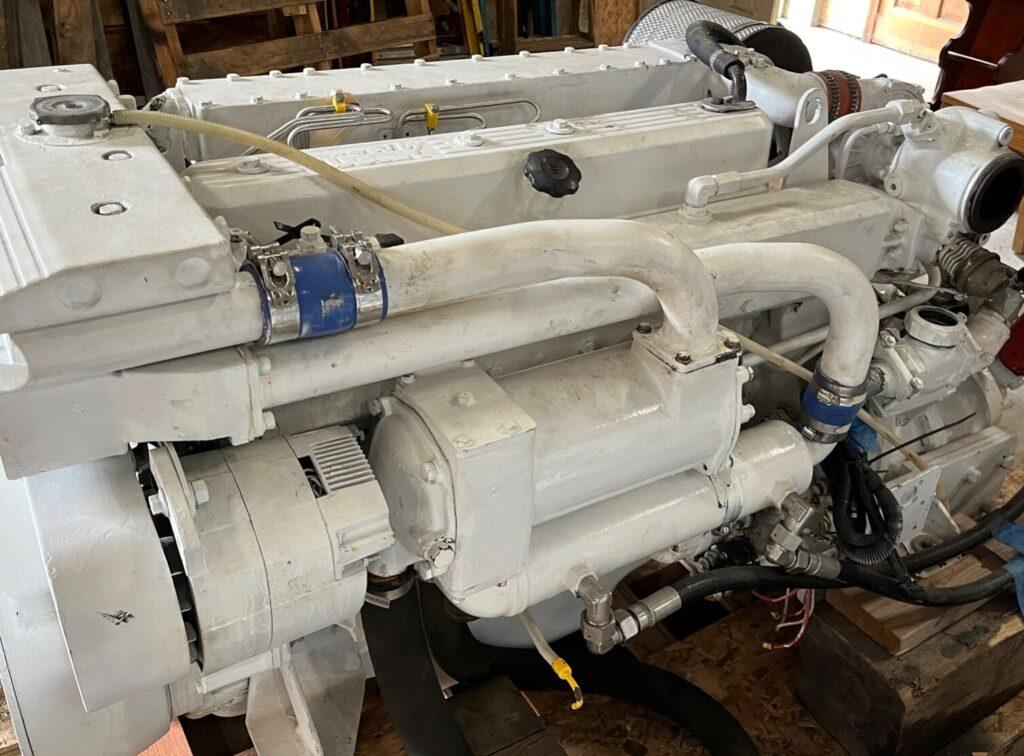
Lugger marine diesel engines are known for reliability and steady torque output, but when a Lugger begins losing RPM under load, hesitating at cruise, or failing to reach rated speed, immediate structured diagnosis is critical. This guide explains how to diagnose Lugger low power and loss of RPM by separating fuel restriction, injection imbalance, air restriction, turbo inefficiency, exhaust backpressure, and propulsion load issues before unnecessary parts are replaced.
Lugger Marine Low Power & Loss of RPM: Fuel, Air & Injection System Diagnosis Guide
Lugger marine diesel engines are built to deliver consistent torque and dependable long-duty performance. When one begins losing RPM under load, hesitating at cruise, or falling short of rated speed, the symptom should never be brushed off as “it’s just getting older.” A Lugger that cannot achieve normal RPM is almost always being restricted by something measurable, and continued operation in that condition can increase soot, raise exhaust temperature, lower fuel efficiency, and put unnecessary stress on the engine.
What makes this symptom challenging is that several different systems can create almost the same complaint. Fuel starvation, air restriction, poor injection timing, low boost, exhaust backpressure, aftercooler fouling, or even propeller overload can all make the engine feel lazy and heavy under load. That is why the correct approach is structured diagnosis, not guessing which part sounds most likely.
At 805 Marine Diesel Mechanic, Lugger low-power and loss-of-RPM problems are diagnosed throughout Ventura, Channel Islands Harbor, Oxnard, and Santa Barbara. With over 30 years of hands-on marine diesel troubleshooting experience, the process always starts by confirming whether the problem is fuel, air, injection, exhaust, or vessel-load related before major components are touched. Begin structured diagnosis using our Master Marine Diesel Troubleshooting Guide.
What “Loss of RPM” Usually Indicates
When a Lugger engine cannot reach rated RPM under load, it usually falls into one of three primary categories:
- Fuel restriction or contamination
- Air restriction or turbo inefficiency
- Mechanical injection imbalance
There is also a fourth category that should never be ignored: excessive load from the propeller, hull, or driveline. A healthy engine can still fail to reach rated RPM if the vessel is over-propped, fouled, or dragging more than normal. That is why this page also cross-checks propulsion and load logic rather than focusing only on the engine bay.
This same structured approach is the exact logic used in the recent redo cluster, including Cummins Marine Diesel Low Power & RPM Loss, Caterpillar Marine Diesel Turbocharger Failures, and Lugger Turbo & Air System Problems.
1) Fuel Supply Restriction: Most Common Cause
Fuel restriction is one of the most common reasons a Lugger gradually loses RPM under load. The engine may idle fine and even sound healthy at low throttle, but once load demand rises, fuel volume falls short and power drops off. The result is often a progressive RPM loss rather than a dramatic instant shutdown.
- Clogged primary fuel filter
- Restricted secondary fuel filter
- Collapsed suction hose
- Tank pickup blockage
- Microbial sludge buildup
Restriction reduces available fuel volume under load, causing gradual RPM drop and weaker throttle response. See our Fuel System Diagnosis Center for detailed testing procedures. This also directly ties into the recent rebuild cluster through Caterpillar Fuel Contamination & Filtration Problems and Cummins Fuel Contamination & Filtration Problems.
2) Injection Pump Timing or Injector Wear
On mechanical Lugger platforms such as the 6108 and 6125, injection timing and injector pop-pressure calibration are critical to full power output. Even when fuel filters are clean and airflow seems acceptable, an engine can still feel weak if timing has drifted or injectors are not atomizing fuel properly.
- Retarded timing reduces horsepower
- Low injector pop pressure causes weak combustion
- Governor calibration drift limits fuel delivery
- Uneven injector pattern raises smoke and lowers torque
Mechanical injection calibration is covered in your Lugger Mechanical Injection Authority Guide. Injection imbalance also overlaps with smoke and combustion content because poor fuel delivery quality often shows up as black or white smoke under load or at startup.
3) Air System & Turbo Issues
Air restriction can mimic fuel starvation almost perfectly. A Lugger engine that cannot get enough air will often lose RPM, produce black smoke, and feel heavy under load even though the fuel system may appear to be the problem at first glance. This is one reason low-power diagnosis should never stop at changing filters alone.
- Restricted air filter
- Aftercooler fouling
- Turbocharger inefficiency
- Boost leak
- Collapsed intake hose
Cross-check air delivery in the Turbo System Diagnosis Center. This page also intentionally ties into recent rebuilds such as Lugger Turbo & Air System Problems, Cummins 6BTA Turbocharger Problems, and Caterpillar Turbocharger Failures.
4) Exhaust Restriction
Exhaust restriction is another major but commonly overlooked reason a Lugger cannot achieve normal RPM. If the engine cannot move exhaust gases out efficiently, it cannot move fresh air in efficiently either. That means combustion quality drops, turbo response suffers, and RPM falls off under load.
- Blocked mixing elbow
- Carbon buildup
- Exhaust hose collapse
- High exhaust backpressure
Exhaust backpressure limits RPM potential and can also raise exhaust temperatures, which makes the engine feel both weak and hotter than normal. This is one reason low-power complaints often overlap with turbo and cooling pages rather than standing alone.
5) Propeller or Load Issues
Not all low-power complaints are engine-related. A Lugger may be mechanically healthy and still fail to reach rated RPM because the boat is simply asking too much from it.
- Fouled propeller
- Over-propped vessel
- Gear ratio mismatch
- Hull fouling
- Driveline drag
This is why the correct question is not just “what’s wrong with the engine?” but also “what load is the engine being asked to carry?” If the boat is over-propped or fouled, the engine may look like it has a power problem even when the real issue is outside the engine itself.
How Low Power Overlaps With Smoke
Low power and smoke often happen together because both are caused by combustion imbalance. When airflow falls off, fuel delivery becomes unstable, or injection timing drifts, the engine usually produces less power and more visible smoke at the same time. That is why you should never isolate these symptoms from each other.
Smoke-related cross-checks are available in:
- Lugger smoke and combustion-related content
- Caterpillar Marine Diesel Smoke Problems
- Cummins QSM11 Smoke & Combustion Problems
A Lugger that is down on RPM and smoking black under load is almost always telling you that fuel and air are out of balance.
How Cooling Problems Can Cause RPM Loss
Cooling system problems can also cause low power and loss of RPM. If a Lugger begins running hotter than normal, aftercooler efficiency drops, combustion conditions change, and the engine may feel weak even before a full overheating alarm occurs. In some cases, operators first notice low power and only later realize temperature was part of the same failure.
This is why low-power diagnosis should also cross-check the cooling side using:
- Lugger Marine Cooling System Diagnosis
- Caterpillar Cooling System Failures
- Cummins Cooling System Failures
Professional Lugger Low RPM Diagnostic Process
Rather than guessing, a structured diagnostic process isolates the actual cause of lost RPM. The goal is to determine whether the engine is fuel-limited, air-limited, mechanically out of calibration, or overloaded by the vessel.
- Fuel vacuum testing under load
- Boost pressure monitoring
- Injection timing verification
- Injector pop testing
- Exhaust temperature evaluation
- Governor inspection
Where applicable, advanced system review is available through the Computerized Marine Engine Survey Diagnostics Center. That deeper testing is especially useful when a Lugger has multiple overlapping symptoms such as RPM loss, smoke, and temperature changes at the same time.
Preventative Reliability Upgrades
Low-power complaints are often preventable. Routine inspection of the fuel, air, and injection systems catches small restrictions before they become major performance losses.
- Dual Racor manifold filtration systems
- Fuel vacuum monitoring gauges
- Injector calibration intervals
- Aftercooler servicing schedule
- Tank cleaning and polishing programs
With 30+ years of marine diesel troubleshooting experience, we focus on long-term reliability — especially for long-range Lugger platforms where small performance losses can build into major operating problems over time.
Ventura & Channel Islands Harbor Lugger Specialist
805 Marine Diesel Mechanic provides mobile Lugger low-power diagnostics throughout:
- Ventura Harbor
- Channel Islands Harbor
- Oxnard
- Santa Barbara
If your Lugger is losing RPM under load, hesitating at cruise, or failing to reach rated speed, professional diagnosis can identify whether the real cause is fuel, air, injection, exhaust, or vessel load before unnecessary parts are replaced.
Lugger Low Power FAQ
1. Why won’t my Lugger reach rated RPM?
Fuel restriction, injector imbalance, turbo inefficiency, exhaust restriction, or excessive propeller load are all common causes.
2. Can dirty fuel cause gradual RPM loss?
Yes. Fuel restriction under load reduces available fuel volume and lowers horsepower output gradually.
3. Should injection timing be checked?
Yes. Incorrect timing significantly affects power output on mechanical Lugger systems and should be verified before guessing at other components.
4. Is turbo failure common on Lugger engines?
Turbo inefficiency is less common than fuel restriction, but it must always be ruled out because boost loss creates many of the same symptoms.
5. Can a clogged primary filter make the engine feel overloaded?
Absolutely. Restricted fuel flow is one of the most common reasons a Lugger feels lazy and will not turn up normally under load.
6. Can aftercooler fouling reduce RPM?
Yes. Reduced air density from a dirty aftercooler can lower available horsepower and create black smoke at the same time.
7. Can propeller problems mimic engine low power?
Yes. Over-propped, damaged, or fouled props can keep a healthy engine from reaching rated RPM.
8. Can black smoke happen with low RPM?
Yes. That usually indicates too much fuel for available air, often from boost, intake, or aftercooler problems.
9. Can exhaust restriction limit RPM?
Yes. Excess backpressure reduces engine breathing and can directly limit full-load performance.
10. Can governor drift reduce horsepower?
Yes. On mechanical systems, governor calibration changes can limit fuel delivery and prevent the engine from reaching full output.
11. Can fuel contamination overlap with low-power complaints?
Yes. Fuel contamination is one of the most common reasons low-power complaints build gradually over time. See Cummins fuel contamination and Caterpillar fuel contamination for similar crossover logic.
12. Can cooling problems cause RPM loss before overheating gets obvious?
Yes. Poor charge-air cooling or rising engine temperatures can reduce performance before a full overheat alarm appears.
13. Can this overlap with the recent Lugger turbo page?
Yes. Low power and low boost are closely connected, which is why this topic directly overlaps with Lugger Turbo & Air System Problems.
14. Can injector wear lower power even if the engine still runs smoothly?
Yes. An engine can feel smooth enough at light load and still be down on power because injector calibration has drifted or spray quality has deteriorated.
15. Can low power and smoke from Lugger engines follow the same logic as Caterpillar and Cummins?
Yes. The same diagnostic logic overlaps directly with Cummins low power and Caterpillar turbo failures.
16. Is mobile diagnosis useful for low-RPM complaints?
Yes. Low-power complaints are easiest to confirm on the boat under real load where RPM, smoke, boost, and vessel performance can all be seen together.
17. Can a dual Racor system improve reliability?
Yes. Dual Racor setups can make service easier and reduce downtime, especially on long-range or commercial applications.
18. Should I keep running the engine if it will not reach normal RPM?
Not for long. Continued under-RPM operation can increase soot, exhaust heat, and stress on the turbo and combustion system.
19. When should I call a mechanic for Lugger low-power symptoms?
If the engine is losing RPM under load, hesitating at cruise, or failing to reach rated speed, it is time for professional diagnosis through the contact page.
20. Where should I start if I want the full Lugger RPM-loss pathway?
Start with the Master Marine Diesel Troubleshooting Guide, then move through the linked turbo, cooling, fuel, and low-power pages from there.
7 Responses