
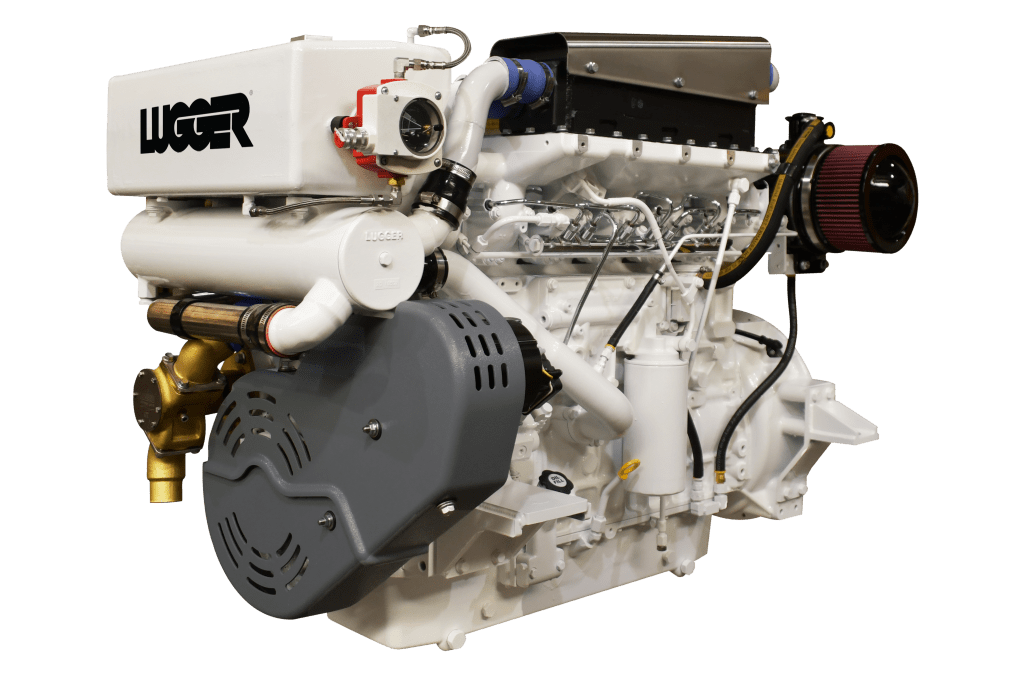
Exhaust smoke is one of the most useful diagnostic indicators on a Lugger marine diesel engine because the color, density, and timing of the smoke can quickly point toward fuel, air, cooling, turbocharger, or internal mechanical problems. This guide explains how to diagnose black smoke, white smoke, and blue smoke on Lugger marine engines before unnecessary parts are replaced and before deeper engine damage develops.
Lugger Marine Diesel Smoke Diagnosis: Black, White & Blue Exhaust Troubleshooting Guide
Exhaust smoke is one of the clearest signs that diesel combustion is no longer balanced correctly. Lugger engines are widely respected for durability, torque, and long service life, but when smoke appears — especially under load — it means something in the combustion process is out of range. That can involve fuel delivery, air supply, turbocharger performance, injector condition, cylinder compression, cooling-system temperature control, or oil entering the combustion process where it should not be.
What makes smoke diagnosis so valuable is that it often appears before a full failure. A Lugger that starts producing black smoke under load may still run, but power is often falling off at the same time. A Lugger with white smoke during startup may still fire, but the engine is warning you that combustion temperature or injector behavior is not where it should be. A Lugger with blue smoke may still sound acceptable at first, but oil-burning problems tend to get worse, not better.
At 805 Marine Diesel Mechanic, Lugger combustion and exhaust smoke problems are diagnosed throughout Ventura, Channel Islands Harbor, Oxnard, and Santa Barbara. With over 30 years of marine diesel troubleshooting experience, the process always begins with the smoke pattern and then moves into fuel, air, turbo, cooling, and mechanical condition so the real cause is identified before the wrong parts are replaced. Start your diagnosis with our Master Marine Diesel Troubleshooting Guide.
Understanding Diesel Combustion
Proper diesel combustion requires the correct balance of:
- Fuel delivery
- Air supply
- Compression temperature
- Injection timing
- Stable engine operating temperature
When any of these factors becomes unbalanced, combustion efficiency drops and visible smoke appears in the exhaust. That is why smoke color matters, but also why smoke color alone is not enough. Two engines can produce similar smoke while having completely different root causes. Real Lugger smoke diagnosis has to consider the operating condition, load level, startup behavior, throttle response, and any accompanying symptoms such as low power, overheating, or shutdown.
This also ties directly into the recently rebuilt smoke pages because the same combustion logic applies across multiple brands, including Caterpillar Marine Diesel Smoke Problems and Cummins QSM11 Marine Diesel Smoke & Combustion Problems.
Black Smoke: Over-Fueling or Lack of Air
Black smoke is the most common smoke condition on Lugger engines and usually indicates incomplete combustion due to excess fuel or insufficient air. In simple terms, the engine is receiving more fuel than available oxygen can burn cleanly. The unburned portion leaves the exhaust as soot.
Common Causes
- Restricted air intake
- Turbocharger inefficiency
- Boost leaks in charge-air piping
- Dirty aftercooler
- Injector spray-pattern deterioration
- Over-propped vessel or heavy hull load
Black smoke under load often appears together with low power, slow acceleration, or failure to reach rated RPM. Air system restrictions should be checked in our Turbo System Diagnosis Center. This also connects directly to the recent redo batch through Caterpillar Marine Diesel Turbocharger Failures and Cummins 6BTA Marine Diesel Turbocharger Problems.
White Smoke: Unburned Fuel
White smoke typically indicates fuel entering the cylinder but failing to ignite completely. This is often seen during startup or when cylinder temperature is too low for clean combustion. A little light white haze on a cold start may be normal, but persistent white smoke means the engine needs attention.
Common Causes
- Low cylinder temperature during startup
- Injector nozzle wear
- Incorrect injection timing
- Low compression
- Coolant entering the combustion chamber
- Air in the fuel system
If the engine struggles to reach operating temperature, cross-check the cooling system using our Cooling System Diagnosis Center. This also ties into the recently rebuilt cooling pages such as Caterpillar Marine Diesel Cooling System Failures and Cummins Marine Diesel Cooling System Failures.
Blue Smoke: Oil Burning
Blue smoke indicates engine oil entering the combustion chamber or exhaust stream. This is a different diagnostic path from black or white smoke because it points toward oil control failure rather than simple fuel-air imbalance. Blue smoke is a serious symptom because it often signals wear or oil leakage that will continue to worsen.
Possible Causes
- Turbocharger oil-seal leakage
- Worn piston rings
- Valve guide wear
- Excessive crankcase pressure
- Oil carryover into the intake path
Turbocharger inspection may also be required. See our Turbo System Diagnosis Center. Blue smoke can also overlap with power-loss complaints because oil-burning engines rarely maintain ideal combustion efficiency under real operating conditions.
Smoke Under Load vs At Startup
When smoke occurs is just as important as what color it is.
Startup Smoke
- Normal light white haze in cold conditions
- Persistent white smoke indicates injector or compression problems
- Blue smoke at startup may indicate oil draining into the system while sitting
Smoke Under Load
- Black smoke under load often indicates airflow restriction or boost loss
- Blue smoke under load suggests oil entering the intake or turbo system
- White smoke under load can point toward injector, timing, or coolant-entry issues
This is why Lugger smoke diagnosis should always include actual operating pattern, not just a description of the exhaust color seen one time at the dock.
How Fuel Contamination Affects Combustion
Dirty or contaminated fuel affects spray-pattern quality and combustion stability. If the fuel contains water, microbial sludge, or debris, injector performance drops and combustion becomes less efficient. That can create white smoke, rough running, hesitation, low power, or unstable operation under load.
- Microbial sludge
- Water contamination
- Clogged injectors
- Restricted primary or secondary filters
These problems are addressed in our Fuel Contamination & Filtration Issues Center. This also intentionally ties into the recently rebuilt fuel-content cluster, including Caterpillar Fuel Contamination & Filtration Problems and Cummins Fuel Contamination & Filtration Problems.
Turbocharger and Airflow Effects
On Lugger engines, turbocharger and intake-side problems are some of the most common reasons black smoke appears under load. The engine may still run and idle acceptably, but once fuel demand rises, the airflow side can no longer keep up. That produces smoke, weak acceleration, and reduced RPM.
- Low boost pressure
- Dirty or restricted air filters
- Dirty aftercooler surfaces
- Charge-air hose leaks
- Turbocharger bearing wear
These are the same core airflow issues we’ve been weaving through the recent Caterpillar and Cummins turbo and low-power pages, because the symptom logic is the same even when the engine family changes.
Cooling System and Smoke Behavior
Cooling system health directly affects combustion. A Lugger that is running too cool may produce white smoke because cylinder temperature is not high enough for complete combustion. A Lugger that is running too hot may lose efficiency and start producing smoke under load because combustion balance changes as temperatures climb.
Cooling-related smoke complaints should always be checked against:
This is one of the easiest diagnostic areas to overlook when owners focus only on smoke color and do not consider engine temperature behavior.
Professional Combustion Diagnosis
Rather than guessing, professional diagnostics isolate the exact cause of smoke conditions. Because smoke can come from multiple systems at once, a structured diagnostic process is the fastest way to avoid replacing the wrong parts.
- Injector spray-pattern testing
- Injection timing verification
- Boost pressure monitoring
- Exhaust temperature analysis
- Compression evaluation
- Fuel quality and filtration inspection
Performance-related smoke issues may also appear alongside power loss. See our Lugger Low Power & Loss of RPM Guide. This also connects naturally to recently rebuilt pages such as Cummins Low Power & RPM Loss.
Preventative Combustion System Maintenance
Keeping the combustion system healthy is always easier than correcting a neglected smoke problem after power and reliability have already fallen off.
- Regular injector service intervals
- Clean fuel filtration
- Aftercooler cleaning
- Air filter inspection
- Correct propeller loading
- Routine cooling-system monitoring
Maintaining proper fuel and air delivery helps ensure clean combustion and long Lugger engine life.
Ventura & Channel Islands Harbor Lugger Combustion Specialist
805 Marine Diesel Mechanic provides mobile Lugger combustion diagnostics throughout Ventura Harbor, Channel Islands Harbor, Oxnard, and Santa Barbara.
With over 30 years of experience diagnosing marine diesel performance problems, we identify the real cause of smoke conditions quickly and accurately so the repair path is based on actual testing rather than guesswork.
Lugger Exhaust Smoke FAQ
1. What causes black smoke on a Lugger engine?
Black smoke usually indicates excess fuel or restricted air supply, often caused by turbo inefficiency, boost leaks, dirty aftercoolers, clogged air filters, or vessel overload.
2. Is white smoke normal during startup?
A small amount of white smoke during cold startup can be normal, but persistent white smoke may indicate injector wear, low compression, air in fuel, or poor combustion temperature.
3. What does blue smoke mean?
Blue smoke typically indicates engine oil entering the combustion process through turbo seals, piston rings, valve guides, or crankcase-pressure-related oil carryover.
4. Should smoke be investigated immediately?
Yes. Smoke indicates combustion imbalance, which can lead to overheating, power loss, injector damage, or internal engine wear if ignored.
5. Can smoke and low power happen together?
Absolutely. Smoke and reduced performance often come from the same combustion imbalance, especially when the problem is related to fuel delivery or airflow.
6. Can restricted air filters cause black smoke?
Yes. Dirty or restricted air filters reduce oxygen supply and are one of the most common causes of black smoke under load.
7. Can a dirty aftercooler create smoke?
Yes. A dirty or restricted aftercooler can reduce intake-air density and create black-smoke, low-power, and weak-throttle-response complaints.
8. Can bad fuel create smoke problems?
Yes. Contaminated fuel affects injector spray quality and combustion stability. See Fuel Contamination & Filtration Issues Center.
9. Can air in the fuel system cause white smoke?
Yes. Air intrusion can upset injector delivery and create unstable combustion, especially during startup or light-load running.
10. Can turbocharger problems create blue smoke too?
Yes. Turbo oil-seal leakage can allow oil into the intake or exhaust side and create blue smoke.
11. Does black smoke always mean the injectors are bad?
No. Black smoke can also come from turbo inefficiency, boost leaks, restricted intake air, dirty aftercoolers, or vessel overload.
12. Can cooling problems change smoke behavior?
Yes. Engines running too cold or too hot often burn fuel differently, which can change smoke color and density.
13. Why does my Lugger smoke more under load than at idle?
Load raises fuel demand, airflow demand, and combustion temperature, which often exposes turbo, injector, and fuel-balance problems more clearly than idle.
14. Can low compression cause white smoke?
Yes. Low compression reduces combustion heat and can leave fuel only partially burned, especially during startup and low-load operation.
15. Can smoke problems raise fuel consumption?
Yes. Poor combustion usually means the engine is wasting fuel and producing less usable output from the same diesel supply.
16. Can a Lugger that smokes also lose RPM?
Yes. Smoke and RPM loss frequently come from the same root problem, especially when airflow or injector performance is deteriorating. See Lugger Low Power & Loss of RPM.
17. Is mobile diagnosis useful for Lugger smoke problems?
Yes. Smoke behavior is often easiest to confirm under real vessel load where RPM, boost, exhaust color, and temperature can all be seen together.
18. Can this smoke logic overlap with the recent Caterpillar and Cummins posts we redid?
Yes. The same combustion logic overlaps directly with Caterpillar smoke diagnosis, Caterpillar fuel contamination, and Cummins QSM11 smoke diagnosis.
19. When should I call a mechanic for Lugger exhaust smoke?
If smoke is persistent, worsening, paired with power loss, or changing color, it is time for professional diagnosis through the contact page.
20. Where should I start if I want the full Lugger smoke pathway?
Start with the Master Marine Diesel Troubleshooting Guide, then move through the linked turbo, cooling, fuel, and low-power pages from there.