Marine diesel overheating problems don’t all behave the same, and one of the fastest ways to diagnose the root cause is identifying when the temperature rises. Before replacing parts or guessing at the problem, start with the Master Marine Diesel Troubleshooting Guide to determine whether the issue is related to raw water flow, cooling capacity, or engine load demand.
At 805 Marine Diesel Mechanic, overheating patterns are often misdiagnosed as turbocharger problems, power loss issues, or even fuel system faults. In reality, the pattern—idle vs cruise—is one of the most powerful diagnostic indicators in marine diesel troubleshooting.
Why Idle vs Cruise Overheating Matters
Marine cooling systems must match heat load. At idle, heat generation is low, while at cruise or under load, heat demand increases dramatically.
This means overheating patterns fall into three categories:
- Idle overheating → low flow or circulation problem
- Cruise overheating → restriction or capacity limitation
- Constant overheating → system failure or internal issue
This pattern-based approach prevents unnecessary part replacement and speeds diagnosis compared to random troubleshooting.
Overheating at Idle — Root Causes
1. Raw Water Pump Impeller Damage
Impellers are most effective at higher RPM. When damaged, they struggle at low speeds.
This is one of the most common causes of idle-only overheating.
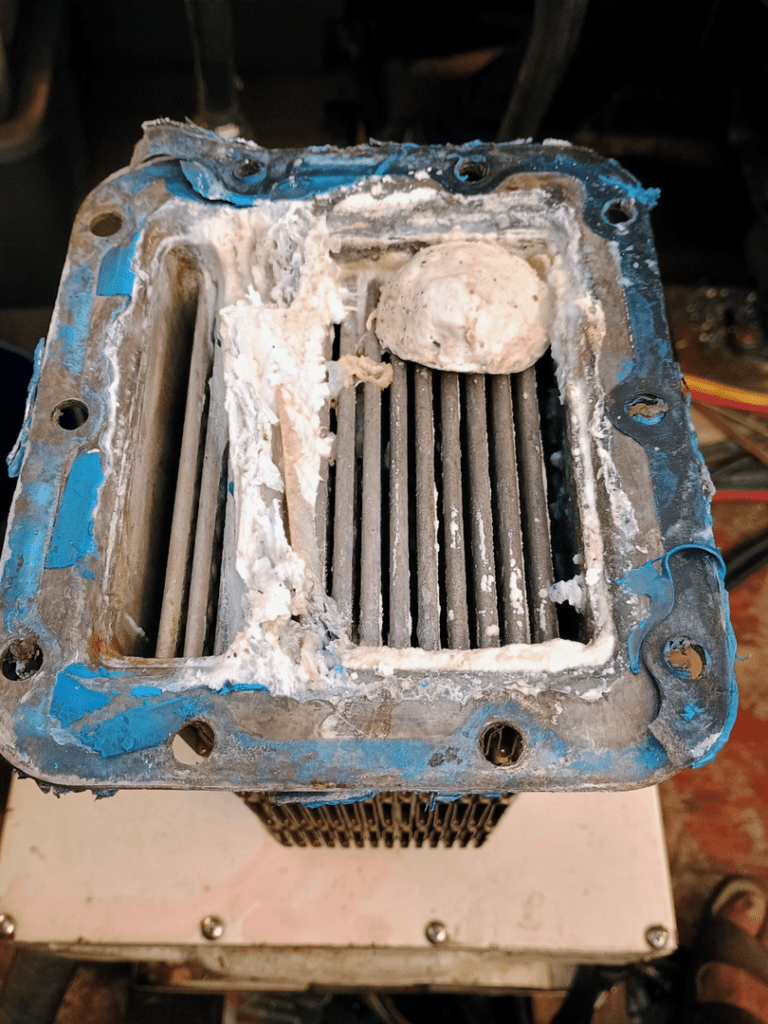
2. Partial Heat Exchanger Blockage
Restricted heat exchangers reduce cooling efficiency even when water flow exists.
This overlaps with contamination-related systems.
3. Coolant Circulation Issues
Closed-loop cooling problems can show up at idle first.
- Air trapped in system
- Low coolant level
- Circulation pump wear
Overheating at Cruise or Under Load — Root Causes
1. Restricted Raw Water Intake
- Clogged strainer
- Blocked intake grate
- Collapsed suction hose
These issues often mimic RPM loss and power loss under load.
2. Fouled Aftercooler or Intercooler
Air system restrictions increase combustion temperature.
3. Exhaust System Restriction
This often overlaps with turbo lag symptoms.
4. Propeller or Vessel Overload
Overload increases engine heat beyond cooling system capacity.
Overheating at Both Idle and Cruise
When overheating occurs at all operating conditions, the issue is usually more severe:
- Thermostat failure
- Severe heat exchanger blockage
- Coolant pump failure
- Internal engine damage
These cases require deeper inspection using advanced diagnostics.
Technician Diagnostic Workflow
- Verify exhaust water discharge volume
- Inspect impeller condition
- Measure heat exchanger temperature delta
- Check coolant circulation system
- Inspect intake and strainer
- Evaluate load vs cooling capacity
This process often integrates load testing and raw water flow diagnostics.
External Authority Resources
Cummins Marine Engines |
Caterpillar Marine Systems
1. Why does my engine overheat at idle but not at cruise?
This usually indicates low raw water flow or circulation issues. The cooling system may function better at higher RPM where pump output increases. Impeller damage or partial restriction is often the cause.
2. Why does my engine overheat at cruise but not idle?
This points to insufficient cooling capacity under load. Restrictions or increased heat demand exceed system capability. Common causes include clogged exchangers or intake restrictions.
3. What is the most common idle overheating cause?
Impeller damage is the most frequent issue. Even slight wear reduces flow at low speeds. Replacement usually restores performance.
4. Can a heat exchanger cause idle overheating?
Yes, partial blockage reduces heat transfer efficiency. This shows up at idle where cooling margin is lowest. Cleaning restores function.
5. Can intake restriction cause cruise overheating?
Yes, limited water supply becomes critical under load. This leads to overheating at higher RPM. Intake and strainer should be inspected.
6. Does propeller overload cause overheating?
Yes, excessive load increases heat generation. The cooling system may not keep up. This results in rising temperatures under throttle.
7. Can turbo issues cause overheating?
Indirectly, yes. Poor airflow increases combustion temperature. This adds load to the cooling system.
8. What happens if overheating is ignored?
Prolonged overheating can damage engine components. This includes head gasket failure and internal wear. Immediate repair is necessary.
9. How do I confirm the cause?
Diagnosis involves checking flow, temperature patterns, and load response. A technician evaluates system performance under different conditions. This ensures accurate identification.
10. Can air in coolant cause idle overheating?
Yes, trapped air reduces circulation efficiency. This often affects idle cooling first. Proper bleeding resolves the issue.
11. Can thermostat failure cause constant overheating?
Yes, a stuck thermostat prevents proper coolant flow. This affects all operating conditions. Replacement is required.
12. Does scaling affect performance?
Yes, buildup inside exchangers reduces heat transfer. This increases operating temperature. Regular cleaning prevents this.
13. Can exhaust restriction cause overheating?
Yes, restricted exhaust flow raises engine temperature. It also affects turbo performance. Inspection is required.
14. What is the fastest diagnosis method?
Comparing temperature behavior at idle vs load is fastest. This quickly narrows down possible causes. Further inspection confirms the issue.
15. Can overheating reduce engine life?
Yes, excessive heat accelerates wear and damage. Long-term exposure leads to major repairs. Proper cooling is essential.
16. How often should cooling systems be serviced?
Annual inspection is recommended. High-use engines may require more frequent service. Preventive maintenance reduces risk.
17. Can fuel issues cause overheating?
Indirectly, yes. Poor combustion increases heat output. This places additional load on cooling systems.
18. Is overheating always a cooling issue?
No, it can also be caused by load, exhaust, or airflow problems. A full diagnostic is required. Cooling is only one part of the system.
19. When should I call a technician?
If overheating occurs consistently or worsens under load, professional diagnosis is needed. Early intervention prevents damage. Technicians identify root causes quickly.
20. What is the most reliable test?
Load testing combined with temperature monitoring is most reliable. It shows how the system performs under real conditions. This ensures accurate diagnosis.

5 Responses