
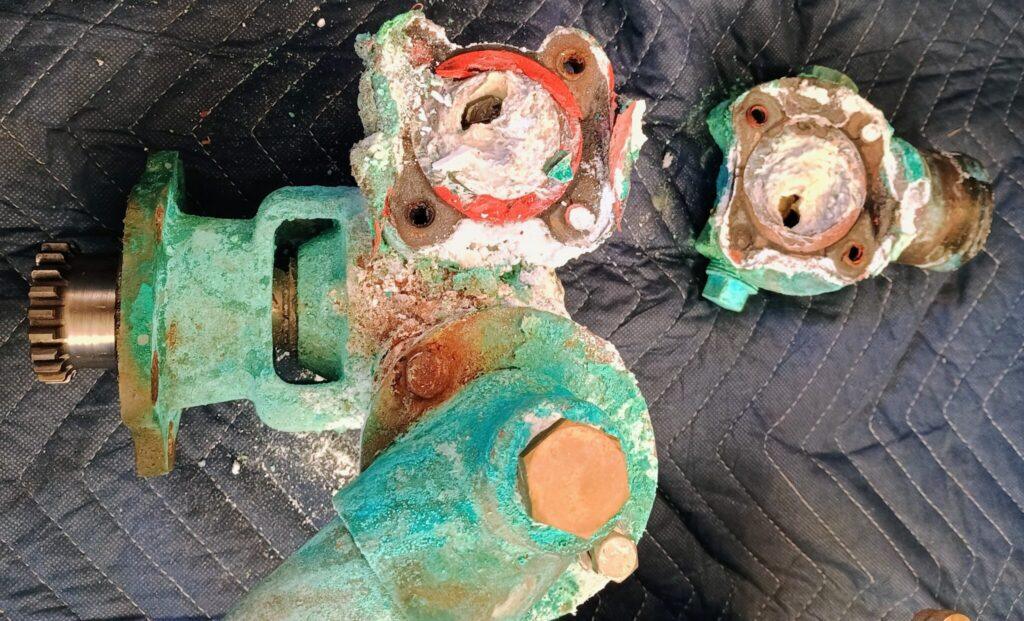
Marine diesel cooling problems should be diagnosed as a complete system, not as a single failed part. A hot-running engine may have a weak impeller, clogged strainer, restricted heat exchanger, low coolant, blocked exhaust elbow, false sender reading, or too much load from the propeller. For a step-by-step symptom path, start with the Master Marine Diesel Troubleshooting Guide before replacing components.
Cooling system diagnosis matters around Ventura, Oxnard, Channel Islands Harbor, and Santa Barbara because local saltwater, kelp, harbor growth, and seasonal layups are hard on seawater pumps, strainers, coolers, hoses, and zincs. A trained technician looks at raw-water flow, closed-loop coolant condition, exhaust discharge, temperature behavior, and load history together so the repair matches the actual failure.
How a Marine Diesel Cooling System Works
Most inboard diesels use two connected cooling circuits. The raw-water side draws seawater through a seacock, strainer, impeller pump, heat exchanger, oil cooler, and exhaust mixing elbow. The closed side circulates coolant through the engine, thermostat, expansion tank, and heat exchanger so seawater does not run directly through the block.
That design protects the engine, but it also creates several places for restriction. If seawater flow drops, heat cannot leave the coolant. If coolant is low, contaminated, or aerated, heat cannot move through the engine correctly. The correct test sequence is simple: confirm flow, confirm coolant, confirm heat transfer, then confirm the alarm or gauge.
Most Common Cooling System Failures
Worn Impellers and Damaged Raw-Water Pumps
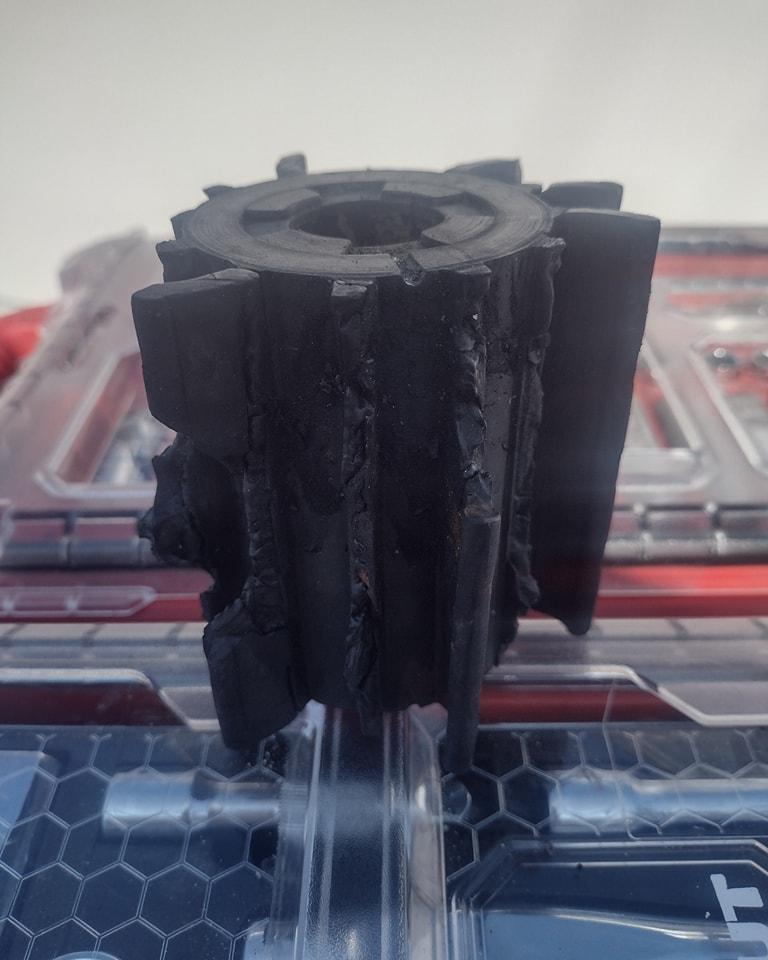
The rubber impeller is the heart of the raw-water side. Dry starts, long storage, heat, and age can harden or break the vanes. When vanes go missing, they often travel downstream and lodge in the heat exchanger or oil cooler. Our marine seawater pump maintenance resource explains why every broken vane should be accounted for during service.
Clogged Strainers and Restricted Intake Flow
A clogged sea strainer can overheat a diesel even when the engine itself is healthy. Eelgrass, kelp, plastic, barnacle growth, or a partially closed seacock can reduce discharge at the exhaust and cause a quick temperature rise. Around Ventura Harbor, Channel Islands Harbor, and Santa Barbara Harbor, strainer inspection before startup is not optional maintenance; it is basic trip preparation.
Fouled Heat Exchangers, Oil Coolers, and Aftercoolers
Salt scale, zinc debris, corrosion, and impeller fragments reduce heat transfer through cooler bundles. A professional service should include cleaning, inspection, pressure testing when appropriate, and verification that zinc anodes are not depleted. For broader repair safety context, the ABYC standards library is a useful authority for marine technicians and builders.
Thermostats, Coolant, and Exhaust Elbows
A stuck thermostat can create slow warm-up, unstable temperature, or rapid overheating. Old coolant can lose corrosion protection, form sludge, or hide air pockets. A restricted wet exhaust elbow can also mimic a cooling problem because cooling water cannot exit cleanly. When steam, black smoke, or temperature rise appear together, use the Smoke & Combustion Diagnosis Center to separate cooling restriction from combustion or load problems.
Preventive Cooling System Checklist
| Component | Technician Check | Common Action |
|---|---|---|
| Impeller | Cracked, stiff, or missing vanes | Replace and search for debris |
| Sea strainer | Kelp, grass, leaks, loose lid seal | Clean before trips |
| Heat exchanger | Scale, zinc debris, corrosion | Clean and pressure-test as needed |
| Coolant | Level, color, odor, contamination | Flush with correct marine diesel coolant |
| Exhaust elbow | Carbon and salt restriction | Inspect or replace if narrowed |
Parts should match the engine model and service manual, especially impellers, thermostats, belts, zincs, hoses, and coolant. For manufacturer-specific parts support, the YANMAR Marine service and parts portal is a helpful example of why genuine or specification-correct parts matter. Local owners can also review our Yanmar diesel repair and Perkins diesel repair pages for brand-specific service planning.
Freshwater Flushing and Local Saltwater Use
Freshwater flushing can help reduce salt accumulation when the system is designed and operated correctly. It is especially useful for vessels that sit between trips in Oxnard, Ventura, or Santa Barbara, but it does not replace impeller inspection, zinc service, coolant testing, or heat-exchanger cleaning.
Owners in Ventura can start with our marine services Ventura page for mobile support. Boats near Oxnard and Channel Islands Harbor can review Channel Islands marine services, while north-coast owners can use Santa Barbara marine services for local diesel cooling repairs, diagnostics, and maintenance planning.
When to Call a Trained Marine Diesel Technician
Call for professional diagnostics when overheating repeats after an impeller change, coolant disappears without an obvious leak, the exhaust discharge weakens, the alarm sounds only under load, or the gauge reading does not match engine-room conditions. A proper service visit should verify raw-water flow end to end, test coolant-side pressure, inspect cooler bundles, confirm sensor readings, and identify whether load, fuel, exhaust, or cooling is the root cause.
Frequently Asked Questions
What causes most marine diesel overheating?
Most overheating starts with low seawater flow, poor coolant condition, or weak heat transfer. Impellers, strainers, heat exchangers, coolant leaks, and exhaust elbows should be checked first.
How often should a raw-water impeller be replaced?
Many owners replace it annually or by engine-hour interval. Always follow the engine manual and inspect for missing vanes.
What are signs of a clogged sea strainer?
Weak exhaust water flow, steam, sudden temperature rise, or overheating after entering weedy water are common signs. Shut down safely before opening the strainer.
Why do broken impeller vanes matter?
Broken vanes can travel into coolers and block water passages. A technician should recover the pieces instead of only installing a new impeller.
How do I know if the heat exchanger is restricted?
The engine may overheat under load even with a good impeller and clean strainer. Cooler inspection, cleaning, and pressure testing confirm the problem.
Can old coolant cause overheating?
Yes, degraded coolant can lose corrosion protection and form deposits. Low coolant or trapped air can also reduce heat transfer.
What does a stuck thermostat do?
A thermostat stuck closed can cause rapid overheating. One stuck open can keep the engine too cool and increase soot.
Can a bad gauge create a false overheat alarm?
Yes, a sender, wire, ground, or display can fail. A technician should compare gauge readings with verified temperature measurements.
Why does my engine overheat only under load?
Load-related overheating often points to restricted cooling flow, fouled coolers, exhaust restriction, or propeller overload. Dockside idle testing may not reveal it.
What does steam in the exhaust mean?
Steam often means cooling water flow is low or exhaust temperature is too high. Check the strainer, impeller, intake, and exhaust elbow.
How often should heat exchangers be serviced?
Saltwater vessels commonly need periodic cooler service based on use and conditions. Local harbor growth and zinc wear can shorten the interval.
Does freshwater flushing prevent all cooling problems?
No, flushing helps reduce salt but does not repair worn parts. Impellers, zincs, hoses, coolant, and coolers still need inspection.
Can a blocked exhaust elbow cause overheating?
Yes, carbon and salt can narrow the elbow and restrict water exit. This can create heat, smoke, and poor power.
Should I keep a spare impeller onboard?
Yes, a spare impeller and gasket can save a trip. You still need the tools and knowledge to install it correctly.
Why does Ventura and Santa Barbara saltwater affect cooling systems?
Saltwater, kelp, eelgrass, and marina growth increase restriction and corrosion risk. Regular inspection is especially important for local cruising boats.
Can overheating damage a diesel engine?
Yes, severe overheating can damage gaskets, heads, pistons, turbos, and exhaust parts. Repeated alarms should not be ignored.
What should be checked before a Channel Islands trip?
Check coolant level, strainer condition, belt tension, impeller age, discharge flow, and spare parts. A pre-trip inspection is better than troubleshooting offshore.
Do Yanmar and Perkins engines use the same cooling parts?
No, parts must match the specific engine model. Impellers, thermostats, zincs, hoses, and gaskets vary by engine.
When should I call 805 Marine Mechanic?
Call when overheating returns, water flow is weak, coolant is disappearing, or the alarm pattern changes. We service Ventura, Oxnard, Channel Islands Harbor, and Santa Barbara.
Can you diagnose cooling problems at the slip?
Many first checks can be done dockside. Load-related issues may also require a sea trial or follow-up inspection.
Schedule Marine Diesel Cooling System Service
If your inboard diesel is running hot, steaming, losing coolant, or showing weak exhaust water flow, schedule a cooling-system inspection with 805 Marine Mechanic for Ventura, Oxnard, Channel Islands Harbor, and Santa Barbara vessels.
One Response