
Why Is My Marine Diesel Engine Overheating at High RPM? (Complete Diagnosis Guide)
If your marine diesel engine runs at normal temperature at idle but overheats when RPM increases, you are dealing with a load-related cooling system failure. This is one of the most common real-world problems we diagnose across Ventura, Oxnard, Channel Islands Harbor, and Santa Barbara.
After 30+ years working on inboard marine diesel engines, one thing is consistent: overheating under load is rarely caused by a single failure. It is almost always a combination of restricted water flow, reduced heat transfer, or increased engine load overwhelming the system.
The key difference is this: at idle, the cooling system can keep up. Under load, it cannot.
Start here:
Marine Diesel Troubleshooting Guide
What Overheating at High RPM Really Means
Marine diesel engines rely on a balance between heat generation and heat removal. As RPM increases, combustion temperatures rise, and the cooling system must increase capacity proportionally.
When any part of the system falls behind—raw water flow, heat exchanger efficiency, or airflow—the engine temperature begins to climb.
Cooling performance depends on proper flow and heat transfer (heat exchanger fundamentals) and seawater system efficiency (marine cooling system basics).
1. Raw Water Flow Restriction (Most Common Failure)
At higher RPM, engines require significantly more seawater flow. Even minor restrictions become major problems under load.
This is the number one real-world failure we see.
- Worn or missing impeller blades
- Clogged sea strainer
- Marine growth in intake
- Partially collapsed hoses
👉 Related: Cooling System Diagnosis Center
2. Heat Exchanger Efficiency Loss
Heat exchangers transfer engine heat to seawater. Over time, salt deposits, zinc debris, and corrosion reduce internal flow and heat transfer efficiency.
This creates a condition where the system appears functional at idle but fails under load.
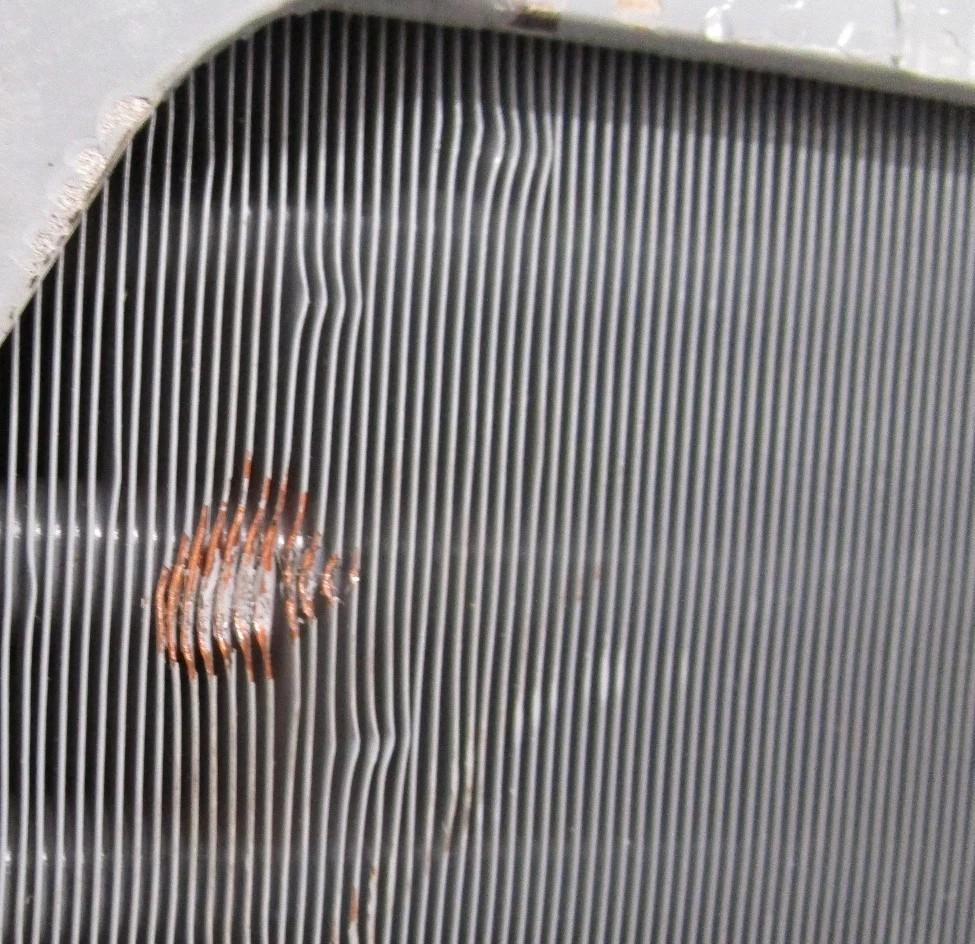
3. Aftercooler Failure (Major Hidden Cause)
Aftercoolers reduce intake air temperature and play a critical role in overall engine efficiency. When restricted or damaged, intake air temperature rises, combustion efficiency drops, and heat production increases.
This is exactly what the image above represents—a failed core restricting performance.
4. Raw Water Pump Wear
The pump may still turn but fail to deliver adequate volume at higher RPM. Internal wear, cam damage, or improper impeller installation can reduce output significantly.
5. Exhaust System Restriction
Restricted exhaust increases backpressure, which increases engine load and temperature.
👉 Related: Low Power Diagnosis Center
6. Closed Cooling System Issues
The freshwater side must also function correctly. Thermostat failure, coolant issues, or circulation problems reduce system efficiency.
7. Engine Overload Condition
If the engine is overloaded, it generates more heat than the system was designed to handle.
- Over-propped vessel
- Hull fouling
- Excess weight
⚠️ Critical Related Electrical Failure
Cooling problems can also be worsened by charging system issues affecting pump speed or system performance:
👉 Marine Diesel Battery Charging System Failures
Step-by-Step Professional Diagnosis
Proper diagnosis requires testing the system under load—not just at idle.
- Inspect intake and strainer
- Check impeller condition
- Measure raw water flow
- Inspect heat exchanger internally
- Check aftercooler condition
- Test thermostat operation
- Evaluate exhaust restriction
👉 Continue with:
Mechanical Diagnostics
Frequently Asked Questions
1. Why does my engine overheat only at high RPM?
This indicates the cooling system cannot keep up with increased heat load. Start with the troubleshooting guide to isolate the system.
2. Can an impeller cause this?
Yes, a worn impeller often works at idle but fails under load.
3. Can a heat exchanger cause overheating?
Yes, internal restriction reduces cooling capacity significantly.
4. What does an aftercooler do?
It cools intake air, reducing combustion temperatures and improving efficiency.
5. Can exhaust restriction cause overheating?
Yes, increased backpressure raises engine load and heat.
6. Where should I start diagnosing?
Start with the cooling system center.
7. Can coolant issues cause this?
Yes, thermostat or coolant problems affect heat removal.
8. Can overloading cause overheating?
Yes, excessive load generates more heat than the system can handle.
9. Is overheating dangerous?
Yes, it can lead to severe engine damage quickly.
10. Can this damage the turbo?
Yes, high temperatures can damage turbo components.
11. Can poor maintenance cause this?
Yes, buildup in cooling systems is a major cause.
12. Should I keep running?
No, overheating should be addressed immediately.
13. Can I diagnose this myself?
Basic checks are possible, but full inspection is recommended.
14. Can electrical issues relate?
Yes, see charging system failures.
15. Can air leaks affect cooling?
Yes, especially in raw water systems.
16. Is this common?
Yes, very common under load conditions.
17. What’s fastest diagnosis?
System-based inspection under load.
18. Do you offer mobile service?
Yes, throughout Ventura and surrounding areas.
19. Can this lead to engine failure?
Yes, if ignored.
20. When should I call a mechanic?
Immediately if overheating persists.
6 Responses