
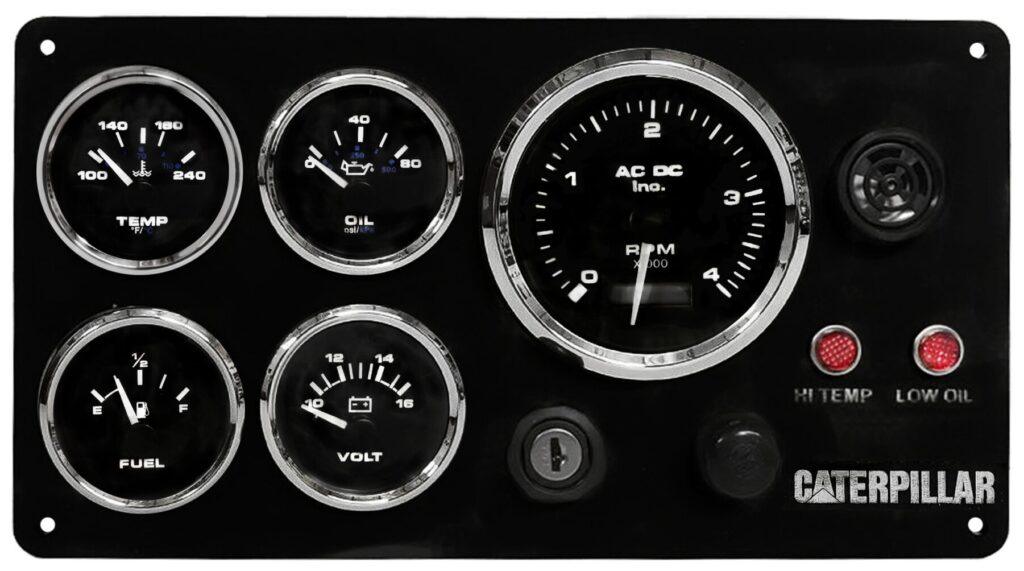
Caterpillar marine diesel electrical and starting problems can leave a perfectly good engine unable to crank, slow to start, or shutting down because of voltage, alarm, or wiring faults. This guide explains how to diagnose Caterpillar starting-system problems by separating battery weakness, voltage drop, starter faults, charging issues, alarm-panel problems, and shutdown-circuit faults before unnecessary parts are replaced.
Caterpillar Marine Diesel Electrical & Starting Problems: Complete Diagnosis Authority Guide
Electrical and starting-system problems are one of the most common causes of Caterpillar marine diesel engines failing to start, cranking too slowly, or shutting down unexpectedly because of alarm or control faults. Caterpillar marine engines such as the CAT 3116, 3126, C7, C9, C12, C18, and C32 rely on a properly functioning electrical system not only to crank the engine, but also to power monitoring circuits, alarm systems, shutdown protection, and charging recovery after startup.
That is why starting complaints should never be diagnosed with guesswork. A Caterpillar that clicks and does not crank may have a different root cause than one that cranks slowly, loses panel power during crank, or starts and then shuts down after an alarm event. In some cases, the issue is simple battery weakness or cable corrosion. In others, it is high resistance in the starting circuit, a weak ground path, failed starter solenoid contacts, alternator undercharging, or faulty alarm and shutdown inputs.
At 805 Marine Diesel Mechanic, Caterpillar marine diesel electrical and starting system issues are diagnosed throughout Ventura, Oxnard, Channel Islands Harbor, and Santa Barbara. With over 30 years of marine diesel experience, the process always starts with system logic and load testing, not part swapping. This page expands from your Master Marine Diesel Troubleshooting Guide and fits directly into your broader starting, shutdown, cooling, smoke, and diagnostics-center network.
How Caterpillar Marine Electrical Systems Work
Marine diesel electrical systems perform several important functions at once. They provide the current required to crank the engine, they recharge battery banks once the engine is running, and they power monitoring systems that protect the engine from damage. On many Caterpillar engines, the electrical side also supports instrument panels, senders, shutdown circuits, and warning systems that influence whether the engine will continue operating normally.
Key components of Caterpillar marine electrical systems include:
- Battery banks
- Starter motor
- Starter solenoid
- Alternator and charging circuit
- Engine wiring harness
- Alarm and shutdown sensors
- Panel wiring, keyswitch circuits, and grounds
If any of these components fail, the engine may not start or may shut down unexpectedly. General starting problems can also be explored here: Engine Will Not Start Diagnosis Center.
Common Caterpillar Starting System Problems
Starting-system failures often produce clear symptoms that help narrow the root cause before testing begins. Pattern recognition matters because a no-crank condition is different from slow crank, and both are different from a crank-no-start complaint.
- Engine will not crank
- Slow cranking speed
- Starter clicking but engine not turning
- Intermittent starting problems
- Starter motor overheating
- Panel lights dimming or dropping out during crank
- Alarm-triggered shutdown after startup
Slow cranking speed is often caused by low battery voltage or high resistance in electrical cables, but it can also be made worse by heat, poor grounds, weak starter internals, or charging systems that have not restored the batteries properly between trips. These complaints often overlap with Boat Engine Won’t Start, Engine Starts Then Dies, and No Smoke When Cranking.
Battery Problems
Batteries are the most common source of electrical starting problems on marine diesel engines because every other part of the starting system depends on adequate voltage and amperage under load. Batteries may appear acceptable when checked at rest and still fail badly when the starter actually draws current.
Common battery-related issues include:
- Low battery charge
- Corroded battery terminals
- Loose battery connections
- Internal battery failure
- Undersized or aging battery banks
Even slightly corroded terminals can dramatically reduce starting power. That is why load testing matters more than surface-voltage assumptions. A Caterpillar may seem to have a starter problem when the real cause is battery collapse under cranking load.
Starter Motor Failures
The starter motor is responsible for rotating the engine during startup. Over time, starter components wear and eventually fail, especially in marine environments where heat, moisture, vibration, and corrosion all accelerate deterioration.
Common starter motor problems include:
- Worn starter brushes
- Failed starter solenoid
- Damaged starter gear
- Internal electrical shorts
- High current draw with weak cranking output
Starter motors exposed to marine environments often suffer corrosion and electrical contact issues long before full failure occurs. That is why intermittent slow-crank complaints should be taken seriously. Many “sudden” starter failures have actually been warning the owner for weeks.
Alternator Charging System Problems
Once the engine is running, the alternator maintains battery charge and powers onboard electrical systems. If charging performance drops, the batteries slowly lose reserve capacity and the next start cycle becomes harder. In these cases the owner often blames the starter because the problem appears during crank, but the real issue is that the batteries were never properly recharged.
Alternator failures can cause:
- Low battery voltage
- Battery discharge while running
- Electrical instrument malfunction
- Low-voltage warnings on the panel
- Failure to restart after shutdown
Low-voltage problems can eventually lead to engine shutdowns or failure to restart. This is also where the link to some of the recently rebuilt posts becomes useful, because charging faults can overlap with the low-power and shutdown complaint pages we just redid, including Marine Diesel Engine Shutdown Causes and Low Power Loss of RPM Diagnosis Center.
Engine Alarm & Shutdown Systems
Caterpillar engines use sensors and alarm systems to monitor critical engine conditions. These systems are there to protect the engine, but they can also become a source of diagnostic confusion when senders, wiring, or panel inputs fail and create false alarms or shutdown behavior.
Common engine alarms include:
- High coolant temperature
- Low oil pressure
- Low coolant level
- Overspeed conditions
- Low system voltage
Faulty sensors or wiring issues can trigger false alarms or shutdowns, but real alarms should never be dismissed until the condition is verified. Cooling-related alarms can also be explored here: Cooling System Diagnosis Center and Boat Engine Overheating.
Electrical Wiring Problems
Marine environments expose electrical wiring to moisture, salt, heat, and vibration. Over time this causes connector corrosion, broken conductors, loose harness connections, and high electrical resistance that may be invisible until the system is tested under load.
Over time this can cause:
- Corroded connectors
- Broken wires
- Loose harness connections
- High electrical resistance
- Intermittent alarm or shutdown inputs
These problems can be difficult to diagnose without systematic electrical testing. This is one reason why electrical complaints often get misread as fuel or shutdown issues until voltage-drop testing proves otherwise.
When Starting Problems Look Like Fuel Problems
A weak electrical system can make a healthy Caterpillar act like it has a fuel or combustion problem. If cranking speed is too low, combustion quality drops and the engine may crank for a long time, produce odd startup smoke, or fail to fire reliably. In that situation the owner may assume injector or fuel issues when the real problem is simply inadequate electrical cranking performance.
The reverse can also happen. A Caterpillar may crank normally but still not start because of air in the fuel system, contaminated fuel, shutdown-control issues, or unstable injector delivery. That is why starting problems should also be cross-checked with:
- Fuel System Diagnosis Center
- Air in Fuel System
- Fuel Contamination & Filtration Issues Center
- How to Prime a Marine Diesel Fuel System
Professional Caterpillar Electrical Diagnosis
Proper electrical troubleshooting requires a structured diagnostic process. Looking at a cable and saying it “looks fine” is not diagnosis. Hearing a starter click and assuming it is bad is not diagnosis either. Real testing has to measure the system while it is actually under cranking and running load.
Our inspection process typically includes:
- Battery load testing
- Starter current draw testing
- Alternator output testing
- Voltage-drop testing
- Sensor and alarm circuit inspection
- Ground-path and harness continuity inspection
Advanced diagnostics can also be performed through: Computerized Marine Engine Survey Diagnostics Center.
Caterpillar Marine Diesel Service in Ventura & Channel Islands Harbor
805 Marine Diesel Mechanic provides professional Caterpillar marine electrical and starting system diagnosis throughout:
- Ventura Harbor
- Channel Islands Harbor
- Oxnard
- Santa Barbara
If your Caterpillar marine diesel engine is experiencing electrical or starting problems, professional diagnosis can quickly locate the real root cause and prevent unnecessary starter, battery, or alternator replacement.
Caterpillar Electrical System FAQ
1. Why does my Caterpillar marine engine crank slowly?
Slow cranking is usually caused by weak batteries, corroded cables, bad grounds, or high electrical resistance in the starting circuit.
2. What causes a starter to click but not crank?
This typically indicates insufficient battery voltage, severe voltage drop, poor connections, or a failed starter solenoid.
3. How do you test a marine diesel starter?
Starter testing involves checking battery voltage under load, measuring current draw, and verifying proper voltage at the starter and solenoid during crank.
4. Can bad wiring prevent a marine diesel from starting?
Yes. Corroded or damaged wiring can prevent proper current flow to the starter motor or can interrupt alarm and shutdown circuits.
5. Can weak batteries still show normal voltage at rest?
Yes. A battery may appear acceptable at rest and still collapse under cranking load, which is why load testing matters.
6. Can corroded battery terminals really cause no-start problems?
Absolutely. Even moderate corrosion can create enough resistance to dramatically reduce starter performance.
7. Why do my Caterpillar gauges drop out when I crank?
That usually points to severe voltage drop, weak battery capacity, bad cable connections, or a starter drawing excessive current.
8. Can a bad ground cable act like a bad starter?
Yes. Poor grounds are one of the most overlooked causes of slow crank and intermittent starting complaints.
9. Can alternator problems cause hard restarting later?
Yes. If the alternator is not restoring battery charge correctly, the engine may start once and then become difficult to restart later.
10. Can alarm-system faults shut an engine down unexpectedly?
Yes. Faulty alarm inputs, sender failures, or wiring issues can create false shutdown behavior, although real alarms must always be verified first.
11. Can electrical problems look like fuel-system problems?
Yes. Slow cranking can reduce combustion quality and make the engine seem like it has a fuel or injector issue when the real problem is electrical.
12. What if the engine cranks fine but still will not start?
Then the diagnostic path usually shifts toward fuel delivery, shutdown circuits, or combustion quality. See Boat Engine Won’t Start.
13. Can low-voltage alarms come from charging-system weakness?
Yes. Low-voltage alarms commonly come from battery weakness, alternator undercharging, regulator problems, or excessive circuit resistance.
14. Can cooling-system alarms overlap with electrical diagnosis?
Yes. Cooling alarms may be triggered by real temperature issues or by bad senders and wiring, which is why they should be cross-checked with the Cooling System Diagnosis Center.
15. Can repeated crank attempts damage the starter?
Yes. Repeated cranking can overheat the starter and create a second failure on top of the original problem.
16. Can bad harness connections create intermittent starting issues?
Yes. Loose or corroded harness connections often cause intermittent symptoms that change with vibration, heat, or moisture.
17. Can electrical faults also trigger shutdown-like symptoms underway?
Yes. Weak voltage, bad alarm inputs, or harness faults can overlap with shutdown complaints. See Marine Diesel Engine Shutdown Causes.
18. Is mobile diagnosis useful for Caterpillar electrical problems?
Yes. Starting and voltage-drop complaints are often easiest to diagnose on the boat with the same batteries, switches, wiring, and environment where the problem occurs.
19. When should I call a mechanic for Caterpillar starting problems?
If the engine cranks slowly, clicks without starting, shows repeated alarm issues, or has intermittent electrical faults, it is time for professional diagnosis through the contact page.
20. Where should I start if I want the full Caterpillar electrical pathway?
Start with the Master Marine Diesel Troubleshooting Guide, then move through the linked starting, shutdown, fuel, cooling, and diagnostics pages from there.