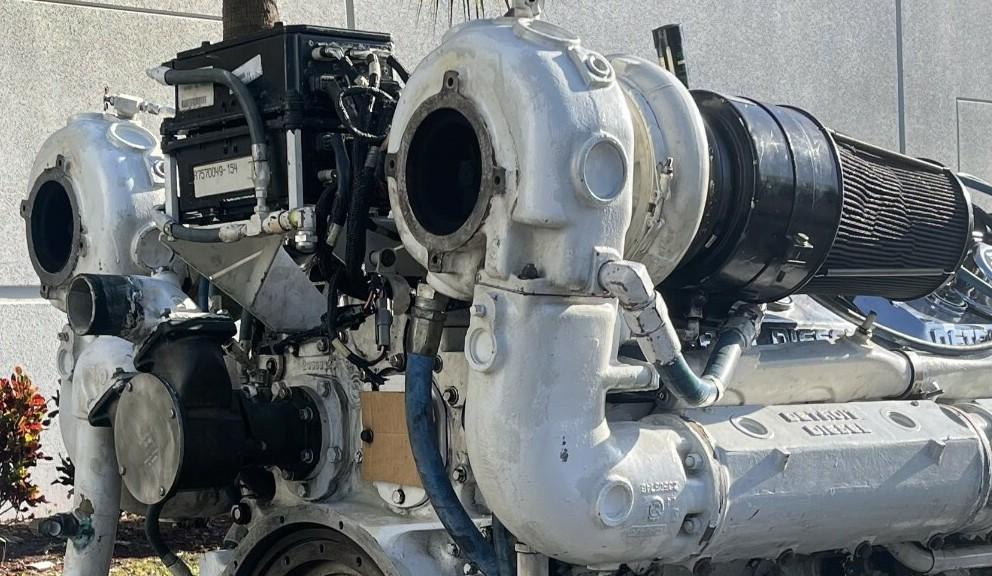
Turbocharger performance issues are one of the most common causes of power loss, smoke, overheating, and efficiency problems in marine diesel engines. This Turbo System Diagnosis Center organizes the complete troubleshooting process used by trained technicians at 805 Marine Diesel Mechanic.
This page serves as a structured diagnostic hub connecting all turbo-related troubleshooting guides. Start here if your engine has performance problems, slow spool-up, or abnormal exhaust smoke.
Return to Master Marine Diesel Troubleshooting Guide →
Start Here — Turbocharger Failure Symptoms
Identify early warning signs before replacing expensive components.
Performance Testing & Boost Diagnostics
Airflow & Charge Air System Problems
Turbo Control Components
Exhaust System Related Turbo Issues
Lubrication & Oil System Causes
Related Performance & Smoke Diagnosis
Local Marine Diesel Turbo Diagnostics
805 Marine Diesel Mechanic provides advanced turbocharger diagnostics, boost testing, airflow analysis, and performance troubleshooting throughout Ventura, Oxnard, Channel Islands Harbor, and Santa Barbara.
Schedule Turbo System Inspection →
How Marine Diesel Turbochargers Improve Engine Performance
Turbochargers play a critical role in modern marine diesel engine performance. By compressing incoming air before it enters the combustion chamber, turbochargers allow the engine to burn more fuel efficiently and generate significantly greater power.
A naturally aspirated diesel engine draws air into the cylinders using only atmospheric pressure. Turbocharged engines, however, use exhaust energy to spin a turbine that compresses incoming air. This compressed air increases oxygen density inside the cylinders, allowing more fuel to be injected and burned efficiently.
The result is higher horsepower, improved fuel efficiency, and better overall engine performance without increasing engine size.
Because turbochargers operate under extremely high temperatures and rotational speeds, even small problems in the turbo system can lead to noticeable engine performance issues.
Common Symptoms of Marine Diesel Turbo Problems
Turbocharger problems often appear as engine performance issues rather than obvious mechanical failures. Many vessel owners first notice reduced power or increased smoke before realizing the turbo system is involved.
Common symptoms of turbo system problems include:
- Loss of engine power under load
- Slow turbo spool-up during acceleration
- Excessive black smoke at higher throttle
- Reduced boost pressure
- High exhaust temperatures
- Engine unable to reach rated RPM
- Unusual turbo noise or whining
Because the turbocharger directly influences air supply to the engine, even minor airflow restrictions can cause noticeable performance problems.
These symptoms are often closely linked with other systems such as fuel delivery, cooling efficiency, and exhaust flow, which is why turbo diagnostics typically involve inspecting several engine systems together.
Boost Pressure and Performance Testing
Boost pressure testing is one of the most effective methods for evaluating turbocharger performance. Marine diesel engines are designed to operate within a specific boost pressure range depending on engine model and load conditions.
During boost testing, technicians measure intake air pressure while the engine operates under load. If boost pressure falls below the expected range, the turbocharger may not be operating efficiently.
Low boost pressure may be caused by several factors:
- Turbocharger wear or damage
- Air leaks in charge air piping
- Restricted air filters
- Aftercooler fouling
- Exhaust restrictions
Because these issues can produce similar symptoms, proper testing is necessary before replacing expensive turbocharger components.
Charge Air System Restrictions
The charge air system includes all components responsible for delivering compressed air from the turbocharger to the engine. This system typically includes intake piping, aftercoolers, intercoolers, and air filters.
If any part of this airflow path becomes restricted, engine performance can drop significantly. Even small airflow restrictions reduce the amount of oxygen available for combustion.
Common airflow restrictions include:
- Clogged or dirty air filters
- Oil contamination inside aftercoolers
- Debris buildup in charge air piping
- Loose clamps causing boost leaks
When airflow becomes restricted, engines often produce excessive black smoke because fuel is being injected faster than the available oxygen can burn efficiently.
Proper inspection of the charge air system is therefore a key step in diagnosing turbo performance problems.
Expansion: Why Turbo Problems Are Often Misdiagnosed
Turbocharger issues are rarely isolated failures. In real-world diagnostics, most turbo-related symptoms actually originate from upstream or downstream system problems.
A turbocharger is driven entirely by exhaust energy. If combustion efficiency drops due to fuel restriction, poor injection, or air restriction, the turbo will not spool correctly. This leads to low boost, black smoke, and reduced engine power — even if the turbo itself is mechanically sound.
This is one of the most common misdiagnoses: replacing a turbocharger when the real issue is fuel delivery, airflow restriction, or exhaust backpressure.
Always verify system inputs before replacing turbo components using the Master Troubleshooting Guide and confirm fuel, air, and exhaust conditions.
Advanced Diagnostic Patterns (Real-World)
- Low boost + black smoke → air restriction or fuel overload
- Low boost + low power → fuel restriction or exhaust restriction
- High boost + overheating → restricted cooling or over fueling
- Turbo slow to spool → charge air leak or weak exhaust energy
- Whining noise → bearing wear or airflow imbalance
- Oil at turbo outlet → oil seal failure or drain restriction
- Engine won’t reach RPM → turbo underperforming due to upstream restriction
Cross-system diagnostics:
- Fuel System Diagnosis Center
- Fuel vs Air Restriction Diagnosis
- Exhaust Backpressure Diagnosis
- Low Power / Loss of RPM
Deep System Explanation: Turbo + Fuel + Cooling + Exhaust
The turbocharger sits at the center of multiple engine systems. Any imbalance across these systems directly affects turbo performance.
Fuel System → Turbo Performance
If fuel delivery is restricted, combustion energy drops. This reduces exhaust flow and prevents the turbo from reaching operating speed.
Air System → Combustion Efficiency
Restricted airflow reduces oxygen availability. This causes incomplete combustion, leading to black smoke and poor engine performance.
Exhaust System → Turbo Drive Energy
Excessive exhaust backpressure prevents efficient turbine rotation. This can mimic turbo failure while actually being an exhaust restriction issue.
Cooling System → Thermal Stability
High exhaust temperatures caused by poor combustion increase heat load on the turbo. Over time, this can damage bearings and reduce turbo lifespan.
In most cases, turbo problems are not isolated failures — they are the result of system imbalance.
FAQ – Marine Diesel Turbo System Diagnosis
What causes low turbo boost?
Can a turbo problem cause black smoke?
What causes slow turbo spool-up?
Can fuel issues affect turbo performance?
What is normal boost pressure?
Can exhaust restriction mimic turbo failure?
Why does my engine lose RPM under load?
What causes turbo whining noise?
Can oil leaks damage the turbo?
How do I test turbo performance?
Can air leaks reduce boost?
What causes high exhaust temperature?
Can a clogged air filter affect turbo?
Why does my turbo feel weak?
What systems affect turbo performance?
Can intercooler problems affect boost?
Is turbo replacement always necessary?
What causes turbo overheating?
How often should turbo systems be inspected?
When should I call a professional?
Schedule Marine Diesel Diagnostic Service
Serving Ventura, Channel Islands Harbor, and Santa Barbara with over 30 years of marine diesel diagnostic experience.
10 Responses