
Marine Diesel Aftercooler & Intercooler Problems (Symptoms + Cleaning Guide)
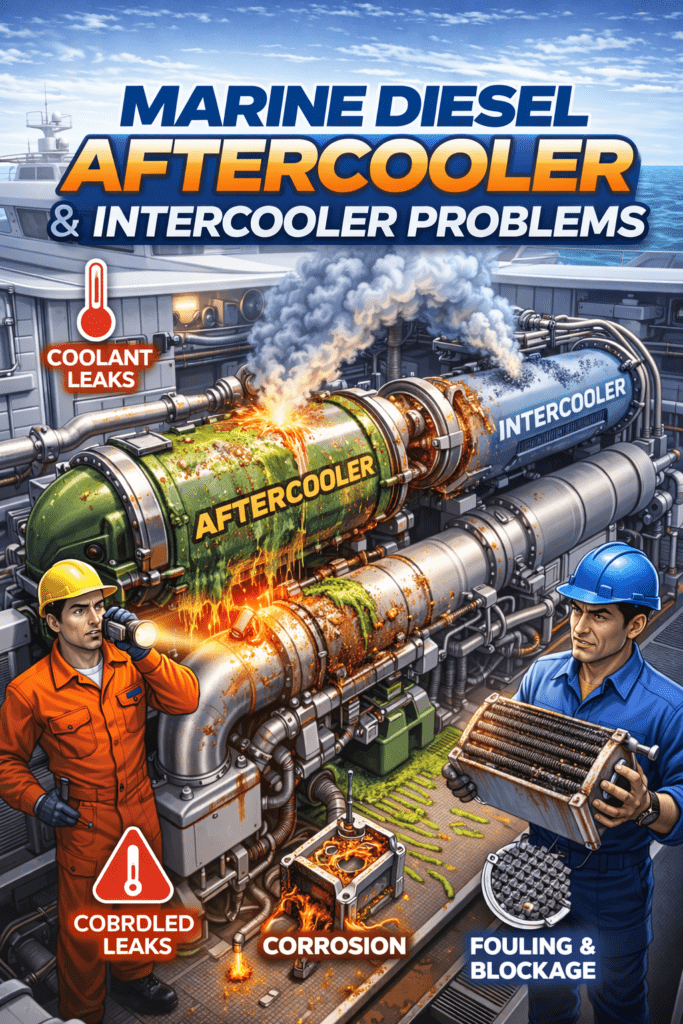
Marine diesel aftercooler and intercooler problems are one of the most common hidden causes of power loss, smoke, overheating, and turbocharger stress. These components are critical to maintaining proper air density and combustion efficiency, yet they are often overlooked until major performance issues develop.
At 805 Marine Diesel Mechanic, restricted aftercoolers are frequently identified during diagnostics across Ventura, Oxnard, Channel Islands Harbor, and Santa Barbara. Many engines diagnosed with turbo or fuel problems are actually suffering from airflow restriction caused by clogged or corroded charge air systems.
Start with the Master Marine Diesel Troubleshooting Guide →
What Does an Aftercooler or Intercooler Do?
Turbochargers compress intake air, which increases its temperature. Hot air is less dense, reducing oxygen content and limiting combustion efficiency. Aftercoolers reduce this temperature before air enters the cylinders, restoring density and improving performance.
This process directly impacts systems covered in the
Turbo System Diagnosis Center and
High Exhaust Temperature Diagnosis.
- Increase oxygen density for combustion
- Improve fuel burn efficiency
- Reduce exhaust gas temperature
- Protect pistons and valves
- Maintain rated horsepower under load
Why Aftercooler Problems Are Misdiagnosed
Aftercooler restriction produces symptoms that overlap with turbocharger, fuel, and cooling system issues. Engines may show black smoke, power loss, or overheating—leading technicians to suspect injectors or turbo failure.
However, restricted airflow reduces oxygen supply, causing incomplete combustion. This directly links to the
Smoke & Combustion Diagnosis Center and
Fuel System Diagnosis Center, even though the root cause is airflow restriction.
Common Symptoms of Aftercooler Problems
- Loss of RPM under load
- Excessive black smoke
- High exhaust gas temperature
- Overheating at cruise
- Not reaching full RPM
- Low boost pressure under load
- Poor fuel efficiency and increased fuel burn
These symptoms are often incorrectly attributed to issues such as
power loss under load or
surging at cruise RPM.
Common Causes of Aftercooler Restriction
Aftercooler failures are typically caused by environmental exposure and lack of maintenance rather than sudden component failure.
Salt buildup inside cooling passages restricts heat transfer, while internal corrosion damages the core structure. Oil contamination from turbo seals coats internal surfaces and reduces airflow efficiency. These conditions are often identified during diagnostics such as
turbo oil system inspections.
- Salt deposits and mineral buildup
- Internal corrosion and pitting
- Oil contamination from turbo seals
- Blocked or restricted cooling passages
- Collapsed internal cores
- Missed maintenance intervals
System Interaction (Critical for Diagnosis)
Aftercooler performance directly affects multiple systems. Restricted airflow increases exhaust temperature, reduces turbo efficiency, and places additional stress on the cooling system.
This interaction must always be evaluated alongside:
- Exhaust Backpressure Problems
- Wastegate Problems
- Computerized Diagnostics Center
- Cooling System Diagnosis Center
- Seawater Pump Failure
Diagnostic Process Used by Trained Technicians
- Measure boost pressure under load
- Compare intake air temperature before and after cooler
- Inspect for oil contamination in charge air piping
- Pressure test aftercooler core integrity
- Inspect raw water flow and cooling efficiency
- Perform charge air leak testing
- Confirm results during sea trial
When Cleaning Is Required Immediately
Aftercoolers should be cleaned or serviced when performance begins to decline, not just when failure occurs.
- Black smoke during acceleration
- Loss of maximum RPM
- Rising engine temperature under load
- Visible corrosion or contamination
- Turbocharger running hotter than normal
External References
Cummins Marine Engines |
Caterpillar Marine Systems
9 Responses