
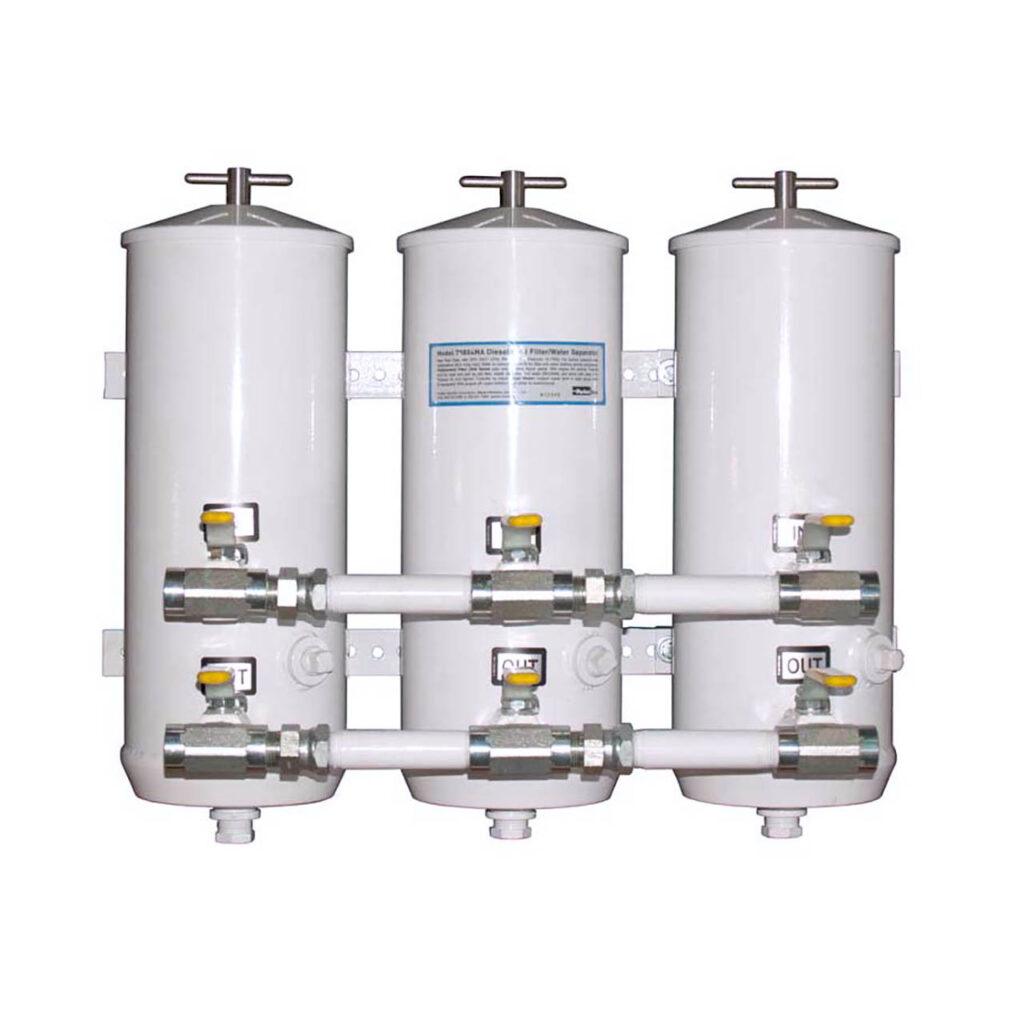
Racor Marine 804A triplex fuel filter water separator system installed as primary yacht diesel filtration for offshore reliability.
Choosing the right yacht fuel filtration and fuel manifold system is one of the most important reliability decisions you can make. Before upgrading filters, manifolds, polishing systems, or water separators, start with the Master Marine Diesel Troubleshooting Guide to understand whether your current symptoms are caused by fuel contamination, restriction, air intrusion, or another engine system.
At 805 Marine Diesel Mechanic, fuel filtration upgrades are often recommended after diagnosing repeat Racor filter clogging, marine diesel fuel contamination, diesel algae contamination, or recurring fuel restriction vs air restriction complaints. A proper filtration layout protects engines, generators, heaters, fuel pumps, injectors, and expensive offshore travel plans.
Why Yacht Fuel Filtration Matters
Marine diesel engines are only as reliable as the fuel reaching the injection system. Coastal humidity, tank condensation, long idle periods, seasonal use, and dockside fuel quality all affect what ends up in your tanks.
When fuel quality drops, symptoms may include low power or loss of RPM, surging at cruise RPM, no-start after filter changes, and engine starts then dies complaints.
A well-designed yacht fuel system usually includes:
- A clean fuel manifold with labeled supply and return valves
- Primary fuel/water separators sized for the engine load
- Secondary engine-mounted filtration matched to manufacturer requirements
- Vacuum monitoring to identify filter restriction before shutdown
- Fuel polishing or remote switching options for long-range cruising
Fuel Manifold Systems: The Control Center of Your Yacht Fuel System
On twin-engine yachts, fuel manifolds bring multiple tank feeds, returns, generator supply lines, and service valves into one organized location. This makes the system easier to operate, inspect, and troubleshoot.
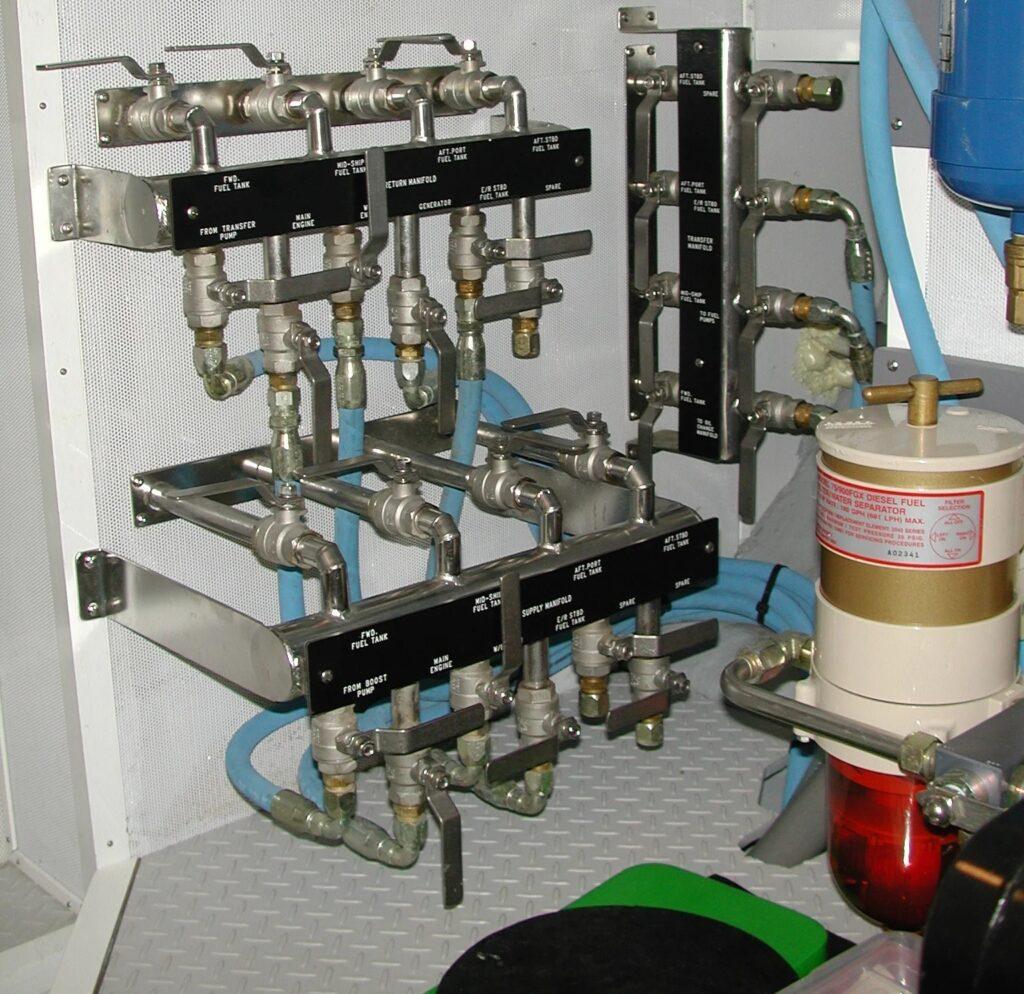
Stainless yacht fuel manifold system with clearly labeled valves for multi-tank diesel fuel management.
A good fuel manifold allows you to isolate a contaminated tank, switch feeds, balance fuel load, and service filter banks without guessing which hose goes where. When fuel valves are misconfigured, the symptoms can look like marine diesel cranks but won’t start or engine turns over but no smoke from exhaust.
- Select which tank feeds each engine or generator
- Isolate bad fuel before it reaches injectors
- Transfer fuel for trim or range planning
- Simplify service and emergency troubleshooting
- Reduce random valves and hidden leak points
Fuel/Water Separators: First Defense Against Water and Sludge
Water is one of the biggest threats to marine diesel systems. It promotes microbial growth, corrodes components, and can quickly damage pumps and injectors.
A properly sized separator removes water before fuel reaches the engine-mounted filter. If water or sludge is already affecting operation, compare symptoms with the Fuel Contamination & Filtration Issues Center and the Fuel System Diagnosis Center.
When fuel contamination affects combustion, it can also create smoke symptoms. The required orphan link for this post fits here naturally: if your engine smokes after sitting or after startup, review marine diesel smoke after startup because fuel quality, air in fuel, injector spray, and cold combustion can all overlap.
- Clear bowls allow quick inspection for water
- Drain valves remove contamination before it travels forward
- Filter media captures fine debris
- Vacuum gauges show restriction trends
- Correct micron selection protects downstream filters
Fleetguard Fuel Filtration Systems
Fleetguard filters are commonly used where high-quality media, strong water separation, and reliable micron control are important. These systems are especially useful on vessels running newer engines, higher fuel flow rates, or commercial-style duty cycles.
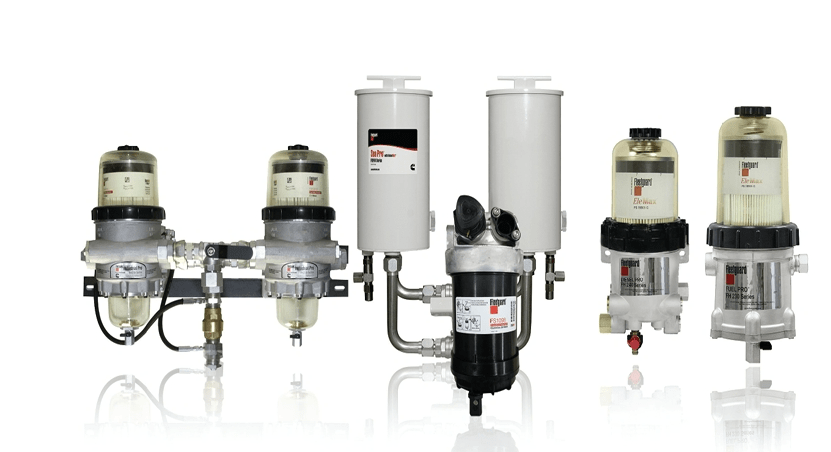
Fleetguard marine diesel filtration systems for clean fuel delivery on yacht engines, generators, and high-use vessels.
If your engine has symptoms like boat engine won’t reach full RPM, power loss under load, or hard starting cold vs warm, filtration should be inspected before assuming injector or pump failure.
Racor Marine Systems for Yachts
Racor turbine systems are one of the most common marine fuel/water separator setups found on yachts, sportfishers, trawlers, and commercial vessels. Their clear bowls, turbine separation, and wide range of filter elements make them practical for many engine rooms.
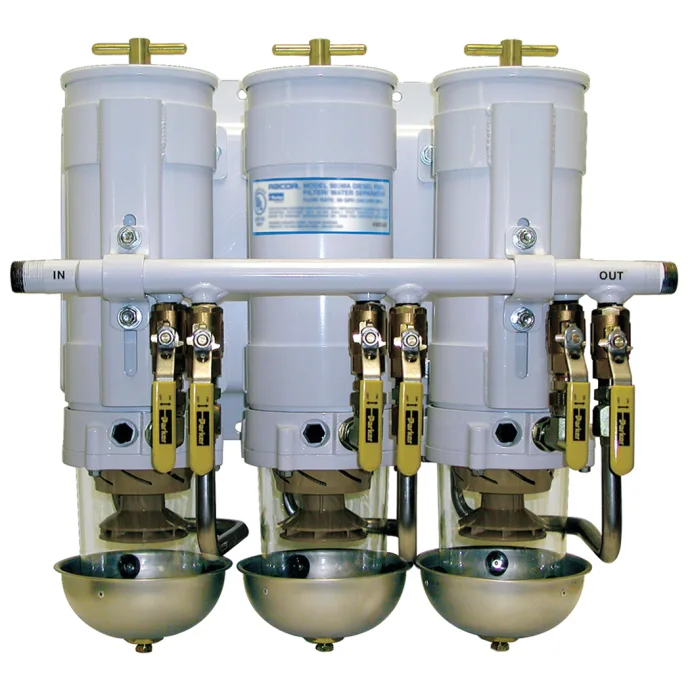
Racor triple fuel/water separator system with clear bowls and service valves protecting yacht diesel engines.
Triplex systems are valuable because they allow filter changeover while underway. On a long run to the Channel Islands, that can turn a major shutdown into a controlled filter change. These systems are also useful when diagnosing repeat filter loading, fuel system priming problems, and fuel system losing prime.
Multi-Canister and High-Capacity Separator Banks
Larger yachts and high-hour vessels may benefit from multi-canister separator banks. These systems provide more filter media area, longer service intervals, and better redundancy than a single separator.
Racor 804A triplex fuel filter water separator bank for heavy-duty yacht fuel filtration and offshore redundancy.
High-capacity systems are especially useful when older tanks show contamination risk or when the vessel has a history of repeated clogged filters. If contamination has already caused shutdowns, compare the pattern with no start after fuel filter change, fuel line blockage, and fuel pressure loss.
Advanced Remote Filtration and Fuel Polishing Systems
Remote filtration systems combine multiple filters, pumps, valves, and controls into a more serviceable fuel management package. These are helpful for larger cruising yachts where engine room access is difficult or filter changes need to be simplified.
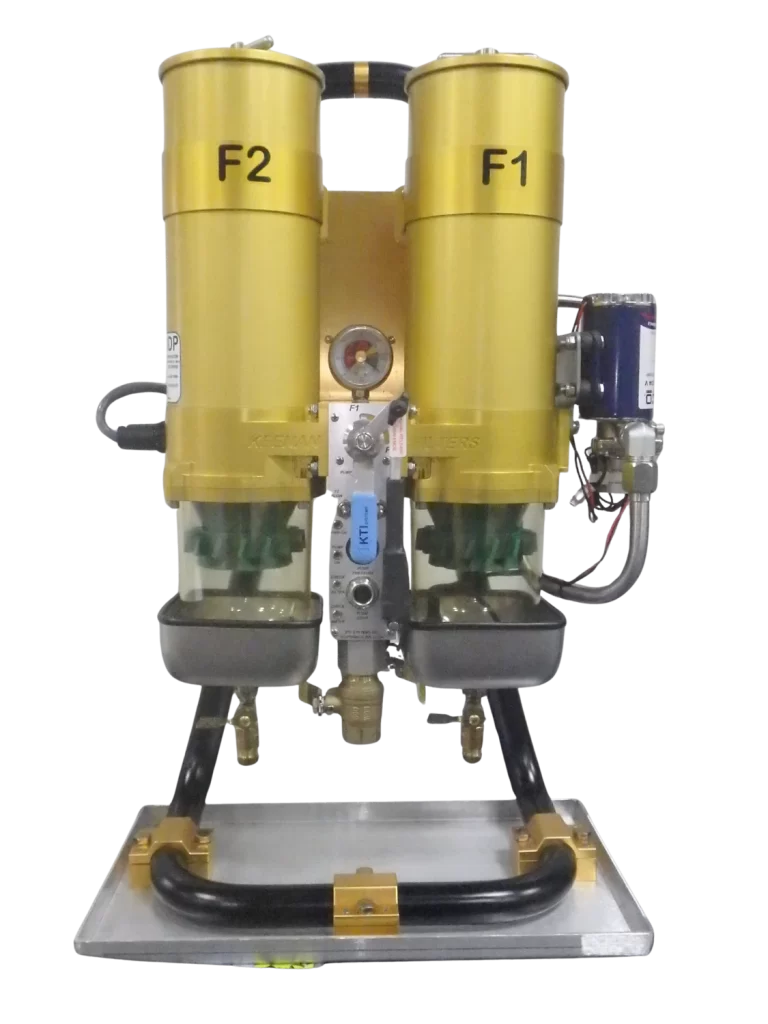
YachtBoss remote dual filtration and polishing system with control panel for large yacht fuel management.
Fuel polishing systems help circulate and clean fuel while dockside or underway. They do not replace proper tank inspection, but they can reduce risk when paired with strong separators, clean manifolds, and a planned maintenance schedule.
Choosing Between Racor, Fleetguard, and Remote Filtration
There is no single best filtration system for every yacht. The correct system depends on tank condition, engine fuel demand, generator load, cruising range, and service access.
- Racor systems work well for clear-bowl inspection and proven water separation.
- Fleetguard filters are useful where high-efficiency media is a priority.
- Triplex systems provide redundancy for offshore operation.
- Remote systems improve access, monitoring, and filter management.
- Manifold systems allow better tank selection and isolation.
We often spec a blended system: a clean manifold, properly sized primary filtration, quality secondary filtration, restriction monitoring, and clear service access. This system approach helps prevent symptoms that may otherwise be misdiagnosed as turbo lag, low boost pressure, or aftercooler restriction.
How 805 Marine Diesel Mechanic Designs a Yacht Fuel System
When we inspect a yacht fuel system, we look at the entire fuel path—not just the filter brand.
- Tank condition and access
- Supply and return routing
- Valve labeling and manifold logic
- Primary separator sizing
- Secondary filter compatibility
- Vacuum gauge installation
- Future polishing or changeover options
Fuel design should also be coordinated with adjacent systems. For example, if the engine also shows overheating, smoke, or performance problems, we may compare the fuel findings with cooling system diagnosis, raw water flow problems, heat exchanger clogging, and overheating at idle vs cruise.
Local Fuel System Challenges in Santa Barbara, Ventura, Oxnard, and Channel Islands Harbor
Local coastal conditions make fuel filtration especially important. Marine layer, temperature swings, seasonal storage, and Channel Islands runs all increase stress on the fuel system.
- Condensation adds water to tanks
- Seasonal use allows sludge and microbial growth
- Long runs expose marginal filter capacity
- Older tanks release debris over time
- Generator and heater loads add complexity
Owners planning longer trips should also consider broader reliability planning, including engine survey diagnostics, repower vs rebuild planning, engine beyond rebuild indicators, Perkins service, Yanmar service, and fresh water flushing.
External Authority Resources
Parker Racor Marine Filtration |
Fleetguard Filtration
Yacht Fuel Filtration & Manifold Systems — FAQ
1. Why does yacht fuel filtration matter so much?
2. What does a fuel/water separator do?
3. When should I upgrade my yacht fuel filtration system?
4. What is a fuel manifold system?
5. Do I need a fuel manifold on a smaller yacht?
6. What causes repeated filter clogging?
7. What is diesel algae?
8. What is fuel polishing?
9. Are Racor systems good for yachts?
10. Are Fleetguard filters useful in marine applications?
11. What micron rating should I choose?
12. Can fuel filtration affect engine power?
13. Can poor fuel cause smoke after startup?
14. How often should fuel filters be serviced?
15. What does a vacuum gauge show?
16. Can I change filters while underway?
17. Should generators have separate filtration?
18. Can fuel system design affect surveys?
19. When should I call a technician?
20. What is the best yacht fuel filtration setup?
805 Marine Diesel Mechanic provides yacht fuel filtration upgrades, fuel manifold planning, Racor and Fleetguard filter support, fuel polishing strategy, contamination diagnosis, and mobile marine diesel service throughout Ventura, Oxnard, Channel Islands Harbor, and Santa Barbara.
2 Responses