
Computerized Marine Engine Survey Diagnostics Center
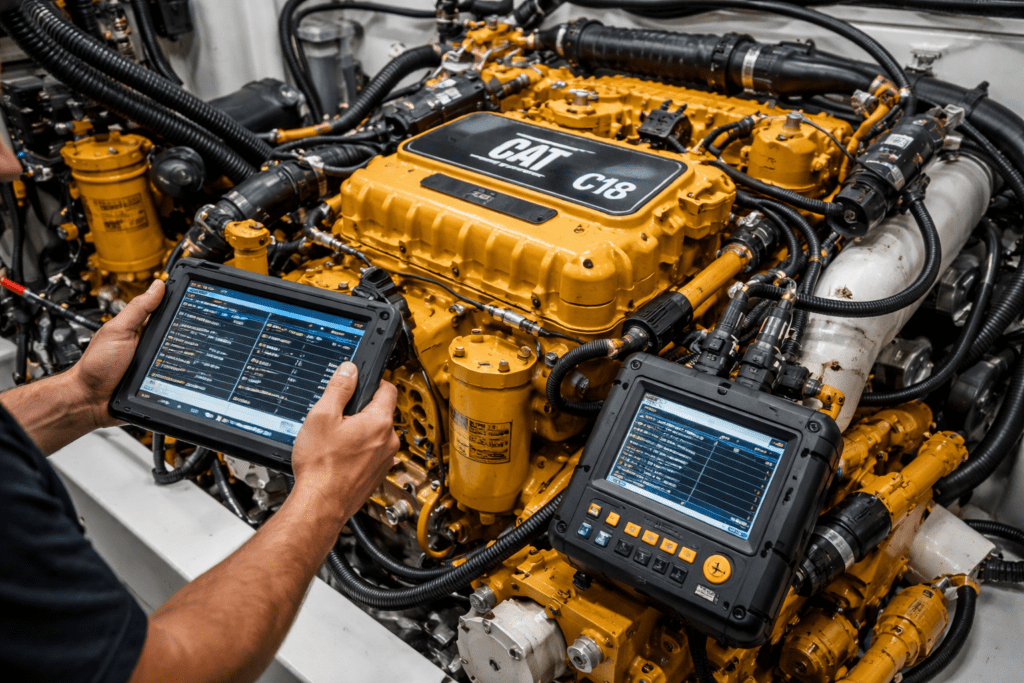
Modern marine diesel engines rely heavily on electronic control systems, onboard diagnostics, and performance data. Computerized engine surveys provide deep insight into engine health, fault history, load performance, and operational trends that cannot be identified through visual inspection alone.
At 805 Marine Diesel Mechanic, computerized diagnostics are a critical part of accurate troubleshooting throughout Ventura, Oxnard, Channel Islands Harbor, and Santa Barbara. These systems allow trained technicians to move beyond assumptions and diagnose engines based on real operating data.
Return to Master Marine Diesel Troubleshooting Guide →
What Is a Computerized Marine Engine Survey?
A computerized diagnostic survey connects directly to the engine’s ECM to retrieve real-time and historical data. This allows technicians to evaluate how the engine has actually been operated—not just how it appears during inspection.
This includes critical information such as load history, fault events, temperature spikes, and fuel performance trends. These insights are essential when diagnosing issues like loss of RPM or intermittent performance complaints.
Why Data Matters More Than Visual Inspection
Visual inspections only show current condition. ECM data shows long-term behavior, including overheating events, overload conditions, and sensor irregularities.
This is why computerized diagnostics are critical when investigating issues like high EGT, black smoke, or overheating under load.
When Computerized Diagnostics Are Essential
- Pre-purchase inspections
- Unknown engine history
- Intermittent faults
- Performance complaints
- Insurance surveys
Many issues like smoke under load or hesitation only appear during real operation, making data analysis essential.
System Integration — Why Modern Diagnostics Are Critical
Modern engines rely on multiple systems working together. Computerized diagnostics allow airflow, fuel, cooling, and load to be analyzed at the same time.
This is why diagnostics are closely tied to:
Advanced Data & Sea Trial Diagnostics
Live testing during sea trial allows real-time monitoring of boost pressure, fuel rate, temperature, and engine load. This reveals issues that never appear at idle.
Problems like power loss or RPM limitation can be confirmed with real data.
Rebuild vs Repower Decisions
Computerized diagnostics help determine whether an engine should be repaired or replaced. Data reveals whether performance issues are operational or structural.
This often overlaps with Mechanical Failure Diagnostics.
Prevention Through Data Monitoring
Routine diagnostic checks can identify trends before failures occur. Monitoring load, temperature, and fuel patterns helps prevent breakdowns.
Regular service through Marine Diesel Engine Services ensures early detection of issues.
For manufacturer reference, see Cummins Marine and Caterpillar Marine.
Local Marine Diagnostics
805 Marine Diesel Mechanic provides advanced computerized diagnostics throughout Ventura, Oxnard, Channel Islands Harbor, and Santa Barbara using real-world load testing and data analysis.
Computerized Marine Engine Survey FAQ
1. What is a computerized marine engine survey?
A computerized marine engine survey is a diagnostic process that connects directly to the engine’s ECM to retrieve real-time and historical data. This allows technicians to evaluate performance trends, fault history, and engine load patterns that cannot be seen during a visual inspection.
2. Why is ECM data important?
ECM data shows how the engine has actually been used over time, including overload events, overheating conditions, and performance trends. This makes it far more reliable than relying on appearance alone when diagnosing issues.
3. Can diagnostics detect hidden engine problems?
Yes, computerized diagnostics can reveal problems that are not visible during normal inspection. Issues like intermittent faults or performance drops often only appear in stored data or live readings.
4. Is this required for pre-purchase surveys?
It is highly recommended for pre-purchase inspections because it reveals engine history and operating patterns. Without it, buyers are relying only on surface-level observations.
5. Can diagnostics identify overheating issues?
Yes, ECM data often records overheating events and temperature trends. These can be compared with overheating under load symptoms for accurate diagnosis.
6. Can it detect turbo problems?
Yes, boost pressure and airflow data can indicate turbo performance issues. This helps diagnose problems related to the turbo system.
7. Does it help with fuel system diagnosis?
Yes, fuel rate and injector data can highlight inefficiencies or imbalances. This is especially useful when diagnosing issues in the fuel system.
8. Can diagnostics detect overload conditions?
Yes, load history data shows whether the engine has been consistently overworked. This is critical for identifying long-term damage risk.
9. What is live data testing?
Live data testing involves monitoring engine performance in real time during operation. This helps identify problems that do not appear at idle or during static inspection.
10. Why is a sea trial important?
A sea trial allows technicians to observe engine behavior under real load conditions. Many issues only appear when the engine is operating at cruise or full throttle.
11. Can diagnostics prevent future failures?
Yes, trend analysis allows early detection of issues before they become serious. This helps reduce costly breakdowns.
12. Can it help decide rebuild vs repower?
Yes, performance data helps determine whether the engine still has useful life remaining. This decision often overlaps with mechanical diagnostics.
13. Can it diagnose power loss?
Yes, data can reveal whether power loss is caused by airflow, fuel, or load issues. This is especially helpful for power loss under load.
14. Can diagnostics detect airflow problems?
Yes, boost and airflow data can identify restrictions or inefficiencies. These often relate to turbo or intake system issues.
15. Can it identify cooling system issues?
Yes, temperature trends and recorded events help identify cooling problems. These can be compared with the cooling system center.
16. Is this better than manual inspection?
It is not a replacement but a critical addition. Combining both methods provides the most accurate diagnosis.
17. Can it detect intermittent problems?
Yes, intermittent faults are often stored in ECM memory. This makes diagnostics essential for hard-to-find issues.
18. How long does a survey take?
Time varies depending on engine type and testing requirements. A full survey with sea trial typically takes several hours.
19. When should I schedule diagnostics?
Diagnostics should be scheduled when performance issues arise or before purchasing a vessel. Early testing helps avoid costly surprises.
20. Where do I start?
Start with the Master Troubleshooting Guide and then schedule a full survey for accurate analysis.
25 Responses