
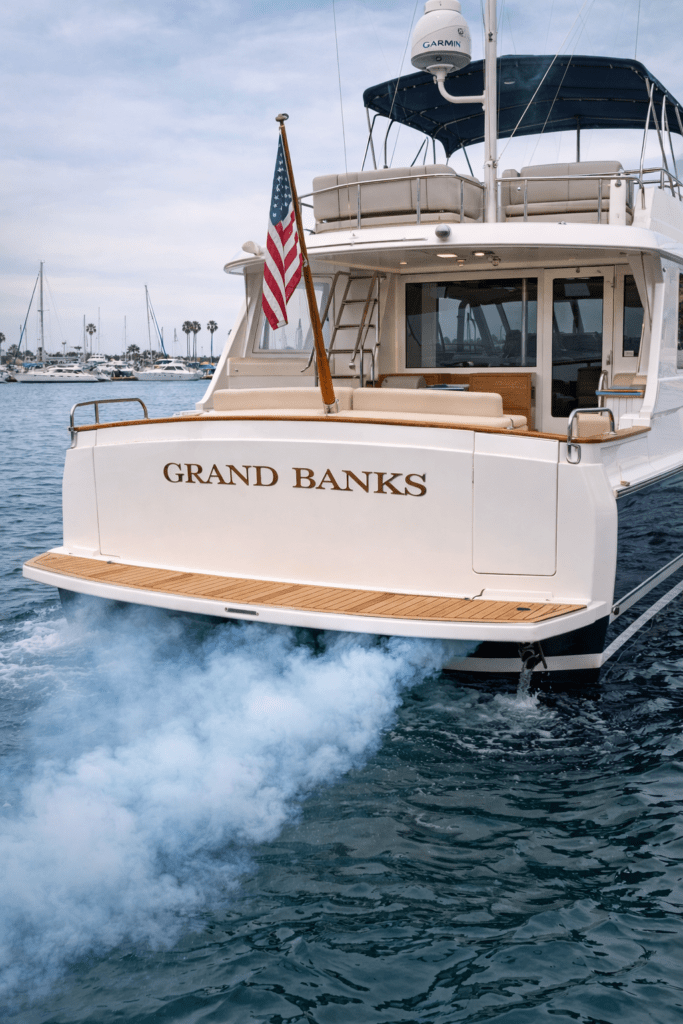
Smoke Only Under Load
If your marine diesel engine runs clean at idle but begins producing smoke when accelerating or under heavy load, the problem is usually related to airflow, turbo boost, fuel delivery balance, or excessive engine load rather than internal engine failure.
At 805 Marine Diesel Mechanic, smoke that appears only under load is one of the most common performance complaints diagnosed throughout Ventura, Oxnard, Channel Islands Harbor, and Santa Barbara. This symptom matters because under load is where the engine demands the most from the fuel, air, cooling, and exhaust systems, so even a small imbalance becomes obvious fast.
Return to Master Marine Diesel Troubleshooting Guide →
Why Smoke Appears Only Under Load
Under load, fuel delivery increases and turbo boost rises. Any imbalance between fuel, air, or cooling capacity becomes more noticeable at higher power levels.
- Fuel demand increases dramatically
- Turbocharger must produce adequate boost
- Airflow restrictions become critical
- Cooling system must handle increased heat
This is why engines that look acceptable at idle can begin smoking once they are asked to accelerate, climb onto plane, or push hard against current, wind, or vessel resistance. In many cases, this same complaint overlaps with loss of power under load or not reaching full RPM, because the engine is being pushed into a range where weak systems can no longer keep up.
Common Smoke Types Under Load
Black Smoke Under Load
Black smoke under load usually means the engine is receiving more fuel than the available air can burn efficiently. That makes airflow, boost pressure, aftercooler performance, and overload conditions the first systems to inspect.
- Low boost pressure
- Air intake restriction
- Aftercooler blockage
- Engine overload or propeller mismatch
These black smoke complaints should also be cross-checked with Marine Engine Black Smoke Under Load and the broader Smoke & Combustion Diagnosis Center so the issue is not treated as only a fuel problem.
Blue Smoke Under Load
Blue smoke under load usually indicates oil is entering the combustion stream or hot exhaust path. Under load, turbocharger oil seal issues, restricted oil drain conditions, or crankcase pressure problems often become more pronounced and visible.
- Turbo oil seal issues
- Oil drain restriction
- Excessive crankcase pressure
Blue smoke complaints should also be compared with Boat Engine Blowing Blue Smoke, especially if oil use has increased or the smoke is paired with turbo noise or power loss.
White Smoke Under Load
White smoke under load is usually more serious than a brief white haze during startup. It may indicate injector issues, timing problems, weak combustion, or water-related intrusion affecting the combustion process.
- Fuel timing issues
- Injector problems
- Water intrusion or cooling issues
If this smoke is paired with roughness, overheating, or heavy power loss, it should also be compared with Mechanical Failure Diagnostics before continuing to run the engine hard.
Key Causes of Smoke Only Under Load
1. Low Turbo Boost
When the engine is loaded, the turbocharger must supply enough compressed air to match fuel delivery. If boost is weak, smoke appears because combustion becomes incomplete.
- Wastegate malfunction
- Boost leak
- Turbo wear
Low-boost conditions often mirror what owners describe as a lazy engine, slow spool-up, or a boat that just will not pull normally. That is why they should also be compared with Turbo System Diagnosis and Low Power / Loss of RPM Diagnostics Center.
2. Airflow Restrictions
Even if the turbo is working, restricted airflow will still create smoke. Dirty filters, blocked intake piping, and aftercooler contamination all reduce the oxygen available for combustion.
- Dirty air filters
- Blocked intake piping
- Aftercooler contamination
This is one reason smoke complaints under load often overlap with Fuel Restriction vs Air Restriction Diagnosis, where the actual problem is a lack of air rather than too much fuel.
3. Engine Overload
Overload means the engine is healthy enough to run, but the vessel is asking for more than the engine can deliver efficiently. In those cases, smoke becomes a symptom of demand rather than immediate engine failure.
- Incorrect propeller pitch
- Hull fouling
- Added vessel weight
Overloaded engines often struggle in the same way as boats with hesitation under throttle or loss of rated RPM, because excess resistance keeps the engine in an inefficient operating range.
4. Cooling System Limitations
Cooling system problems do not always show up first as overheating alarms. In some cases, smoke appears under load because combustion heat rises faster than the cooling system can manage, which worsens efficiency and increases visible smoke.
- Raw water restriction
- Heat exchanger clogging
These conditions should also be compared with the Cooling System Diagnosis Center and Heat Exchanger Clogging Symptoms before assuming the smoke is coming only from fueling problems.
5. Fuel System Imbalance Under Load
Fuel problems often stay partially hidden at idle and only become obvious under throttle. Restricted filters, weak supply, contaminated fuel, and injector imbalance can all reduce combustion quality when the engine is asked to work harder.
That is why smoke-only-under-load complaints should also be checked against the Fuel Contamination & Filtration Issues Center and the Fuel System Diagnosis Center. In some cases, the engine may also show symptoms like starting then stalling or unstable running before the smoke becomes the main complaint.
Exhaust Restriction and Backpressure
Exhaust restriction is one of the most overlooked causes of smoke under load. A blocked mixing elbow, collapsed exhaust component, or severe backpressure problem can reduce airflow through the engine and create soot even when the turbo and fuel systems are still functioning.
That is why smoke complaints under load should also be compared with Marine Diesel Exhaust Backpressure Problems. If the engine sounds strained and the smoke gets worse as demand rises, backpressure belongs high on the list.
Step-By-Step Diagnostic Process
- Identify smoke color and exactly when it appears.
- Verify maximum RPM during sea trial.
- Measure boost pressure under load.
- Inspect air intake system.
- Check cooling system flow.
- Evaluate propeller and vessel load.
- Inspect fuel delivery and filtration stability.
- Consider exhaust backpressure if airflow and fueling seem normal.
This is the exact reason smoke-under-load complaints are best diagnosed underway or under true load conditions. A dockside engine that looks fine can still reveal major airflow, cooling, fuel, or overload issues once the boat is operated normally.
Advanced Diagnostics Under Real Load
Professional diagnosis goes beyond visual observation. Load testing, boost measurement, fuel restriction checks, and thermal analysis help confirm which system is limiting performance instead of guessing from smoke color alone.
Advanced evaluation through the Computerized Diagnostics Center can help identify whether the limiting condition is fuel, air, cooling, or load. This is especially useful when the engine only misbehaves in a narrow RPM range or after extended running.
Prevention and Reliability Upgrades
Many smoke-under-load complaints can be reduced or prevented through routine maintenance and better system monitoring. Clean air filters, serviced aftercoolers, stable boost plumbing, clean fuel, and proper cooling performance all help keep the engine in balance when demand rises.
Routine service through Marine Diesel Engine Services and better filtration awareness can catch small restrictions before they turn into full smoke events. For manufacturer reference and marine support resources, review Cummins Marine and Caterpillar Marine.
Local Marine Diesel Performance Diagnostics
805 Marine Diesel Mechanic provides real-world load testing and performance diagnostics throughout Ventura County, Oxnard, Channel Islands Harbor, and Santa Barbara. With over 30 years of experience, diagnosis focuses on identifying the exact system imbalance causing smoke—not just treating the visible symptom.
Whether the issue is fuel, air, turbo, cooling, exhaust, or vessel load, accurate diagnostics prevent repeat failures and unnecessary part replacement.
Smoke Only Under Load FAQ
1. Why does my engine smoke only under load?
Because under load the engine demands much more from the fuel, air, turbo, and cooling systems. Small imbalances that are hidden at idle become obvious once the engine is asked to produce real power.
2. Is black smoke under load always a fuel problem?
No, not always. Black smoke often points first to an air or boost problem, which is why it should be compared with Marine Engine Black Smoke Under Load and Turbo System Diagnosis.
3. Can low turbo boost cause smoke only when accelerating?
Yes, that is one of the most common patterns. The engine may seem acceptable at idle, but once fueling rises, weak boost creates incomplete combustion and visible smoke.
4. Can an aftercooler cause smoke only under load?
Yes, a fouled aftercooler reduces air density exactly when the engine needs the most oxygen. That is why this symptom should be compared with Aftercooler & Intercooler Problems.
5. What does blue smoke under load usually mean?
Blue smoke usually means oil is entering the combustion or exhaust stream. Under load, turbo oil seal issues, restricted drains, or crankcase pressure problems often become more obvious.
6. What does white smoke under load usually mean?
White smoke under load often points to poor combustion, timing issues, injector trouble, or water-related problems. If it persists, it should be compared with White Smoke Diagnosis and more serious mechanical possibilities.
7. Can propeller overload cause smoke?
Yes, overload is a major cause of smoke under load. If the propeller pitch is wrong or the hull is fouled, the engine may stay in an inefficient range and produce smoke even if it is otherwise healthy.
8. Why does the engine run clean at idle but smoke at cruise?
Idle does not stress the system enough to expose weak airflow, fuel restriction, cooling limits, or load imbalance. Cruise or acceleration is where those weaknesses finally show up.
9. Can cooling problems create smoke under load?
Yes, they can. When combustion temperatures rise and the cooling system falls behind, smoke may increase before a hard overheating alarm ever appears.
10. Can fuel contamination cause smoke only under load?
Yes, contaminated fuel or unstable delivery often becomes more obvious under load because demand is much higher. That is why this symptom should also be checked against the Fuel Contamination & Filtration Issues Center.
11. Can a dirty air filter really make a boat smoke?
Yes, especially under throttle when airflow demand rises sharply. A filter that seems adequate at idle may become a major restriction when the turbo tries to move more air.
12. Can exhaust restriction mimic turbo failure?
Yes, very easily. Increased backpressure reduces effective airflow and can make the engine act like it has a boost problem even when the turbo itself is still functioning.
13. Should I keep running the engine if it only smokes under load?
You should reduce load until the cause is identified. Continued heavy operation can increase exhaust temperature, carbon buildup, and turbo stress.
14. What is the first test a technician should do?
The first priority is to confirm the smoke color and verify engine RPM under real load. From there, boost, airflow, cooling, and fuel stability can be tested in a logical order.
15. Can low RPM and smoke happen together?
Yes, and they often do. That is why smoke-only-under-load complaints usually overlap with Low Power / Loss of RPM Diagnostics Center.
16. Can smoke under load mean mechanical failure?
Sometimes, but not usually first. Most smoke-under-load complaints come from fuel, air, boost, cooling, or overload conditions before true internal engine failure is confirmed.
17. Why does smoke get worse when pushing into wind or tide?
Because the engine sees more demand and more load. If the system is already marginal, that added resistance pushes it into visible smoke faster.
18. What tools help confirm the cause?
Boost pressure testing, fuel pressure and restriction testing, load/RPM verification, temperature checks, and live-data analysis are the most useful tools. The goal is to confirm which system is failing under real operating conditions.
19. When should I call a technician?
If the smoke is getting worse, is paired with low power, or happens repeatedly under normal operation, professional diagnostics are the right move. The sooner the engine is tested under load, the less likely it is that repeat damage will occur.
20. Where should I continue troubleshooting?
Start with the Master Marine Diesel Troubleshooting Guide. Then branch into smoke, turbo, fuel, cooling, overload, or low-power pages depending on what the engine does under load.
2 Responses