Marine Diesel Turbo Oil Supply & Oil Drain Problems (Diagnosis Guide)
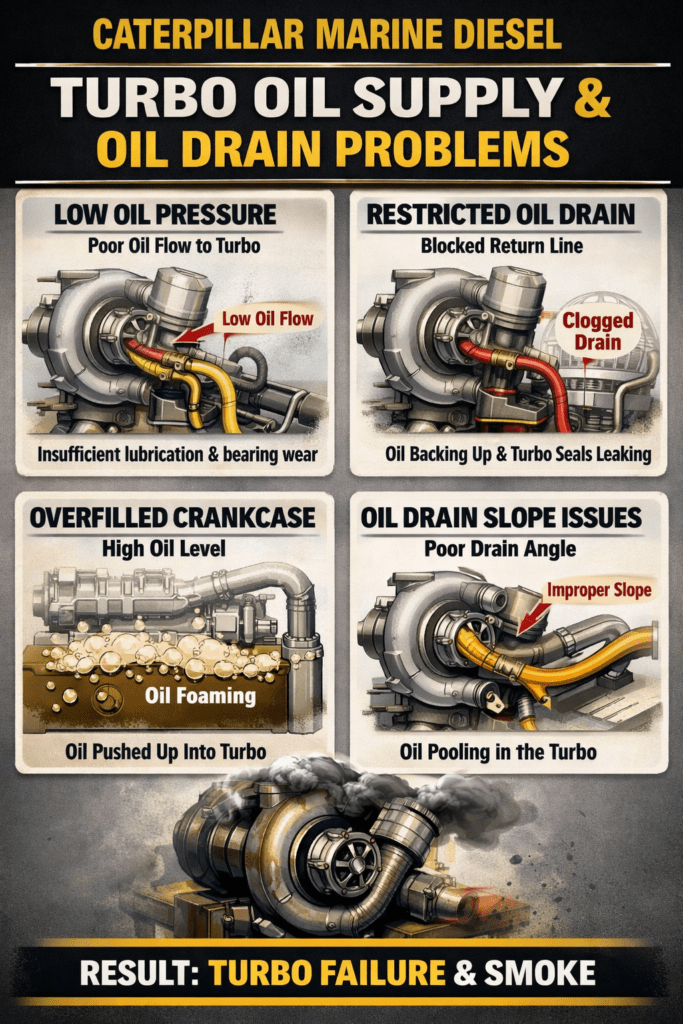
Turbochargers depend entirely on proper oil supply and unrestricted oil return to operate safely. Many marine diesel turbo failures are not caused by worn components, but by restricted oil feed lines, poor oil pressure, or blocked drain passages that create internal pressure and heat.
At 805 Marine Diesel Mechanic, oil-related turbo issues are one of the most common hidden causes of blue smoke, power loss, and premature turbo failure diagnosed throughout Ventura, Oxnard, Channel Islands Harbor, and Santa Barbara.
Start with the Master Marine Diesel Troubleshooting Guide →
Why Turbo Oil Systems Fail (Feed vs Drain)
The turbo oil system has two completely different functions: oil supply (feed) and oil return (drain). Understanding this difference is critical for proper diagnosis.
Oil supply is pressure-driven and lubricates turbo bearings. Oil drain is gravity-driven and must flow freely back to the engine. Failure on either side creates different symptoms but often leads to the same result—turbo damage.
- Restricted feed → bearing damage
- Restricted drain → oil backup → blue smoke
- Contaminated oil → seal damage
These issues are tightly connected to the Turbo System Diagnosis Center and Smoke & Combustion Diagnosis Center.
Common Symptoms of Turbo Oil Problems
- Blue smoke from exhaust
- Oil residue in intake piping
- Turbo whining noise
- Sudden turbo failure
- Reduced boost pressure
- Excessive oil consumption
Oil Supply (Feed Line Problems)
Oil supply issues occur when the turbo does not receive enough clean, pressurized oil. Even partial restriction can quickly lead to bearing damage.
- Clogged feed lines
- Carbon buildup
- Low oil pressure
- Incorrect oil viscosity
These problems often mimic internal turbo failure and are frequently misdiagnosed.
Oil Drain (Return Line Problems)
The oil drain system must allow unrestricted gravity flow. Any restriction causes oil to back up into the turbo housing.
- Kinked drain lines
- Poor installation angle
- Carbon blockage
- Crankcase pressure issues
Drain problems are one of the most common causes of blue smoke and are often mistaken for turbo seal failure.
Why Oil Drain Problems Cause Blue Smoke
When oil cannot drain properly, it builds inside the turbo and is forced past seals into the intake or exhaust. This results in blue smoke and oil consumption.
Cross-System Causes (Often Missed)
Turbo oil issues are rarely isolated. High EGT, fuel imbalance, and engine load all contribute to oil system breakdown.
Step-By-Step Diagnostic Process
- Inspect oil feed and drain lines
- Verify oil pressure
- Check turbo shaft play
- Inspect intake for oil residue
- Inspect exhaust for oil contamination
- Check crankcase ventilation
External Manufacturer References
Cummins Marine |
Caterpillar Marine
Turbo Oil System FAQ
1. What causes blue smoke from a turbo?
Blue smoke is typically caused by oil entering the combustion or exhaust system. This is most often due to restricted oil drain flow rather than actual turbo seal failure.
2. Can oil supply issues damage a turbo?
Yes, insufficient oil supply leads to rapid bearing wear and overheating. Even short periods of poor lubrication can permanently damage a turbocharger.
3. What is the difference between oil feed and drain?
The oil feed is pressure-driven and supplies lubrication, while the drain relies on gravity to return oil. Each system fails differently and must be diagnosed separately.
4. Can a clogged drain cause turbo failure?
Yes, a clogged drain creates internal pressure that forces oil past seals. This often leads to smoke and eventual turbo damage if not corrected.
5. Why does my turbo have oil in the intake?
Oil in the intake is usually caused by drain restriction or excessive crankcase pressure. It should not automatically be assumed to be seal failure.
6. Can crankcase pressure affect turbo oil flow?
Yes, high crankcase pressure restricts oil return flow. This can cause oil buildup inside the turbo housing and lead to smoke.
7. What causes repeated turbo failure?
Repeated failures are almost always caused by unresolved oil system issues. Replacing the turbo without fixing the root cause will lead to another failure.
8. Can overheating affect turbo oil?
Yes, high temperatures break down oil and create carbon deposits. This can restrict both feed and drain passages over time.
9. How do I test turbo oil pressure?
Oil pressure is tested at the engine and compared to specifications. Proper pressure is critical for turbo lubrication.
10. Can oil viscosity cause problems?
Yes, incorrect oil viscosity can reduce flow and increase wear. Always use manufacturer-recommended oil.
11. Why is my turbo noisy?
Noise usually indicates bearing wear or imbalance. This often results from oil supply issues.
12. Can fuel problems affect turbo oil?
Indirectly, yes. Fuel issues can increase combustion temperature and stress the turbo oil system.
13. What are early warning signs?
Blue smoke, oil consumption, and reduced boost are common early indicators. Catching these early prevents major damage.
14. Should I replace the turbo immediately?
Not always. Proper diagnosis is required because many symptoms come from external system problems.
15. How often inspect oil lines?
Oil lines should be inspected during regular service intervals. Early detection prevents costly failures.
16. Can airflow affect oil problems?
Yes, airflow issues can increase EGT and stress the oil system. These systems are interconnected.
17. What causes oil leaks at turbo?
Leaks are usually caused by pressure buildup or seal overload. Drain restriction is a common cause.
18. Is turbo oil failure common?
Yes, it is one of the most common causes of turbo failure. Many failures are preventable with proper maintenance.
19. Can I prevent turbo oil issues?
Yes, proper oil maintenance and inspection of lines are key. Regular service greatly extends turbo life.
20. When should I call a technician?
If you see smoke, oil leaks, or performance loss, professional diagnostics are recommended immediately.

6 Responses