
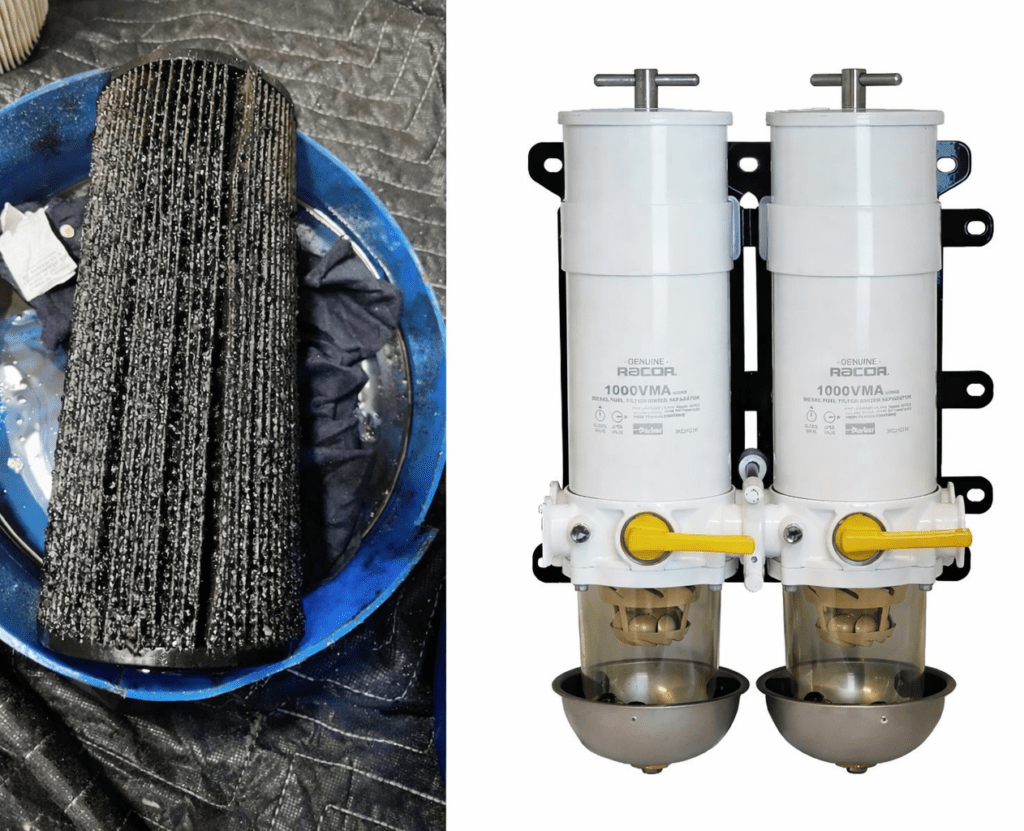
Fuel contamination is one of the most common causes of hard starting, power loss, rough running, injector wear, and shutdown complaints on Cummins marine diesel engines. This guide explains how water contamination, microbial growth, tank debris, clogged Racor filters, and restricted secondary filtration affect Cummins fuel delivery so you can diagnose the real cause before expensive injection components are damaged.
Cummins Marine Diesel Fuel Contamination & Filtration Problems: Complete Diagnosis Authority Guide
Fuel contamination is one of the most common causes of marine diesel performance problems because it starts quietly and then spreads through the system until the engine finally shows the result. Cummins marine engines such as the 6BTA 5.9, QSB 5.9, QSC 8.3, QSL9, QSM11, QSX15, and X15 all depend on clean diesel fuel to maintain proper injector performance, stable fuel pressure, and reliable combustion. Once water, sludge, debris, or biological contamination enters the system, the engine may begin hard starting, losing power, smoking differently, stumbling under load, or shutting down unexpectedly.
The mistake many owners make is changing a clogged filter and assuming the problem is solved. Sometimes that restores operation for a short time, but it does not explain why the filter loaded up in the first place. A dirty filter is not just a service item. It is evidence. It tells you the fuel system has been carrying contamination, and unless the root cause is found, the symptoms usually return.
At 805 Marine Diesel Mechanic, Cummins marine diesel fuel contamination issues are diagnosed throughout Ventura, Oxnard, Channel Islands Harbor, and Santa Barbara. With over 30 years of marine diesel experience, the approach is always systematic: inspect the fuel sample, inspect the filters, inspect the tank side, and inspect how the engine is actually responding under load. This page expands from your Master Marine Diesel Troubleshooting Guide and fits directly into your sitewide fuel, filtration, power-loss, and combustion authority structure.
How Marine Diesel Fuel Contamination Occurs
Marine fuel systems are always exposed to contamination risk because boats operate in damp, salty, storage-heavy environments. Tanks breathe through vents, condensation forms inside partially filled tanks, and fuel often stays onboard far longer than automotive fuel. All of that gives water, biological growth, and sediment more opportunity to build up.
Common contamination sources include:
- Water intrusion through fuel tank vents
- Condensation inside fuel tanks
- Microbial growth, often called diesel algae
- Sediment from aging fuel tanks
- Contaminated fuel during refueling
- Rust, sludge, and loosened deposits stirred up by vessel motion
Once contamination enters the system, filters may clog quickly and fuel delivery becomes restricted. General fuel-system troubleshooting naturally belongs with the Fuel System Diagnosis Center, but this page goes deeper into the contamination side of the problem.
Signs of Fuel Contamination
Contaminated diesel fuel usually produces noticeable performance and reliability problems before anyone opens a filter bowl and sees what is inside.
- Frequent fuel-filter clogging
- Loss of engine power
- Rough running
- Engine hesitation under load
- Hard starting
- Unexpected shutdown
- Surging or unstable cruising speed
These symptoms often occur when contaminated fuel begins restricting fuel flow to the injection system. That is why fuel restriction complaints naturally overlap with Low Power Loss of RPM Diagnosis Center, Boat Engine Losing Power, Engine Starts Then Dies, and Engine Surging at Cruise RPM.
Primary Fuel Filtration Systems
Most marine diesel engines rely on primary filtration systems such as Racor fuel-water separators to remove water and larger debris before fuel reaches the engine. That first stage of protection is critical because it keeps contamination from moving deeper into the supply side and injection components.
Primary filters are designed to remove:
- Water contamination
- Rust particles
- Fuel tank debris
- Microbial growth residue
When these filters become clogged, the engine may begin starving for fuel even though the rest of the system is mechanically healthy. In real-world troubleshooting, the condition of the primary filter often tells you more about the health of the fuel tank than about the health of the engine itself.
This is also where your internal content on Racor Filter Troubleshooting becomes a natural supporting page.
Secondary Engine Fuel Filters
After fuel passes through the primary filtration system, it flows through secondary engine filters that provide much finer filtration before fuel reaches the injectors and high-pressure components. These filters are critical because Cummins injection systems are sensitive to very small particles and unstable fuel quality.
Restricted secondary filters can cause:
- Reduced fuel pressure
- Engine hesitation
- RPM limitations
- Unexpected shutdowns
- Weak acceleration under load
Maintaining both primary and secondary filtration systems is essential because the two stages do different jobs. If the primary side is overwhelmed, the secondary side often becomes the next restriction point, and the engine can start showing symptoms that look like injector or pump failure even though the fuel quality problem started upstream.
Injector Damage from Contaminated Fuel
Fuel injectors are extremely sensitive to contamination. Even small particles or water droplets can damage injector components, disturb spray pattern, and reduce combustion quality. On electronically controlled Cummins engines, injector performance is even more critical because precision fuel metering is what keeps combustion clean and power output stable.
Injector damage may cause:
- Poor fuel atomization
- Rough engine operation
- Excessive exhaust smoke
- Reduced engine power
- Hard starting and uneven idle
That is why contaminated fuel often stops being “just a filter problem” and becomes a combustion problem. Related diagnostic pages include Smoke & Combustion Diagnosis Center, Boat Engine Blowing Black Smoke, and Boat Engine Blowing White Smoke.
Fuel Tank Contamination
The fuel tank itself often becomes the real source of recurring problems. Water, sludge, rust, and sediment accumulate at the bottom of the tank, and every time the boat moves hard or the fuel level changes, some of that contamination can get stirred back into circulation. That is why repeated filter clogging should always raise suspicion about the tank, not just the filters.
Fuel tank contamination may lead to:
- Repeated filter clogging
- Injector damage
- Fuel pump wear
- Recurring hard-start or shutdown complaints
In severe cases, fuel polishing, tank cleaning, or deeper tank inspection may be necessary. A new filter cannot fix a dirty tank.
When Fuel Contamination Looks Like Something Else
Fuel contamination often gets misdiagnosed because the symptoms overlap with many other problems. A contaminated system may look like turbo weakness because the engine loses power. It may look like an injector problem because the engine smokes. It may look like an electrical problem because the engine starts and then dies. It may even look like air intrusion because the engine surges or runs inconsistently.
That is why contamination pages should also connect with:
- How to Prime a Marine Diesel Fuel System
- Boat Engine Won’t Start
- Marine Diesel Turbo Diagnosis Center
Real troubleshooting separates contaminated fuel, unstable fuel supply, and unrelated low-power complaints instead of collapsing them into one guess.
Professional Cummins Fuel Contamination Diagnosis
Diagnosing contaminated marine diesel fuel systems requires more than replacing filters. It requires inspecting both the fuel quality and the entire delivery system. The question is not just whether the filter is dirty. The question is what the filter is catching, where it came from, how far it has moved through the system, and whether other components have already been affected.
A professional diagnostic process typically includes:
- Fuel sample inspection
- Filter contamination analysis
- Fuel pressure testing
- Injector inspection
- Fuel tank inspection
- Performance confirmation under real operating conditions
Advanced engine inspections are also part of your wider network through the Computerized Marine Engine Survey Diagnostics Center, which helps connect fuel contamination symptoms with deeper injector, pressure, and engine-condition analysis.
Cummins Marine Diesel Service in Ventura & Channel Islands Harbor
805 Marine Diesel Mechanic provides Cummins marine diesel fuel contamination diagnosis and repair throughout:
- Ventura Harbor
- Channel Islands Harbor
- Oxnard
- Santa Barbara
If your Cummins marine diesel engine is experiencing frequent filter clogging, fuel contamination symptoms, hard starting, shutdowns, or loss of power, professional diagnosis can quickly identify whether the root cause is in the fuel tank, the filtration system, the injector side, or a broader fuel-delivery problem.
Cummins Fuel Contamination FAQ
1. What causes diesel fuel contamination in boats?
Fuel contamination is commonly caused by water intrusion, condensation inside fuel tanks, microbial growth, contaminated dock fuel, and debris from aging tanks.
2. Why do marine diesel fuel filters clog frequently?
Frequent filter clogging usually indicates contaminated fuel, microbial growth, or sediment inside the tank that keeps being pulled into the filtration system.
3. Can contaminated diesel damage Cummins injectors?
Yes. Water, sediment, and microbial contamination can damage injector components and reduce spray quality very quickly.
4. How can fuel contamination be prevented?
Regular filter service, tank inspection, water control, clean refueling practices, and proper storage habits all reduce contamination risk.
5. Can water in the fuel make the engine hard to start?
Yes. Water contamination can destabilize fuel delivery and create hard-start, rough-start, and no-start complaints.
6. What does black sludge in a Racor usually mean?
Black sludge often suggests microbial growth or severe contamination inside the fuel tank and separator system.
7. Can contaminated fuel cause low power under load?
Absolutely. Restricted fuel flow is one of the most common causes of power loss. Related page: Low Power Loss of RPM Diagnosis Center.
8. Can bad fuel cause a Cummins engine to shut down unexpectedly?
Yes. Severe contamination can starve the engine of fuel and trigger shutdown or stall behavior.
9. Is changing the filter enough to fix contaminated fuel?
Not usually. It may restore operation briefly, but if the tank still contains contamination the problem normally comes back.
10. Can fuel contamination cause smoke problems?
Yes. Poor fuel quality affects combustion and can contribute to smoke complaints. Related page: Smoke & Combustion Diagnosis Center.
11. Can contaminated fuel damage fuel pumps too?
Yes. Dirty or wet fuel can shorten the life of fuel pumps and other precision components, not just the injectors.
12. Why does the engine run better right after I change the filters?
Because fresh filters temporarily restore fuel flow. If the source contamination is still in the tank, the symptom usually returns once the new filters load up.
13. Can tank contamination cause repeated service calls?
Yes. A dirty tank is one of the most common reasons the same filter-clogging or power-loss complaint keeps returning.
14. Can fuel contamination feel like turbo or airflow problems?
Yes. Restricted fuel delivery can create weak power and smoke symptoms that overlap with turbo-related complaints. Related page: Marine Diesel Turbo Diagnosis Center.
15. Can air in the fuel system be confused with contaminated fuel?
Yes. Both can cause rough running, surging, and hard starting, which is why they need to be separated during diagnosis. Related page: Marine Diesel Air in Fuel System.
16. Can contaminated fuel affect top RPM?
Yes. Restricted or unstable fuel delivery often prevents the engine from reaching full RPM. Related page: Boat Engine Won’t Reach Full RPM.
17. Is mobile diagnosis useful for fuel contamination problems?
Yes. On-boat diagnosis often makes it easier to inspect the real tank, Racor setup, filter condition, and running behavior under the same conditions where the complaint occurs.
18. Can microbial growth keep coming back after service?
Yes. If the tank and contaminated fuel are not addressed properly, biological growth can continue to return and keep fouling the system.
19. When should I call a mechanic for Cummins fuel contamination symptoms?
If filters keep clogging, the engine loses power, stalls, smokes differently, or starts hard repeatedly, it is time for professional diagnosis through the contact page.
20. Where should I start if I want the full Cummins fuel contamination pathway?
Start with the Master Marine Diesel Troubleshooting Guide, then move through the linked fuel, filtration, RPM, smoke, and air-in-fuel pages from there.
6 Responses