
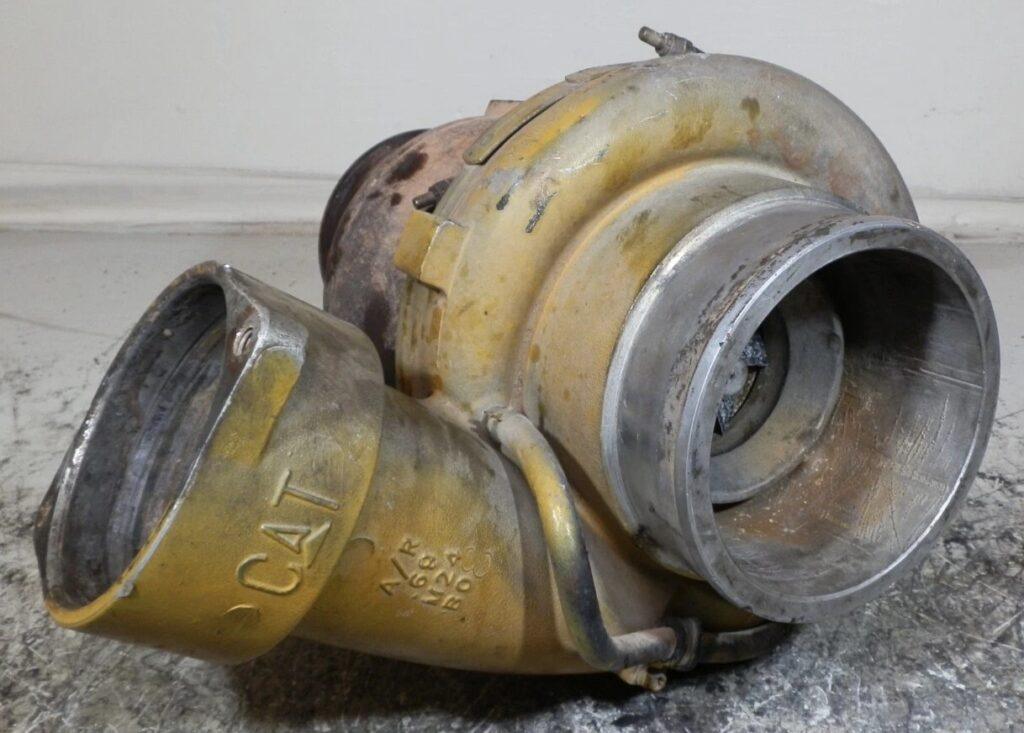
Turbochargers are critical to Caterpillar marine diesel performance because they supply the airflow needed to burn fuel cleanly and make rated horsepower. This guide explains how to diagnose Caterpillar turbocharger failures by separating boost loss, intake restriction, aftercooler fouling, oil-seal damage, exhaust-side problems, and fuel-air imbalance before reduced RPM and smoke turn into larger engine damage.
Caterpillar Marine Diesel Turbocharger Failures: Complete Turbo & Air System Diagnosis Authority Guide
Turbochargers play a critical role in modern marine diesel engine performance. Caterpillar engines such as the CAT 3116, 3126, C7, C9, C12, C18, and C32 depend on turbochargers to increase airflow into the engine, allowing more fuel to burn efficiently and produce higher horsepower. When turbocharger performance falls off, the engine usually shows the result quickly through lower boost, slower acceleration, black smoke, reduced RPM, and a general feeling that the engine is working harder while producing less output.
What makes turbo problems tricky is that not every low-boost or smoke complaint is caused by the turbocharger itself. A dirty intake path, fouled aftercooler, collapsed hose, restricted exhaust path, bad fuel delivery, or overheating-related combustion change can all create symptoms that look like turbo failure. That is why the correct path is always turbo system diagnosis, not just replacing the turbo because the engine feels weak.
At 805 Marine Diesel Mechanic, Caterpillar turbocharger and air system problems are diagnosed throughout Ventura, Oxnard, Channel Islands Harbor, and Santa Barbara. With over 30 years of marine diesel experience, the process always starts with airflow, boost, exhaust energy, and related engine-support systems so the true failure point is located before unnecessary parts replacement begins. This page expands from your Master Marine Diesel Troubleshooting Guide and also deliberately ties into some of the recently rebuilt pages in your content network.
How Caterpillar Marine Turbochargers Work
A turbocharger increases engine power by forcing additional air into the combustion chambers. Exhaust gases spin the turbine wheel, which drives the compressor wheel on the intake side. This compressed air allows the engine to burn more fuel efficiently, increasing both horsepower and torque. On Caterpillar marine engines, that added airflow is a major reason the engine can achieve full rated performance under heavy vessel load.
The turbo system typically includes:
- Turbocharger turbine and compressor
- Air intake system
- Aftercooler
- Charge-air piping
- Exhaust manifold and exhaust flow path
- Oil supply and oil drain for turbo lubrication
Any restriction or failure within these components can significantly reduce engine performance. Related engine performance problems can also be explored here: Low Power Loss of RPM Diagnosis Center and, from the recent redo batch, Cummins Marine Diesel Low Power & RPM Loss.
Common Caterpillar Turbocharger Failure Symptoms
Turbocharger problems usually produce several noticeable symptoms, especially when the engine is asked to work hard. Many owners first describe the issue as “it feels weak” or “it will not turn up,” but the real clues are usually visible in the smoke, RPM, and boost behavior.
- Loss of engine power
- Black exhaust smoke
- Slow acceleration
- Reduced top speed
- Excessive exhaust temperatures
- Reduced maximum RPM
- Unusual turbo noise
These symptoms typically occur when airflow becomes restricted or boost pressure decreases. Combustion issues related to airflow problems are covered here: Smoke & Combustion Diagnosis Center, and from the recently redone batch, Caterpillar Marine Diesel Smoke Problems and Cummins QSM11 Smoke & Combustion Problems.
Turbocharger Mechanical Failures
Turbochargers operate at extremely high speeds and temperatures. Over time, internal components can wear or fail. Once bearing wear starts or a wheel begins contacting the housing, turbocharger deterioration can accelerate quickly and turn a performance complaint into a much larger repair.
Common turbocharger failures include:
- Worn turbo shaft bearings
- Damaged compressor blades
- Exhaust turbine damage
- Oil-seal failures
- Housing contact from excessive shaft play
When bearings fail, the turbo shaft may develop excessive play, which can quickly damage the compressor housing and contaminate the intake path. Turbo oil-seal failures can also create blue-smoke complaints, which connect naturally to your combustion pages.
Air Intake Restrictions
Even when the turbocharger itself is functioning properly, restrictions in the air intake system can reduce airflow enough to make the engine behave like the turbo is failing. This is one of the most common reasons turbochargers get blamed unfairly.
Common intake restrictions include:
- Dirty air filters
- Collapsed intake hoses
- Restricted air silencers
- Blocked intake vents
- Contaminated charge-air plumbing
Air intake restrictions often cause engines to run rich and produce black smoke because the engine is receiving fuel without enough oxygen to burn it cleanly. This airflow path overlaps directly with the Caterpillar smoke page and also with the recently rebuilt Cummins 6BTA Marine Diesel Turbocharger Problems.
Aftercooler Problems
Aftercoolers cool compressed air coming from the turbocharger. Cooler air increases oxygen density and improves combustion efficiency. When aftercoolers become restricted, intake air temperatures rise and engine power declines, often with smoke and weak throttle response following behind.
Aftercooler problems may include:
- Salt buildup inside cooling passages
- Internal corrosion
- Restricted seawater flow
- External fouling or neglected service
When aftercoolers become restricted, intake air temperatures rise and engine power declines. Cooling system diagnostics can also be found here: Cooling System Diagnosis Center and from the redo batch Cummins Marine Diesel Cooling System Failures.
Fuel System Interaction With Turbo Performance
The turbocharger and fuel system must work together to maintain proper engine performance. If fuel delivery becomes restricted, turbocharger performance may also decline because the engine produces less exhaust energy to drive the turbine. On the other side, if fuel delivery is excessive relative to available air, smoke and incomplete combustion become obvious.
Fuel system diagnostics are covered here:
- Fuel System Diagnosis Center
- Fuel Contamination & Filtration Issues Center
- Marine Diesel Fuel Contamination
To intentionally tie this into the recent redo batch, this topic also cross-connects with Cummins Marine Diesel Fuel Contamination & Filtration Problems because weak fuel delivery and turbo complaints often overlap in real-world diagnosis.
Exhaust-Side Restriction and Turbine Energy
The turbocharger depends on the exhaust side just as much as the intake side. If exhaust flow is restricted, the turbine cannot develop proper speed and boost falls off even if the intake side looks acceptable. This is why mixing elbows, exhaust restrictions, and high backpressure conditions belong in the Caterpillar turbo diagnostic path.
Exhaust-side restriction can lead to:
- Lower turbine speed
- Reduced boost
- Higher exhaust temperature
- Black smoke
- Lower RPM under load
For broader crossover logic, this also ties into recently redone low-power and smoke pages where boost loss and combustion imbalance are central symptoms.
Professional Caterpillar Turbo Diagnosis
Diagnosing turbocharger problems requires a combination of mechanical inspection and engine performance testing. Looking only for shaft play is not enough. A healthy turbo with a leaking hose or dirty aftercooler can behave like a failed turbo. A worn turbo with fuel contamination or poor combustion can create a symptom pattern that seems bigger than the turbo itself.
Our turbo system diagnostic process typically includes:
- Boost pressure testing
- Turbo shaft inspection
- Air intake restriction testing
- Aftercooler inspection
- Exhaust system inspection
- Smoke and load-pattern review
Advanced engine inspections are available through: Computerized Marine Engine Survey Diagnostics Center.
Preventing Marine Diesel Turbocharger Failures
Proper maintenance helps extend turbocharger life and maintain engine performance. Because turbochargers depend on airflow, clean oil, and stable engine temperature, preventive service has to include more than just looking at the turbo itself.
Recommended preventive maintenance includes:
- Regular air filter replacement
- Routine aftercooler inspection
- Monitoring engine exhaust temperatures
- Maintaining proper oil quality
- Periodic turbo inspection
- Watching for early smoke and low-power changes
Early detection of airflow restrictions can prevent expensive turbocharger failures and keep the engine from being overloaded while trying to compensate for falling boost.
Caterpillar Marine Diesel Service in Ventura & Channel Islands Harbor
805 Marine Diesel Mechanic provides professional Caterpillar turbo system diagnosis and repair throughout:
- Ventura Harbor
- Channel Islands Harbor
- Oxnard
- Santa Barbara
If your Caterpillar marine diesel engine is experiencing turbocharger or air system problems, professional diagnosis can quickly identify whether the cause is the turbocharger itself, the intake system, the aftercooler, the exhaust path, or a related fuel and combustion issue.
Caterpillar Turbocharger FAQ
1. What causes turbocharger failure on marine diesel engines?
Turbo failures are commonly caused by oil contamination, bearing wear, foreign-object damage, excess heat, or airflow restrictions.
2. Can a failing turbo cause black smoke?
Yes. Reduced boost pressure from a failing turbocharger can lead to incomplete combustion and black exhaust smoke.
3. How do you know if a turbocharger is worn out?
Signs include shaft play, reduced boost pressure, oil leakage, abnormal noise, and obvious loss of engine performance.
4. Can restricted air filters affect turbo performance?
Yes. Dirty air filters reduce airflow to the turbocharger and limit engine power even if the turbo itself is still healthy.
5. Can a bad aftercooler make a Caterpillar feel like it has a turbo problem?
Absolutely. A restricted aftercooler reduces air density and can create low-boost, black-smoke, and low-power symptoms.
6. Can turbo problems reduce maximum RPM?
Yes. Weak boost commonly causes reduced full-throttle RPM and slower vessel acceleration.
7. Can a leaking charge-air hose mimic turbo failure?
Yes. Charge-air leaks can bleed off boost and create the same weak-running symptoms as a worn turbocharger.
8. Can a bad turbo create blue smoke too?
Yes. Turbo oil-seal failure can allow oil into the intake or exhaust path and create blue smoke.
9. Does black smoke always mean the turbo is bad?
No. Black smoke can also come from dirty filters, aftercooler fouling, exhaust restriction, fuel imbalance, or excessive vessel load.
10. Can fuel restriction affect turbo behavior?
Yes. If fuel delivery is unstable, exhaust energy may drop and the turbo may not spool correctly. This also ties into Cummins fuel contamination problems we recently rebuilt because the same crossover logic applies.
11. Can cooling problems contribute to turbo failure?
Yes. Engines running hot place more stress on the turbocharger and aftercooler system, increasing the chance of heat-related wear.
12. Why does my Caterpillar accelerate slowly under load?
Slow acceleration often points toward weak boost, intake restriction, exhaust restriction, or fuel-air imbalance.
13. Can exhaust restrictions hurt turbo performance?
Yes. Exhaust restriction reduces turbine energy and can lower boost while increasing exhaust temperature.
14. Can low power and smoke happen together with turbo problems?
Yes. Turbocharger issues often create both smoke and loss of power because combustion loses the airflow it needs.
15. Can turbo shaft play always be felt by hand?
Not always in a simple way. Shaft movement must be interpreted correctly because some slight movement can be normal, while excessive play signals wear.
16. Can a turbocharger fail gradually instead of all at once?
Yes. Many turbochargers weaken slowly, showing earlier warning signs like more smoke, lower RPM, and weaker throttle response before full failure occurs.
17. Is mobile diagnosis useful for Caterpillar turbo problems?
Yes. Turbo symptoms are often easiest to confirm under real vessel load where boost, smoke, RPM, and temperature can be observed together.
18. Can turbo issues overlap with recently rebuilt low-power pages?
Yes. This topic directly overlaps with Cummins low power / RPM loss and Cummins 6BTA turbocharger problems because the same airflow and boost logic applies.
19. When should I call a mechanic for Caterpillar turbocharger problems?
If the engine is losing power, smoking black, sounding abnormal, or failing to reach normal RPM, it is time for professional diagnosis through the contact page.
20. Where should I start if I want the full Caterpillar turbo pathway?
Start with the Master Marine Diesel Troubleshooting Guide, then move through the linked smoke, low-power, fuel, cooling, and turbo pages from there.
3 Responses