
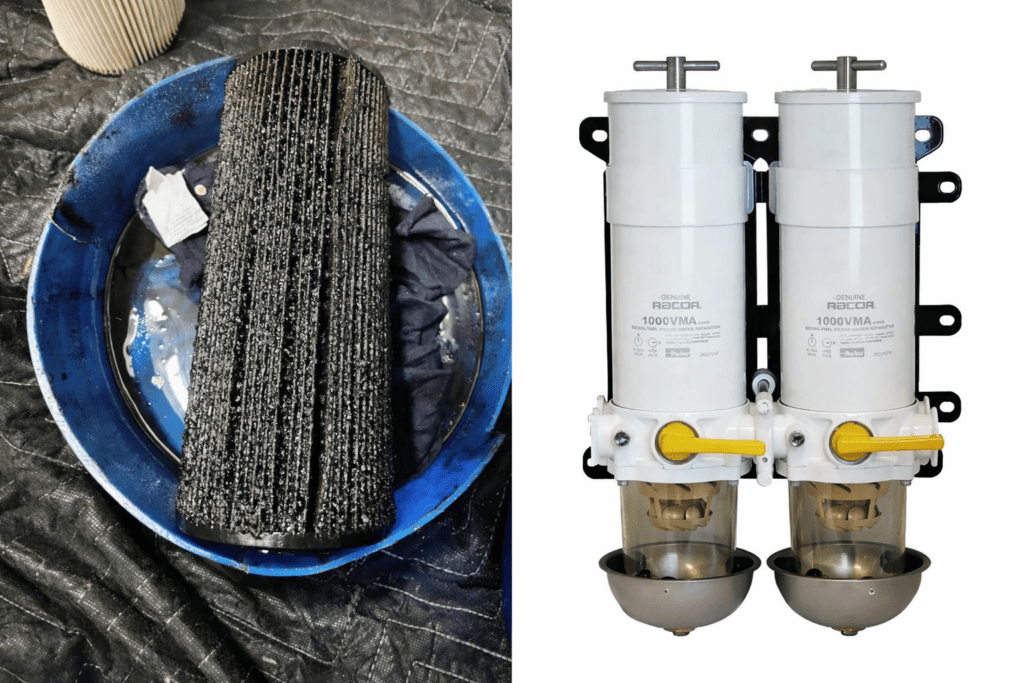
Fuel contamination is one of the most common causes of hard starting, rough running, low RPM, and shutdown problems in Yanmar marine diesel engines. This guide explains how water, microbial growth, sludge, and dirty filtration systems affect Yanmar fuel delivery so you can diagnose the real cause before contaminated fuel damages injectors, pumps, and sensitive engine components.
Yanmar Marine Diesel Fuel Contamination & Filtration Problems: Complete Diagnosis Guide
Fuel contamination causes more marine diesel reliability problems than many boat owners realize. A Yanmar engine may appear healthy one day and then suddenly begin hard starting, losing power under load, stumbling at cruise, or shutting down without warning. In many of those cases, the problem starts inside the fuel tank long before the owner notices any symptom at the helm.
Water, biological growth, rust, tank debris, and contaminated dock fuel all work their way through the fuel system until the filters begin to load up and the engine finally shows the result. That is why proper marine diesel diagnosis does not stop at swapping a dirty filter and hoping the problem is solved. The real goal is figuring out why the filter got dirty, what is still upstream, and whether contamination has already moved farther into the system.
At 805 Marine Diesel Mechanic, fuel contamination and filtration problems are diagnosed throughout Ventura, Oxnard, Channel Islands Harbor, and Santa Barbara. With over 30 years of marine diesel experience, the approach is to inspect the tank, the filtration system, the fuel supply side, and the combustion side together so the root cause is fixed instead of temporarily hidden. This article is part of your broader authority structure and expands from the Master Marine Diesel Troubleshooting Guide.
How Marine Diesel Fuel Contamination Happens
Marine fuel systems live in a harsh environment. Boats sit for long periods, tanks breathe through vents, moisture condenses in partially filled tanks, and fuel often remains onboard longer than automotive fuel ever would. That makes contamination much more likely.
Common contamination sources include:
- Water entering through fuel tank vents
- Condensation inside partially filled tanks
- Microbial diesel growth at the fuel-water interface
- Debris from aging fuel tanks
- Contaminated fuel picked up during refueling
- Rust, scale, and loosened sediment after rough conditions
Once contaminants enter the system, they collect in filters, reduce fuel flow, and begin affecting injection quality. In bad cases, the filters do exactly what they are designed to do — trap contamination — but become so restricted that the engine can no longer get enough fuel to run correctly.
Symptoms of Fuel Contamination in a Yanmar Marine Diesel
Fuel contamination usually shows up as a reliability or performance complaint before anyone actually looks inside the filter bowl.
- Engine stalling
- Hard starting
- Loss of power under load
- Clogged fuel filters
- Rough engine operation
- Unexpected engine shutdown
- Surging or unstable cruising RPM
Many power-loss and shutdown complaints begin with restricted fuel delivery. That is why this topic connects naturally to Low Power Loss of RPM Diagnosis Center, Boat Engine Losing Power, Engine Starts Then Dies, and Engine Surging at Cruise RPM.
Primary Marine Fuel Filtration Systems
Most marine diesel engines use a two-stage filtration system designed to protect expensive injection components from water and debris. On many Yanmar installations, that system includes a primary fuel-water separator such as a Racor unit, followed by a secondary engine-mounted fuel filter.
The typical system includes:
- Primary Racor fuel-water separator
- Secondary engine fuel filter
- Fuel lift pump
- Injection pump or high-pressure fuel system
The primary filter is there to remove water and larger contamination before fuel reaches the engine. The secondary filter protects the precision side of the system. When contamination gets bad enough, both filters may be overloaded, and the engine may show symptoms that look like injector failure, air in fuel, or general low-power complaints.
Clogged Fuel Filters and Restricted Fuel Flow
Fuel filters are consumable parts, but they are also diagnostic clues. A dirty filter does not just tell you it is time for a service item. It tells you something upstream is dirty, wet, unstable, or failing.
Restricted fuel filters may cause:
- Engine hesitation
- Reduced RPM
- Fuel pressure loss
- Unexpected shutdown
- Slow acceleration
- Hard restart after running
If the engine loses power, then temporarily improves after filter replacement, that does not prove the problem is solved. It often proves contamination is still present in the tank or fuel supply side. This is why filtration problems should also be investigated through the Fuel System Diagnosis Center and Racor Filter Troubleshooting Guide.
Microbial Diesel Growth
Microbial contamination, often called diesel algae, develops when water accumulates in marine fuel tanks. The organisms grow at the boundary between the diesel fuel and the water layer. As they multiply, they create sludge and acidic contamination that spreads through the fuel system.
Diesel microbial contamination can cause:
- Black sludge in fuel filters
- Fuel system corrosion
- Clogged injectors
- Repeated filter blockage
- Persistent performance complaints even after service
If microbial growth is present, replacing filters alone is usually not enough. The tank, lines, and system condition need to be considered as a whole. Otherwise the engine keeps getting “fixed” and then failing again.
Injector Damage from Contaminated Fuel
Modern marine diesel injection components require extremely clean fuel. Even microscopic debris can damage injector internals, reduce atomization quality, and create combustion issues that show up as smoke, rough running, or hard starting. On electronically controlled or high-pressure systems, contamination becomes even more expensive because precision parts have much tighter tolerances.
When injector performance begins to suffer, the fuel problem starts crossing into combustion diagnosis. That is why this topic also belongs with your Smoke & Combustion Diagnosis Center, Boat Engine Blowing White Smoke, and Boat Engine Blowing Black Smoke style symptom pages across the site.
Air in Fuel, Water in Fuel, and Why They Get Confused
Fuel contamination and air intrusion often get mixed together because both can cause hard starting, surging, rough operation, and shutdowns. But they are not the same. Air in the fuel system usually points toward suction-side leaks, loose fittings, poor priming, or seal problems. Water and contamination point toward tank condition, storage conditions, venting, and filtration overload.
That is why this diagnosis path should also be connected to:
Real troubleshooting separates unstable fuel supply from dirty fuel supply, even when the symptoms overlap.
Professional Fuel System Diagnosis
Proper fuel contamination diagnosis means inspecting the entire fuel delivery system instead of only replacing filters. The filters tell you what the engine has been exposed to, but they do not always tell you the full extent of what is still inside the tank, the pickup, the lines, or the injection side.
A professional diagnostic procedure typically includes:
- Fuel sample inspection
- Fuel tank contamination analysis
- Fuel pressure testing
- Injector performance review
- Fuel filtration inspection
- Condition assessment of tank, hoses, and separators
Advanced engine diagnostics are also part of the wider site structure through the Computerized Marine Engine Survey Diagnostics Center. That matters because some contamination problems extend beyond the filters and into injector, performance, and combustion quality.
Yanmar Marine Diesel Service in Ventura & Channel Islands Harbor
805 Marine Diesel Mechanic provides fuel contamination diagnosis and filtration service throughout:
- Ventura Harbor
- Channel Islands Harbor
- Oxnard
- Santa Barbara
If your Yanmar marine diesel engine is showing clogged filters, hard starting, rough operation, loss of power, or shutdown symptoms, professional inspection can quickly determine whether the problem is water contamination, microbial growth, repeated filter restriction, injector exposure, or a broader fuel-system issue.
Fuel Contamination & Filtration FAQ
1. What causes fuel contamination in marine diesel engines?
Fuel contamination usually begins when water enters the tank, condensation builds inside the tank, microbial growth develops, or dirty fuel is introduced during refueling.
2. How often should marine diesel fuel filters be replaced?
Fuel filters are often replaced annually or every 100 to 200 engine hours, but contaminated fuel can shorten that interval dramatically.
3. Can contaminated fuel damage diesel injectors?
Yes. Contaminated fuel can damage injectors, injection pumps, and other precision fuel-system parts by introducing debris and unstable fuel quality.
4. How do marine technicians diagnose fuel contamination?
Technicians inspect fuel samples, examine filter contents, check tank condition, evaluate pressure behavior, and review injector and system performance.
5. Can water in the fuel make my Yanmar hard to start?
Yes. Water contamination disrupts clean fuel delivery and can absolutely create hard-start, rough-start, or no-start complaints.
6. What does black sludge in the filter usually mean?
Black sludge often suggests microbial growth or severe contamination inside the tank and filtration system.
7. Can clogged filters cause loss of power under load?
Absolutely. Restricted filters reduce fuel flow and often show up first as power loss, reduced RPM, or hesitation under load. Related page: Low Power Loss of RPM Diagnosis Center.
8. Can bad fuel cause sudden engine shutdown?
Yes. If contamination becomes severe enough to starve the engine of fuel, shutdown can happen unexpectedly. Related page: Engine Starts Then Dies.
9. Is replacing the filter enough to solve fuel contamination?
Not always. A new filter may restore flow temporarily, but if the tank still contains contamination, the problem usually returns.
10. Can microbial contamination corrode the fuel system?
Yes. Microbial growth can create acidic conditions that contribute to corrosion inside tanks and fuel-system components.
11. Can contaminated fuel make the engine surge at cruise?
Yes. Unstable or restricted fuel flow can create surging, hesitation, and uneven performance. Related page: Engine Surging at Cruise RPM.
12. Can fuel contamination create smoke problems?
Yes. Poor fuel quality and injector contamination can affect combustion and create smoke symptoms. Related page: Smoke & Combustion Diagnosis Center.
13. Can marine diesel algae keep coming back after service?
Yes. If the tank and system are not cleaned properly, microbial contamination often returns and keeps clogging filters.
14. Can air in the fuel system look like contamination?
Yes. Air intrusion and contaminated fuel can create similar symptoms, which is why real diagnosis must separate them. Related page: Marine Diesel Air in Fuel System.
15. Why does the engine improve right after I change the filter?
Because the new filter temporarily restores fuel flow. If contamination is still in the tank, the symptom usually returns once the new filter loads up.
16. Can dirty fuel affect low RPM complaints?
Yes. Restricted fuel delivery is one of the most common reasons engines will not reach full RPM. Related page: Boat Engine Won’t Reach Full RPM.
17. Can contaminated fuel harm the lift pump or injection system?
Yes. Long-term exposure to dirty fuel can stress lift pumps, injection components, and the entire precision side of the fuel system.
18. Is mobile diagnosis useful for fuel contamination problems?
Yes. On-boat diagnosis often makes it easier to inspect the real tank, separator, filters, and running behavior under the same conditions where the symptom occurs.
19. When should I call a mechanic for fuel contamination symptoms?
If filters keep clogging, the engine loses power, stalls, or runs rough repeatedly, it is time for professional diagnosis through the contact page.
20. Where should I start if I want the full Yanmar fuel contamination path?
Start with the Master Marine Diesel Troubleshooting Guide, then move through the linked fuel, air-in-fuel, priming, RPM, and combustion pages from there.
One Response