
Diagnose Caterpillar marine diesel low power and RPM loss fast using a structured, system-based process built from over 30 years of real-world marine diesel experience in Ventura, Oxnard, Channel Islands Harbor, and Santa Barbara.
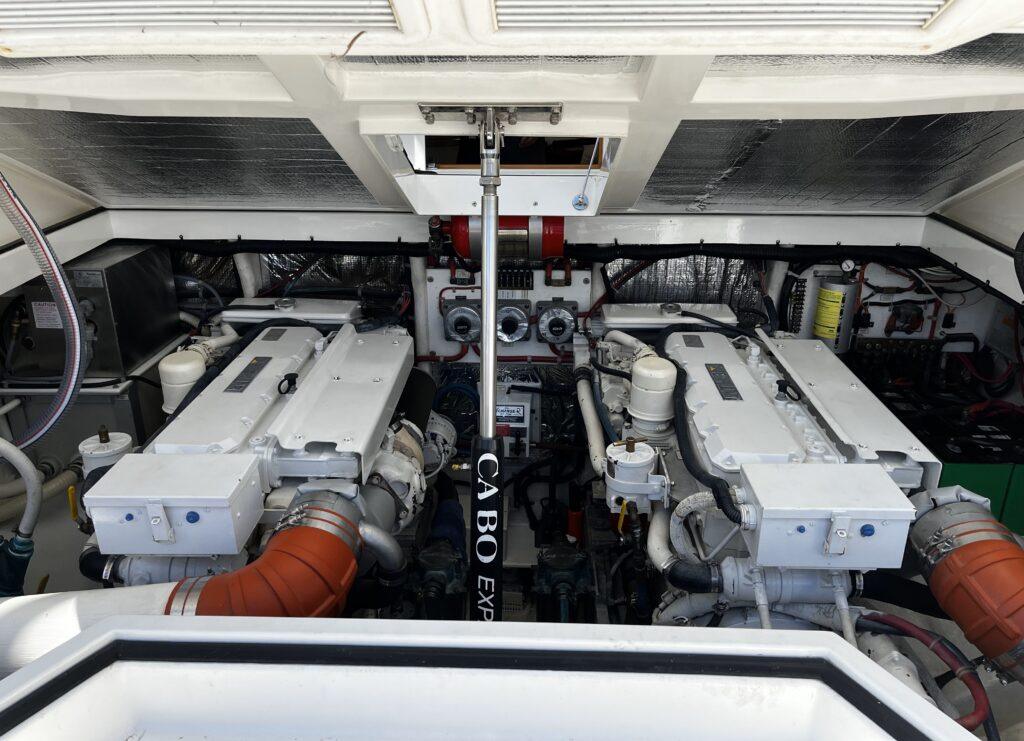
Caterpillar Marine Diesel Low Power & RPM Loss: Complete Diagnosis Authority Guide
Schedule Caterpillar Performance Diagnosis
Loss of power or reduced RPM is one of the most common complaints among owners of Caterpillar marine diesel engines. Engines such as the CAT 3116, 3126, C7, C9, C12, C18, and C32 are built to deliver strong, reliable horsepower under load, but when fuel delivery, airflow, cooling performance, or vessel load conditions become restricted, engine output quickly suffers.
If your Caterpillar marine diesel cannot reach rated RPM, accelerates slowly, or feels weak under load, the problem usually comes from an imbalance in one or more core systems. The key is to diagnose the engine by system instead of guessing at parts. That means looking at fuel, air, cooling, exhaust, combustion, and propeller load together.
At 805 Marine Diesel Mechanic, we diagnose Caterpillar marine diesel performance problems throughout Ventura, Oxnard, Channel Islands Harbor, and Santa Barbara. With more than 30 years of marine diesel experience, we use a real-world troubleshooting process to find the root cause of low power complaints before unnecessary parts are replaced.
This guide is part of our complete diagnostic system:
Master Marine Diesel Troubleshooting Guide
Common Caterpillar Low Power Symptoms
When a Caterpillar marine diesel engine loses power, the symptoms usually show up in a pattern. Some vessels lose top speed. Others cannot reach full throttle RPM. In more severe cases, the engine may smoke, run hot, or struggle badly when put under propeller load.
- Engine cannot reach rated RPM
- Slow acceleration under load
- Loss of top speed
- Black exhaust smoke
- High engine temperature
- Sluggish throttle response
- Uneven performance from one engine to the other on twin-engine boats
These symptoms often overlap, which is why low power diagnosis must be approached as a full-system problem instead of a single-component problem.
Related starting and electrical crossover issues can be found here: Electrical & Starting System Diagnosis Center.
Fuel System Restrictions
Fuel restriction is one of the most common reasons a Caterpillar marine diesel loses power or will not reach rated RPM. If the engine cannot get enough clean fuel under load, horsepower drops immediately. This may happen gradually as filters plug up, or it may appear suddenly after contaminated fuel is introduced into the system.
Common fuel-related causes include:
- Clogged primary or secondary fuel filters
- Fuel contamination
- Weak lift pumps
- Air entering the fuel system
- Injector wear
- Injection pump performance problems
Fuel restriction often shows up as hesitation, poor throttle response, inability to reach full RPM, or surging at cruise speed. On some Caterpillar engines, the operator first notices the boat feels heavy or slow before realizing the engine is not making full power.
Deeper fuel-related diagnosis is covered here: Fuel System Diagnosis Center.
Additional crossover pages:
Air in Fuel System |
Marine Diesel Fuel Contamination Diagnosis
Airflow and Turbocharger Restrictions
A marine diesel engine must move a large volume of clean air in order to burn fuel efficiently. If airflow is restricted, fuel cannot burn correctly and power falls off. This is one reason black smoke and low RPM often appear together.
Common airflow restrictions include:
- Dirty or restricted air filters
- Turbocharger wear or damage
- Aftercooler restrictions
- Collapsed intake hoses
- Boost leaks
A failing turbocharger or clogged aftercooler can make a Caterpillar engine feel lazy under load even though the engine may still idle smoothly. In real-world diagnosis, this is where many owners waste money by replacing fuel parts before confirming the engine is making proper boost and airflow.
Turbo and air-side diagnosis is discussed here: Marine Diesel Turbo & Air System Diagnosis Center.
Related smoke and airflow symptom page: Black Smoke Under Load Marine Diesel Engine.
Need Help Finding the Real Cause? Contact 805 Marine Diesel Mechanic
Cooling System Problems That Reduce Power
Cooling problems do not just cause overheating. They can also reduce available power. When engine temperatures climb beyond the normal range, combustion efficiency drops and the engine may no longer pull cleanly under load. In some cases, the operator notices reduced RPM before a major overheat alarm occurs.
Cooling-related causes of low power include:
- Restricted heat exchangers
- Raw water pump failures
- Blocked seawater strainers
- Aftercooler fouling
- Thermostat problems
If a Caterpillar engine loses RPM and also runs hotter than normal, cooling system restriction must move high on the suspect list. This is especially true if the issue is worse at cruise RPM than at idle.
Cooling system diagnosis can be found here: Cooling System Diagnosis Center.
Related overheating page: Marine Diesel Engine Overheating at High RPM.
Propeller, Hull, and Vessel Load Problems
Not every low-RPM complaint is caused by the engine itself. Sometimes the engine is healthy, but the propeller load is excessive. A damaged propeller, too much pitch, growth on the running gear, or hull fouling can all increase load enough to drag engine RPM down.
Common load-related issues include:
- Propeller damage
- Incorrect propeller pitch
- Marine growth on hull or running gear
- Transmission drag
- Drivetrain misalignment or binding
This is why low power diagnosis should always include a look at what the engine is being asked to push. An overloaded propeller can make an otherwise healthy Caterpillar engine look weak.
Related drivetrain crossover page: Shaft Spins but Boat Doesn’t Move Properly.
Combustion and Injector Problems
When injectors wear, spray patterns weaken, or combustion becomes uneven from cylinder to cylinder, the engine cannot make full power. These problems often show up as smoke, roughness under load, or poor acceleration.
Common combustion-related issues include:
- Injector nozzle wear
- Poor fuel atomization
- Incorrect injection timing
- Uneven cylinder contribution
- Low compression in one or more cylinders
Combustion faults are often overlooked because the engine may still start and idle. But when the engine is asked to carry load, poor combustion shows up quickly in the form of reduced RPM and lost power.
Combustion diagnosis is discussed here: Smoke & Combustion Diagnosis Center.
Related rough-running page: Rough Idle Marine Diesel Engine.
How We Diagnose Caterpillar Low Power Problems
At 805 Marine Diesel Mechanic, we use a structured process to keep diagnosis focused and accurate. That process typically includes:
- Confirming actual loaded RPM versus rated RPM
- Checking for fuel restriction and contamination
- Inspecting turbocharger and intake system condition
- Evaluating aftercooler and cooling system performance
- Reviewing smoke color and exhaust behavior
- Assessing vessel load, propeller condition, and hull drag
- Inspecting combustion balance and injector performance
This step-by-step method helps separate true engine faults from load-related issues and prevents the common mistake of replacing filters, injectors, and turbo parts without a complete diagnosis.
Advanced diagnostic services are available through our Computerized Marine Engine Survey Diagnostics Center.
Why Low Power Problems Get Misdiagnosed
Low power problems are often misdiagnosed because multiple symptoms point in different directions. A Caterpillar engine that runs hot, smokes black, and will not reach full RPM may have a cooling restriction, a turbo problem, a fuel restriction, or too much propeller load. If diagnosis starts with guessing instead of testing, the wrong part gets replaced and the real cause stays in place.
The best way to diagnose power loss is to think in terms of system balance. The engine must have:
- Enough clean fuel
- Enough clean air
- Proper cooling capacity
- Efficient combustion
- A reasonable propeller load
When one of those systems falls behind, RPM and power suffer.
Preventing Caterpillar Marine Diesel Power Loss
Routine maintenance plays a major role in preventing power loss. In many cases, the failure is not sudden. It builds slowly as filters plug, air systems get dirty, exchangers foul, injectors wear, or propeller load increases from growth and damage.
Recommended preventive maintenance includes:
- Regular fuel filter replacement
- Fuel quality monitoring
- Air filter and turbocharger inspection
- Aftercooler and cooling system maintenance
- Injector performance checks
- Bottom and running gear cleaning
- Monitoring engine RPM trends over time
Maintenance crossover page: Fresh Water Flushing Marine Diesel Engine.
Caterpillar Marine Diesel Service in Ventura, Oxnard, Channel Islands Harbor, and Santa Barbara
805 Marine Diesel Mechanic provides professional Caterpillar marine diesel low power diagnosis and repair throughout:
- Ventura Harbor
- Channel Islands Harbor
- Oxnard
- Santa Barbara
If your Caterpillar marine diesel engine is struggling under load, producing black smoke, running hot, or failing to reach rated RPM, a structured diagnostic approach can identify the real cause and restore performance.
With over 30 years of experience, 805 Marine Diesel Mechanic provides mobile dockside service focused on accurate troubleshooting, not guesswork.
Book Caterpillar Low Power Diagnosis
Caterpillar Low Power Diagnosis FAQ
Why can’t my Caterpillar marine engine reach rated RPM?
This is usually caused by a restriction in one of the engine’s core operating systems or by excessive vessel load. Common causes include fuel restriction, poor boost, aftercooler fouling, cooling system restriction, hull fouling, or propeller overload. For a broader symptom-based diagnostic path, start with the Master Marine Diesel Troubleshooting Guide.
Can clogged fuel filters cause low power on a Caterpillar marine diesel?
Yes. Restricted fuel filters reduce fuel volume under load, which limits horsepower and can cause hesitation, low RPM, or poor acceleration. For deeper fuel-side diagnosis, see the Fuel System Diagnosis Center.
Do turbocharger problems affect engine RPM?
Yes. A failing turbocharger or restricted intake system reduces airflow, which lowers combustion efficiency and engine output. This often shows up as black smoke and sluggish acceleration under load.
Can hull growth affect Caterpillar engine RPM?
Yes. Marine growth on the hull, shafts, propellers, or rudders increases drag and load. That extra drag can prevent even a healthy engine from reaching rated RPM.
Why does my Caterpillar engine make black smoke when it loses power?
Black smoke usually means there is more fuel than available air. That can happen with turbocharger problems, restricted intake airflow, aftercooler fouling, or excessive engine load. Related diagnosis is covered at Black Smoke Under Load Marine Diesel Engine.
Can cooling system problems reduce power even if the engine is not fully overheating?
Yes. A partially restricted cooling system can raise operating temperature enough to hurt efficiency and reduce performance before a full overheat alarm occurs. Cooling-related crossover diagnosis is available at Cooling System Diagnosis Center.
Can dirty aftercoolers cause low power?
Yes. A restricted aftercooler raises intake air temperature and reduces charge-air density, which directly lowers power output and can contribute to smoke under load.
Can bad injectors cause reduced RPM?
Yes. Worn injectors can cause poor atomization, weak combustion, uneven cylinder contribution, smoke, and noticeable power loss, especially when the engine is asked to work hard.
How do I know if my Caterpillar engine has too much propeller load?
If the engine runs clean but cannot reach rated RPM and the hull or running gear condition is questionable, excessive propeller load should be investigated. This is especially important after prop changes, bottom growth, or drivetrain issues.
Can air in the fuel system cause intermittent power loss?
Yes. Air leaks on the suction side of the fuel system can create unstable fuel delivery and cause surging, hesitation, and loss of power. Related diagnosis page: Air in Fuel System.
Why does my Caterpillar engine lose power only under load?
That usually points to a system that can barely keep up at idle but falls behind when engine demand rises. Fuel restriction, turbo problems, cooling restriction, and excessive propeller load are all common causes.
Can contaminated fuel make a Caterpillar engine feel weak?
Yes. Fuel contamination can restrict filters, damage injectors, and disrupt stable combustion. Related fuel-quality diagnosis is covered at Marine Diesel Fuel Contamination Diagnosis.
Why is one engine on my twin-engine boat weaker than the other?
That often indicates a system imbalance on the weak side, such as fuel restriction, turbocharger wear, cooling restriction, or injector issues. Side-to-side performance comparison can be a valuable diagnostic clue.
Can a restricted exhaust system reduce power?
Yes. Exhaust restriction increases backpressure and limits engine breathing, which can reduce performance and contribute to smoke and heat under load.
What is the first step in diagnosing low power on a Caterpillar marine diesel?
The first step is confirming the complaint under real operating conditions. That means comparing actual RPM to rated RPM, noting smoke color, engine temperature, and load behavior, then testing the major systems in order.
Can overheating and low power happen together?
Yes. Cooling restriction and low power frequently overlap. If the engine runs hotter than normal and also struggles to carry load, cooling system diagnosis should be part of the process. Related page: Marine Diesel Engine Overheating at High RPM.
Can poor maintenance cause gradual RPM loss over time?
Absolutely. Dirty filters, neglected aftercoolers, restricted exchangers, injector wear, and bottom growth often build slowly and create a gradual loss of performance that owners do not notice right away.
Does rough idle relate to low power complaints?
It can. Rough idle may point toward injector imbalance, poor combustion, air intrusion, or other system faults that also reduce loaded performance. Related page: Rough Idle Marine Diesel Engine.
Can drivetrain problems make it seem like the engine is weak?
Yes. Shaft, coupling, transmission, or propeller issues can add drag or reduce propulsion efficiency, making the engine appear weak even when the engine itself is not the main problem.
When should I call a professional for Caterpillar low power diagnosis?
If your engine will not reach rated RPM, smokes under load, runs hot, hesitates, or feels weak despite basic maintenance, professional diagnosis can prevent wasted parts replacement. Contact 805 Marine Diesel Mechanic for dockside service in Ventura, Oxnard, Channel Islands Harbor, and Santa Barbara.
Authority Resources
Caterpillar Marine Engines |
Marine Insight: Marine Diesel Engine Overview
One Response