
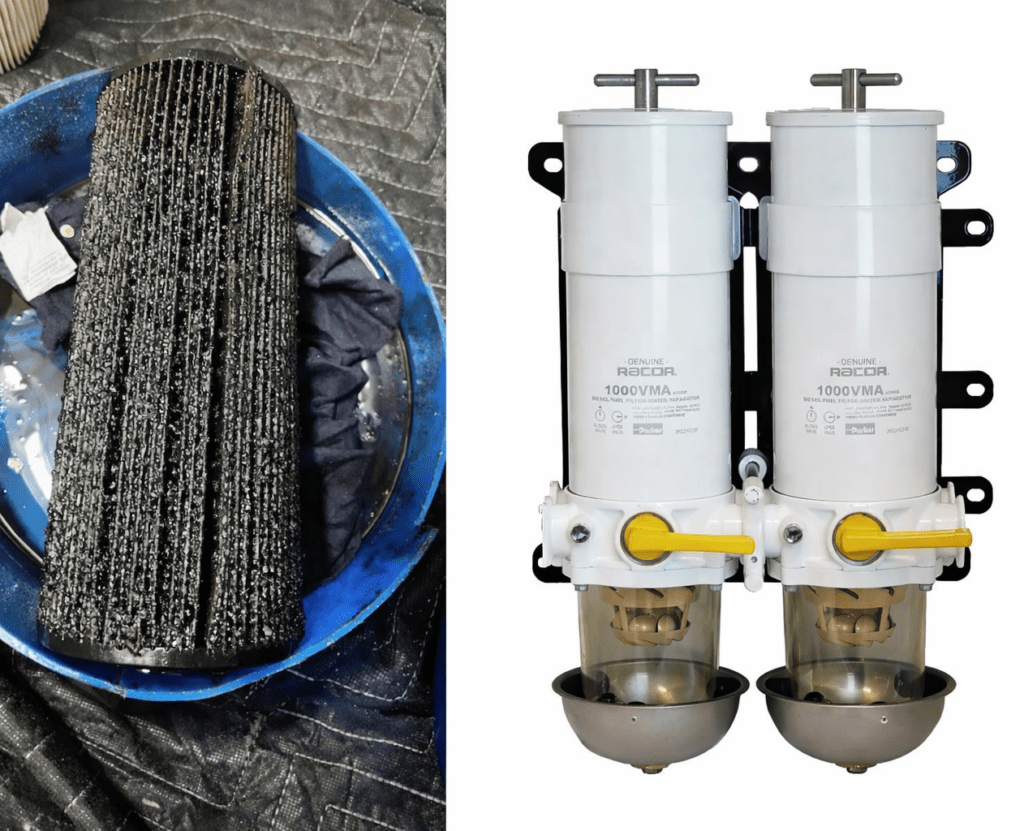
Boat Engine Fuel Contamination – Complete Marine Diesel Diagnosis Guide
If your boat engine has fuel contamination, you can expect hard starting, shutdowns, power loss, rough running, and repeated filter failures. Contaminated diesel fuel is one of the most common marine engine problems—and one of the most misunderstood—because replacing filters often hides the real issue instead of fixing it.
After 30+ years diagnosing marine diesel engines in Ventura, Oxnard, Channel Islands Harbor, and Santa Barbara, one thing is clear: fuel contamination is rarely just a filter problem—it is a system problem that spreads if not corrected properly.
Start with:
Master Marine Diesel Troubleshooting Guide
What Fuel Contamination Really Means
Fuel contamination means the diesel entering your engine is no longer clean, dry, and stable. Instead, it contains water, sludge, microbial growth, rust, or degraded fuel particles that disrupt combustion and restrict fuel flow.
👉 Compare symptoms:
Why Does My Boat Engine Start Then Die?
Why Is My Yacht Losing Power Under Load?
1. Water Intrusion (MOST DESTRUCTIVE)
Water is one of the most damaging forms of contamination. It promotes corrosion, microbial growth, and unstable combustion. Even small amounts can create hard starting and rough running conditions.
👉 Boat Engine Won’t Start
👉 Why Is My Boat Hard to Start Cold?
2. Sludge, Microbial Growth & Tank Debris
Over time, diesel fuel can develop biological growth and sludge. This material settles in tanks and becomes suspended when the boat moves, quickly clogging filters.
👉 Engine Shutting Down While Running
👉 Why Is My Yacht Engine Surging?
3. Filter Plugging & Flow Restriction
Clogged filters are often the first visible sign of contamination. However, replacing filters alone does not solve the root problem if contamination remains in the tank.
👉 Boat Engine Won’t Reach Full RPM
👉 Why Does My Boat Use Too Much Fuel?
4. Air Intrusion & Contamination Overlap
Fuel contamination often exists alongside air intrusion. Dirty filters and disturbed seals allow air into the system, compounding performance issues.
👉 Air in Fuel System
👉 Why Is My Boat Engine Rough at Idle?
5. Injection System Risk
If contamination passes beyond filtration, it can damage injectors and pumps. This leads to poor combustion, smoke, and long-term engine wear.
👉 Black Smoke Under Load
👉 Boat Engine Losing Power
6. Tank-Level Contamination (ROOT CAUSE)
If contamination originates in the tank, filters will continue to clog until the tank is cleaned or polished. This is where many repairs fail—treating symptoms instead of the source.
👉 Engine Surging at Cruise
👉 Why Is My Yacht Overheating?
⚠️ Related Local Marine Service
If your system shows repeated contamination symptoms:
👉 Universal M-40 Engine Info & Service
Advanced Diagnostic Insight (CRITICAL)
Fuel contamination rarely exists alone. It creates cascading failures across multiple systems:
- Restricted fuel → loss of power
- Water contamination → unstable combustion
- Sludge → repeated filter plugging
- Air intrusion → rough idle and shutdown
The key is identifying whether contamination is localized or system-wide.
👉 Related crossover:
Why Does My Boat Engine Lose Power?
Boat Rough Idle Guide
Step-by-Step Diagnosis
- Inspect primary filters
- Check for water contamination
- Evaluate tank condition
- Inspect hoses and seals
- Test fuel flow under load
- Check injection system impact
- Determine need for polishing
FAQ – Boat Engine Fuel Contamination
1. What causes fuel contamination?
Water, sludge, and tank debris. Start with the Master Guide.
2. Can contaminated fuel cause shutdown?
Yes, see shutdown guide.
3. Can it cause hard starting?
Yes, see hard starting guide.
4. Can it cause power loss?
Yes, see power loss guide.
5. Why won’t my engine reach RPM?
See RPM guide.
6. Can air be involved?
Yes, see air intrusion guide.
7. Can it cause rough idle?
Yes, see rough idle guide.
8. Can it cause surging?
Yes, see surging guide.
9. Can overheating relate?
Yes, see overheating guide.
10. Where should I start?
Use the Master Guide.
5 Responses