
Protecting your marine diesel engine starts with the right maintenance schedule. Explore our manufacturer-specific service guides and use the Marine Diesel Troubleshooting Guide to investigate problems before they become costly offshore failures.
30+ Years Experience
Preventive Maintenance
805 Marine Mechanic | Maintenance Resource Center
Marine Diesel Engine Maintenance Schedules & Service Intervals
Explore maintenance guides for Caterpillar, Cummins, Volvo Penta, Yanmar, MAN, MTU, Detroit Diesel, Universal, Perkins, and 11 additional manufacturers. Learn what to inspect, how to organize service intervals, and when professional marine diesel maintenance is needed.
Built for boat owners, captains, and vessel managers operating in Ventura, Oxnard, Channel Islands Harbor, Santa Barbara, Marina Del Rey, and beyond.

Your Marine Diesel Maintenance Resource Center
Marine diesel engines work under sustained loads in environments where saltwater, heat, vibration, and extended periods of inactivity can create serious maintenance challenges. A carefully planned service program helps identify developing problems before they cause expensive repairs or unexpected shutdowns.
This master maintenance page connects our manufacturer-specific schedules with practical guidance for fuel systems, lubrication, cooling, raw-water pumps, exhaust systems, and electrical components.
Rather than applying one service interval to every engine, begin with the correct manufacturer’s manual for your engine model and serial number. Then consider operating hours, elapsed calendar time, duty cycle, environmental conditions, and maintenance history.
Manufacturer Schedules
Find maintenance guidance organized by marine diesel engine brand and identify the appropriate model-specific requirements.
Preventive Inspections
Understand the systems that deserve regular attention, from seawater cooling to fuel filtration and lubrication.
Professional Diagnostics
Recognize when operating symptoms require pressure testing, electronic diagnostics, component inspection, or sea trials.
Marine Diesel Engine Maintenance Schedules by Brand
Select your engine manufacturer below to open its dedicated maintenance schedule. These 20 guides cover a broad range of recreational, commercial, legacy, and electronically controlled marine diesel engines.
Before performing a scheduled service, verify the engine model, serial number, marine rating, and manufacturer documentation. Service intervals can vary considerably within the same engine brand.
Banks Marine
Maintenance planning for Banks marine diesel applications, including lubrication, cooling, and fuel-system checks.
Beta Marine
Service planning for Beta Marine propulsion diesels, raw-water pumps, filters, belts, and cooling systems.
Caterpillar Marine
Preventive maintenance guidance for Caterpillar marine diesel engines and their critical support systems.
Cummins Marine
Maintenance guidance for Cummins mechanical and electronically controlled marine diesel engine families.
Detroit Diesel
Service planning for classic two-stroke and later Detroit Diesel marine propulsion engines.
Deutz Marine
Preventive service guidance for Deutz marine diesel lubrication, filtration, and cooling systems.
FNM Marine
Maintenance planning for FNM marine diesel propulsion installations and associated components.
Ford Lehman
Maintenance guidance for older Ford Lehman marine diesel engines and long-service-life components.
FPT Marine
Service planning for FPT marine propulsion diesels, filtration, cooling, and electronic systems.
John Deere Marine
Preventive maintenance for John Deere marine diesel propulsion and auxiliary engine applications.
Lugger Marine
Maintenance guidance for Lugger marine diesels, including fuel, cooling, and lubrication systems.
MAN Marine
Service planning for MAN high-output marine diesels, cooling systems, and engine monitoring.
MTU Marine
Maintenance guidance for MTU marine propulsion systems and high-performance diesel applications.
Nanni Marine
Maintenance planning for Nanni marine diesel engines, including seawater cooling and filters.
Perkins Marine
Service guidance for Perkins marine diesel engines, including classic and later propulsion models.
Scania Marine
Preventive service planning for Scania marine diesels, electronic controls, and cooling systems.
Solé Marine
Maintenance guidance for Solé marine diesel installations, filters, impellers, and routine inspections.
Universal Marine
Service planning for classic Universal marine diesel engines, including cooling and fuel systems.
Yanmar Marine
Maintenance guidance for Yanmar marine diesel engine families, fuel systems, and seawater cooling.
Volvo Penta
Service planning for Volvo Penta marine diesel engines, including D-series and legacy applications.
Marine Diesel Engine Service Interval Reference
A maintenance schedule should combine engine operating hours with calendar-based inspections. Engines that accumulate relatively few hours may still require annual servicing because oil, coolant, hoses, seals, impellers, and other components can deteriorate with age and inactivity.
The following reference organizes common maintenance planning checkpoints. It is not a universal schedule and does not establish a required replacement interval for any particular engine.
| Planning Checkpoint | Items to Review | Important Considerations |
|---|---|---|
| Before Each Departure | Fluid levels, leaks, belts, strainers, batteries, visible hoses, and alarms. | Check engine-room condition and verify that safety-critical systems are ready. |
| Initial / Break-In Service | Oil, filters, fasteners, valve clearance, and other items specified by the manufacturer. | Required break-in procedures vary by engine and installation. |
| Periodic Hour-Based Service | Oil and filters, fuel filtration, belts, anodes, raw-water components, and inspections. | Use the actual manufacturer interval; do not assume every engine uses a 250-hour cycle. |
| Annual / Seasonal Service | Calendar-limited fluids and components, cooling-system condition, corrosion, and storage-related concerns. | Calendar limits may apply even when operating hours are low. |
| Major Scheduled Service | Valve adjustments, heat exchanger service, injectors, coolers, and other model-dependent procedures. | Perform only at the applicable interval or when inspection results justify service. |
| Condition-Based Service | Oil analysis, cooling performance, fault history, fuel pressure, vibration, and exhaust temperatures. | Abnormal findings may require action before the next scheduled interval. |
Operating Hours
Track actual engine hours and identify service items that have reached their prescribed operating-hour limits.
Calendar Time
Track service items with annual, seasonal, or other calendar requirements, even when the vessel has seen limited use.
Duty Cycle
Consider sustained high load, long idle periods, frequent starts, extended cruising, and commercial operating conditions.
Inspection Findings
Adjust maintenance decisions when oil analysis, temperature trends, leakage, corrosion, or component inspections reveal problems.
Need a Maintenance Plan for Your Engine?
805 Marine Mechanic provides mobile marine diesel maintenance, system inspections, diagnostics, and service planning. Contact us with your engine manufacturer, model, serial number, operating hours, and known maintenance history.
Marine Diesel Fuel System Maintenance
The fuel system is one of the most common sources of marine diesel operating problems. Water intrusion, microbial contamination, sediment, air leaks, deteriorated hoses, and restricted filtration can cause hard starting, low power, rough running, or complete engine shutdown.
Maintenance should begin with regular inspection of primary fuel-water separators and the condition of fuel stored onboard. The secondary filtration system must also be maintained according to the engine manufacturer’s requirements.
- Inspect fuel-water separators and drain accumulated water as required.
- Replace primary and secondary filters at the specified intervals or when condition requires.
- Inspect fuel hoses, fittings, clamps, and connections for leakage or deterioration.
- Investigate repeated air intrusion, loss of prime, or abnormal fuel restriction.
- Evaluate tank contamination when filters repeatedly become restricted.
- Review injector and fuel-pump testing requirements for the specific engine.
Electronically controlled high-pressure injection systems can be especially sensitive to contamination. Opening or servicing high-pressure fuel components requires the correct procedures, equipment, and safety precautions.
For detailed troubleshooting, visit our Marine Diesel Fuel System Diagnosis resource.
Lubrication, Oil Filters, and Marine Transmission Service
Engine oil protects bearings, cylinder components, valve trains, turbochargers, and other heavily loaded internal parts. Marine diesel engines operate under sustained load, making the correct oil specification and timely servicing essential.
Oil change intervals vary by engine model, duty cycle, oil specification, and manufacturer instructions. Many recreational marine diesel engines use annual or operating-hour-based service requirements, but the correct interval must be established for the individual engine.
- Use the manufacturer-approved engine oil specification and viscosity.
- Replace oil filters with components approved for the application.
- Monitor oil pressure and investigate unexplained changes.
- Check for coolant contamination, fuel dilution, or unusual metal content.
- Maintain marine gear lubricant or transmission fluid separately according to the gear manufacturer’s requirements.
- Record service dates, engine hours, oil type, filter information, and findings.
Oil analysis can help identify developing wear, contamination, and lubricant-condition concerns. It is most useful when interpreted with operating history and previous samples rather than as a stand-alone guarantee of engine condition.
For broader professional support, see our Marine Diesel Engine Services page.
Marine Diesel Cooling System Maintenance
Marine cooling systems must transfer substantial engine heat while dealing with saltwater, mineral deposits, corrosion, and biological debris. Reduced cooling performance may not become obvious until the vessel is operating at cruising speed or under heavy load.
Preventive inspections should cover both the closed-circuit coolant system, where fitted, and the raw-water system supplying the heat exchanger and exhaust components.
- Inspect coolant condition, level, concentration, and signs of contamination.
- Check heat exchangers, coolers, hoses, clamps, and connections for leakage or deterioration.
- Inspect seawater strainers and verify adequate raw-water flow.
- Service sacrificial anodes according to the cooling-system design.
- Evaluate thermostats, pumps, pressure caps, and coolant circulation when symptoms justify testing.
- Investigate elevated operating temperatures before sustained high-load operation.
Heat exchanger cleaning and descaling should be performed using procedures compatible with the metals, seals, coatings, and cooling-system design. Aggressive chemical treatment or improper pressure testing can cause damage.
Learn more in our Cooling System Diagnosis Center.
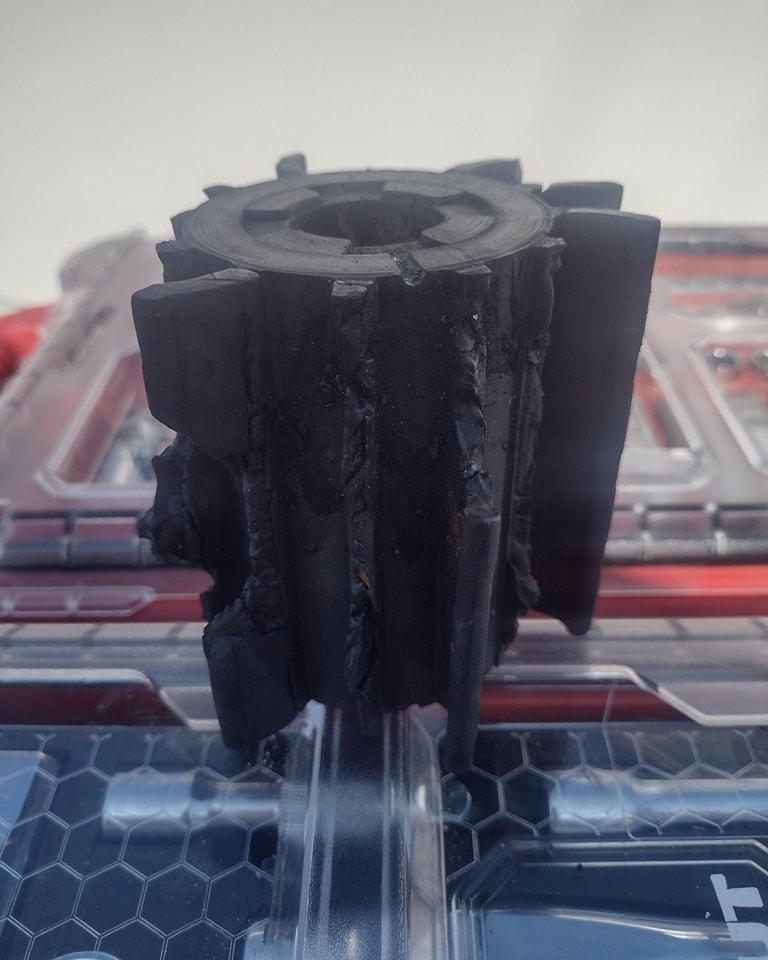
Raw-Water Pump Impeller Maintenance
Raw-water pump impellers are particularly important because rubber vanes can crack, harden, tear, or take a permanent set during service. Some failures develop gradually, while others cause a sudden reduction in seawater delivery.
Inspect and replace the impeller according to the applicable manufacturer schedule and actual operating condition. Do not assume that one seasonal or 250-hour interval applies to every pump and engine.
When an impeller is found with missing vanes, inspect the downstream system for fragments. Installing a new impeller without locating debris may leave the original cooling restriction unresolved.
Air Intake, Turbochargers, and Exhaust Maintenance
Marine diesel engines require adequate intake air and properly functioning exhaust systems to develop rated power efficiently. Restricted filters, deteriorated intake hoses, turbocharger problems, and exhaust restrictions can contribute to smoke, elevated temperatures, and poor performance.
Air Intake Inspections
- Inspect and service approved air filters.
- Check intake hoses and clamps.
- Inspect turbocharger connections and visible leakage.
- Evaluate crankcase ventilation components.
- Inspect charge-air cooling systems where fitted.
Exhaust Inspections
- Inspect mixing elbows and risers for deterioration.
- Check exhaust hoses and clamps.
- Look for soot, leaks, corrosion, and heat damage.
- Investigate exhaust restriction and abnormal temperatures.
- Confirm proper seawater injection and exhaust routing.
Saltwater injection elbows are particularly vulnerable to internal corrosion and deposits. The Beta Marine water-injection exhaust bend is an example of this type of component; its design and fitment are application-specific.
Some engines use Walker-style washable air filtration systems, while others use manufacturer-specific elements. Always follow the correct cleaning, replacement, and installation requirements.
Electrical Systems, Batteries, and Engine Controls
Corrosion, poor grounds, deteriorated wiring, and charging-system problems can produce difficult starting conditions, intermittent shutdowns, alarm events, and communication faults on electronically controlled engines.
- Inspect battery condition and verify secure connections.
- Check charging voltage and alternator operation.
- Inspect belts, grounds, terminals, and accessible harness connections.
- Look for water intrusion, green corrosion, damaged insulation, and overheated connectors.
- Review engine alarms and stored fault information using compatible diagnostic equipment when appropriate.
Electrical testing should follow the manufacturer’s procedures. Modern electronic engine controls may require specialized diagnostic tools and should not be subjected to improvised testing methods that could damage control modules.
Seasonal Maintenance for Ventura, Channel Islands, and Santa Barbara Boating
Boats operating along the Southern California coast may experience prolonged saltwater exposure, kelp and debris in seawater strainers, extended offshore runs, and periods of limited use between trips. These conditions make routine inspections and accurate service records especially valuable.
Before a longer trip to the Channel Islands, owners should verify fluid levels, inspect seawater strainers, review recent temperature and oil-pressure behavior, and address known leaks or alarms. A properly conducted sea trial after major cooling or fuel-system repairs can help verify performance under actual operating load.
For local mobile service, visit Marine Mechanic Ventura CA.
When Scheduled Maintenance Is Not Enough
A maintenance schedule is designed to reduce the likelihood of failure, but it cannot establish the internal condition of every engine component. Engines with unusual smoke, coolant loss, oil contamination, reduced rated RPM, abnormal operating temperatures, or repeated alarms may require diagnostic testing before additional routine service is performed.
Depending on the complaint, professional evaluation may include cooling-system pressure testing, fuel-pressure checks, electronic fault review, oil analysis, mechanical inspection, and monitored sea trials.
When buying or selling a vessel, maintenance records are also important evidence of previous care. However, they do not replace a thorough mechanical assessment. Our Marine Engine Survey page explains the role of professional engine inspections in evaluating vessel condition.
20 Frequently Asked Questions About Marine Diesel Engine Maintenance
These answers address common maintenance questions from boat owners and captains. Always use the service documentation applicable to your engine model, serial number, and installation when determining exact procedures and intervals.
1. How often should marine diesel engine oil be changed?
Marine diesel oil-change intervals depend on the manufacturer, engine model, operating hours, duty cycle, and approved lubricant. Many recreational engines use annual or hour-based oil-change requirements, but there is no single interval that applies to every marine diesel engine.
Engines subjected to prolonged idling, heavy loads, or severe operating conditions may require additional attention. Consult your manufacturer’s maintenance guide and record every oil and filter change.
2. Why is marine diesel fuel-system maintenance important?
Marine fuel systems are vulnerable to water intrusion, sediment, microbial contamination, deteriorated hoses, and air leaks. These conditions can cause difficult starting, loss of power, restricted fuel delivery, and unexpected engine shutdown.
Regular filter inspections, fuel-water separator maintenance, and leak checks help reduce these risks. Visit our Marine Diesel Fuel System Diagnosis page for additional troubleshooting information.
3. How often should marine raw-water pump impellers be replaced?
Impeller replacement intervals vary by pump manufacturer, engine application, operating hours, and calendar time. Some applications require seasonal inspections or replacement, while others specify different intervals.
Impellers can deteriorate even when an engine receives relatively little use. When missing vanes are discovered, downstream cooling passages should be checked for debris before the engine is returned to service.
4. What happens when marine diesel cooling-system maintenance is neglected?
Neglected cooling systems may develop corrosion, restricted seawater flow, coolant leakage, blocked heat exchangers, and overheating. Continued operation under abnormal temperatures can damage exhaust components, cylinder heads, gaskets, and internal engine parts.
Cooling problems should be investigated before operating under sustained load. Our Cooling System Diagnosis Center explains common symptoms and diagnostic considerations.
5. Why should primary and secondary marine fuel filters be maintained?
Primary fuel filtration helps remove contamination and, where equipped, separate water before fuel reaches the engine. Secondary filters provide additional protection for the injection system.
Restricted filters can reduce fuel delivery and cause performance problems, particularly at higher engine loads. Filter specifications, replacement intervals, and bleeding procedures should match the particular engine and fuel system.
6. Can poor maintenance shorten the life of a marine diesel engine?
Yes. Delayed lubrication service, overheating, fuel contamination, corrosion, and neglected cooling-system components can accelerate engine wear and contribute to major failures.
Preventive maintenance cannot eliminate every mechanical risk, but it provides opportunities to identify problems before they become more expensive. Learn about professional support on our Marine Diesel Engine Services page.
7. How often should marine diesel engine coolant be replaced?
Coolant replacement requirements depend on the engine manufacturer’s specification, the coolant chemistry, service hours, and elapsed calendar time. Conventional and extended-life coolant formulations may have substantially different maintenance requirements.
Using an incompatible coolant or mixing products without manufacturer approval can create corrosion and deposit problems. Cooling-system inspections should also include concentration, contamination, and pressure-related concerns.
8. What are the most common causes of marine diesel overheating?
Common causes include damaged raw-water impellers, clogged strainers, restricted heat exchangers, thermostat faults, coolant loss, circulation problems, and exhaust-related restrictions. The actual cause depends on the cooling-system design and operating symptoms.
Overheating at cruising RPM but not at idle may indicate a problem that becomes more pronounced under load. Our Marine Diesel Troubleshooting Guide can help organize the diagnostic process.
9. Should marine diesel exhaust elbows be inspected regularly?
Yes. Water-injection elbows, risers, exhaust hoses, and related fittings are exposed to heat, moisture, corrosion, and deposits. Internal deterioration may be difficult to identify from an external visual inspection alone.
Inspection frequency and replacement requirements depend on the exhaust design and manufacturer recommendations. Visible corrosion, leaks, unusual exhaust temperatures, and performance changes justify further evaluation.
10. Why is electrical-system maintenance important on marine diesel engines?
Marine electrical systems operate in an environment where moisture, vibration, and salt exposure can accelerate corrosion and connection failures. Poor grounds, weak batteries, and charging-system problems may produce starting failures or intermittent engine faults.
Electronically controlled engines may also experience sensor or communication problems. Qualified technicians can use compatible diagnostic equipment to distinguish electrical faults from mechanical problems.
11. Can dirty air filters reduce marine diesel engine performance?
Yes. Restricted intake airflow can affect combustion, increase exhaust smoke, and limit engine performance. The impact depends on the engine design, operating load, and severity of the restriction.
Air filtration, intake hoses, crankcase ventilation, and turbocharger connections should be inspected according to the applicable maintenance schedule. Use approved replacement or cleaning procedures for the installed filtration system.
12. How often should marine seawater strainers be inspected?
Seawater strainers should be inspected frequently enough to prevent debris from restricting cooling flow. Boats operating in areas with kelp, vegetation, or floating debris may require more frequent checks.
Before cleaning a strainer, follow the vessel’s seawater-system safety procedures and verify proper reassembly afterward. Air leaks or improperly secured covers can create additional cooling problems.
13. Why are marine diesel maintenance records important?
Maintenance records document service dates, engine hours, lubricants, filters, component replacements, and inspection findings. They help owners determine when future maintenance is due and identify recurring mechanical concerns.
Complete records are also useful when preparing a vessel for sale. A professional Marine Engine Survey can evaluate present engine condition alongside the documented maintenance history.
14. What should be included in annual marine diesel maintenance?
Annual maintenance may include engine oil and filters, fuel filtration, belt and hose inspections, cooling-system checks, raw-water components, electrical connections, and other manufacturer-specified items.
The exact work depends on the engine model, installation, service history, and operating hours. Use the manufacturer maintenance directory to locate the relevant engine brand before establishing a service plan.
15. Can preventive marine diesel maintenance reduce repair costs?
Preventive maintenance can identify developing problems before they lead to expensive component damage or offshore breakdowns. Examples include discovering deteriorated hoses, fuel contamination, cooling restrictions, and lubrication concerns during routine inspections.
Although maintenance involves ongoing expense, planned service often reduces the likelihood of avoidable emergency repairs. Professional maintenance and diagnostics are available through our Marine Diesel Engine Services resource.
16. Should marine diesel engines be operated regularly?
Marine diesel engines generally benefit from appropriate operation and maintenance rather than prolonged neglect. Extended inactivity can contribute to battery discharge, corrosion, fuel deterioration, and problems associated with aging seals and components.
However, brief unloaded idling is not a substitute for proper operation or storage preparation. Follow the manufacturer’s recommendations for layup, recommissioning, warm-up, and operation under suitable load.
17. Can computerized diagnostics help with routine marine diesel maintenance?
On compatible electronically controlled engines, diagnostic equipment can help review fault codes, operating parameters, sensor information, and certain recorded events. These findings may reveal concerns that are not immediately obvious during a visual inspection.
Diagnostic information must be interpreted alongside mechanical inspections and actual operating conditions. The Marine Diesel Troubleshooting Guide provides a broader starting point for identifying engine problems.
18. Which marine diesel maintenance items are commonly overlooked?
Frequently overlooked items can include seawater pump impellers, heat exchanger condition, sacrificial anodes, fuel contamination, deteriorated hoses, electrical grounds, and exhaust elbow corrosion.
These items may appear satisfactory during light use while developing problems under heavier operating conditions. A documented inspection program helps prevent important maintenance tasks from being missed.
19. Why does saltwater exposure increase marine diesel maintenance requirements?
Saltwater and marine humidity accelerate corrosion of exposed metals, electrical connections, cooling components, and exhaust-system parts. Seawater cooling systems may also accumulate deposits and debris that reduce heat-transfer performance.
Vessels operating around Ventura Harbor, Oxnard, Channel Islands Harbor, and Santa Barbara should pay particular attention to cooling-system condition and corrosion protection. For regional service information, visit Marine Mechanic Ventura CA.
20. Who should perform advanced marine diesel maintenance and diagnostics?
Advanced work should be performed by trained technicians familiar with the particular marine diesel engine and installation. Procedures involving high-pressure fuel systems, engine timing, electronic controls, cooling-system pressure testing, and major component removal require appropriate equipment and service information.
805 Marine Mechanic provides mobile marine diesel maintenance, inspections, and diagnostic services throughout its Southern California service area. Use our Contact Page to discuss your engine and maintenance needs.
Information to Have Ready Before Scheduling Marine Diesel Service
Providing accurate engine information helps determine the correct service requirements, parts, and diagnostic equipment before a technician arrives at the vessel.
Engine Identification
- Manufacturer and engine model
- Engine serial number
- Current operating hours
- Vessel make and model
Service History
- Date and hours of last service
- Previous maintenance records
- Recent component replacements
- Known leaks, alarms, or symptoms
Operating Conditions
- Typical cruising RPM
- Recreational or commercial use
- Extended idle or storage periods
- Recent overheating or power loss
Vessel Location
- Marina or harbor
- Slip or dock location
- Engine-room accessibility
- Preferred service scheduling
Protect Your Marine Diesel Engine Before the Next Offshore Trip
With more than 30 years of marine engine experience, 805 Marine Mechanic provides mobile diesel maintenance, cooling-system service, fuel-system troubleshooting, mechanical inspections, and computerized diagnostics.
Serving Ventura Harbor, Oxnard, Channel Islands Harbor, Santa Barbara, and Marina Del Rey.
Schedule Marine Diesel Maintenance
Call 805-774-0637 to discuss your engine’s maintenance requirements.