
Marine Diesel Smoke & Combustion Diagnosis Center
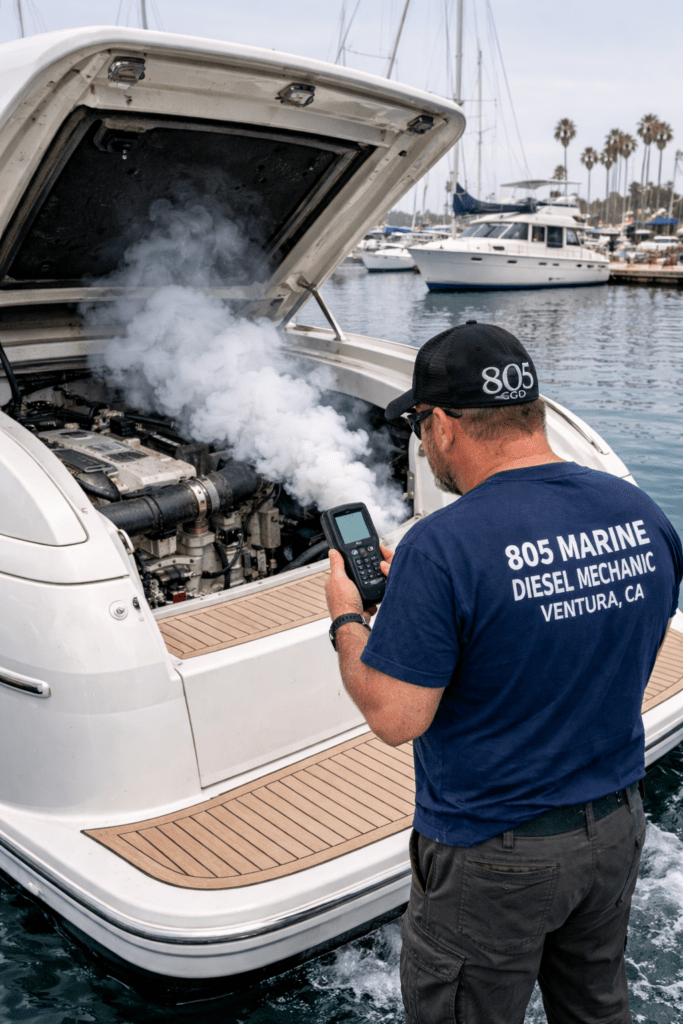
Exhaust smoke and combustion symptoms are some of the fastest ways to diagnose what’s happening inside a marine diesel engine. Blue smoke, black smoke, and white smoke each point to different root causes—fuel, air, cooling, turbo boost, or internal engine wear.
This Smoke & Combustion Diagnosis Center organizes the step-by-step troubleshooting process used by trained technicians at 805 Marine Diesel Mechanic across Ventura, Oxnard, Channel Islands Harbor, and Santa Barbara. Use this hub to choose the correct diagnostic path, then follow the linked guides for detailed procedures.
Return to Master Marine Diesel Troubleshooting Guide →
Open Master Troubleshooting Guide
Start Here — Smoke Color Comparison (Fast Diagnosis)
If you want the quickest path, use the comparison guide first. It explains what each smoke color usually means and what to test next.
White Smoke (Startup, Misfire, Unburned Fuel)
- White Smoke at Startup Diagnosis
- Hard Starting (Cold vs Warm Engine Diagnosis)
- Engine Turns Over But No Smoke From Exhaust
Common white smoke causes: cold combustion, low compression, injector timing issues, air in fuel, or water intrusion. Always confirm whether the smoke clears as the engine warms up.
Black Smoke (Overfueling, Air Restriction, Low Boost, Overload)
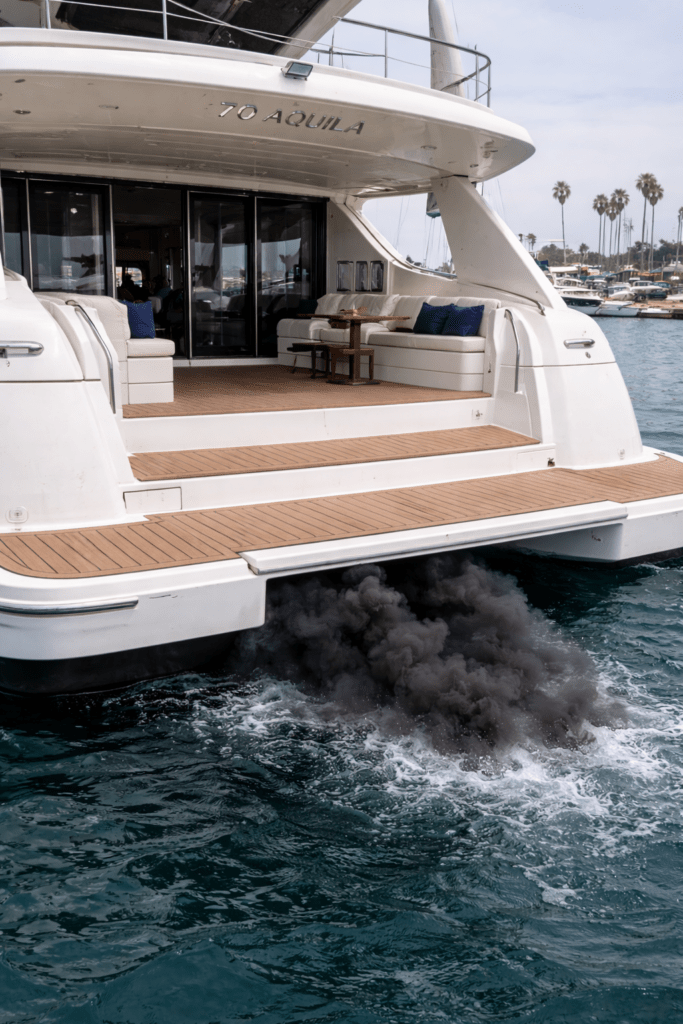
- Excessive Black Smoke Under Throttle
- Low Power / Loss of RPM Diagnosis
- Fuel Restriction vs Air Restriction Diagnosis
Common black smoke causes: restricted intake, turbo boost leaks, aftercooler restriction, overloaded prop/hull drag, or fuel delivery imbalance.
Blue Smoke (Oil Burning, Turbo Seals, Engine Wear)
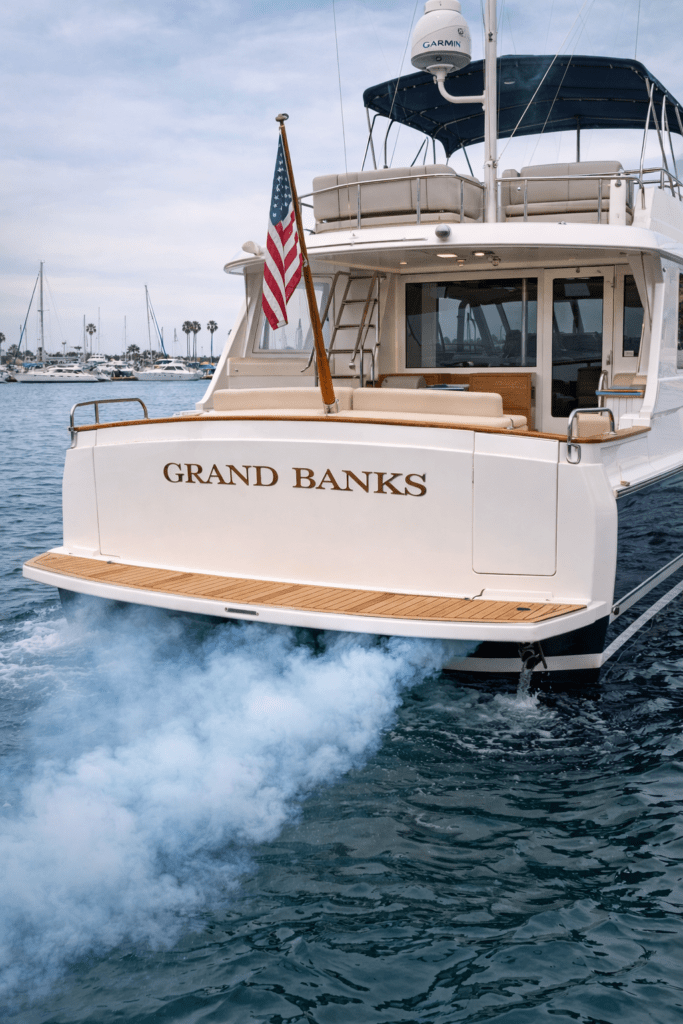
- Blue Smoke Causes in Marine Diesel
- Turbo Oil Supply & Oil Drain Problems
- Signs Your Marine Diesel Engine Is Beyond Rebuild
Common blue smoke causes: oil burning from rings/valve guides, turbo oil seal leakage, excessive crankcase pressure, or incorrect oil level/viscosity.
Turbo & Airflow Causes That Show Up as Smoke
Many smoke complaints are turbo/airflow issues, not fuel problems. Use these guides to test the system correctly.
- Turbocharger Failure Symptoms (Diagnosis Guide)
- Boost Pressure Testing on Marine Diesel Engines
- Aftercooler & Intercooler Problems (Symptoms + Cleaning Guide)
Fuel Quality, Restriction, and Smoke
Fuel restriction and contamination can cause incomplete combustion (white smoke), power loss with minimal smoke, or surging with intermittent smoke changes.
- Diesel Algae Contamination
- Racor Filter Troubleshooting Guide
- How to Prime a Marine Diesel Fuel System (Step-by-Step)
Quick Diagnostic Path (Technician Order)
- Identify the smoke color (blue, black, white) and when it occurs (startup, throttle-up, cruise).
- Match smoke to symptom (power loss, hard starting, overheating, surging).
- Check restrictions (air filter/AirSep, Racor restriction, heat exchanger/aftercooler).
- Verify boost under load (boost testing is essential for black smoke + low RPM).
- Rule out fuel contamination (water, algae, sludge) and air intrusion.
- Assess mechanical wear (oil consumption, blow-by, compression issues) if symptoms persist.
Local Smoke & Combustion Diagnostics (Ventura, Oxnard, Channel Islands Harbor & Santa Barbara)
805 Marine Diesel Mechanic provides mobile diagnostics for smoke, performance problems, turbo boost issues, and fuel system faults. If you want a clear answer without guesswork, we can inspect the system and recommend the most reliable fix.
Book a Smoke Diagnostic Inspection
FAQ: Marine Diesel Smoke & Combustion
What smoke color is the most serious?
Any smoke that suddenly changes alongside power loss, overheating, or abnormal noises should be treated as urgent. Blue smoke with oil consumption and black smoke with low RPM are common high-risk patterns.
Does black smoke always mean injector problems?
No. Black smoke often indicates air restriction, low boost, aftercooler restriction, or overload—injectors are only one possible cause.
Can white smoke be normal at startup?
It can be, especially in cooler conditions. If it clears as the engine warms, it may be normal. Persistent white smoke needs diagnosis.