
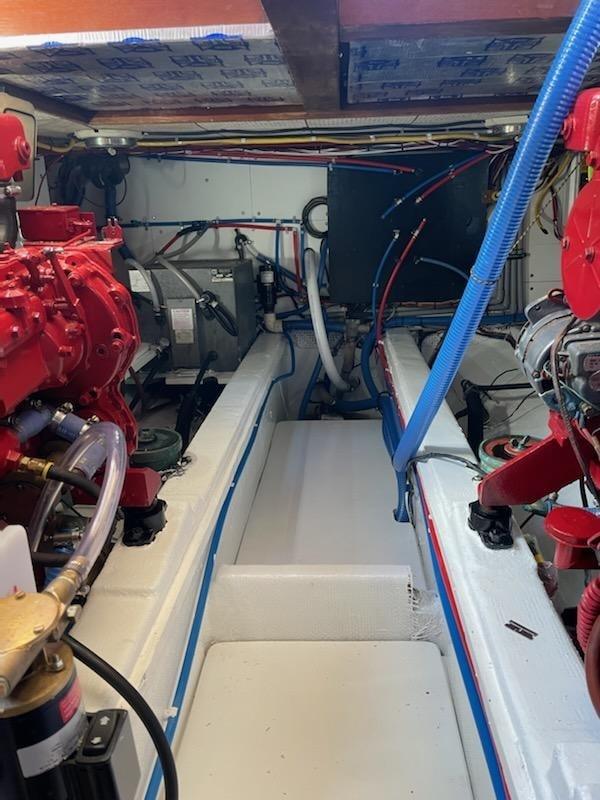
This Ford Lehman 120 twin-engine restoration shows what a clean, methodical marine diesel refit should look like. Before any paint was applied, the engine room was evaluated as a full operating system: starting, cooling, fuel filtration, bilge safety, plumbing access, wiring layout, and long-term serviceability. For owners diagnosing similar problems before a restoration, start with the Master Marine Diesel Troubleshooting Guide so symptoms are sorted by system instead of guessed at part by part.
805 Marine Mechanic completed this project for a coastal cruising vessel operating around Santa Barbara, Ventura, Oxnard, and Channel Islands Harbor. The goal was not only to make the engine room look better. The job was planned to improve reliability, make inspections easier, reduce corrosion risk, and create a safer layout for future maintenance. For larger service planning, our marine diesel services page explains how diagnostics, maintenance, and restoration work fit together.
Before and After: A Real Engine Room Transformation
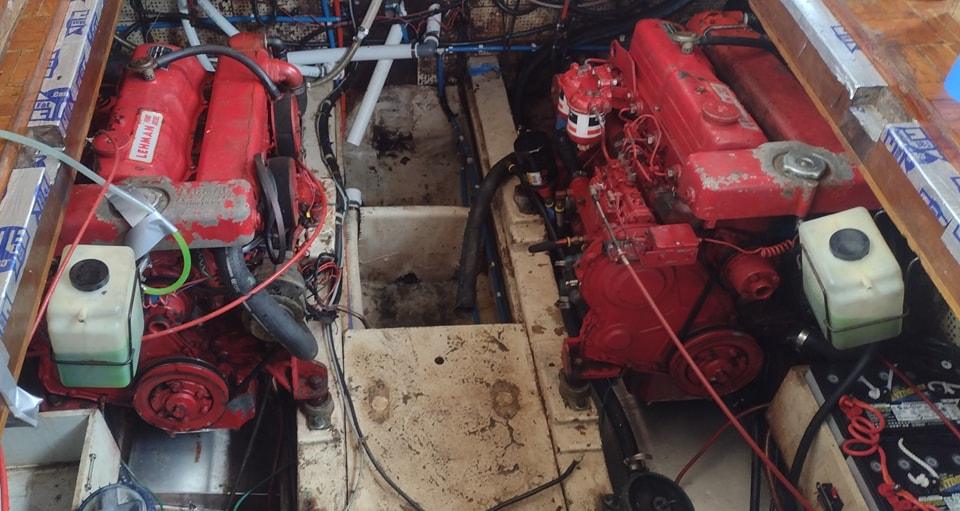
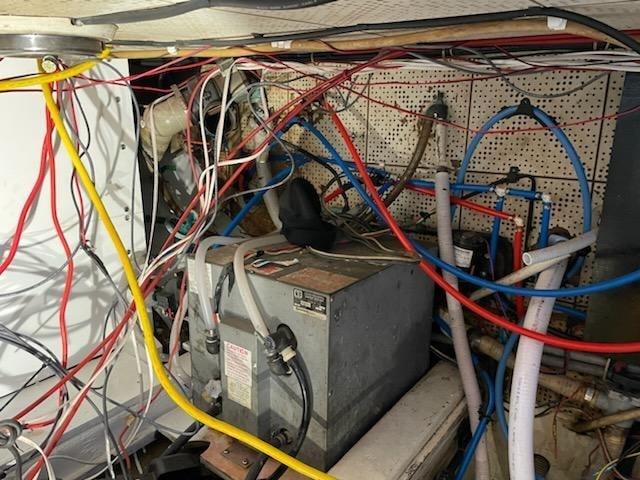
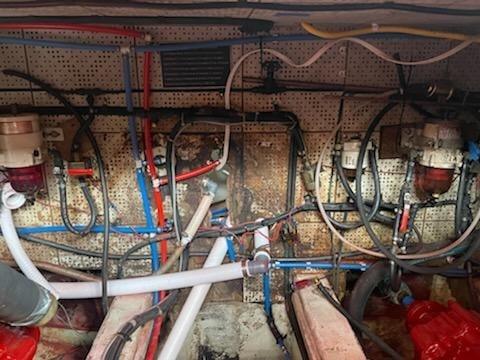
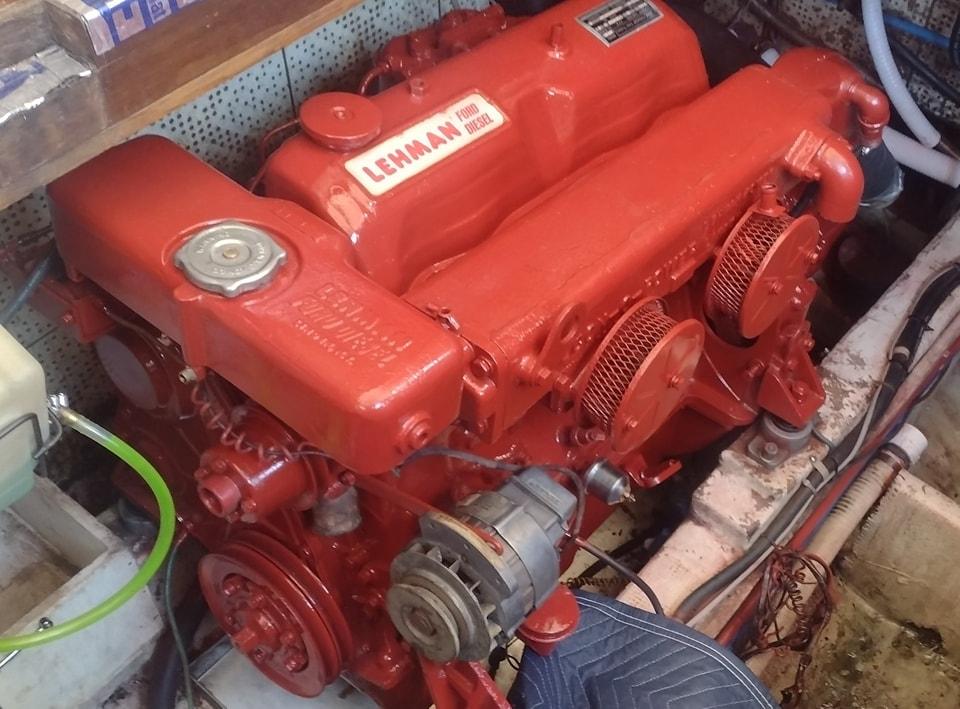
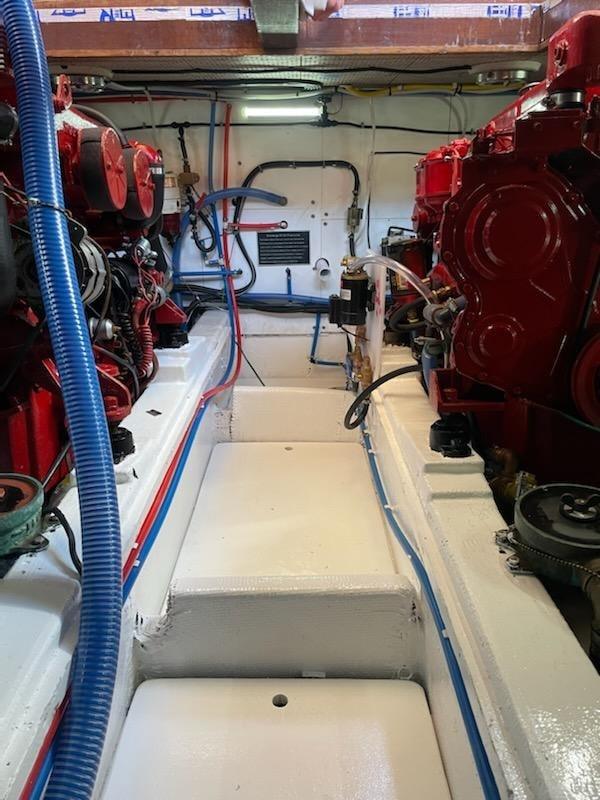
The before photos show the typical problems found in older diesel engine rooms: tired paint, salt exposure, plumbing congestion, stained bilge surfaces, and equipment that had become harder to inspect. The after photos show the value of doing the job in the right order: inspect, repair, clean, protect, then reassemble with future access in mind.
Before Photos
After Photos
What We Restored on the Ford Lehman 120 System
Ford Lehman 120 engines are respected for simple, durable service, but age and saltwater exposure still need a disciplined work plan. American Diesel Corp identifies itself as specializing in Lehman Ford engines, marine diesel parts, and technical support, which is why model-specific parts planning matters for these older installations. Owners comparing classic diesel platforms can also review our Perkins diesel repair resource for a similar service mindset.
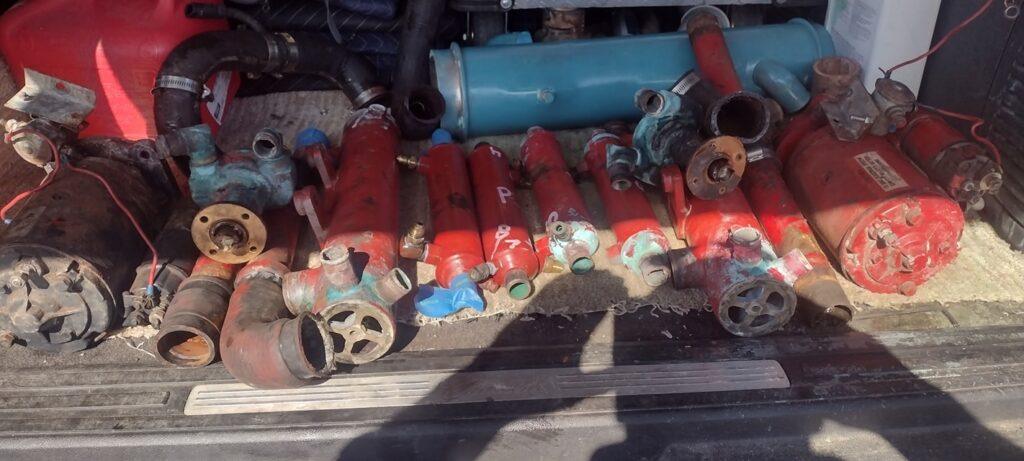
- Rebuilt starters: Both starters were serviced to improve cranking reliability and reduce no-start risk.
- Rebuilt raw-water pumps: Pump service restored cooling-water confidence before the engines returned to regular use.
- Saltwater system pickling: Both raw-water circuits were flushed to remove scale, corrosion byproducts, and marine buildup.
- Remote Racor vacuum gauges: The owner can now monitor fuel-filter restriction before it becomes a power-loss problem.
- Bilge and engine paint: Clean paint improves corrosion protection and makes new leaks easier to spot.
- Freshwater flushing system: The new freshwater flushing setup supports easier salt removal after local coastal operation.
- Dual oil-changing pump: Cleaner oil service reduces mess and encourages on-schedule maintenance.
System-Based Diagnostics Came Before Paint
A good restoration starts by deciding which systems can be trusted and which need correction. On this vessel, the workflow matched the same logic used in our Fuel System Diagnosis Center, Cooling System Diagnosis Center, and Electrical & Starting System Diagnosis Center. If an engine cranks slowly, overheats under load, or loses RPM, the cause needs to be confirmed before cosmetic work hides the evidence.
The remote fuel-vacuum gauges were especially useful because clogged filters can create symptoms that look like injector or governor trouble. For owners dealing with repeat filter changes, water in the bowls, or power loss after rough seas, the marine diesel fuel system problems guide explains why tank condition and air intrusion should be checked before major repairs are authorized. If the complaint is hard starting, the boat engine won’t start guide gives a practical first-pass checklist.
Paint, Bilge Renewal, and Safety Upgrades
The bilge was stripped, cleaned, and repainted so leaks, rust stains, coolant residue, and oil mist can be seen early. A bright engine room is not just cosmetic; it helps a technician inspect hoses, clamps, mounts, seacocks, wiring, pumps, and shaft-area components faster. ABYC standards are used by marine builders and repair professionals, so electrical, bilge-pump, and alarm layouts should be approached with that safety mindset.

The project also added a new high-water alarm and midship bilge pump for better warning and redundancy. A high-water alarm does not replace routine inspection, but it gives the owner earlier notice if a leak, failed hose, pump issue, or stuffing-box problem develops. For smoke, combustion, or post-restoration performance checks, our Smoke & Combustion Diagnosis Center helps separate normal warm-up behavior from fuel, air, or oil-control problems.
Local Ford Lehman Diesel Restoration Service
805 Marine Mechanic supports classic inboard diesel vessels across Ventura, Oxnard, Channel Islands Harbor, and Santa Barbara. Owners in Ventura can start with our marine services Ventura page, while boats based near the islands can review Channel Islands marine services. For harbor and coastal cruising support farther north, our Santa Barbara marine services page explains local diesel repair coverage.
We also service other inboard diesel brands, including Yanmar diesel repair, Perkins, and related classic marine diesel installations. The final result on this Ford Lehman 120 project is a cleaner, safer, more inspectable engine room built for dependable cruising between Santa Barbara Harbor, Ventura Harbor, Oxnard, and the Channel Islands.
Frequently Asked Questions
What did this Ford Lehman 120 restoration include?
It included starter rebuilds, raw-water pump rebuilds, saltwater flushing, fuel-vacuum gauges, bilge paint, a high-water alarm, and a midship bilge pump. The work improved both appearance and service reliability.
Why restore the engine room before repainting it?
Paint should come after inspection and repair. Cleaning first exposes leaks, corrosion, bad routing, and access problems that paint alone would hide.
Why are Ford Lehman 120 engines worth restoring?
They are simple, durable, and well liked in many cruising boats. A careful restoration can extend useful service when the base engine is still sound.
What does a clean bilge help a technician see?
A clean bilge makes oil, coolant, fuel, and seawater leaks easier to spot. It also improves visibility around hoses, pumps, wiring, and mounts.
Why rebuild both starters?
Slow cranking can create hard-start complaints even when fuel and compression are acceptable. Rebuilt starters improve starting consistency and reduce dockside failures.
Why rebuild raw-water pumps?
Raw-water pumps protect the cooling system by moving seawater through heat exchangers. Rebuilding them helps reduce overheating risk under load.
What is saltwater system pickling?
It is a controlled cleaning flush used to remove scale and marine buildup from raw-water passages. The goal is better cooling flow and corrosion control.
Why add remote Racor vacuum gauges?
Vacuum gauges show fuel-filter restriction before the engine loses power. They help the owner catch contamination or clogged filters early.
Why install a freshwater flushing system?
Freshwater flushing helps remove salt from suitable raw-water systems after use. It is especially useful for boats operating around Ventura, Oxnard, and Santa Barbara.
Why add a high-water alarm?
A high-water alarm gives earlier warning if water rises in the bilge. It does not replace inspection, but it improves safety.
Why add a midship bilge pump?
A midship pump adds redundancy and improves water removal in another part of the vessel. Redundancy matters when a hose, seacock, or pump fails.
Is engine-room wiring part of restoration?
Yes, wiring layout affects safety and service access. Clean routing also makes future diagnostics faster and more reliable.
Does engine paint improve reliability?
Paint alone does not repair an engine. Proper cleaning, preparation, and coating can reduce corrosion and make developing problems easier to see.
Can this work help with hard starting?
It can when the problem involves starters, batteries, wiring, fuel restriction, or maintenance neglect. The cause still needs diagnosis before parts are replaced.
Can this work help with overheating?
It can when cooling restriction, raw-water pump wear, or scale buildup is involved. A sea-trial or load test may still be needed.
Do you service Ford Lehman engines in Ventura?
Yes, 805 Marine Mechanic supports Ford Lehman and other inboard diesels in Ventura. Mobile service depends on access, scope, and vessel location.
Do you work in Channel Islands Harbor?
Yes, we support vessels around Channel Islands Harbor and nearby Oxnard marinas. This area is common for cruising, fishing, and island runs.
Do you service boats in Santa Barbara?
Yes, Santa Barbara vessels are within our local service area. We support diagnostics, maintenance, restoration planning, and related inboard diesel work.
Do you work on other diesel brands?
Yes, we also service brands such as Yanmar, Perkins, Cummins, and other inboard diesel platforms. The diagnostic process changes by engine and system layout.
When should I schedule a diesel restoration inspection?
Schedule an inspection when the engine room shows corrosion, leaks, starting issues, overheating, fuel problems, or unsafe wiring. Early planning usually lowers repair risk.
Schedule Ford Lehman Diesel Restoration Service
If your engine room is showing corrosion, leaks, wiring issues, cooling problems, or hard-start symptoms, 805 Marine Mechanic can inspect the full system and build a practical restoration plan for Ventura, Oxnard, Channel Islands Harbor, and Santa Barbara vessels.
One Response