
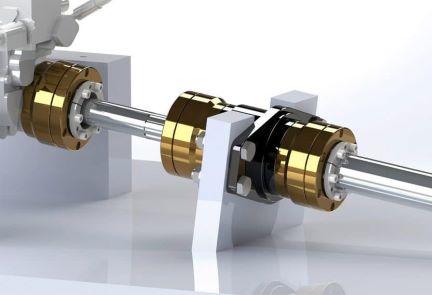
Marine drivetrain and coupling failures are one of the most misdiagnosed problems in diesel-powered boats. Symptoms like vibration, clunking when shifting, loss of propulsion, or shaft spin without movement are often blamed on the transmission — when in reality, the failure exists downstream in the coupling, shaft, or alignment system.
This guide breaks down how drivetrain failures actually develop, how they overlap with transmission and engine symptoms, and how to isolate the true root cause using a system-based diagnostic approach built from over 30 years of marine diesel experience.
Marine Drivetrain System Overview
The drivetrain is responsible for transferring power from the engine and transmission to the propeller. While the transmission controls engagement, the drivetrain is what actually delivers usable thrust into the water.
Key drivetrain components include:
- Transmission output flange
- Flexible coupling
- Drive shaft
- Shaft bearings
- Shaft seals and stuffing box
- Propeller and hub
When any of these components fail, the symptoms can look identical to transmission problems, which is why this page should always be used alongside the Master Marine Diesel Troubleshooting Guide.
Common Drivetrain & Coupling Failure Symptoms
Shaft Spins but Boat Doesn’t Move
This is one of the most definitive drivetrain failure symptoms. If the shaft is rotating but propulsion is lost, the problem is almost never inside the transmission.
Common causes include:
- Spun propeller hub
- Failed coupling connection
- Broken keyway on shaft
- Stripped spline or flange damage
Full diagnostic pathway here:
Shaft Spins but Boat Doesn’t Move Properly
Clunk When Shifting Into Gear
A sharp clunk when engaging gear is often blamed on the transmission, but many times the drivetrain is absorbing shock from misalignment or worn components.
- Worn flexible coupling
- Loose mounting bolts
- Misaligned shaft
- Damaged cutlass bearing
Related diagnostic crossover:
Clunk When Shifting Into Gear
Excessive Vibration Under Load
Vibration is one of the clearest indicators of drivetrain issues. Unlike engine vibration, drivetrain vibration typically increases with speed and load.
- Shaft misalignment
- Bent shaft
- Worn bearings
- Propeller imbalance
Deep dive here:
Marine Diesel Excessive Vibration
Coupling Failure: The Hidden Weak Point
The coupling is designed to absorb shock and compensate for slight misalignment, but it is also one of the most overlooked failure points in the drivetrain.
Common coupling failures include:
- Rubber element separation
- Metal fatigue or cracking
- Bolt stretch or loosening
- Heat damage from misalignment
When a coupling begins to fail, it often creates intermittent symptoms:
- Clunking when shifting
- Vibration that comes and goes
- Sudden loss of propulsion
This is where many misdiagnoses happen, especially when the issue is incorrectly attributed to a slipping transmission instead of mechanical disconnect.
Alignment Problems: The Root Cause Most People Miss
Misalignment is one of the most common underlying causes of drivetrain failure. Even a small deviation between the engine, transmission, and shaft can create long-term damage.
Alignment issues lead to:
- Premature coupling failure
- Bearing wear
- Shaft vibration
- Transmission output stress
What makes alignment so dangerous is that it often develops slowly. The boat may run “fine” for months or years while internal damage builds up.
This is why drivetrain issues should always be cross-checked with:
Drivetrain vs Transmission vs Engine (Critical Separation)
Correct diagnosis depends on separating these three systems:
Drivetrain Failure
- Shaft spins but no movement
- Vibration increases with speed
- Clunking or mechanical noise
Transmission Failure
- Delayed engagement
- Slipping under load
- No gear engagement
Engine Performance Issue
Misdiagnosis happens when these systems are not separated properly. A drivetrain issue can feel like a transmission problem, and a weak engine can make both systems appear faulty.
When Drivetrain Problems Mimic Transmission Slipping
One of the most confusing scenarios is when a coupling or propeller hub failure mimics transmission slipping.
Here’s what actually happens:
- Engine produces power normally
- Transmission engages correctly
- Power is lost AFTER the transmission
The result feels like slipping — but the transmission is doing its job.
This is why drivetrain diagnosis must always be included before assuming internal gearbox failure.
External Authority References
Advanced Drivetrain Diagnostic Process (Real-World Method)
Proper drivetrain diagnosis is not about guessing — it is about isolating exactly where power is being lost between the engine and the propeller. This requires testing under load, not just at idle.
A structured diagnostic process looks like this:
Step 1: Confirm Engine Output
Before touching the drivetrain, confirm the engine is producing proper power. If the engine cannot reach load RPM or is producing smoke, the issue may not be drivetrain-related.
Step 2: Verify Transmission Engagement
Check that the transmission is engaging solidly without delay or slipping. If engagement is clean, the problem likely exists downstream.
Step 3: Inspect Coupling Integrity
The coupling is the first mechanical link after the transmission. Failures here can completely disconnect power while everything upstream appears normal.
Look for:
- Rubber element failure
- Loose or stretched bolts
- Heat discoloration
- Metal fatigue cracks
Step 4: Shaft & Bearing Evaluation
Check shaft alignment, straightness, and bearing condition. Even a slightly bent shaft can create vibration and long-term damage.
Step 5: Propeller & Load Analysis
Finally, confirm the propeller is intact and properly matched. A spun hub or damaged prop can completely eliminate thrust.
How Drivetrain Failures Cascade Into Bigger Problems
Drivetrain failures rarely stay isolated. Once vibration or misalignment begins, it starts affecting multiple systems:
- Transmission output bearings begin to wear
- Engine mounts take uneven load
- Couplings degrade faster
- Cooling systems may appear affected due to increased load
This is why drivetrain issues often show up alongside:
These are not separate problems — they are connected through load, resistance, and imbalance.
Professional Repair & Service Approach
Once the root cause is identified, proper repair focuses on restoring system alignment and eliminating stress points rather than just replacing parts.
- Coupling replacement or upgrade
- Precision shaft alignment
- Bearing and support replacement
- Propeller repair or balancing
- Transmission output inspection
At 805 Marine Diesel Mechanic, all drivetrain repairs are performed with system-level diagnosis across Ventura, Channel Islands Harbor, Oxnard, and Santa Barbara.
Marine Drivetrain & Coupling Failure FAQ
1. Why does my shaft spin but the boat doesn’t move?
This is usually caused by a spun propeller hub or coupling failure. The engine and transmission may be working properly, but power is not reaching the propeller.
2. Can a bad coupling feel like a slipping transmission?
Yes. When a coupling fails, it can mimic transmission slip because power is lost after the gearbox.
3. What causes vibration under load?
Most commonly shaft misalignment, bent shafts, worn bearings, or propeller imbalance.
4. Can drivetrain issues cause engine problems?
Yes. Increased load and resistance can affect engine performance and temperature.
5. How do I know if it’s drivetrain or transmission?
Use the Master Troubleshooting Guide and confirm whether power loss happens before or after the transmission.
6. Can misalignment damage the transmission?
Yes. Misalignment puts stress on transmission output bearings and seals.
7. What causes clunking when shifting?
Loose couplings, worn mounts, or misalignment are common causes.
8. Can a bent shaft cause vibration?
Yes. Even slight bends create significant vibration at speed.
9. Can propeller damage cause loss of power?
Yes. A damaged or mismatched propeller reduces thrust and efficiency.
10. Should I replace parts or diagnose first?
Always diagnose first to avoid unnecessary repairs.
11. Can drivetrain problems cause overheating?
Yes. Increased load can raise engine and transmission temperatures.
12. Can coupling bolts loosen over time?
Yes. Vibration and load cycles can loosen bolts, leading to failure.
13. What is the first sign of drivetrain failure?
Usually vibration or unusual noise under load.
14. Can drivetrain issues affect RPM?
Yes. Increased resistance can prevent the engine from reaching full RPM.
15. How often should alignment be checked?
At least annually or after any major service.
16. Can worn bearings cause noise?
Yes. Bearings often create whining or grinding sounds.
17. Is vibration always drivetrain-related?
No, but drivetrain issues are one of the most common causes.
18. Can drivetrain problems get worse quickly?
Yes. Once misalignment or wear starts, damage accelerates rapidly.
19. When should I call a mechanic?
At the first sign of vibration, clunking, or loss of propulsion.
20. Where should I start diagnosis?
Start with the Master Marine Diesel Troubleshooting Guide.
With over 30 years of marine diesel experience, 805 Marine Diesel Mechanic provides expert drivetrain diagnostics and repair throughout Ventura, Channel Islands Harbor, Oxnard, and Santa Barbara.