
Seawater Pump Failure & Impeller Damage (Complete Diagnosis Guide)
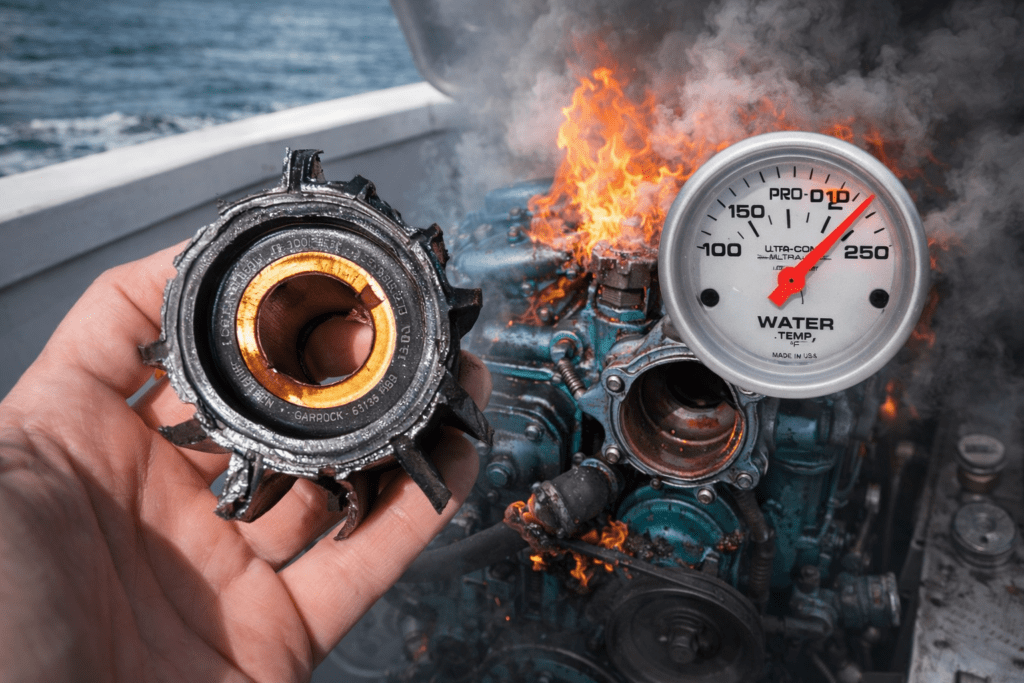
Seawater pump failure is one of the most common causes of marine diesel overheating. A damaged or worn impeller can drastically reduce cooling flow, leading to rising engine temperature under load.
At 805 Marine Diesel Mechanic, impeller failures are frequently diagnosed throughout Ventura, Oxnard, Channel Islands Harbor, and Santa Barbara. What makes these failures critical is not just the pump itself, but the downstream damage that often follows.
Return to Master Marine Diesel Troubleshooting Guide →
What the Seawater Pump Does
The seawater pump moves raw water through the cooling system, including the heat exchanger, oil cooler, aftercooler, and exhaust system. Without consistent flow, engine temperatures rise quickly under load.
This is why seawater pump problems often show up as overheating under load rather than at idle.
Common Symptoms
- Overheating at cruise
- Reduced exhaust water flow
- Steam from exhaust
- Rising temperature with RPM
- High exhaust temperature
These symptoms overlap with the Cooling System Diagnosis Center and Raw Water Flow Problems.
Impeller Failure Types
- Missing vanes
- Heat damage from dry running
- Cracked or hardened rubber
- Pump wear and reduced efficiency
Hidden Damage from Broken Impellers
Broken impeller pieces travel through the cooling system and create restrictions. These often clog the heat exchanger, oil cooler, or aftercooler.
This is why replacing the impeller alone often does not fix overheating.
Cooling System Flow Path
Water flows through intake → pump → coolers → heat exchanger → exhaust. Any restriction reduces total cooling capacity.
This is why failures must be compared with Exhaust Backpressure Problems and High EGT.
Advanced Diagnostics
Diagnosis requires tracing flow through the entire system and verifying output under load. Advanced testing through the Computerized Diagnostics Center can confirm restrictions.
Prevention
- Replace impellers annually
- Inspect cooling passages
- Avoid dry running
- Monitor temperature trends
Routine service through Marine Diesel Engine Services helps prevent failures.
For manufacturer reference, see Cummins Marine and Caterpillar Marine.
Local Diagnostics
805 Marine Diesel Mechanic provides full cooling diagnostics throughout Ventura, Oxnard, Channel Islands Harbor, and Santa Barbara with over 30 years experience.
Seawater Pump Failure FAQ
1. What causes impeller failure?
Impellers fail due to wear, heat, dry running, or age. Even a small amount of damage can significantly reduce water flow and lead to overheating.
2. Can I just replace the impeller?
Not always. Broken pieces often remain in the system, which is why the cooling system must be checked completely.
3. What happens when vanes break?
Vanes travel downstream and clog cooling passages. This reduces flow and causes overheating under load.
4. Can impeller failure cause high EGT?
Yes. Reduced cooling raises combustion temperature, which increases exhaust temperature.
5. Why does overheating happen under load?
Cooling demand increases with RPM. Weak pumps cannot keep up, causing temperature rise.
6. Can a worn impeller still work?
Yes, at idle. But under load it often fails to provide enough flow.
7. How often should impellers be replaced?
Typically annually or per manufacturer recommendations. Waiting too long increases risk of failure.
8. Can debris clog the heat exchanger?
Yes, and this is very common. This leads to ongoing overheating even after pump repair.
9. What are signs of low water flow?
Weak discharge, steam, or rising temperatures. These should be compared with raw water flow issues.
10. Can pump housing wear matter?
Yes, worn components reduce pump efficiency even with a new impeller installed.
11. Can seawater pumps affect engine power?
Indirectly yes. Overheating can reduce efficiency and cause performance loss.
12. Can overheating damage the engine?
Yes. Prolonged overheating can lead to major internal damage.
13. Can impeller damage be gradual?
Yes, many failures develop over time. This makes them harder to detect early.
14. What systems are affected?
Cooling, exhaust, and performance systems all interact. That’s why diagnosis must be system-wide.
15. Can overheating repeat after repair?
Yes, if debris remains. This is why full inspection is required.
16. Should I inspect hoses?
Yes, hoses can trap debris and restrict flow.
17. Can impeller failure damage exhaust?
Yes, lack of cooling can overheat exhaust components.
18. When should I call a technician?
If overheating occurs under load or repeatedly. Early diagnosis prevents damage.
19. Where do I start troubleshooting?
Start with the Master Troubleshooting Guide.
20. What is the best prevention?
Regular maintenance and inspections. Preventive service avoids costly failures.
8 Responses