
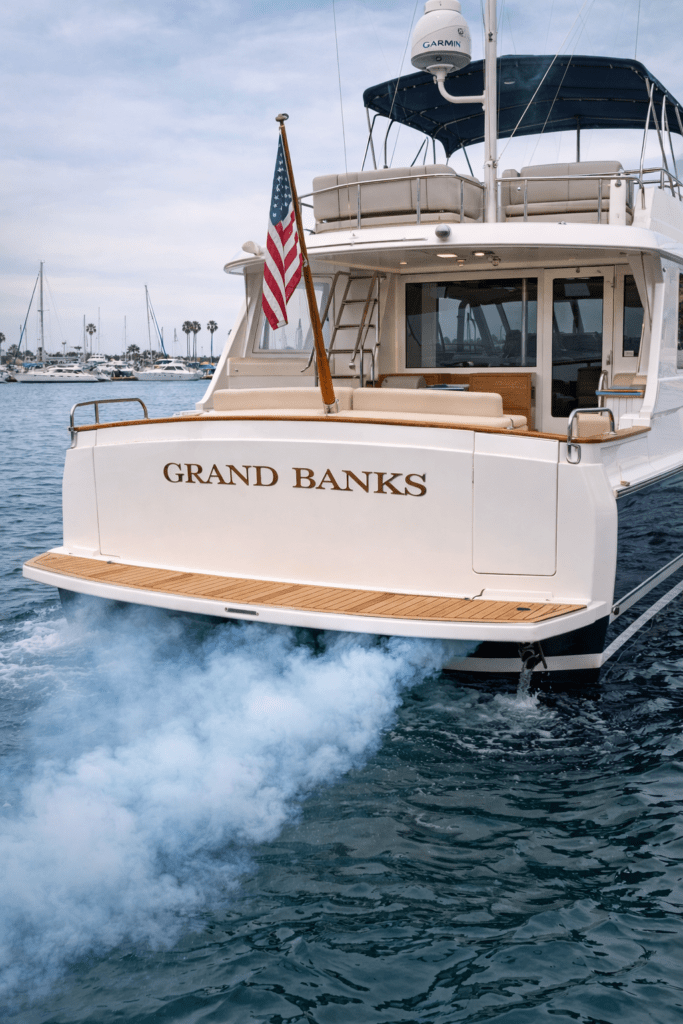
Yacht Engine Blue Smoke While Running – Marine Diesel Diagnosis Guide
If your yacht engine is producing blue smoke while running, it is almost always a sign that engine oil is entering the combustion process. Unlike black smoke (fuel imbalance) or white smoke (unburned fuel or coolant), blue smoke points directly to oil control problems, turbocharger leakage, or internal engine wear.
With over 30 years of marine diesel diagnostic experience throughout Ventura, Oxnard, Channel Islands Harbor, and Santa Barbara, one thing is consistent: blue smoke is never just cosmetic—it is a mechanical warning.
Start here:
Master Marine Diesel Troubleshooting Guide
What Blue Smoke While Running Really Means
Blue smoke indicates oil is being burned during combustion or entering the intake/exhaust system. This can occur through worn piston rings, valve guides, turbocharger seals, or excessive crankcase pressure forcing oil into the intake stream.
Diesel combustion depends on controlled fuel and air delivery (diesel fundamentals) and proper lubrication system control (marine diesel maintenance).
1. Turbocharger Oil Seal Failure
Turbochargers are one of the most common sources of blue smoke. When seals wear, oil leaks into the intake or exhaust and burns during operation.
👉 Turbo Failure Diagnosis
👉 Loss of Power Under Load
2. Internal Engine Wear (Rings & Cylinders)
Worn piston rings and cylinders allow oil to enter the combustion chamber, especially under load.
3. Valve Guide & Seal Wear
Worn valve guides allow oil into the combustion chamber from the top end, especially noticeable at idle and throttle changes.
4. Crankcase Pressure & Breather Issues
Excessive crankcase pressure forces oil into the intake system.
5. Fuel System Conditions That Amplify Smoke
Fuel system issues don’t cause blue smoke—but they make it worse by reducing combustion efficiency.
👉 Fuel System Diagnosis
👉 Fuel Contamination
6. Cooling System Influence
Improper cooling can change combustion efficiency and increase visible smoke.
⚠️ Related Maintenance Resource
Proper maintenance is critical to preventing oil-related failures:
👉 Marine Engine Maintenance Channel Islands
Step-by-Step Professional Diagnosis
- Confirm smoke color and pattern
- Inspect turbocharger for oil leakage
- Check crankcase pressure
- Inspect oil level and condition
- Evaluate injector performance
- Perform compression test
- Analyze system performance under load
Frequently Asked Questions
1. What causes blue smoke in a yacht engine?
Blue smoke is caused by oil entering combustion. Start with the Master Guide.
2. Can turbo failure cause blue smoke?
Yes, oil seals leak into intake or exhaust.
3. Can worn rings cause blue smoke?
Yes, oil enters cylinders under load.
4. Can valve guides cause this?
Yes, oil leaks from top end.
5. Is blue smoke always oil?
In most cases, yes.
6. Can fuel issues make it worse?
Yes, see fuel system diagnosis.
7. Can overheating contribute?
Yes, see cooling diagnosis.
8. Can air leaks affect this?
Yes, see air system issues.
9. Is this dangerous?
Yes, indicates internal wear.
10. Should I keep running?
No, diagnosis recommended.
11. Can this worsen quickly?
Yes, oil consumption increases.
12. Can turbo cleaning fix it?
Sometimes, depending on wear.
13. Can injectors cause blue smoke?
Indirectly by worsening combustion.
14. Can crankcase pressure cause it?
Yes, forces oil into intake.
15. Can maintenance prevent it?
Yes, see maintenance guide.
16. What is fastest diagnosis?
System-based inspection.
17. Do you service Ventura?
Yes, mobile service available.
18. When should I call?
When smoke persists.
19. Can this lead to rebuild?
Yes, if internal wear is severe.
20. Where is full guide?
Use the Master Guide.