
Marine diesel engine maintenance in Ventura, Channel Islands, Oxnard, and Santa Barbara requires more than basic service—it demands full system awareness. Before performing cooling system work or descaling, start with the Master Marine Diesel Troubleshooting Guide to properly diagnose overheating, flow restriction, and performance issues across all systems.
Marine Diesel Engine Descaling — Why It Matters
Routine descaling is one of the most overlooked yet critical maintenance procedures for marine diesel engines. It restores cooling efficiency, prevents overheating, and protects expensive components like heat exchangers, oil coolers, and aftercoolers.
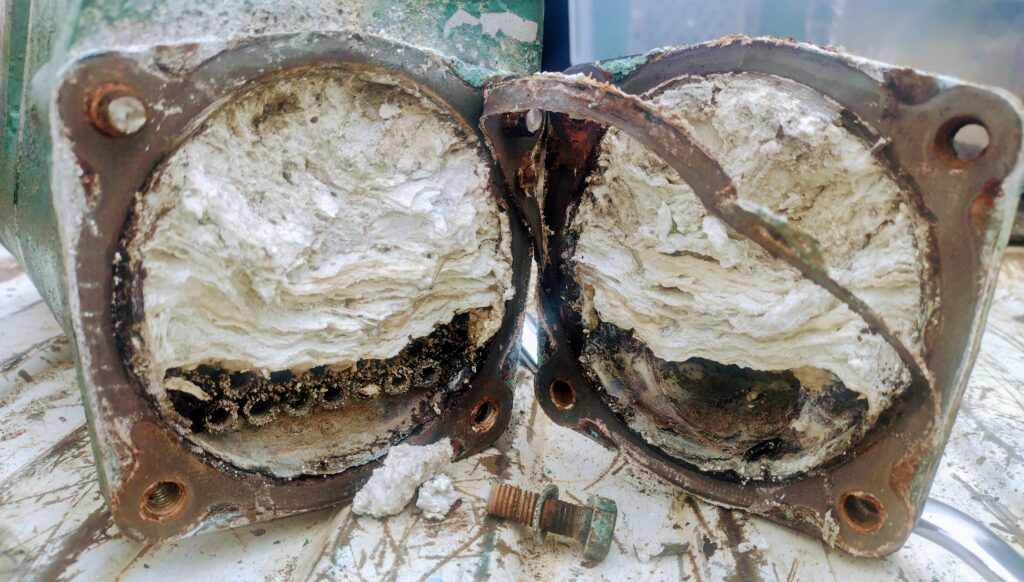
Why Descaling Is Critical
Marine engines operate in saltwater environments that create mineral buildup and corrosion. Systems like marine cooling systems and heat exchangers depend on unrestricted flow to maintain proper temperatures.
When scaling builds up, it reduces efficiency and causes overheating. Related systems such as aftercoolers and exhaust systems also suffer from restricted flow and increased heat.
Key Components That Require Descaling
Heat Exchanger and Aftercooler
These components manage engine temperature and airflow. Descaling restores heat transfer and prevents overheating under load.
Seawater Pump and Raw Water Circuit
Seawater pumps must maintain consistent flow. Preventive measures like fresh water flushing systems help reduce salt buildup between trips.
Oil and Transmission Coolers
Cooling systems extend beyond the engine block. Systems like marine transmission service and oil cooling circuits must also be maintained to prevent overheating and wear.
What Happens Without Descaling
Neglecting descaling leads to overheating, reduced performance, and increased fuel consumption. It can also cause corrosion and internal damage to critical components.
Mechanical stress increases when systems like engine mounts and alignment systems are affected by vibration caused by inefficient operation.
Professional Descaling Process
- Chemical descaling using marine-safe solutions
- Circulation through cooling system components
- Neutralization and flushing
- Inspection and reassembly
Electrical system reliability should also be verified during service. Components like marine alternator systems ensure proper engine operation after maintenance.
Local Channel Islands Conditions
Saltwater exposure accelerates buildup and corrosion. Regular inspection and maintenance are essential for boats operating in Ventura, Channel Islands Harbor, and Santa Barbara.
For regional boating conditions, refer to Channel Islands National Park and marine system guidelines from ABYC standards.
Why Choose 805 Marine Mechanic
805 Marine Mechanic provides mobile marine diesel service with professional diagnostics and descaling solutions. Dockside service ensures accurate evaluation under real-world conditions.
For long-term planning, services like engine surveys and repower planning help maintain performance and reliability.
Final Thoughts
Marine diesel descaling is essential for maintaining cooling efficiency and preventing costly failures. Routine service protects your engine and ensures reliable operation offshore.
With professional maintenance and system-based diagnostics, your vessel remains ready for Channel Islands crossings and coastal cruising.
Frequently Asked Questions
What is marine engine descaling?
Descaling removes mineral buildup from cooling systems. It restores proper flow and heat transfer.
Why is descaling important?
It prevents overheating and improves efficiency. It also extends component life.
How often should descaling be done?
Typically every 1–2 years depending on usage. Saltwater exposure may require more frequent service.
What happens if I skip descaling?
Skipping descaling leads to buildup and overheating. It can cause expensive damage.
Which components need descaling?
Heat exchangers, aftercoolers, and pumps require it. Oil and transmission coolers also benefit.
Can descaling improve fuel efficiency?
Yes, improved cooling increases efficiency. It reduces engine load.
Is descaling a DIY process?
Basic flushing can be done by owners. Full descaling should be done professionally.
What causes scaling?
Mineral deposits from saltwater cause scaling. Lack of maintenance worsens it.
Does descaling prevent corrosion?
Yes, it reduces buildup that leads to corrosion. It helps protect internal surfaces.
What areas do you service?
Ventura, Oxnard, Channel Islands Harbor, and Santa Barbara. Local expertise improves service quality.
Do you provide mobile service?
Yes, service is performed dockside. This improves accuracy and convenience.
Can overheating damage engines?
Yes, overheating can cause serious damage. Cooling systems must be maintained.
Is descaling expensive?
It is less expensive than major repairs. Preventive maintenance saves money.
How long does descaling take?
It depends on engine size and condition. Most services can be completed in a day.
Do I need flushing systems?
Flushing systems help reduce salt buildup. They extend engine life.
Can poor maintenance cause failure?
Yes, neglect is a major cause of engine failure. Regular service prevents issues.
What is included in service?
Inspection, cleaning, and testing are included. Systems are checked for performance.
When should I call a mechanic?
At the first sign of overheating or issues. Early service prevents damage.
Can descaling improve performance?
Yes, it restores cooling efficiency. Engines run smoother.
How do I schedule service?
Contact 805 Marine Mechanic online. Provide details for faster scheduling.
Schedule Marine Diesel Descaling
Protect your engine with professional descaling and cooling system service across Ventura, Oxnard, Channel Islands Harbor, and Santa Barbara.