
Marine diesel engine repowering can dramatically improve reliability, fuel efficiency, cruise performance, and long-term operating costs.
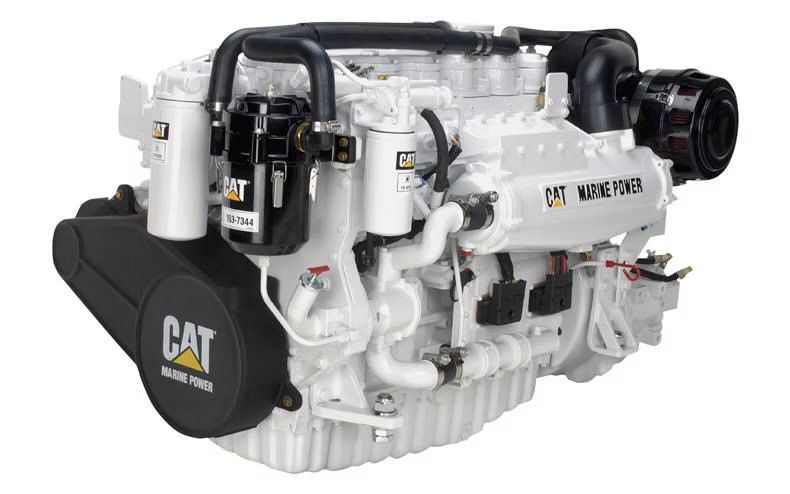
At 805 Marine Diesel Mechanic, marine diesel engine repower projects are performed for sailboats, yachts, commercial vessels, and sportfishing boats throughout Ventura Harbor, Oxnard, Channel Islands Harbor, and Santa Barbara Harbor. Repowering is more than replacing an old engine. A properly engineered repower upgrades the complete propulsion system so the vessel operates more efficiently, more reliably, and with lower vibration and fuel consumption.
For broader diesel troubleshooting support before deciding between repair or replacement, visit the Marine Diesel Troubleshooting Guide.
Schedule a Marine Repower Consultation
What Is a Marine Diesel Engine Repower?
A marine diesel repower replaces an aging propulsion engine with a newer, more efficient marine diesel engine and updates supporting systems to match the new powerplant. Depending on the vessel and project goals, the repower may also include transmission upgrades, shaft work, propeller replacement, cooling-system redesign, exhaust-system fabrication, fuel-system modifications, engine bed adjustments, and electrical integration.
Modern marine diesel engines are cleaner, quieter, and significantly more fuel efficient than many older mechanical diesel engines. Newer electronically controlled systems also provide improved diagnostics, fuel mapping, operating data, and engine monitoring.
Repowering is often the best solution when:
- The existing engine has excessive operating hours
- Major rebuild costs approach replacement cost
- Parts availability becomes limited
- Fuel economy becomes unacceptable
- Excessive smoke or vibration develops
- Reliability concerns increase offshore risk
- Commercial downtime becomes expensive
- The owner wants more modern propulsion technology
Why Boat Owners Choose to Repower
Older marine diesel engines can still run for many years, but long-term operating costs eventually rise as injectors, turbochargers, cooling systems, pumps, and drivetrain components continue aging. In many situations, repeated repairs become more expensive than replacing the propulsion package with a modern diesel platform.
Modern engines offer:
- Improved fuel efficiency
- Reduced smoke and emissions
- Quieter operation
- Lower vibration
- Improved torque output
- Advanced digital diagnostics
- Better cold-start performance
- Reduced maintenance requirements
Repowering also improves resale value and can increase owner confidence during offshore operation.
Planning a Marine Diesel Engine Repower
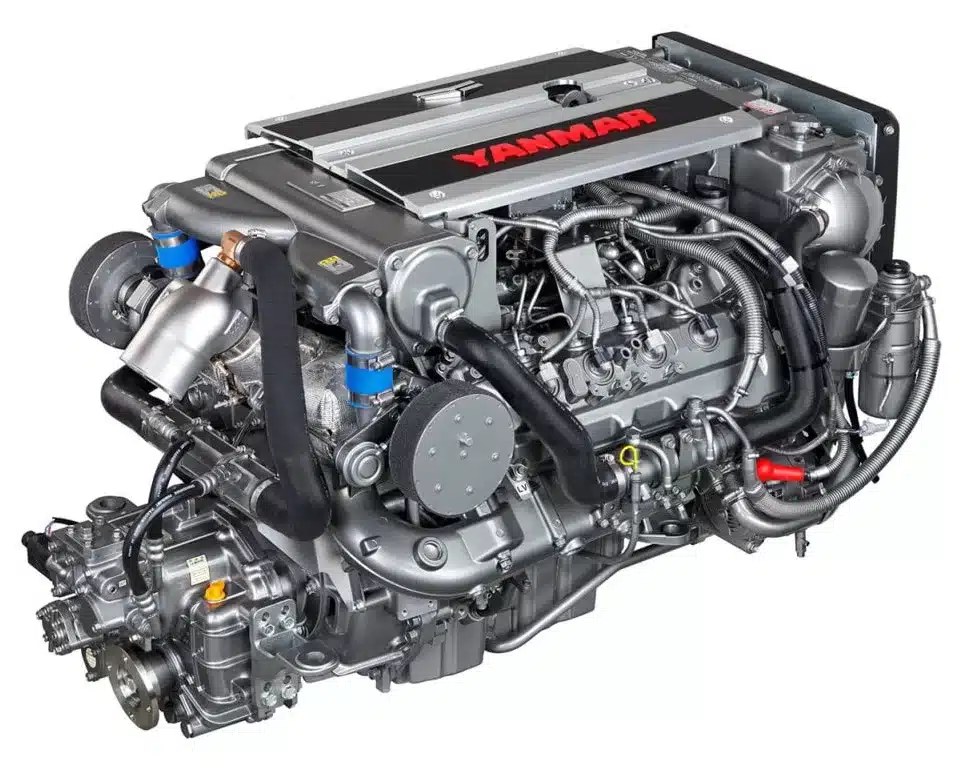
Repowering requires careful engineering and planning before installation begins. The replacement engine must match the vessel’s hull design, operating goals, displacement, shaft angle, transmission setup, and cooling-system capacity.
At 805 Marine Diesel Mechanic, repower planning often includes:
- Evaluating horsepower requirements
- Checking vessel displacement
- Inspecting the engine bed structure
- Measuring shaft alignment
- Inspecting transmission condition
- Reviewing cooling-system capacity
- Checking exhaust routing
- Inspecting fuel-system compatibility
- Reviewing electrical-system requirements
- Inspecting propeller sizing and pitch
Incorrect engine sizing can create poor performance, excessive fuel burn, overload conditions, or driveline stress. Repowers should always be engineered as a complete propulsion-system upgrade rather than simply “making the new engine fit.”
Transmission, Shaft, and Propeller Considerations
One of the most overlooked aspects of a marine diesel repower is driveline compatibility. A newer engine may produce a completely different torque curve and operating RPM range compared to the original engine.
The transmission ratio, shaft diameter, coupling, propeller pitch, and propeller diameter may all need adjustment to match the new engine properly.
For related driveline support, visit Marine Transmission Service & Repair.
During repower projects, technicians often inspect:
- Propeller shaft condition
- Cutlass bearing wear
- Coupling alignment
- Shaft straightness
- Transmission output flange condition
- Engine mount loading
Proper alignment is critical after installation. Poor alignment can quickly create vibration, coupling wear, transmission damage, and shaft-bearing failure.
Cooling-System Upgrades During Repower
Cooling systems must support the heat rejection requirements of the new engine. Modern engines may require upgraded seawater flow, larger heat exchangers, additional aftercoolers, or redesigned hose routing.
For related cooling support, visit the Cooling System Diagnosis Center.
Repower cooling upgrades may include:
- New raw-water pumps
- Heat-exchanger upgrades
- Aftercooler servicing
- Larger seawater strainers
- Exhaust temperature monitoring
- Coolant-system redesign
- Improved engine-room ventilation
Fuel-System and Electrical Integration
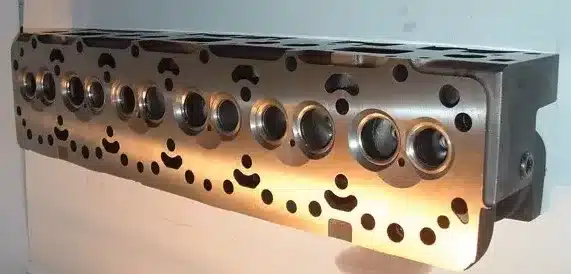
Modern electronically controlled marine diesel engines often require different fuel-delivery specifications, return-line configurations, filtration standards, and electrical-system integration compared to older engines.
Fuel systems may require:
- Updated fuel hoses
- Improved fuel filtration
- New return-line routing
- Lift-pump upgrades
- Fuel polishing support
- Tank cleaning
For related fuel-system support, visit the Fuel System Diagnosis Center.
Electrical upgrades may include:
- New harness integration
- Gauge package replacement
- Digital display systems
- ECM communication integration
- Charging-system upgrades
- Battery-bank evaluation
Modern digital engine systems provide valuable operating data, fault-code tracking, fuel consumption monitoring, and diagnostics that older mechanical systems cannot provide.
Engine Mounts and Structural Modifications
Repowering often requires custom engine bed modifications and new mount positioning. Newer engines rarely align perfectly with the original mounting footprint.
Mount selection and positioning directly affect:
- Vibration control
- Engine alignment
- Transmission loading
- Hull noise
- Long-term drivetrain reliability
For related mount support, visit Marine Engine Motor Mount Replacement.
Benefits of Repowering a Marine Diesel Vessel
Repowering offers several major advantages beyond simply replacing a failing engine.
1. Improved Fuel Economy
Modern common-rail and electronically controlled diesel engines use advanced injection systems and combustion management to improve fuel efficiency significantly.
For commercial operators and long-range cruisers, fuel savings can become substantial over time.
2. Reduced Emissions
Newer marine diesel engines are designed to meet stricter environmental standards and generally produce cleaner exhaust with lower particulate output.
3. Lower Noise and Vibration
Modern engines, improved mounts, updated couplings, and better balance characteristics reduce overall vibration and improve onboard comfort.
4. Improved Reliability
Repowering reduces the risk of repeated downtime associated with aging systems, obsolete parts, and recurring failures.
5. Better Long-Term Support
Newer engines usually provide better parts support, digital diagnostics, and long-term manufacturer support.
Repower Sea Trials and Final Testing
After installation, the vessel should undergo extensive testing and sea trials to verify proper operation.
Sea trials may include:
- Operating temperature checks
- Full-load RPM verification
- Boost-pressure checks
- Transmission engagement testing
- Fuel-consumption evaluation
- Exhaust-temperature monitoring
- Vibration analysis
- Alignment rechecks
Sea-trial testing confirms that the vessel performs correctly under real operating conditions.
For broader inspection support, visit Marine Engine Survey.
Marine Diesel Repower Support in Ventura and Santa Barbara
805 Marine Diesel Mechanic provides marine diesel repower planning, engine replacement, propulsion-system upgrades, driveline alignment, cooling-system integration, fuel-system upgrades, diagnostics, and sea-trial support throughout Ventura Harbor, Oxnard, Channel Islands Harbor, and Santa Barbara Harbor.
For local mobile service support, visit Marine Mechanic Ventura CA.
Whether repowering a sailboat auxiliary diesel, commercial vessel, or large cruising yacht, a properly engineered repower can dramatically improve performance, efficiency, and reliability for years to come.
Contact 805 Marine Diesel Mechanic
What is a marine diesel engine repower?
A marine diesel engine repower replaces an older propulsion engine with a newer marine diesel engine and updates related propulsion-system components.
Why do boat owners repower marine diesel engines?
Repowering improves reliability, fuel efficiency, emissions, diagnostics capability, and long-term operating costs.
Can a repower improve fuel economy?
Yes. Modern marine diesel engines are typically far more fuel efficient than older mechanical engines.
Does repowering reduce vibration?
Often, yes. Updated engines, mounts, alignment, and driveline components can significantly reduce vibration.
Does a repower include transmission inspection?
It should. The transmission ratio and driveline must match the new engine properly.
Can the original propeller be reused after repowering?
Sometimes, but many repowers require propeller pitch or diameter changes to match the new engine’s power curve.
Do repowers require shaft alignment?
Yes. Alignment is critical after installation to prevent vibration and driveline wear.
Can a repower improve resale value?
Yes. A properly documented modern diesel repower can increase vessel appeal and market value.
Are electronically controlled marine engines better?
Modern electronically controlled engines provide improved diagnostics, fuel management, and operating efficiency.
Can a repower require cooling-system upgrades?
Yes. Many newer engines require updated seawater flow, heat exchangers, and cooling-system integration.
Do repowers require electrical upgrades?
Often, yes. New engine harnesses, digital displays, and charging systems may require integration work.
Can engine beds require modification during repower?
Yes. Engine bed modifications are common when mount locations or engine dimensions change.
Can a repower reduce emissions?
Yes. Modern diesel engines generally produce cleaner exhaust and lower emissions than older engines.
How long does a marine repower take?
Repower timelines vary depending on vessel complexity, fabrication requirements, and parts availability.
Should fuel systems be inspected during repower?
Yes. Fuel filtration, hoses, tanks, and return systems should all be evaluated for compatibility.
Can a repower improve cruise speed?
Depending on the vessel and propulsion setup, repowering may improve acceleration and cruise efficiency.
What engines are commonly used for repowers?
Common repower brands include Yanmar, Cummins, Perkins, Volvo Penta, and Caterpillar depending on vessel requirements.
Are sea trials important after repowering?
Yes. Sea trials verify RPM, temperatures, boost pressure, vibration levels, and overall operating performance.
Can old engines simply be rebuilt instead of replaced?
Sometimes, but repeated repairs and obsolete parts may make repowering the better long-term investment.
Where does 805 Marine Diesel Mechanic perform repowers?
805 Marine Diesel Mechanic performs marine diesel repower projects throughout Ventura Harbor, Oxnard, Channel Islands Harbor, and Santa Barbara Harbor.
Schedule a Marine Diesel Engine Repower Consultation
805 Marine Diesel Mechanic provides professional marine diesel engine repower planning, propulsion-system upgrades, driveline alignment, cooling-system integration, and sea-trial support throughout Ventura Harbor, Oxnard, Channel Islands Harbor, and Santa Barbara Harbor.